The Short Answer
If you're searching for an electric mini truck for sale in USA markets in 2026, your options are narrow but growing. Street-legal, highway-capable electric mini trucks (also called kei trucks or neighborhood electric vehicles) remain a niche segment. The most accessible new options include the Bollinger B2 (announced, pending production), various low-speed electric vehicles (LSVs) from manufacturers like Club Car and Polaris, and imported Japanese kei trucks converted to electric power by specialty shops. For full highway-speed use, the closest production equivalent is the Ford Maverick hybrid (not fully electric) or waiting for upcoming compact electric pickups like the next-generation Tesla compact truck concept. Expect to spend between $25,000 and $55,000 depending on the vehicle class, with most true electric mini trucks falling outside the federal §30D tax credit due to weight, speed, or sourcing restrictions.
What Counts as an "Electric Mini Truck" in 2026?
The term "electric mini truck" covers several distinct vehicle categories, and understanding which one you need is the first step before shopping:
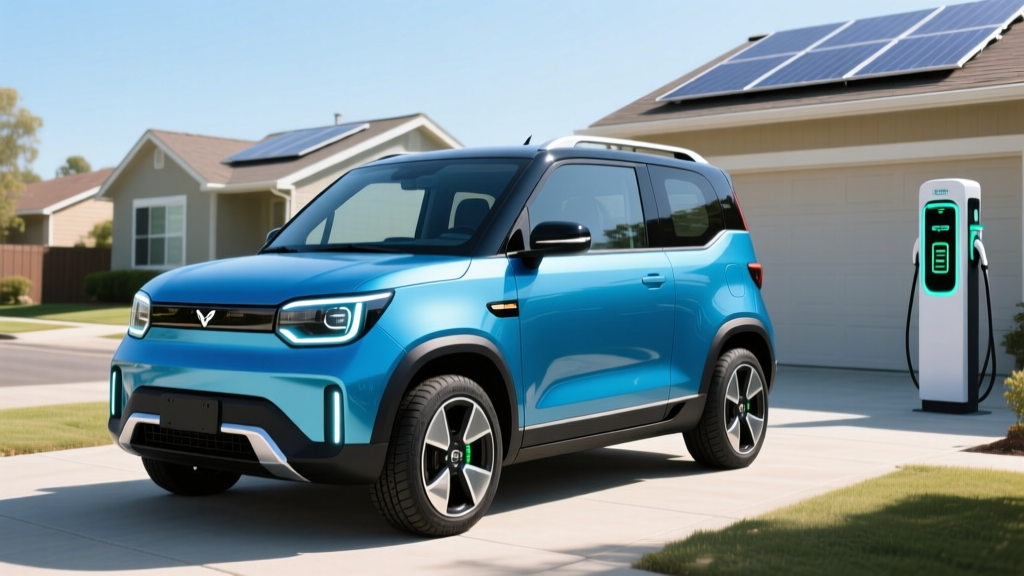
- Low-Speed Vehicles (LSVs): Federally limited to 25 mph maximum speed, legal on roads with speed limits up to 35 mph (varies by state). Examples include the Club Car Urban and Polaris Ranger EV. These are common on campuses, planned communities, and farms. Prices: $12,000–$22,000.
- Neighborhood Electric Vehicles (NEVs): Similar to LSVs, street-legal at low speeds, often used for last-mile delivery or utility work. Brands like Ayresa and STAR EV produce utility-style NEVs. Prices: $10,000–$18,000.
- Electric Kei Trucks: Japanese-market micro trucks (Suzuki Carry, Honda Acty) converted to electric drivetrains by US-based shops like EV West or Legacy EV. Not originally street-legal in all 50 states — registration varies wildly. Conversion cost: $15,000–$30,000 on top of the donor vehicle ($3,000–$8,000).
- Compact Electric Pickups (Full-Speed): Highway-capable electric trucks in a smaller footprint. As of early 2026, no mass-market compact electric pickup is in full production in the US. The Bollinger B2 has been announced but remains pre-production. The Ford Maverick remains hybrid-only (no BEV variant yet).
This distinction matters enormously for your purchase decision, insurance costs, registration requirements, and whether the vehicle qualifies for any federal or state incentives.
2026 Electric Mini Truck Options: Specs & Pricing
Below is a snapshot of what's realistically available or announced for US buyers as of 2026. Note that many of these are specialty or low-volume products — availability varies by dealer and region.
| Vehicle | Class | Battery (kWh) | Est. Range (mi) | Top Speed | MSRP / Cost | Status (2026) |
|---|---|---|---|---|---|---|
| Club Car Urban (LSV) | LSV | ~8 kWh (lead-acid or Li-ion) | 30–40 | 25 mph | $14,000–$18,000 | Available |
| Polaris Ranger EV | LSV/UTV | ~12 kWh | 30–50 | 25 mph | $15,000–$20,000 | Available |
| STAR EV Electric Utility | NEV | ~10 kWh | 25–40 | 25 mph | $12,000–$16,000 | Available |
| Electric Kei Truck Conversion | Converted | 15–30 kWh (varies) | 40–80 | 55–70 mph | $20,000–$38,000 (total) | Specialty shops |
| Bollinger B2 (announced) | Compact Pickup | ~100 kWh (prelim.) | ~200 (EPA est.) | 100+ mph | ~$55,000+ (est.) | Announced/pre-production |
| Ford Maverick Hybrid | Compact Pickup (HEV) | 1.1 kWh (hybrid) | N/A (hybrid) | 110+ mph | $28,000–$40,000 | Available (not BEV) |
Note: LSV/NEV range figures are manufacturer estimates under ideal conditions. Real-world range drops 15–30% in cold weather or under heavy payload. Battery chemistry is typically NMC lithium-ion for newer models, though some budget LSVs still use lead-acid (heavier, shorter lifespan, 3–5 year replacement cycle).
Electric Mini Truck vs. Gas Alternative: Cost Comparison
The most common comparison for buyers is a low-speed electric utility truck versus a gas-powered equivalent like the Honda Pioneer 500 or a used gas kei truck. Here's how the economics stack up over 5 years of typical use (5,000 miles/year, light utility work):
| Cost Factor | Electric LSV (e.g., Polaris Ranger EV) | Gas UTV (e.g., Honda Pioneer 500) |
|---|---|---|
| Purchase Price | $17,000 | $12,000 |
| Fuel/Energy Cost (5 yrs, 25,000 mi) | $450 (at $0.14/kWh, 0.3 kWh/mi) | $3,750 (at $3.75/gal, 25 MPG) |
| Maintenance (5 yrs) | $300 (tires, cabin filter, fluid top-offs) | $2,500 (oil changes, spark plugs, belts, filters) |
| Insurance (5 yrs avg) | $1,500 | $1,800 |
| Battery Replacement Reserve | $2,000 (if out of warranty by year 5) | N/A |
| Total 5-Year Cost | $21,250 | $20,050 |
The electric LSV costs roughly $1,200 more over five years in this scenario, primarily due to the higher upfront price. However, the per-mile energy cost is dramatically lower — roughly $0.04/mile for electricity vs. $0.15/mile for gasoline. If you drive more than 5,000 miles/year or keep the vehicle longer than 5 years, the electric option breaks even and then pulls ahead. The math also improves if you charge on solar or off-peak utility rates (as low as $0.08/kWh in some regions).
For higher-speed electric mini trucks (converted kei trucks or the Bollinger B2 if it reaches production), the comparison shifts. A gas-powered Ford Maverick hybrid gets an EPA-estimated 42 MPG combined and starts at $28,000. Until a comparable compact electric pickup is in full US production with EPA certification, the Maverick hybrid remains the most practical small truck for buyers who need highway speeds and don't want range limitations.
Real-World Ownership: What First-Time Buyers Must Know
Charging Access and Infrastructure
Most LSVs and NEVs charge on standard 120V Level 1 power using a NEMA 5-15 outlet — no special installation needed. A full charge typically takes 6–10 hours depending on battery size. This works well for overnight charging at home or in a garage.
For converted kei trucks with larger batteries (20–30 kWh), you'll want a 240V Level 2 charger (J1772 connector) for practical daily use. Home Level 2 installation typically costs $800–$2,500 including equipment (a ChargePoint Home Flex or Emporia Level 2 unit at $400–$700), electrician labor, and permit fees. If your home's electrical panel is maxed out (common in older homes with 100A service), a panel upgrade to 200A can add $1,500–$3,500.
DC fast charging is essentially nonexistent for LSVs and NEVs — these vehicles lack the onboard hardware for it. Converted kei trucks rarely support DC fast charging either. If you need rapid public charging, you're looking at full-size electric pickups like the Ford F-150 Lightning or Rivian R1T, which support 150–250 kW DC fast charging (10–80% in 20–40 minutes).
Climate and Range Reality
Small battery packs are especially vulnerable to cold-weather range loss. At 20°F (-7°C), expect a 25–40% reduction in range compared to mild-weather performance. An LSV rated for 40 miles of range in summer might deliver only 24–30 miles in a northern winter. If you live in a cold climate and need reliable daily range, oversize your battery expectations by at least 40%.
Heat is less of a range killer but accelerates battery degradation over time. Vehicles stored outdoors in sustained 100°F+ heat (Arizona, Texas summers) without thermal management systems will see faster capacity loss. Most LSVs lack active battery thermal management — a significant difference from production EVs like the Tesla Model 3 or Hyundai Ioniq 5, which use liquid cooling to preserve battery health.
Registration, Insurance, and Legal Considerations
LSVs must meet Federal Motor Vehicle Safety Standard (FMVSS) No. 500, which requires headlights, taillights, turn signals, mirrors, a parking brake, a windshield (not necessarily glass), and a VIN. Registration requirements vary by state — some states require a title and registration, others treat LSVs like golf carts with minimal paperwork.
Converted kei trucks face a patchwork of state regulations. Some states (like Vermont and Maine) have pathways for registering imported kei trucks; others prohibit them entirely on public roads. Always check with your state DMV before purchasing a conversion.
Insurance for LSVs typically runs $200–$500/year through specialty insurers. Converted kei trucks can be harder to insure — some carriers won't cover them, while others require agreed-value policies.
Federal Tax Credits: Do Electric Mini Trucks Qualify?
Under the IRS §30D clean vehicle credit, eligibility requires the vehicle to meet specific criteria:
- Vehicle classification: Must be a four-wheeled vehicle with a gross vehicle weight rating (GVWR) under 14,000 lbs. Most LSVs technically qualify on weight, but must also be "made by a manufacturer" meeting safety standards.
- MSRP caps: Vans, SUVs, and pickups capped at $80,000; other vehicles at $55,000.
- Buyer income limits (2026): Modified AGI of $150,000 (single), $225,000 (head of household), $300,000 (joint).
- Battery sourcing requirements: Critical minerals and battery components must meet increasing percentages of US/free-trade-agreement sourcing — a hurdle for many imported or small-battery vehicles.
- Final assembly: Must occur in North America.
In practice, most LSVs and NEVs do not qualify for the full $7,500 federal credit because they fail the battery sourcing or final assembly requirements, or because the manufacturer hasn't completed the IRS certification process. Converted kei trucks almost never qualify. The Bollinger B2, if it reaches production with North American assembly and compliant battery sourcing, could qualify — but this is speculative until the vehicle is EPA-certified and listed on the IRS eligible vehicle list.
Some state and local incentives apply to LSVs and NEVs — check your state energy office or Alternative Fuels Data Center for current programs.
Common Misconceptions About Electric Mini Trucks
| Myth | Fact |
|---|---|
| "Electric mini trucks are all street-legal everywhere in the US." | LSVs are only legal on roads with speed limits ≤35 mph (state rules vary). Converted kei trucks face registration barriers in many states. |
| "They qualify for the $7,500 federal tax credit." | Most LSVs and conversions fail §30D sourcing, assembly, or certification requirements. Never assume eligibility — check the IRS list. |
| "The battery will need replacing every 3 years." | Modern NMC lithium-ion packs in LSVs typically last 5–8 years or 20,000–40,000 miles before significant degradation. Lead-acid packs last 3–5 years. |
| "I can charge it anywhere with a regular outlet." | Level 1 (120V) works but takes 6–10+ hours. If you need daily use with higher mileage, Level 2 (240V) is strongly recommended. |
| "There are plenty of new electric mini trucks available at dealerships." | As of 2026, there is no mass-market, highway-speed electric mini truck in full US production. Options are LSVs, NEVs, or specialty conversions. |
Decision Framework: Which Electric Mini Truck Is Right for You?
Choose an LSV/NEV (Club Car, Polaris, STAR EV) if:
- You need a utility vehicle for a campus, farm, planned community, or neighborhood
- Your driving is under 25 mph on roads with speed limits ≤35 mph
- Daily range needs are under 25 miles
- Budget is $10,000–$22,000
- You want simple 120V plug-in charging with no installation
Choose an electric kei truck conversion if:
- You need a compact cargo bed with 55–70 mph capability
- Your state allows registration of imported/converted kei trucks
- You're comfortable with a specialty build and limited dealer support
- Budget is $20,000–$38,000 and you can wait 3–6 months for a conversion shop
Choose a gas or hybrid compact truck (Ford Maverick Hybrid) if:
- You need highway speeds, full registration in all 50 states, and dealer service
- Daily driving exceeds 100+ miles or includes towing
- You want a proven warranty (Ford: 3 yr/36,000 mi basic, 5 yr/60,000 mi powertrain)
- You don't have reliable home charging access
Wait for a production compact electric pickup (Bollinger B2, others) if:
- You want a highway-capable electric truck with EPA certification, full safety features, and §30D tax credit eligibility
- You can defer your purchase 1–3 years
- Budget is $45,000–$60,000+
Frequently Asked Questions
Can I buy a new electric mini truck at a regular car dealership?
Generally no. Most electric mini trucks (LSVs, NEVs) are sold through specialty dealers, outdoor equipment retailers, or direct from manufacturers like Club Car and Polaris. They are not typically stocked at Ford, Toyota, or Chevrolet dealerships. Converted kei trucks come from specialty EV conversion shops.
How long does the battery last in an electric mini truck?
Modern lithium-ion LSV batteries last approximately 5–8 years or 20,000–40,000 miles before capacity drops below 80% of original. Lead-acid batteries (found in budget models) last 3–5 years. Replacement costs range from $2,000–$5,000 depending on pack size and chemistry.
Are electric mini trucks safe to drive on public roads?
LSVs meet FMVSS No. 500, which requires basic safety equipment but does not mandate crash testing, airbags, or crumple zones. They are significantly less protective than a full-size vehicle in a collision. They are appropriate for low-speed, low-traffic environments — not highways or high-speed arterials.
What's the cheapest electric mini truck I can buy in 2026?
New NEVs from brands like STAR EV or Ayresa start around $10,000–$12,000. Used LSVs (Club Car, Polaris) can be found for $5,000–$10,000 depending on age and battery condition. Always verify battery health (state of health / SoH percentage) before buying used.
Can I tow with an electric mini truck?
Most LSVs have minimal towing capacity — typically 500–1,000 lbs at most. Electric kei truck conversions may handle 1,000–1,500 lbs depending on the drivetrain. For any serious towing (over 2,000 lbs), you'll need a full-size electric or hybrid pickup.