Introduction: The MEB Platform in the Real World
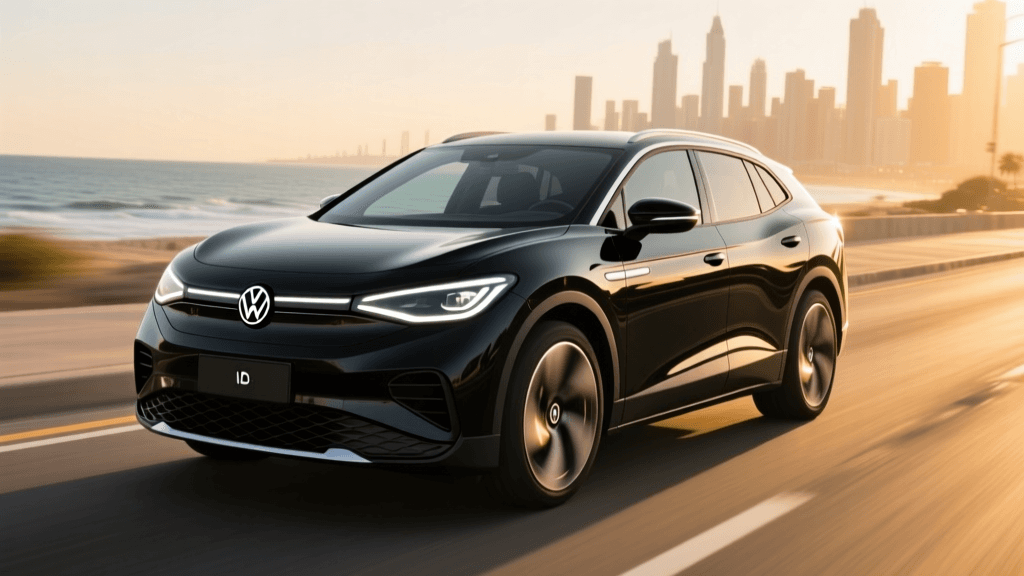
When Volkswagen introduced the ID.4, it was heralded as the flagship of the brand's Modular Electric Drive Matrix (MEB) platform. Now, with a full year of ownership in the rearview mirror, it is time to look past the initial honeymoon phase and evaluate the vehicle's underlying technology. This is not just about how the ID.4 drives; it is a comprehensive technology deep dive into how its software architecture, battery management systems, and advanced driver assistance features hold up to the rigors of daily use. According to extensive testing hubs like Car and Driver, the ID.4 offers a compelling blend of comfort and range, but the true ownership experience is defined by its digital ecosystem and electrical engineering.
Software and Infotainment: Growing Pains and OTA Updates
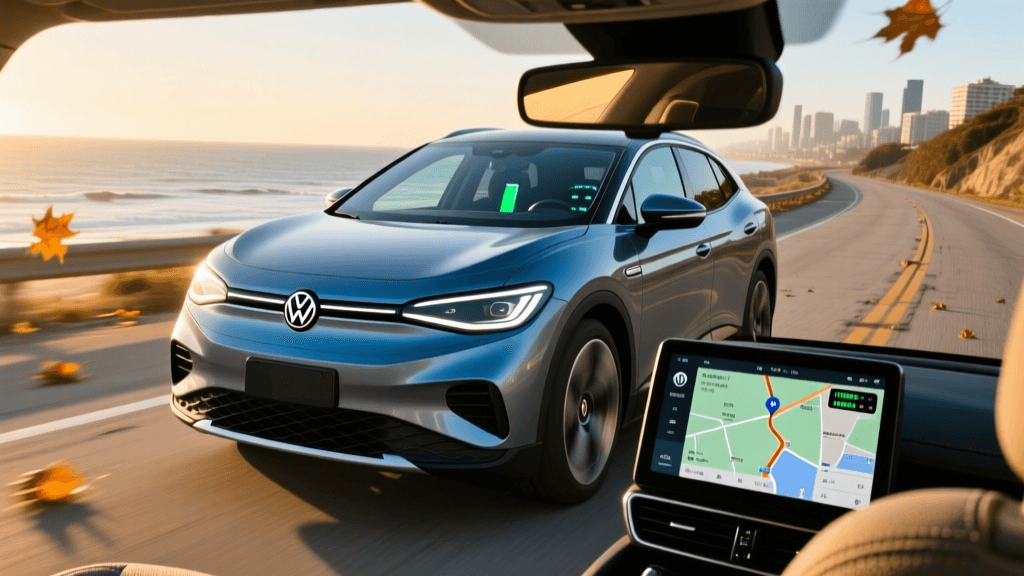
The most polarizing aspect of the ID.4's technology suite is its infotainment system. Running on Volkswagen's proprietary MEB operating system, the 12-inch central display (on higher trims) controls nearly every vehicle function. Over the past year, the transition from Software 2.4 to the much-anticipated Software 3.0 via Over-The-Air (OTA) updates brought noticeable improvements, including enhanced voice recognition and a slightly more responsive interface. However, the system still relies on touch-capacitive sliders for volume and climate control, which lack haptic feedback and back-lighting, making them frustrating to use at night.
Actionable Advice: If the infotainment screen freezes, lags, or the backup camera fails to disengage, you do not need to visit the dealership. Press and hold the power button on the left side of the steering wheel column for 15 to 20 seconds. This forces a soft reset of the MEB operating system, clearing the cache and resolving 90% of minor software glitches without interrupting your drive.
Battery Health and Charging Curve Analysis
The ID.4 Pro models are equipped with an 82 kWh gross (77 kWh net) lithium-ion battery pack utilizing Nickel Manganese Cobalt (NMC) chemistry. After 12 months and approximately 14,000 miles of mixed driving, real-world battery degradation has been virtually imperceptible, hovering around 1% to 2%, which is well within normal parameters for liquid-cooled packs. As noted by the U.S. Department of Energy's Alternative Fuels Data Center, proper thermal management is critical for EV battery longevity, and the ID.4's active liquid cooling system performs exceptionally well in maintaining optimal cell temperatures.
However, the DC fast charging curve is where the ID.4's technology shows its age compared to newer 800-volt architectures. The vehicle peaks at 135 kW, but it does not hold that peak for long. Below is the real-world charging data gathered over a year of using Electrify America and Tesla Supercharger (with adapter) networks:
| State of Charge (SOC) | DC Fast Charging Speed (kW) | Estimated Time in Band |
|---|---|---|
| 10% - 20% | ~115 kW | 4 minutes |
| 20% - 45% | ~135 kW (Peak) | 8 minutes |
| 45% - 80% | ~90 kW (Tapering) | 14 minutes |
| 80% - 100% | ~40 kW (Steep Drop) | 18+ minutes |
Actionable Advice: To preserve battery health and optimize charging times, set your daily charge limit to 80% via the vehicle's charging menu or the Volkswagen app. Only charge to 100% immediately before a long road trip. Furthermore, never rely on DC fast charging for the final 20% of the battery unless absolutely necessary, as the charging speed drops to a crawl to protect the cells from over-voltage stress.
Home Charging Optimization: Maximizing the 11.5 kW Onboard Charger
One of the most overlooked technological specs of the ID.4 is its 11.5 kW onboard AC charger. Many owners plug their vehicles into a standard 40-amp NEMA 14-50 outlet, which limits continuous draw to 32 amps (roughly 7.7 kW). This means you are leaving nearly 40% of the vehicle's AC charging potential on the table.
Actionable Advice: To maximize the ID.4’s onboard charger, have a licensed electrician hardwire a premium Level 2 charger, such as the ChargePoint Home Flex or Emporia Vue, on a dedicated 60-amp circuit. This allows the charger to deliver a continuous 48 amps (11.5 kW), reducing a full 0% to 100% charge from over 10 hours down to roughly 7.5 hours. This is particularly vital for owners who frequently deplete their battery on long commutes and need rapid overnight turnaround.
Advanced Driver Assistance Systems (ADAS)
Volkswagen's IQ.DRIVE suite, specifically the Travel Assist feature, combines adaptive cruise control and lane centering into a single, semi-autonomous highway driving system. Over the past year, Travel Assist has proven to be remarkably smooth, avoiding the 'ping-pong' effect common in older lane-keeping systems. The capacitive touch steering wheel is a brilliant technological inclusion; rather than applying physical torque to the wheel to prove you are paying attention, the system detects the electrical capacitance of your hands resting on the rim.
However, the system is not without flaws. In heavy rain or when the front radar sensor gets caked with road grime, Travel Assist will abruptly disengage, sometimes with little warning. Ongoing coverage by EV publications like Electrek highlights that while VW's hardware is robust, sensor fusion software still struggles in adverse weather conditions compared to camera-heavy systems from competitors.
Actionable Advice: Keep a microfiber cloth and a small bottle of automotive glass cleaner in your center console. At the first sign of heavy highway spray or snow, pull over safely and wipe the front VW emblem (which houses the radar sensor) and the windshield camera housing behind the rearview mirror to restore full ADAS functionality.
Thermal Management System: Preconditioning Deep Dive
The ID.4 utilizes a highly sophisticated heat pump and resistive PTC (Positive Temperature Coefficient) heater to manage cabin and battery temperatures. In winter months, battery range can drop by up to 20% if the cabin is heated using battery power while driving. The technology to mitigate this lies in the vehicle's preconditioning software.
By setting a departure timer in the vehicle's infotainment system while the car is still plugged into your home Level 2 charger, the ID.4 will draw power from the grid—not the battery—to warm the cabin and bring the battery cells to their optimal operating temperature of roughly 77°F (25°C). This not only preserves your morning range but also enables immediate regenerative braking, which is otherwise severely limited when the battery is cold.
'The true measure of an EV's technology isn't just its peak horsepower or 0-60 time; it is how seamlessly its thermal and software systems integrate into your daily routine without requiring constant manual intervention.'
Verdict: Is the Tech Worth the Investment?
After one year of ownership, the Volkswagen ID.4 presents a fascinating technological dichotomy. Its hardware—the MEB chassis, the liquid-cooled battery pack, and the IQ.DRIVE sensor suite—is fundamentally excellent, robust, and built for longevity. However, the software layer, particularly the infotainment UI and climate control sliders, remains a work in progress that requires patience and occasional manual reboots.
For the tech-savvy owner who takes the time to optimize their home charging setup, utilize preconditioning routines, and understand the nuances of the DC fast-charging curve, the ID.4 is a highly rewarding, efficient, and comfortable electric vehicle. It may not have the bleeding-edge software polish of a Silicon Valley startup, but its core electrical engineering proves that legacy automakers still know how to build a solid foundation.