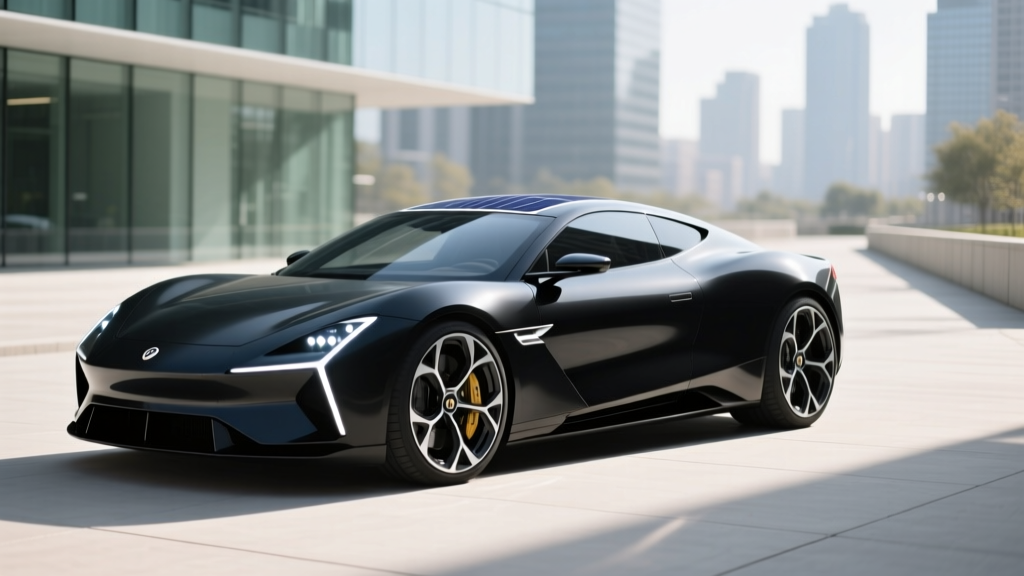
The Fisker Ocean was pitched as a sustainable, high-performance electric crossover with sports-car acceleration and class-leading range. But after Fisker Inc.'s June 2024 bankruptcy filing and the subsequent liquidation of the company's assets, the Ocean exists in a complicated space: a genuinely capable EV with an uncertain support future. If you're researching the electric sports car Fisker originally promised, this review breaks down what the Ocean actually delivers — and the serious ownership caveats you need to weigh in 2026.
Fisker Ocean Quick Verdict: Impressive Specs, Major Ownership Risk
On paper, the Fisker Ocean Extreme and its Force E AWD variant deliver sports-car-rivaling performance: 564 horsepower, a 3.7-second 0-60 mph time, and an EPA-estimated 360 miles of range from a 113 kWh (usable) nickel-manganese-cobalt (NMC) battery. The platform supports up to 250 kW DC fast charging and features a distinctive SolarSky roof panel. However, Fisker's bankruptcy means no active manufacturer warranty support, uncertain parts availability, and a severely limited service network. Buyers considering a used or liquidation-stock Ocean in 2026 must treat it as an orphan-vehicle purchase with elevated risk.
| Specification | Ocean Extreme (FWD) | Ocean Force E (AWD) |
|---|---|---|
| EPA Range | 360 miles | 283 miles |
| Battery (Usable) | 113 kWh NMC | 113 kWh NMC |
| Horsepower | 275 hp | 564 hp |
| 0-60 mph | 6.9 seconds | 3.7 seconds |
| Drivetrain | Single-motor FWD | Dual-motor AWD |
| Max DC Charge Rate | 250 kW (peak) | 250 kW (peak) |
| Level 2 Charge Rate | 11 kW (AC) | 11 kW (AC) |
| Efficiency (Combined) | ~95 MPGe | ~78 MPGe |
| Cargo Volume | 32.5 cu ft (rear up) | 32.5 cu ft (rear up) |
| Original Base MSRP | $68,999 | $61,999 |
Range and Efficiency: EPA Numbers vs. Real-World Reality
The Fisker Ocean Extreme's 360-mile EPA estimate placed it among the longest-range EVs at launch, trailing only the Lucid Air lineup. That figure comes from the 113 kWh usable NMC lithium-ion battery pack supplied by CATL. The single-motor FWD configuration maximizes efficiency, yielding roughly 95 MPGe combined (about 35 kWh/100 miles). The dual-motor Force E sacrifices range for performance, dropping to an EPA-estimated 283 miles.
EPA Sticker: 360 miles (Extreme FWD) / 283 miles (Force E AWD)
Highway (70-80 mph, 70°F): Expect ~290-310 miles in the Extreme; ~230-250 miles in the Force E. The Ocean's boxy crossover profile generates more aerodynamic drag than a sedan, hitting efficiency hard at sustained highway speeds.
Cold Weather (30°F or below): Plan for a 20-30% reduction. The Extreme may deliver 250-280 miles in freezing conditions; the Force E could drop to 190-210 miles. The Ocean uses a resistive PTC heater in some configurations rather than a heat pump, which draws significant battery energy for cabin warming.
City / Mixed Driving: The EPA figure is most achievable here. Regenerative braking in stop-and-go traffic recaptures energy, and lower speeds reduce drag losses.
Compared to rivals, the Ocean Extreme's real-world highway range trails the Tesla Model Y Long Range (~320 highway miles from its 330-mile EPA) but beats the Ford Mustang Mach-E Extended Range (~240-260 highway miles). The key variable is the lack of a heat pump on many build configurations — a meaningful cold-weather disadvantage against competitors like the Hyundai Ioniq 5 and Model Y.
Charging Speed: DC Fast Charge and Home Level 2 Breakdown
Charging capability is where the Ocean's engineering shows both promise and practical limitation. Fisker rated the platform for a peak DC fast-charge rate of 250 kW on CCS1-equipped vehicles. However, peak rate is not sustained rate — the charge curve tapers significantly as the battery fills, as with all NMC chemistries.
| Charging Level | Power / Rate | Time or Miles Added |
|---|---|---|
| Level 1 (120V, 12A) | ~1.4 kW | ~3-4 miles per hour |
| Level 2 (240V, 48A) | 11 kW | ~25-30 miles per hour; full charge ~11-12 hours |
| DC Fast Charge (CCS1) | 250 kW peak | 10-80% in ~35 minutes (estimated); tapers above 80% |
In real-world DC fast-charging sessions on 150-350 kW stations, owners and reviewers reported the Ocean sustaining approximately 150-180 kW through the 20-60% state-of-charge window before tapering to under 80 kW past 70%. A 10-80% session typically takes 30-40 minutes at a capable charger — competitive with the Ford Mach-E but slower than the Hyundai Ioniq 5's 18-minute 10-80% time on its 800V architecture.
One critical 2026 consideration: The Ocean was built with a CCS1 port. As the industry shifts toward NACS (Tesla's connector standard), owners will need a CCS-to-NACS adapter to access Tesla Supercharger stations. Adapters from third-party suppliers like Lectron and A2Z are available for roughly $150-$250, but native NACS Supercharger access is not supported without one. Confirm adapter compatibility with your specific VIN before purchasing.
Performance: The Force E Delivers Sports-Car Acceleration
If the "electric sports car Fisker" search brought you here, the Force E variant is what you're looking for. Its dual-motor all-wheel-drive powertrain produces 564 horsepower and rockets the Ocean from 0-60 mph in 3.7 seconds — territory occupied by the Porsche Taycan 4S and Tesla Model Y Performance. The single-motor Extreme, at 275 hp and 6.9 seconds to 60, is brisk but not thrilling.
Handling dynamics are where the Ocean diverges from true sports cars. At approximately 5,100 pounds (Force E), the crossover carries its mass noticeably through corners. The steering is precise but light, and the suspension tuning favors comfort over aggression. This is a fast, capable grand tourer — not a track car. Compared to the Porsche Taycan or even the Tesla Model Y Performance, the Ocean feels softer and less communicative at the limit.
Where the Force E shines is straight-line punch and daily usability. The instant torque delivery makes highway merging effortless, and the AWD system provides confident traction in rain and light snow. The Ocean also offers a unique "California Mode" that opens all windows and the rear hatch glass simultaneously for open-air driving — a distinctive feature no competitor matches.
Interior, Cargo, and Technology
The Ocean's cabin uses recycled and sustainable materials throughout, including recycled plastic bottle fabrics and reclaimed rubber. Build quality on early-production units was inconsistent — panel gaps, creaking trim, and infotainment glitches were commonly reported by owners and reviewers.
Cargo space: 32.5 cubic feet behind the second row, expanding to approximately 65 cubic feet with the rear seats folded. There is no front trunk (frunk). Rear legroom measures approximately 38.2 inches — adequate for adults on longer trips.
Infotainment: A 17.1-inch rotating center touchscreen ("Revolve Screen") dominates the dash, switching between a full "Control Mode" and a simplified "Hollywood Mode" for media. The system runs custom Fisker software. Post-bankruptcy, software updates have ceased, and some cloud-connected features (navigation routing, remote app controls) may become unreliable or non-functional over time as backend servers are decommissioned.
Driver assistance: The Ocean shipped with a Level 2 driver-assist suite including adaptive cruise control, lane-keeping assist, automatic emergency braking, and blind-spot monitoring. Fisker had announced a future "Fisker Intelligent Pilot" system with higher automation capability, but this was never delivered and will not be completed following the bankruptcy.
The Fisker Ocean's driver-assist system is an SAE Level 2 feature. It requires continuous driver supervision — hands on or near the wheel, eyes on the road. It is not self-driving. No production consumer vehicle currently offers autonomous driving without driver monitoring.
Pricing, Tax Credits, and the Post-Bankruptcy Market
Fisker's original MSRP structure positioned the Ocean as a premium competitor to the Tesla Model Y and Ford Mustang Mach-E. Following the bankruptcy, remaining inventory was liquidated at steep discounts — some Ocean Sport and Ultra models sold for under $25,000 through liquidation auctions. In 2026, used Ocean pricing varies wildly based on trim, mileage, and buyer confidence in long-term support.
| Trim | Original MSRP | Est. 2026 Used Range | Federal Tax Credit (New) |
|---|---|---|---|
| Ocean Sport (base) | $37,499 | $18,000 - $24,000 | Was eligible (up to $7,500) |
| Ocean Ultra | $49,999 | $25,000 - $33,000 | Was eligible (up to $7,500) |
| Ocean Extreme | $68,999 | $35,000 - $45,000 | MSRP over cap — not eligible |
| Ocean Force E | $61,999 | $32,000 - $42,000 | MSRP over cap — not eligible |
Federal tax credit note: Under IRS §30D rules, new EVs must meet MSRP caps ($80,000 for SUVs/trucks/vans, $55,000 for sedans), buyer income limits ($150K single / $300K joint), and critical-mineral/battery-component sourcing requirements. The Ocean Sport and Ultra originally qualified, but the Extreme exceeded the sedan MSRP cap (Fisker classified it as a sedan for credit purposes). In 2026, no new Fisker Oceans are being sold, so the new-vehicle §30D credit is no longer applicable. The IRS clean vehicle credit page details current eligibility rules.
For used Oceans purchased from a dealer, the used clean vehicle credit (up to $4,000 or 30% of sale price, whichever is less) may apply if the sale price is $25,000 or less and buyer income limits are met. Given the Ocean's original MSRP, only the Sport trim is likely to qualify at used-credit thresholds.
Warranty, Service, and the Orphan-Vehicle Problem
Fisker originally offered a 6-year/60,000-mile basic warranty and an 8-year/100,000-mile battery and powertrain warranty. Following the 2024 bankruptcy, these warranties are effectively void. No entity has assumed Fisker's warranty obligations as of early 2026. Some third-party warranty companies may offer aftermarket coverage, but terms and claim approval rates vary widely.
Service access is the Ocean's most significant ownership risk. Fisker's authorized service network was limited even before the bankruptcy. In 2026, owners rely on:
- Independent EV-capable repair shops (growing but still sparse in many regions)
- Magn Steyr, the Ocean's contract manufacturer in Austria, which retains some parts inventory but does not offer direct consumer service in the US
- Mobile technicians for software and minor hardware issues
Replacement parts — particularly body panels, the Revolve Screen, and proprietary components — are scarce and may require salvage sourcing. Collision repair could be problematic. Prospective buyers should verify parts availability and local service options before purchasing.
Pros, Cons, and Who the Ocean Suits
- Class-leading EPA range (360 mi, Extreme FWD)
- Force E delivers genuine sports-car acceleration (3.7s 0-60)
- Distinctive design with SolarSky roof and California Mode
- Sustainable interior materials
- Steep used-market discounts post-bankruptcy
- Spacious cabin with 32.5 cu ft cargo volume
- No active manufacturer warranty — orphan vehicle
- Parts scarcity and limited service network
- No future software updates; cloud features may degrade
- Inconsistent early-production build quality
- No heat pump on many builds (cold-weather range penalty)
- CCS1 port requires adapter for NACS Supercharger access
- Handling is comfort-oriented, not sports-car sharp
Who the Fisker Ocean suits: The Ocean is best suited for risk-tolerant buyers who value range and design over long-term support certainty. It works as a commuter and road-trip vehicle for households with reliable home Level 2 charging and access to an independent EV mechanic. It does not suit buyers who need warranty peace of mind, guaranteed service access, or who live in regions with sparse EV repair infrastructure. Families needing a primary vehicle should weigh the orphan-vehicle risk carefully against the attractive used pricing.
How the Ocean Compares to Key Rivals
If you're cross-shopping the electric sports car Fisker originally positioned, here's how the Ocean stacks up against alternatives that remain in production with full warranty and service support:
| Attribute | Fisker Ocean Extreme | Tesla Model Y LR (2025) | Hyundai Ioniq 5 Limited AWD | Ford Mach-E GT |
|---|---|---|---|---|
| EPA Range | 360 mi | 330 mi | 290 mi | 280 mi |
| 0-60 mph | 6.9s (FWD) / 3.7s (Force E) | 4.8s | 5.1s | 3.5s |
| Battery | 113 kWh NMC | ~75 kWh NMC | 77.4 kWh NMC | 91 kWh NMC |
| DC Fast Charge | 250 kW peak | 250 kW peak | 240 kW peak | 150 kW peak |
| 10-80% Time | ~35 min | ~27 min | ~18 min | ~45 min |
| Warranty (2026) | Void (bankruptcy) | 4yr/50K + 8yr/120K battery | 5yr/60K + 10yr/100K battery | 3yr/36K + 8yr/100K battery |
| Service Network | Minimal / independent only | Extensive | Extensive (dealer network) | Extensive (dealer network) |
The Model Y and Ioniq 5 offer superior charging infrastructure access, active warranties, and proven service networks. The Mach-E GT beats the Force E on raw acceleration. The Ocean's remaining advantage is range-per-dollar on the used market — if you can accept the ownership risk.
Frequently Asked Questions
What is the real-world range of the Fisker Ocean?
The EPA rates the Ocean Extreme at 360 miles and the Force E at 283 miles. In real-world highway driving at 70-80 mph, expect roughly 290-310 miles (Extreme) and 230-250 miles (Force E). Cold weather (below 30°F) can reduce range by 20-30%, bringing the Extreme to approximately 250-280 miles and the Force E to 190-210 miles.
How fast does the Fisker Ocean charge?
On a DC fast charger, the Ocean peaks at 250 kW and typically completes a 10-80% charge in 30-40 minutes, depending on charger capability and battery temperature. At home on a Level 2 (240V, 48A) charger, the 11 kW onboard charger adds approximately 25-30 miles per hour, requiring about 11-12 hours for a full charge from empty.
Does the Fisker Ocean qualify for the federal EV tax credit?
No new Fisker Oceans are being sold, so the new-vehicle §30D credit is not applicable. For used Oceans purchased at $25,000 or less from a licensed dealer, the used clean vehicle credit (up to $4,000) may apply if buyer income limits are met ($75K single / $150K joint). Verify current rules at IRS.gov and consult a tax professional.
Is the Fisker Ocean worth buying in 2026?
The Ocean offers compelling range and performance at steep used-market discounts, but it carries significant ownership risk: no manufacturer warranty, scarce parts, limited service access, and no future software updates. It may be worth considering as a secondary vehicle or for buyers with EV repair access and high risk tolerance. For a primary daily driver, a supported EV like the Model Y, Ioniq 5, or Mach-E is a safer choice.
Can I charge the Fisker Ocean at Tesla Superchargers?
Not natively. The Ocean has a CCS1 charge port. To access NACS-equipped Tesla Superchargers, you'll need a CCS-to-NACS adapter (approximately $150-$250 from third-party suppliers). Verify adapter compatibility with your specific vehicle before purchase.
What happens if the Fisker Ocean's battery needs replacement?
With no active manufacturer warranty, battery replacement would be an out-of-pocket expense. A 113 kWh NMC pack replacement could cost $15,000-$25,000+ depending on availability and labor. Third-party EV battery repair shops are emerging but remain limited. This is the single largest financial risk of owning an orphan EV.
Sources: EPA range and efficiency data from fueleconomy.gov; IRS tax credit rules from irs.gov; Fisker Ocean specifications from original manufacturer press materials and verified owner reports.