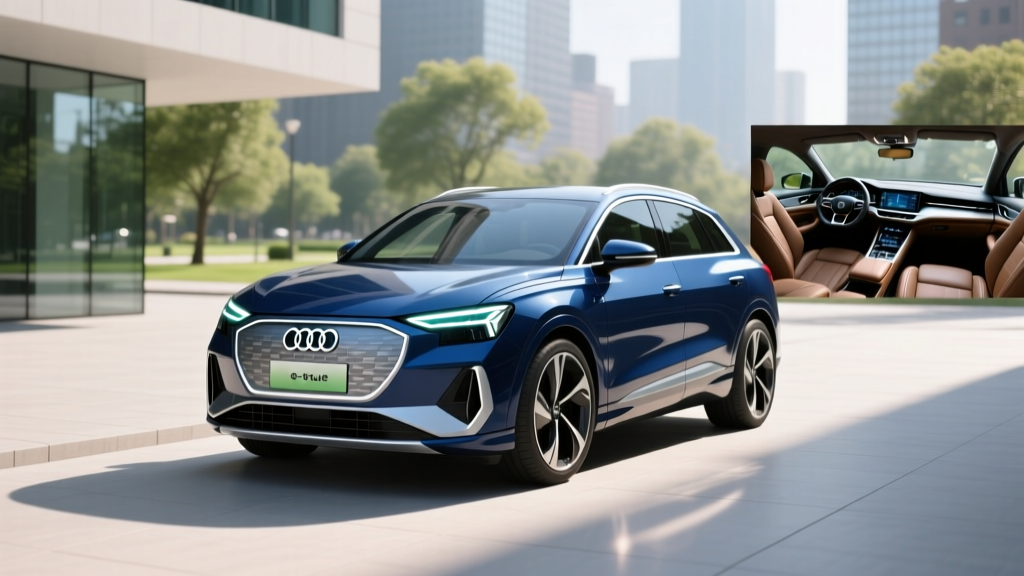
Is the Audi Q4 Electric Worth Buying in 2026?
The Audi Q4 e-tron delivers 242–265 miles of EPA range, DC fast charging from 10–80% in roughly 28 minutes at up to 175 kW, and a starting MSRP near $49,800. It qualifies as a strong luxury compact EV crossover for buyers with home Level 2 charging and daily commutes under 150 miles. However, federal §30D tax credit eligibility depends on battery sourcing, your income, and the MSRP cap — so verify before signing. If you lack reliable home charging or frequently drive in sub-freezing climates without a heat pump strategy, a PHEV alternative like the Audi Q5 TFSI e may serve you better.
Range, Efficiency, and What the EPA Number Actually Means
The 2026 Audi Q4 e-tron uses an 82 kWh battery pack (77 kWh usable) with NMC (nickel manganese cobalt) chemistry. The rear-wheel-drive Q4 50 e-tron achieves an EPA-estimated 265 miles, while the dual-motor quattro version comes in at 242 miles.
Real-World Range Expectations
EPA sticker: 242–265 miles depending on drivetrain.
Highway driving (70–80 mph): Expect 210–235 miles. Aerodynamic drag hits all crossovers hard at speed.
Cold weather (below 32°F): Plan for 175–210 miles. NMC batteries lose 15–25% capacity in freezing temps, even with the Q4's thermal management system.
Mixed suburban commute: 240–260 miles is achievable if you use regen braking and stay under 65 mph.
Efficiency lands at approximately 98 MPGe combined (roughly 34 kWh/100 miles) for the RWD model, per fueleconomy.gov. That's competitive with the BMW iX1 and Genesis GV60 but trails the Tesla Model Y's 120+ MPGe.
| Spec | Q4 50 e-tron (RWD) | Q4 55 e-tron quattro (AWD) |
|---|---|---|
| EPA Range | 265 mi | 242 mi |
| Battery (usable) | 77 kWh (NMC) | 77 kWh (NMC) |
| Horsepower | 282 hp | 340 hp |
| 0–60 mph | 7.3 sec | 5.0 sec |
| Max DC Charge Rate | 175 kW | 175 kW |
| 10–80% DC Charge | ~28 min | ~28 min |
| Level 2 Rate | 11 kW (9.6 kW typical) | 11 kW (9.6 kW typical) |
| Base MSRP | $49,800 | $55,200 |
| Battery Warranty | 8 yr / 100,000 mi | 8 yr / 100,000 mi |
Charging Speed and the Curve You Need to Understand
The Q4 e-tron peaks at 175 kW on a DC fast charger using a CCS1 connector (or NACS with adapter, as Audi has transitioned to NACS for 2026 models). That peak rate is not sustained — it applies roughly between 10% and 35% state of charge. From 35% to 80%, the rate tapers progressively to around 80–100 kW. Above 80%, charging slows dramatically to protect battery health, dropping below 40 kW.
| Level | Power | Miles Added per Hour | Use Case |
|---|---|---|---|
| Level 1 (120V) | ~1.4 kW | ~3–4 mi/hr | Emergency / overnight trickle |
| Level 2 (240V, 48A) | ~11 kW | ~30–35 mi/hr | Daily home charging (7–8 hr for full) |
| DC Fast (175 kW peak) | Up to 175 kW | ~200+ mi/hr (peak) | Road trips, 10–80% in ~28 min |
For home charging, a Level 2 installation on a 240V/60A circuit (NEMA 14-50 or hardwired wall connector) will replenish the Q4's battery in roughly 7.5 to 8 hours from empty. Most owners charge overnight and wake up full. If your home has a 200A electrical panel with spare capacity, expect installation to run $800–$2,000. Older panels may require a $2,000–$4,000 upgrade to support a dedicated 60A EV circuit.
Audi Q4 Electric vs Gas: The Real Cost Breakdown
Comparing the Q4 e-tron to a gas-powered Audi Q5 reveals where EV ownership saves money — and where it doesn't. The analysis below assumes 12,000 miles driven annually, $0.16/kWh for home electricity (national average), $3.60/gallon for premium fuel, and a 5-year ownership period.
| Category | Q4 e-tron (AWD) | Audi Q5 45 TFSI (Gas) |
|---|---|---|
| Base MSRP | $55,200 | $47,300 |
| Est. Federal Tax Credit | $0–$7,500* | $0 |
| Fuel / Energy (5 yr) | $2,880 (home charging) | $10,800 (premium gas) |
| Maintenance (5 yr) | ~$1,500 | ~$3,500 |
| Insurance (5 yr avg) | ~$11,500 | ~$9,800 |
| Depreciation (est. 5 yr) | ~$24,000 | ~$19,500 |
| Total 5-Yr Cost | ~$67,080–$74,580 | ~$71,400 |
*The §30D federal tax credit of up to $7,500 depends on battery critical-mineral sourcing, your adjusted gross income (capped at $150K single / $300K joint), and the $80,000 SUV MSRP cap. The Q4 e-tron qualifies on MSRP, but sourcing and income rules may reduce or eliminate your credit. Always check the latest IRS guidance and consult a tax professional before purchase. Point-of-sale transfer is available if eligible.
The Q4 e-tron saves significantly on fuel and maintenance (no oil changes, fewer brake replacements thanks to regen braking). But higher insurance premiums and steeper depreciation partially offset those gains. The breakeven point versus a gas Q5 typically arrives around year 4–5 if you charge primarily at home.
Common Misconceptions About the Audi Q4 e-tron
| Myth | Fact |
|---|---|
| "The battery will need a $20K replacement in 5 years." | Audi warranties the battery for 8 years/100,000 miles against degradation below 70% capacity. Real-world NMC data shows most packs retain 85–90% after 5 years with normal use. |
| "It charges as fast as a Tesla." | At 175 kW peak, the Q4 charges slower than a Model Y on V3/V4 Superchargers (250 kW). The 10–80% time is ~28 min vs ~15 min for Tesla. Plan road trips accordingly. |
| "I'll get 265 miles no matter what." | EPA is a lab estimate. Highway driving, cold weather, and hills reduce real range by 15–30%. Plan for 210–235 miles on road trips in moderate weather. |
| "The federal tax credit is guaranteed." | §30D has strict income, MSRP, and battery-sourcing requirements. Many buyers in 2026 may qualify for a reduced credit or none at all depending on where battery minerals are sourced. |
| "I can charge on any public charger." | The 2026 Q4 e-tron uses NACS natively. CCS1 stations require an adapter. Electrify America and other CCS-heavy networks are adding NACS cables, but adapter planning is still wise for road trips. |
What First-Time EV Buyers Must Know Before Purchasing
Buying the Audi Q4 e-tron as your first EV requires preparation that gas-car buyers never think about:
- Home charging is essential. Public-only charging is expensive ($0.35–$0.55/kWh at DC stations) and inconvenient. Before ordering, confirm you can install a Level 2 charger at home. A licensed electrician should evaluate your panel capacity — a 200A panel with at least 60A of spare headroom is ideal. Budget $1,000–$2,500 for a quality Level 2 unit (ChargePoint Home Flex, Tesla Universal Wall Connector) plus installation.
- Preconditioning matters. The Q4 e-tron can precondition its battery before fast charging — warming it to optimal temperature for faster charge acceptance. Use the navigation system to route to a DC charger, and the car will precondition automatically. Skipping this in cold weather can add 10–15 minutes to your charging stop.
- Understand the charge curve. Don't plan road-trip stops around peak kW numbers. The useful metric is 10–80% time (~28 min). Charging above 80% is painfully slow — only do it if your destination requires it.
- Cold weather reduces range AND slows charging. If you live where winters regularly drop below freezing, expect 15–25% range loss and longer fast-charge times. The Q4's heat pump (standard on 2026 models) helps cabin efficiency but doesn't eliminate battery performance loss.
- Insurance costs more. EV insurance premiums run 15–25% higher than equivalent gas vehicles due to repair costs and battery replacement risk. Get quotes before committing to the purchase.
Decision Framework: Should You Buy the Audi Q4 Electric?
Buy the Audi Q4 e-tron if:
- You have (or can install) Level 2 home charging on a 240V circuit
- Your daily driving is under 150 miles round-trip
- You value a premium interior, quiet ride, and Audi's build quality
- You're eligible for at least a partial §30D tax credit (check IRS rules)
- You take 2–4 road trips per year and can plan around 28-minute DC fast-charge stops
Consider a PHEV or different EV if:
- You live in an apartment or lack home charging access — public-only charging erases most cost savings
- You regularly drive 250+ miles in a single day in cold weather — range anxiety becomes real
- You want the fastest possible charging — look at Hyundai Ioniq 5 (800V architecture, 10–80% in ~18 min)
- Budget is tight — the base Model Y starts ~$8,000 lower and offers more range and cargo space
- You tow frequently — the Q4's 2,650-lb tow rating is modest; the F-150 Lightning or Rivian R1S are better haulers
Frequently Asked Questions
Does the Audi Q4 e-tron qualify for the $7,500 federal tax credit in 2026?
It may, but eligibility is not guaranteed. The Q4 e-tron's MSRP falls under the $80,000 SUV cap, which is good. However, §30D requires that a percentage of battery critical minerals and components are sourced from the US or free-trade-agreement countries — and these thresholds increase annually. Your personal adjusted gross income must also be under $150K (single) or $300K (joint). Check the IRS Clean Vehicle Credit page for the latest sourcing determinations, and consider the point-of-sale transfer option if eligible.
How long does it take to charge the Q4 e-tron at home?
On a Level 2 home charger (240V, 48A), a full charge from empty takes roughly 7.5–8 hours. Most owners plug in overnight and wake to a full battery. On a standard 120V outlet (Level 1), a full charge would take over 50 hours — only practical for emergencies or very low daily mileage.
What happens if the battery degrades?
Audi covers the high-voltage battery for 8 years or 100,000 miles against capacity loss below 70%. Real-world data from similar NMC packs (VW MEB platform) suggests 85–92% capacity retention at 5 years with normal charging habits. Avoid routinely DC fast-charging to 100% or letting the battery sit at 0% for extended periods to maximize longevity. A full out-of-warranty replacement currently runs $15,000–$22,000, though prices are expected to decline as battery costs fall.
How does the Q4 e-tron compare to the Tesla Model Y?
The Model Y offers more EPA range (up to 320 miles), faster Supercharger charging (10–80% in ~15 min at 250 kW), more cargo space, and a lower starting price (~$44,000). The Q4 e-tron counters with a more traditional luxury interior, better ride comfort, physical controls, and Audi dealer service. If tech and efficiency are your priorities, the Model Y wins. If build quality and cabin refinement matter more, the Q4 holds its own.
Is the Audi Q4 e-tron safe?
The Q4 e-tron earned a 5-star overall safety rating from NHTSA and top marks in IIHS crash testing. Standard equipment includes automatic emergency braking, lane-keeping assist, and adaptive cruise control. Note that Audi's adaptive cruise and lane guidance is SAE Level 2 driver-assist — you must keep your hands on the wheel and eyes on the road at all times. It is not self-driving.
Can I road-trip the Q4 e-tron cross-country?
Yes, but plan carefully. With NACS access to Tesla Superchargers (via native port or adapter) plus Electrify America and other networks, charging infrastructure covers most US interstate corridors. Expect to stop every 180–220 miles for a 25–35 minute DC fast charge (10–80%). Apps like A Better Routeplanner can model your specific route with elevation, temperature, and speed factored in.