The Fisker Story in 2026: Where Do Things Stand?
If you've been searching for information on Fisker models — particularly the Fisker Ocean SUV or the announced Fisker Pear — you've likely noticed a confusing mix of old headlines, liquidation listings, and ghost-town social media accounts. Here's the reality: Fisker Inc. filed for Chapter 11 bankruptcy in June 2024, and by late 2024, its remaining Ocean SUV inventory was being liquidated at steep discounts through third-party dealers and auction houses. As of 2026, Fisker does not manufacture, sell, or support new vehicles.
This article serves as a definitive buyer's guide and historical profile for anyone considering a leftover or used Fisker Ocean, or wondering whether the brand's announced models (Pear, Alaska, Ronin) will ever reach production. We'll cover the Ocean's real-world specs, charging performance, warranty situation, and the serious risks that come with buying an EV from a defunct automaker.
Fisker Ocean: Specs, Range, and Efficiency
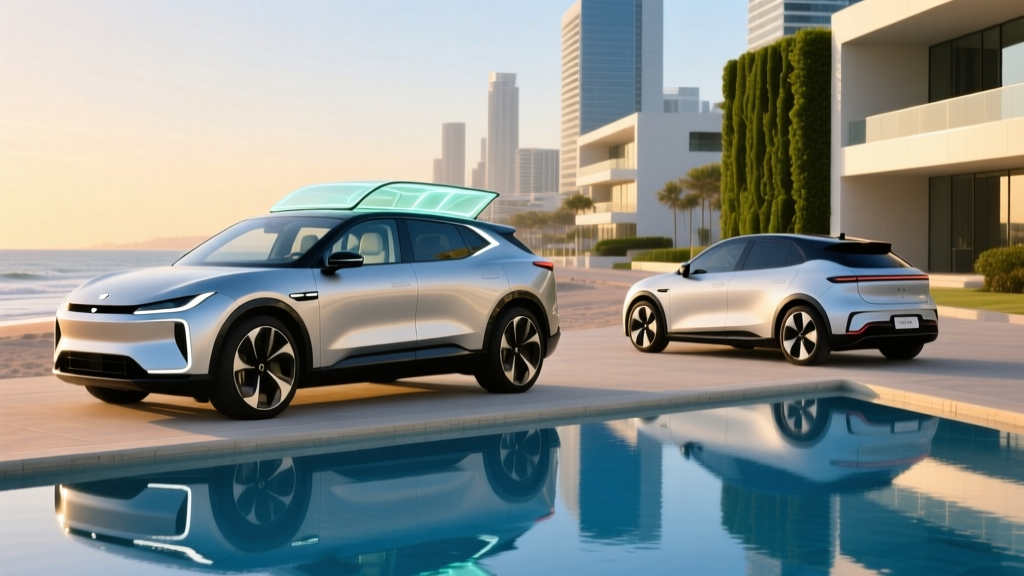
The Fisker Ocean was the company's sole production vehicle — a midsize electric SUV built on a platform developed with Magna Steyr in Austria. It launched for the 2023 model year in three primary trims. Here are the confirmed specifications based on EPA data and Fisker's published specs before the company's collapse:
| Spec | Ocean Sport (FWD) | Ocean Ultra / Extreme (AWD) |
|---|---|---|
| EPA Range | 250 miles | 360 miles (Extreme, w/ Hyper Range pack) |
| Battery Capacity (usable) | ~71 kWh (Touring pack, NMC) | ~113 kWh (Hyper Range pack, NMC) |
| Battery Chemistry | NMC (Nickel Manganese Cobalt) | NMC |
| Horsepower | 275 hp | 564 hp (Boost mode) |
| 0-60 mph | 6.9 seconds | 3.7 seconds (Boost mode) |
| Drivetrain | Single-motor FWD | Dual-motor AWD |
| MPGe (combined) | ~93 MPGe | ~87 MPGe (Extreme) |
| Efficiency | ~36 kWh/100 mi | ~39 kWh/100 mi |
| Cargo Volume (rear seats up) | 32.5 cu ft | 32.5 cu ft |
| Cargo Volume (rear seats folded) | 68.3 cu ft | 68.3 cu ft |
| Rear Legroom | 38.2 inches | 38.2 inches |
| Base MSRP (at launch) | $37,499 | $68,999 (Extreme) |
Charging Performance: DC Fast Charging and Home Level 2
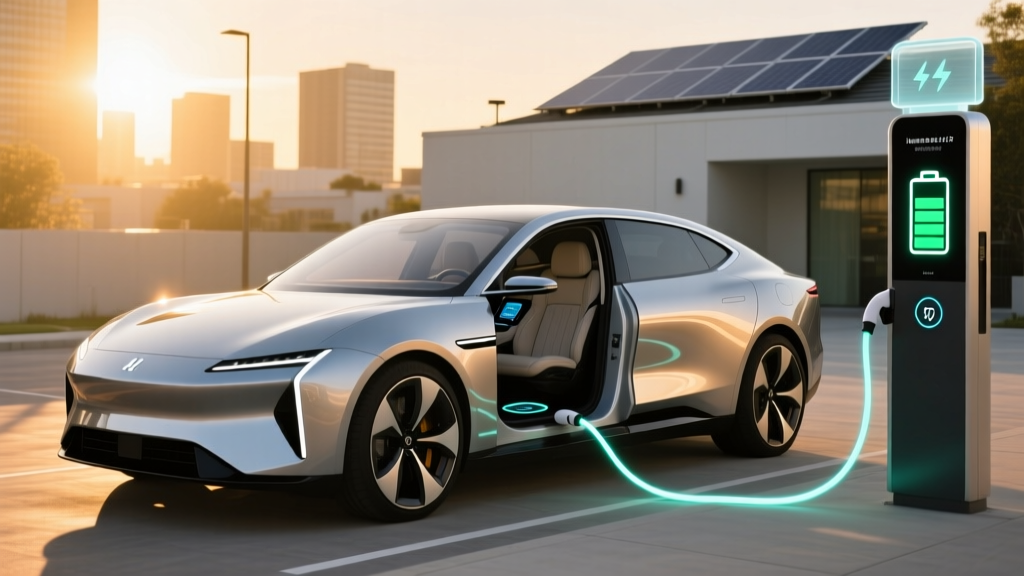
Charging speed was one of the Fisker Ocean's weaker points compared to rivals like the Hyundai Ioniq 5 or Tesla Model Y. The Ocean's electrical architecture was limited to 400 volts (not the 800V systems found on Hyundai/Kia/Genesis EVs), which capped its DC fast-charging potential.
| Charging Level | Power / Rate | Speed |
|---|---|---|
| Level 1 (120V household) | ~1.4 kW | ~3-4 miles per hour |
| Level 2 (240V home/public) | 11 kW onboard charger | ~25-30 miles per hour; full charge in ~10-11 hrs (Hyper Range) |
| DC Fast Charge (peak) | Up to ~175 kW (Hyper Range pack) | 10-80% in approximately 35-40 minutes |
| DC Fast Charge (Sport/Touring) | Up to ~150 kW | 10-80% in approximately 30-35 minutes |
Charging curve reality: The Ocean's peak DC charge rate of ~175 kW was only sustained briefly between roughly 15-40% state of charge. Above 60% SoC, the curve tapered significantly, dropping below 75 kW. This meant the advertised 10-80% time of ~35 minutes was achievable under ideal conditions (preconditioned battery, moderate ambient temperature, a functional 350 kW CCS station), but real-world sessions at Electrify America or EVgo stations often stretched to 40-50 minutes due to station power-sharing and battery temperature management.
The Ocean used the CCS1 connector standard. With the industry's ongoing shift to NACS (Tesla's connector), Fisker never released a NACS adapter for the Ocean — a complication for used buyers wanting access to Tesla Superchargers without third-party workarounds.
Technology, Driver Assists, and the California Mode
Fisker positioned the Ocean as a tech-forward, sustainability-focused SUV. Key features included:
- Fisker Intelligent Pilot: A Level 2 driver-assistance system (SAE Level 2 — the driver must remain fully engaged and hands on or near the wheel). It bundled adaptive cruise control, lane centering, and automatic emergency braking. It was not competitive with Tesla's Autopilot or GM's Super Cruise in real-world refinement.
- California Mode: A one-touch feature that simultaneously lowered all windows and opened the rear hatch glass for an open-air driving experience — the Ocean's most distinctive party trick.
- Solar Roof (Extreme trim): Integrated photovoltaic cells on the roof that Fisker claimed could add up to 1,500 miles of range per year under ideal conditions. In practice, real-world gains were closer to 500-800 miles annually depending on climate and parking habits — roughly 1-2 miles of range per sunny day of parking.
- 17.1-inch Rotating Infotainment Screen: A large central touchscreen that could rotate from landscape to portrait orientation. Software was Android-based but suffered from sluggish response times and limited third-party app support at launch. Over-the-air updates were planned but became uncertain after bankruptcy.
- Revolve Seat (Extreme): The front passenger seat could rotate 90 degrees toward the door for easier entry/exit and a lounge-like feel when parked.
Pricing, Depreciation, and the Tax Credit Question
The Fisker Ocean's pricing story is one of the most dramatic in modern EV history. At launch, MSRPs ranged from $37,499 (Sport) to $68,999 (Extreme). During Fisker's financial collapse in mid-2024, remaining new inventory was liquidated at massive discounts — with reports of Ocean Extreme models selling for $25,000-$35,000 and Sport trims going for under $20,000 through auction channels.
| Trim | Original MSRP | 2024 Liquidation Price (approx.) | 2026 Used Market (est.) | §30D Federal Credit Eligibility |
|---|---|---|---|---|
| Ocean Sport | $37,499 | $17,000-$22,000 | $14,000-$19,000 | Not eligible (new credit required manufacturer certification; used credit up to $4,000 may apply if dealer qualifies and buyer meets income caps) |
| Ocean Ultra | $52,999 | $22,000-$28,000 | $18,000-$24,000 | Same as above — used-EV credit only |
| Ocean Extreme | $68,999 | $25,000-$35,000 | $22,000-$30,000 | Same as above — used-EV credit only |
Federal tax credit details (IRS §30D and §25E): Because Fisker Inc. no longer exists as a functioning manufacturer, the new-vehicle §30D credit ($7,500) is no longer applicable. However, buyers purchasing a used Fisker Ocean from a licensed dealer may qualify for the §25E Used Clean Vehicle Credit of up to $4,000 (or 30% of the sale price, whichever is less). Key requirements per the IRS include:
- The vehicle must be purchased from a licensed dealer (not a private party).
- The sale price must be $25,000 or less.
- Buyer adjusted gross income must not exceed $75,000 (single), $112,500 (head of household), or $150,000 (joint filers).
- The credit can be transferred to the dealer at point of sale for an immediate price reduction.
- The vehicle must be at least two model years old (the 2023 Ocean qualifies in 2026).
Consult a tax professional to confirm eligibility — rules are subject to legislative change.
The Warranty Problem: What Coverage Remains?
This is the single biggest risk factor for anyone considering a used Fisker Ocean. At launch, Fisker offered:
- Basic vehicle warranty: 6 years / 60,000 miles
- Battery and powertrain warranty: 6 years / 60,000 miles (with a capacity retention threshold of approximately 70% over the warranty period)
With Fisker Inc. dissolved, these warranties are effectively unenforceable. There is no manufacturer to process claims, authorize repairs, or supply proprietary parts. Some third-party extended warranty companies have offered limited coverage for Fisker Oceans, but terms vary widely and exclusions are significant.
Parts availability: The Ocean was built by Magna Steyr in Graz, Austria, using a mix of proprietary Fisker components and supplier-sourced parts. Body panels, the rotating screen mechanism, the solar roof assembly, and Fisker-specific software modules are extremely difficult to source. Collision repair and drivetrain service remain major concerns. Independent EV shops can handle basic maintenance (brake fluid, cabin filters, tire rotation), but high-voltage system repairs require specialized diagnostic tools that were never widely distributed outside Fisker's authorized service network.
Fisker Pear, Alaska, Ronin: Will Any Future Models Arrive?
Fisker announced three additional models before its collapse:
- Fisker Pear: A compact crossover planned at a ~$29,900 starting price, to be built by Foxconn in Lordstown, Ohio. Targeted for 2025 production.
- Fisker Alaska: An electric pickup truck with a claimed 340+ mile range and a "Houdini" trunk/bed feature.
- Fisker Ronin: A limited-production electric GT convertible priced above $100,000.
Status as of 2026: None of these vehicles entered production. The Pear program was effectively terminated when Fisker's partnership with Foxconn unraveled during bankruptcy proceedings. The Alaska and Ronin remained prototype-stage concepts. There is no credible indication that any entity has acquired the tooling, IP, or production agreements necessary to resume these programs. Treat any online listings or pre-order pages for these models as non-functional.
Fisker Ocean vs. Key Competitors: Is It Worth the Risk?
Pros
- Distinctive design with standout features (California Mode, solar roof, rotating screen)
- 360-mile EPA range on Extreme trim rivals the best in class
- Spacious interior with 38.2" rear legroom and 68.3 cu ft max cargo
- Liquidation pricing makes it one of the cheapest long-range EVs available used
- 564 hp AWD performance on Ultra/Extreme trims
Cons
- No manufacturer support — warranty is effectively void
- Proprietary parts are scarce; collision repair is a major risk
- Software bugs were widespread at launch; no OTA updates forthcoming
- DC fast charging slower than rivals (175 kW peak vs. 250-350 kW on competitors)
- CCS1-only connector; no official NACS adapter for Tesla Supercharger access
- Insurance costs may be elevated due to parts scarcity
- Resale value is highly uncertain
Compared to a used Tesla Model Y, Hyundai Ioniq 5, or Ford Mustang Mach-E from the same model year, the Fisker Ocean offers more range per dollar on the used market. But those competitors come with active manufacturer support, established service networks, ongoing software updates, and vastly better parts availability. For most buyers, the savings on a used Ocean don't adequately compensate for the orphan-brand risk.
Who Should (and Shouldn't) Consider a Used Fisker Ocean
Consider it if:
- You're an EV-experienced owner with access to an independent EV mechanic
- You want a distinctive, head-turning design at a bargain price
- You primarily drive locally and can charge at home (minimizing DC fast-charge dependency)
- You're comfortable self-insuring against major repair costs
- You view the purchase as a depreciating daily driver, not a long-term keeper
Avoid it if:
- You need reliable warranty coverage and dealer service access
- You take frequent road trips and depend on public charging infrastructure
- You're a first-time EV buyer who wants a supported, worry-free ownership experience
- You plan to keep the vehicle beyond 2-3 years (resale trajectory is unpredictable)
- You live in an area without independent shops experienced in high-voltage EV repair
Frequently Asked Questions
What is the real-world range of the Fisker Ocean?
The Ocean Extreme (113 kWh Hyper Range pack) is EPA-rated at 360 miles, but expect 290-320 miles in real-world highway driving and 220-260 miles in cold weather. The Ocean Sport (71 kWh pack) is rated at 250 miles EPA, with roughly 200-215 miles achievable in mixed highway use.
How fast does the Fisker Ocean charge?
On a DC fast charger, the Ocean Extreme peaks at ~175 kW and charges from 10-80% in approximately 35-40 minutes under ideal conditions. At home on Level 2 (240V), the 11 kW onboard charger adds about 25-30 miles per hour. The Ocean is slower to fast-charge than rivals with 800V architectures (Hyundai Ioniq 5: 10-80% in ~18 minutes at 250 kW).
Does the Fisker Ocean qualify for any federal tax credit in 2026?
The new-vehicle §30D credit is no longer available. However, a used Ocean purchased from a licensed dealer for $25,000 or less may qualify for the §25E Used Clean Vehicle Credit of up to $4,000, subject to buyer income limits ($75K single / $150K joint) and other IRS requirements. Always verify with a tax professional.
Can I get the Fisker Ocean serviced?
Fisker's authorized service network no longer exists. Basic maintenance (tires, brakes, cabin filters) can be done at any competent shop. However, high-voltage battery diagnostics, proprietary software issues, and collision repair involving Fisker-specific body panels or the solar roof are extremely difficult to address. Parts availability is the primary concern.
Will the Fisker Pear or other announced models ever be produced?
No. Fisker Inc. ceased operations in 2024. The Pear (compact crossover), Alaska (pickup), and Ronin (GT convertible) were all pre-production concepts that never reached manufacturing. No successor entity has revived these programs as of 2026.
Is buying a used Fisker Ocean a good deal?
On pure price-per-mile-of-range, a used Ocean at $18,000-$25,000 is compelling. But the total cost of ownership must factor in zero warranty coverage, scarce parts, uncertain insurance costs, and near-certain steep depreciation. For risk-tolerant buyers with EV experience and home charging, it can work. For most shoppers, a used Model Y, Ioniq 5, or Mach-E — even at a higher price — offers far less ownership risk.