Quick Answer: Is a Lux Electric Car Worth It?
A luxury electric car makes financial sense if you can charge at home, drive 10,000–15,000 miles annually, and qualify for the federal §30D tax credit (up to $7,500 at point of sale). Expect to pay $55,000–$95,000 before incentives, gain 280–400 miles of EPA range, and save $1,200–$2,200 per year on fuel and maintenance compared to a comparable gas luxury sedan or SUV. The biggest risks: public charging reliability on road trips, cold-weather range loss of 20–30%, and higher insurance premiums averaging 15–25% above gas equivalents.
What Defines the Lux Electric Car Segment in 2026
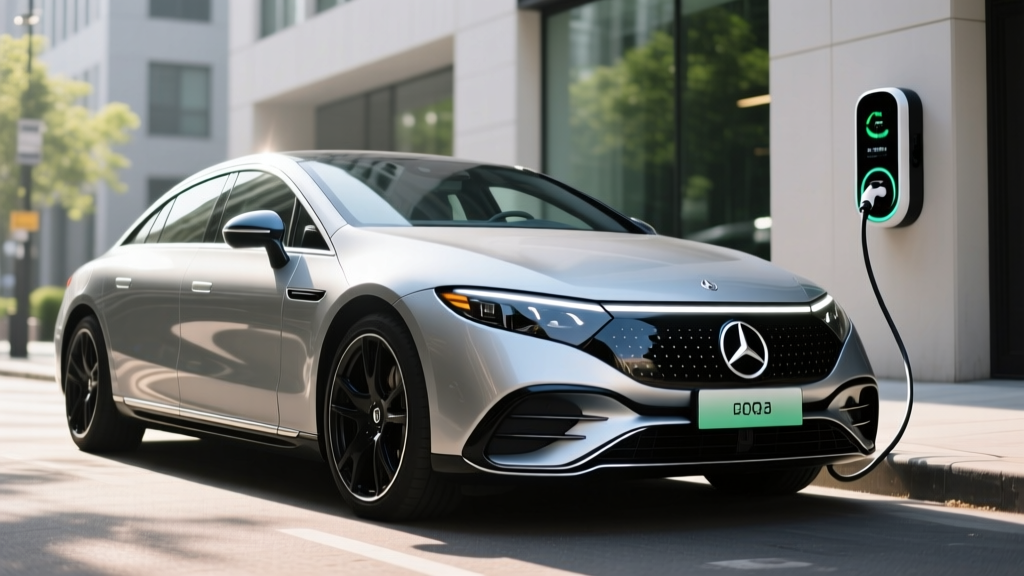
The luxury EV market has matured well beyond early adopters. Today's premium electric vehicles compete directly with the BMW 5 Series, Mercedes E-Class, Porsche Cayenne, and Range Rover on refinement — while offering instant torque, lower running costs, and advanced driver-assistance tech. The segment spans from the Tesla Model S ($84,990 base) and BMW i5 eDrive40 ($70,200) to the Lucid Air Pure ($69,900) and Mercedes EQS 450+ ($104,400).
What separates a luxury EV from a mainstream one isn't just leather and wood trim. It's battery capacity (typically 85–118 kWh usable), DC fast-charge architecture (250–350 kW peak), air suspension, acoustic glass, and SAE Level 2+ driver-assistance suites. Buyers in this segment expect 300+ miles of real-world range, 10–80% fast charging under 25 minutes, and a cabin that isolates them from road noise at 80 mph.
Real Range and Efficiency: EPA vs the Real World
Luxury EVs carry large battery packs, but heavy curb weights (4,500–5,500 lbs) and wide performance tires reduce efficiency. Here's how the top contenders actually perform:
| Model (2026) | Battery (kWh usable) | Chemistry | EPA Range | Real-World Highway* | MPGe Combined | Peak DC kW | 10–80% Time |
|---|---|---|---|---|---|---|---|
| Lucid Air Pure (RWD) | 88 | NMC | 419 mi | ~340 mi | 146 | 250 kW | ~22 min |
| Tesla Model S (LR AWD) | 95 | NMC | 402 mi | ~310 mi | 124 | 250 kW | ~25 min |
| BMW i5 eDrive40 | 84.3 | NMC | 295 mi | ~240 mi | 97 | 205 kW | ~28 min |
| Mercedes EQS 450+ Sedan | 107.8 | NMC | 390 mi | ~300 mi | 97 | 200 kW | ~31 min |
| Porsche Taycan 4S (PA) | 105 | NMC | 318 mi | ~260 mi | 87 | 320 kW | ~18 min |
*Real-world highway estimates assume 70–75 mph cruising, moderate climate control use, and 65°F. Cold weather (below 32°F) reduces these figures by an additional 20–30% due to battery chemistry limitations and cabin heating load. Data sourced from fueleconomy.gov and manufacturer specifications.
Charging at Home and on the Road: What Lux EV Owners Actually Face
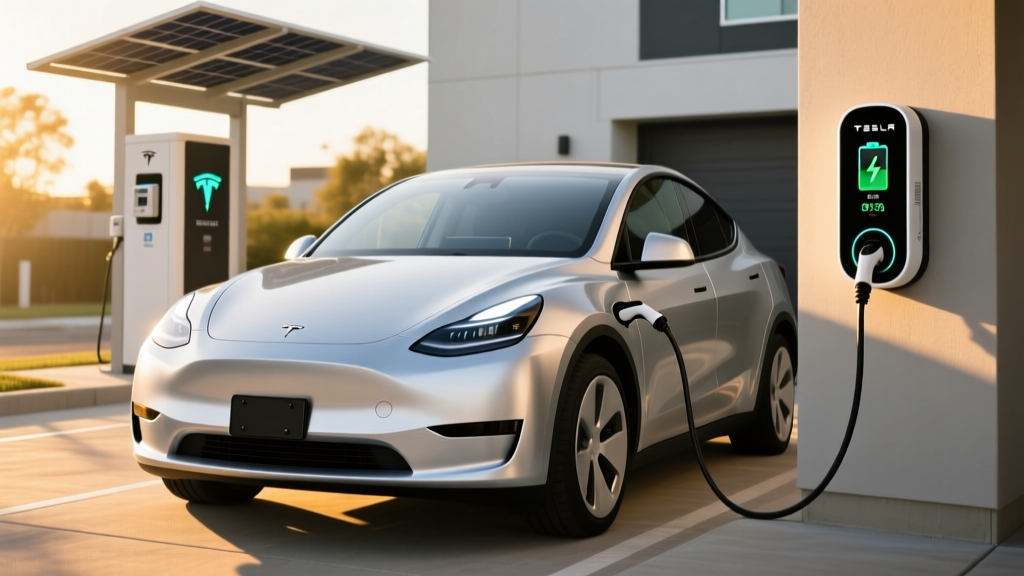
Luxury EV buyers disproportionately have access to home charging — garages in single-family homes are the norm for this demographic. But installation isn't trivial. Most luxury EVs accept 11.5 kW on Level 2 (48 amps), requiring a 60-amp dedicated circuit on a 200-amp home panel.
| Level | Power (kW) | Miles Added/Hour | Typical Use Case |
|---|---|---|---|
| Level 1 (120V) | 1.2–1.4 kW | 3–5 mi/hr | Overnight trickle; emergency only |
| Level 2 (240V, 48A) | 11.5 kW | 30–40 mi/hr | Primary home charging; full overnight refill |
| DC Fast Charge | 200–350 kW | 600–1,200 mi/hr | Road trips; 10–80% in 18–31 min |
Home installation cost for a hardwired Level 2 station (like a ChargePoint Home Flex or Tesla Wall Connector) runs $800–$1,600 total: $500–$700 for the unit, $300–$900 for electrician labor and permitting. If your panel needs an upgrade from 100A to 200A, add $1,500–$3,000. A licensed electrician should always perform the final assessment.
On the road, the charging landscape has consolidated around the NACS (Tesla) and CCS1 standards. BMW, Mercedes, Lucid, and Porsche now ship with NACS ports or include CCS-to-NACS adapters, granting access to Tesla's 20,000+ Supercharger network — the most reliable DC fast-charging infrastructure in the US. Public DC fast-charging costs $0.30–$0.55/kWh depending on network and location, translating to roughly $30–$55 for a 10–80% session in a luxury EV.
Lux Electric Car vs Gas: The 5-Year Cost Breakdown
The headline advantage of a lux electric car is running-cost savings. But the upfront premium, insurance costs, and depreciation curves tell a more nuanced story. Here's a realistic 5-year / 60,000-mile comparison between a BMW i5 eDrive40 ($70,200) and its gas sibling, the BMW 530i xDrive ($61,200):
| Cost Category | BMW i5 eDrive40 (EV) | BMW 530i xDrive (Gas) | EV Savings |
|---|---|---|---|
| MSRP (before incentives) | $70,200 | $61,200 | –$9,000 |
| Federal §30D Tax Credit | –$3,750* | $0 | +$3,750 |
| State Incentive (avg) | –$1,500 | $0 | +$1,500 |
| Home Charger Install | $1,200 | $0 | –$1,200 |
| Fuel / Electricity (5 yr) | $4,200** | $10,800*** | +$6,600 |
| Maintenance (5 yr) | $1,800 | $4,500 | +$2,700 |
| Insurance (5 yr) | $14,400 | $11,400 | –$3,000 |
| Est. Depreciation (5 yr) | $32,000 | $27,000 | –$5,000 |
| Net 5-Year Cost | $84,600 | $83,100 | –$1,500 |
*The BMW i5 eDrive40 qualifies for $3,750 under §30D (partial critical-minerals compliance). Credit eligibility depends on buyer income caps ($150K single / $300K joint for new vehicles), MSRP limits ($55K sedans — the i5 exceeds this, so the credit is typically available only on used i5 models or via point-of-sale lease structures). Always verify current rules at IRS.gov §30D and consult a tax professional.
**Based on $0.14/kWh home charging and $0.42/kWh public DC fast charging, mixed 80/20.
***Based on 28 MPG combined and $3.60/gal premium unleaded.
Federal Tax Credits and Incentives: What Lux EV Buyers Actually Qualify For
The §30D federal tax credit is the most misunderstood part of buying a luxury EV. Here are the hard rules for 2026:
- MSRP Cap: $55,000 for sedans; $80,000 for SUVs, vans, and trucks. Many luxury EV sedans (Model S, EQS, Lucid Air) exceed the sedan cap and do NOT qualify for the new-vehicle credit.
- Income Cap: Modified AGI ≤ $150,000 (single), $225,000 (head of household), $300,000 (joint).
- Battery Sourcing: Up to $3,750 requires critical-minerals sourcing from US or FTA partners; up to $3,750 requires battery components manufactured in North America. Both halves phase in stricter thresholds annually.
- Point-of-Sale Transfer: You can transfer the credit to the dealer at purchase, reducing your out-of-pocket price immediately — no need to wait for tax filing.
- Lease Loophole: Under §45W (commercial clean vehicle credit), the leasing company claims the credit and may pass savings as a reduced lease payment. This bypasses MSRP and income caps entirely. Many luxury EV buyers use this path.
SUVs like the BMW iX xDrive50 ($87,250 MSRP, under the $80K cap on qualifying trims), Tesla Model X ($79,990), and Rivian R1S ($75,900) may qualify for partial or full credits depending on the buyer's income and the vehicle's battery-sourcing compliance for the model year. Always check the latest eligible-vehicle list on fueleconomy.gov.
Common Misconceptions About Luxury EVs
| Myth | Fact |
|---|---|
| "EV batteries need replacing every 5–7 years." | Modern NMC and LFP packs retain 85–92% capacity at 100,000 miles. Federal warranty mandates 8 years/100,000 miles minimum. BMW and Mercedes warrant 8 yr/100K mi at 70% capacity retention. Real-world data from Tesla fleets shows ~12% degradation at 150,000 miles. |
| "Public charging is too unreliable for road trips." | Tesla Superchargers maintain 99.5%+ uptime. Electrify America and EVgo have improved to ~95% uptime. NACS adoption means luxury EVs now access the most reliable network. Plan stops with A Better Routeplanner for redundancy. |
| "EVs are worse in winter." | Range drops 20–30% in sub-freezing temps — real, but manageable with preconditioning and a heat pump (standard on most 2026 luxury EVs). A 350-mile EPA car still delivers 250+ miles in cold weather, sufficient for most daily drives. |
| "A lux electric car can't match a gas car's performance." | The Taycan Turbo GT does 0–60 in 2.1 seconds. The Model S Plaid hits it in 1.99 seconds. Electric torque delivery is instant — no turbo lag, no downshift wait. The performance gap favors EVs in real-world acceleration. |
| "Insurance is impossibly expensive." | Premiums run 15–25% higher than gas equivalents, not double. Average luxury EV insurance: $220–$300/month depending on state and driving record. Tesla Insurance and manufacturer-partnered programs can reduce this. |
Decision Framework: Which Lux Electric Car Fits Your Life?
Choose a Lucid Air Pure if:
- Maximum range is your top priority (419 mi EPA, best-in-class efficiency)
- You take frequent 200–350 mile road trips and want fewer charge stops
- You value cabin space and a full-size sedan over badge prestige
Choose a Tesla Model S Long Range if:
- Supercharger network access without adapters is a must
- You want the fastest 0–60 time available (3.1 sec LR, 1.99 sec Plaid)
- Over-the-air updates and software integration matter to you
Choose a BMW i5 or iX if:
- Traditional luxury build quality and dealer service network are priorities
- You prefer a familiar luxury brand experience with EV benefits
- Leasing through BMW Financial to capture the §45W credit makes sense for your budget
Choose a Porsche Taycan if:
- Driving dynamics and chassis tuning are non-negotiable
- 800V architecture and 320 kW peak charging speed matter for your road-trip pattern
- You accept lower range (260–318 mi EPA) in exchange for handling and charge speed
Skip the lux electric car and consider a PHEV if:
- You lack home charging access and rely on street parking
- Your driving pattern includes frequent 500+ mile trips through charging deserts (rural Mountain West, parts of the Plains)
- You want electric commuting (25–40 mi EV range) with gas flexibility — look at the BMW X5 xDrive50e or Porsche Cayenne E-Hybrid
Frequently Asked Questions
How long does a luxury EV battery actually last?
Based on current degradation data, a well-maintained NMC battery in a luxury EV retains 85–90% of original capacity at 100,000 miles and 78–85% at 200,000 miles. All 2026 luxury EVs carry a minimum 8-year/100,000-mile battery warranty (mandated by federal law), with BMW, Mercedes, and Lucid warranting 70% capacity retention. Full battery replacement costs $15,000–$28,000 out of warranty, but most packs outlast the vehicle's economic life.
Is a lux electric car cheaper to maintain than a gas luxury car?
Yes, significantly. EVs eliminate oil changes, spark plugs, transmission fluid, timing belts, and exhaust system repairs. Regenerative braking extends brake pad life to 80,000–120,000 miles. Annual maintenance on a luxury EV averages $300–$500 vs $900–$1,500 for a comparable gas BMW or Mercedes. Tire replacement is the main EV-specific cost — heavier weight and instant torque wear tires 15–20% faster, budgeting $1,200–$2,000 every 25,000–35,000 miles for a premium set.
Can I daily-charge to 100% without damaging the battery?
For NMC chemistry (used in nearly all luxury EVs), daily charging to 80% is recommended for longevity. Charging to 100% occasionally for road trips is fine. If your daily commute is under 100 miles, setting a charge limit to 70–80% via the vehicle's app will meaningfully slow long-term degradation. LFP batteries (rare in luxury EVs but used in some Tesla trims) tolerate daily 100% charging without concern.
What happens if I can't install a home charger?
Without home charging, luxury EV ownership becomes significantly less convenient and more expensive. Public DC fast charging costs 2–3x more per kWh than home charging and adds 20–40 minutes to your week. If you live in an apartment or condo without charging access, consider a PHEV instead — or advocate for your building to install shared Level 2 stations. Some luxury EV owners without home charging rely on workplace charging or Tesla Destination Chargers at local businesses, but this requires planning and isn't a long-term solution for most buyers.
Do luxury EVs qualify for the $7,500 federal tax credit?
Most luxury EV sedans do NOT qualify for the full $7,500 new-vehicle credit because they exceed the $55,000 MSRP cap for sedans. SUVs under $80,000 MSRP (like certain iX, Model X, and R1S trims) may qualify partially. The most reliable path for luxury EV buyers is leasing: the dealer claims the §45W commercial credit and typically passes $5,000–$7,500 in savings through as a capitalized-cost reduction. Always verify eligibility at IRS.gov before signing.