Quick Answer: Which GM Electric Car Should You Buy First?
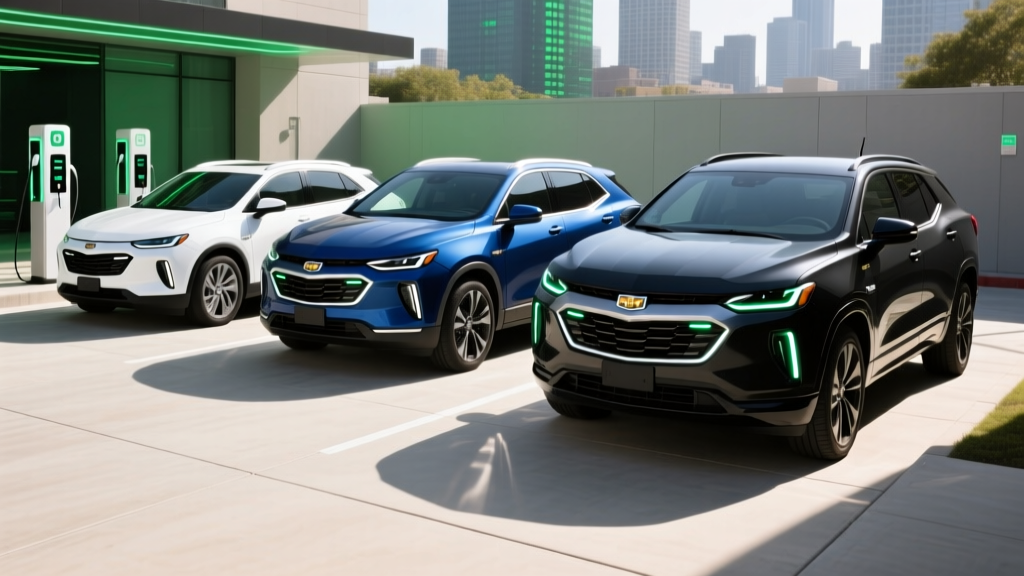
If you're shopping for your first GM electric car in 2026, the Chevrolet Equinox EV (starting around $33,600, EPA range up to 319 miles) is the best entry point for most buyers — it offers the lowest price-to-range ratio in GM's Ultium lineup. Choose the Blazer EV if you need more cargo space and faster DC charging (up to 190 kW). Choose the Silverado EV only if you need truck utility and can absorb the higher MSRP. All three use GM's Ultium battery platform with NMC chemistry and qualify for varying levels of the federal §30D tax credit depending on your income, the vehicle's MSRP, and battery-sourcing compliance.
GM's 2026 EV Lineup: The Ultium Platform Explained
General Motors built its current electric lineup on the Ultium platform — a modular battery architecture using nickel-manganese-cobalt (NMC) lithium-ion cells in a pouch format. Unlike some competitors that have moved to lithium iron phosphate (LFP) for base trims, GM has standardized on NMC across its mainstream EVs, prioritizing energy density over cycle-life longevity. The practical trade-off: NMC packs deliver more miles per kilogram of battery, but they degrade slightly faster over thousands of charge cycles and are more sensitive to sustained high-state-of-charge storage.
GM's battery warranty covers 8 years / 100,000 miles with a capacity-retention threshold of 70% — meaning if your pack drops below 70% of original capacity within that window, GM will repair or replace it. This is consistent with industry norms (Hyundai offers 10/100,000; Tesla offers 8/100,000 at 70%).
For a first-time EV buyer, the key Ultium specs to understand:
- Battery capacity: Ranges from ~85 kWh usable (Equinox EV) to ~200+ kWh (Silverado EV max-range)
- Architecture: 400V nominal (not 800V like Hyundai/Kia E-GMP), which caps peak DC fast-charge speeds
- Thermal management: Active liquid cooling and heating — essential for preserving battery health in extreme climates
- Connector: NACS (Tesla-style) as of the 2025 model year, giving access to Tesla Supercharger networks via native port
Model-by-Model Breakdown: Equinox EV, Blazer EV, and Silverado EV
| Spec | 2026 Equinox EV | 2026 Blazer EV | 2026 Silverado EV |
|---|---|---|---|
| Base MSRP | ~$33,600 | ~$44,600 | ~$55,900 |
| EPA Range (max config) | 319 mi | 324 mi | 440 mi (Max Range) |
| Battery (usable, est.) | ~85 kWh | ~102 kWh | ~200 kWh (Max Range) |
| Chemistry | NMC (Ultium) | NMC (Ultium) | NMC (Ultium) |
| Peak DC Charge Rate | ~150 kW | ~190 kW | ~200 kW |
| 10–80% DC Fast Charge | ~32 min | ~28 min | ~42 min |
| Level 2 (240V) Rate | 11.5 kW (~34 mi/hr) | 11.5 kW (~34 mi/hr) | 11.5 kW (~34 mi/hr) |
| Horsepower | up to 213 hp (FWD) / 288 hp (AWD) | up to 288 hp (AWD) / 557 hp (SS) | up to 510 hp (AWD) |
| 0–60 mph | ~8.0 sec (FWD) | ~7.0 sec (AWD) / ~4.0 sec (SS) | ~4.5 sec |
| Cargo Volume | 26.4 cu ft (rear seats up) | 25.5 cu ft (rear seats up) | ~57 cu ft (bed + frunk) |
| Towing Capacity | Not rated | 1,500 lbs | 10,000 lbs (max config) |
| Battery Warranty | 8 yr / 100,000 mi | 8 yr / 100,000 mi | 8 yr / 100,000 mi |
Real-World Range vs. EPA Sticker
EPA estimates assume mixed driving at moderate temperatures. Here's what to actually expect:
- Highway-only (70–75 mph): Subtract 15–20% from EPA. A 319-mi Equinox EV delivers roughly 255–270 miles on a flat highway run in fair weather.
- Cold weather (below 30°F): Subtract 20–30%. The same Equinox EV may deliver 220–255 miles in winter conditions, depending on cabin heat usage and whether you precondition.
- Towing (Silverado EV): Subtract 40–50%. The 440-mile Max Range Silverado EV towing a 6,000-lb trailer will realistically cover 220–260 miles before needing a charge.
Always plan road trips around the worst-case scenario, not the sticker.
Charging Your First GM EV: Home Setup and Public Networks
The single most important ownership variable for your first GM electric car is home charging access. If you can install a Level 2 charger, daily ownership becomes effortless — you wake up every morning with a full "tank." If you can't, public-charging dependency introduces real friction and cost.
| Level | Power | Miles Added per Hour | Use Case |
|---|---|---|---|
| Level 1 (120V outlet) | ~1.4 kW | ~3–4 mi/hr | Overnight top-ups; sufficient if you drive <30 mi/day |
| Level 2 (240V, home) | ~11.5 kW | ~34 mi/hr | Daily charging; full overnight replenishment for all GM EVs |
| DC Fast Charge | 150–200 kW | ~180–240 mi/hr (peak) | Road trips; 10–80% in 28–42 minutes depending on model |
| Item | Typical Cost Range |
|---|---|
| Level 2 charger (hardware) | $300–$700 |
| Electrician labor (240V/50A circuit) | $600–$2,000 |
| Permit & inspection | $50–$300 |
| Panel upgrade (if needed, 100A→200A) | $1,500–$3,500 |
| Total (no panel upgrade) | $950–$3,000 |
| Total (with panel upgrade) | $2,450–$6,500 |
Connector note: Starting with the 2025 model year, GM EVs ship with a native NACS port, granting direct access to Tesla Supercharger stalls without an adapter. This is a significant advantage for road-trip charging, as Tesla's Supercharger network remains the most reliable DC fast-charging network in the U.S. according to multiple owner surveys. For Electrify America, EVgo, and other CCS-based networks, GM provides a CCS adapter or you can use stations that have been retrofit with NACS connectors.
Cost of Ownership: EV vs. Gas vs. Hybrid
Let's put concrete numbers behind the purchase decision. Below is a 5-year total-cost-of-ownership comparison for the Equinox EV against its gas counterpart (the Equinox AWD with a 1.5L turbo) and a comparable hybrid crossover. Assumptions: 15,000 miles/year, $0.14/kWh national average electricity, $3.40/gallon regular gas, home Level 2 charging for the EV.
| Cost Category | Equinox EV (LT2 AWD) | Gas Equinox (AWD) | Comparable Hybrid Crossover |
|---|---|---|---|
| Purchase Price (MSRP) | $41,900 | $32,500 | $35,000 |
| Federal Tax Credit (§30D) | Up to $7,500* | $0 | $0 (HEV ineligible) |
| Effective Purchase Price | $34,400 | $32,500 | $35,000 |
| Fuel/Energy (5 yr / 75k mi) | $3,940 | $9,560 | $6,375 |
| Maintenance (5 yr) | $1,200 | $3,800 | $3,200 |
| Insurance (5 yr, avg) | $8,500 | $6,800 | $7,200 |
| 5-Year Total | $48,040 | $52,660 | $51,775 |
*§30D credit eligibility depends on buyer income (≤$150k single / ≤$300k joint), vehicle MSRP caps ($55k for SUVs), battery critical-mineral and component sourcing rules, and point-of-sale transfer availability. Always verify current-year rules at IRS.gov §30D and consult a tax professional.
The EV wins on fuel and maintenance — electric motors have no oil changes, no spark plugs, and regenerative braking dramatically extends brake-pad life. The gap comes from insurance, which runs 15–25% higher for EVs due to higher repair costs and battery-replacement risk. In this comparison, the Equinox EV breaks even with the gas model within roughly 3 years and pulls ahead from there.
Federal Tax Credit: What Actually Applies to GM EVs in 2026
The §30D Clean Vehicle Credit can reduce your federal tax liability by up to $7,500, split into two halves:
- $3,750 for meeting critical-minerals sourcing requirements
- $3,750 for meeting battery-component manufacturing requirements
§30D Eligibility Checklist (2026 Rules)
- ✅ Vehicle MSRP must be ≤$55,000 for SUVs/trucks (Equinox EV and Blazer EV qualify; Silverado EV trims vary)
- ✅ Buyer AGI must be ≤$150,000 (single) or ≤$300,000 (joint filing)
- ✅ Battery must meet critical-mineral and component sourcing thresholds (increasing annually — check current-year fueleconomy.gov listings)
- ✅ Vehicle must be assembled in North America (all current GM Ultium EVs are)
- ✅ Credit can be transferred to the dealer at point of sale for an upfront price reduction
- ❌ Used EVs have a separate §25E credit (up to $4,000) with different caps
Critical caveat: Battery-sourcing rules tighten each year. A GM model that qualified for the full $7,500 in 2025 may qualify for only $3,750 or zero in 2026 depending on supply-chain shifts. Always check the vehicle's VIN against the official DOE/Fueleconomy.gov eligible-vehicle list before signing a purchase agreement.
Common First-Time EV Buyer Misconceptions
| Myth | Fact |
|---|---|
| "The battery will need replacing in 5 years and cost $20,000." | NMC Ultium packs are warrantied for 8yr/100k miles at 70% capacity. Industry data from NHTSA and long-term fleet studies show most modern packs retain 85–90% capacity at 100k miles. Full replacement is rare; individual module repair is more common and less expensive. |
| "I'll save $7,500 on every GM EV." | The §30D credit has income caps, MSRP caps, and sourcing rules that change annually. Some Silverado EV trims exceed the $55k SUV cap. Always verify by VIN. |
| "EVs don't work in cold climates." | Range drops 20–30% below 30°F — real and measurable. But with preconditioning (warming the battery while plugged in) and a heat pump, GM Ultium EVs remain practical in northern states. You just need to plan for reduced range in winter. |
| "Charging takes too long for road trips." | 10–80% in 28–42 minutes is the reality. Pair that with a 30-minute meal break every 250 miles and road trips are viable — though yes, slower than a 5-minute gas stop. The NACS connector gives GM owners access to the most reliable fast-charging network available. |
| "My electric bill will skyrocket." | At $0.14/kWh and 3.0 mi/kWh efficiency, an Equinox EV costs about $0.047/mile to fuel. That's roughly $70/month for 1,500 miles of driving — compared to ~$160/month for a gas Equinox at $3.40/gallon and 28 MPG combined. |
Decision Framework: Which GM Electric Car Is Right for You?
Choose Based on Your Actual Driving Life
Choose the Equinox EV if:
- Your budget is under $40,000 (after credit)
- You commute 30–60 miles daily and want minimal charging cost
- You don't need to tow
- You want the best value-per-mile-of-range in GM's lineup
Choose the Blazer EV if:
- You want a sportier drive (SS trim: 557 hp, ~4.0 sec 0–60)
- You need slightly faster DC charging for frequent road trips
- You prefer a larger, more premium crossover interior
- Budget stretches to ~$45,000–$52,000
Choose the Silverado EV if:
- You need a truck bed and up to 10,000-lb towing
- You want maximum range (440 mi EPA in Max Range trim)
- Budget is flexible ($55k–$80k+ depending on trim)
- You understand towing will cut range roughly in half
Choose a PHEV or gas vehicle instead if:
- You have no home-charging access and your area has limited public DC infrastructure
- You regularly drive 400+ miles in remote areas with sparse charging
- You live in extreme cold (below 0°F routinely) and cannot garage or precondition
First-Time EV Buyer FAQ
Do I need to install a home charger before my GM EV arrives?
It's strongly recommended. A Level 2 (240V/50A) home charger adds roughly 34 miles of range per hour of charging, meaning an overnight session fully replenishes any GM Ultium EV. Level 1 (standard 120V outlet) adds only 3–4 miles per hour — adequate only if you drive under 30 miles per day and have 10+ hours to charge overnight. Budget $950–$3,000 for a professional Level 2 installation (more if your electrical panel needs upgrading from 100A to 200A service). Consult a licensed electrician for a site-specific quote.
How does the GM Super Cruise system work — is it self-driving?
No. Super Cruise is a SAE Level 2 driver-assistance system. It handles steering, acceleration, and braking on pre-mapped divided highways, but you must remain attentive — an infrared camera monitors your eyes. If you look away for too long, the system escalates warnings and eventually disengages. It is not autonomous driving. Level 4 driverless capability (no human attention required) currently exists only in commercial robotaxi services like Waymo, not in consumer vehicles.
What happens if I run out of charge on the road?
The same thing that happens if you run out of gas: you need a tow to the nearest charger. GM's roadside assistance covers out-of-charge towing for the duration of the basic warranty. The practical prevention is trip planning — apps like A Better Routeplanner and the built-in GM Energy navigation system route you through charging stops with buffer. With 250–320 miles of real-world range, you'll typically stop every 2.5–3.5 hours on a highway trip.
Will my GM EV qualify for HOV lane access?
This varies by state. California's Clean Air Vehicle decals, for example, have specific income caps and program expiration dates. Check your state's DMV or department of transportation for current EV HOV-lane eligibility. Federal law does not govern this — it's entirely state-level.
How do I monitor my Ultium battery's health over time?
The myChevrolet (or myCadillac/myGMC) app includes a battery health indicator showing estimated State of Health (SoH). For a more granular view, third-party OBD-II tools like OBDeleven or ScanGauge can read individual cell voltages and pack-level degradation data. If you notice SoH dropping below 85% before 60,000 miles, contact your dealer — that trajectory could put you below the 70% warranty threshold before coverage expires.
Is it better to buy or lease a GM EV?
Leasing has a distinct advantage for first-time EV buyers: the lease loophole. Under current IRS rules, the §30D credit's battery-sourcing and MSRP restrictions apply to purchases, but a leased EV may qualify for the commercial clean-vehicle credit (§45W) claimed by the lessor, who can pass savings through as a reduced lease payment. This means some GM EVs that don't qualify for the $7,500 purchase credit may still offer equivalent savings through a lease. Ask the dealer to show you both purchase and lease scenarios side by side.
Buying your first GM electric car is a significant financial decision — and the Ultium lineup offers genuine value, particularly with the Equinox EV's price-to-range ratio. The keys to a good experience are realistic range expectations, confirmed home-charging access, verified tax-credit eligibility, and a clear understanding of what you're gaining (low fuel cost, minimal maintenance, instant torque) versus what you're trading (long road-trip stops, cold-weather range loss, higher insurance). Run your own numbers, check the EPA's fueleconomy.gov for verified range data, and test-drive with your actual commute in mind.