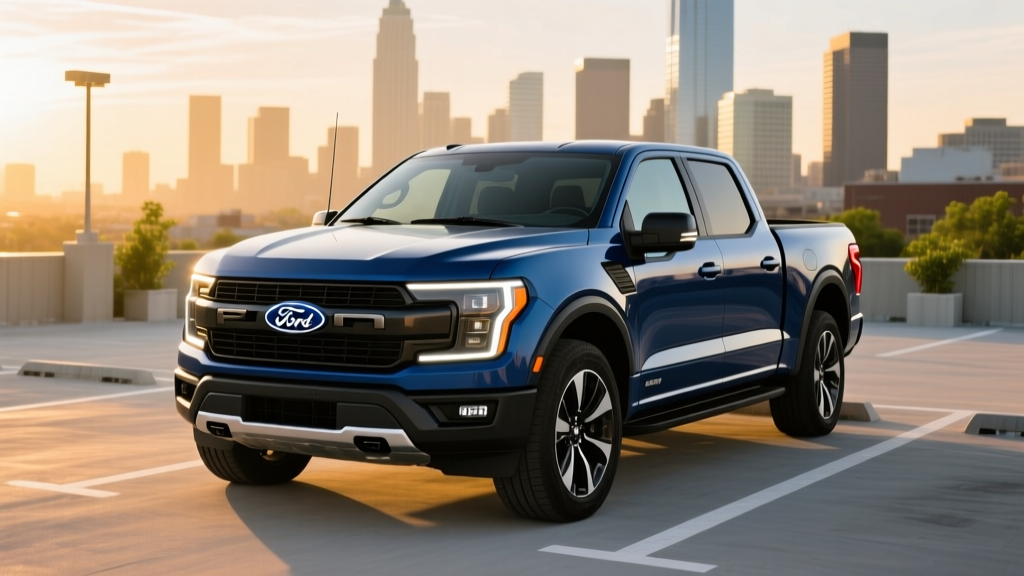
The Ford F-150 Lightning has spent several years proving that a full-size electric pickup can handle daily driving, job-site duty, and road trips without compromise on utility. For 2026, Ford has refined the lineup with updated battery options, revised pricing, and continued eligibility for the federal EV tax credit on select trims — making this one of the most compelling moments to shop for F-150 Lightning deals.
This review covers every number that matters: real-world range versus the EPA sticker, DC fast-charging speeds and the charge-curve taper, home charging requirements, and exactly how the IRS §30D tax credit applies to each trim. If you're cross-shopping the Lightning against the Rivian R1T, Chevrolet Silverado EV, or Tesla Cybertruck, this is the data you need.
2026 F-150 Lightning Specs at a Glance
| Spec | Standard Range | Extended Range |
|---|---|---|
| EPA Range | 230 miles | 320 miles |
| Battery (usable) | 98 kWh (NMC) | 131 kWh (NMC) |
| Horsepower | 580 hp | 580 hp |
| Torque | 775 lb-ft | 775 lb-ft |
| 0-60 mph | ~4.0 sec | ~3.8 sec |
| Drivetrain | AWD (dual-motor) | AWD (dual-motor) |
| Max DC Fast Charge | 150 kW | 150 kW |
| 10-80% DC Time | ~41 min | ~45 min |
| Level 2 Home Rate | 11.3 kW (~20 mi/hr) | 11.3 kW (~20 mi/hr) |
| Max Towing | 7,700 lbs | 10,000 lbs |
| Max Payload | 2,235 lbs | 1,952 lbs |
| MPGe (combined) | 68 MPGe | 66 MPGe |
| Efficiency | 49 kWh/100 mi | 51 kWh/100 mi |
Both battery packs use nickel-manganese-cobalt (NMC) chemistry, which delivers higher energy density than lithium iron phosphate (LFP) — important in a truck where packaging space for cells is finite. The trade-off is that NMC degrades slightly faster over time and prefers not to sit at 100% state of charge for extended periods. Ford's battery management system includes a substantial buffer to protect long-term health.
Real-World Range: What the EPA Sticker Doesn't Tell You
Standard Range (EPA 230 mi): Expect ~190-210 mi on the highway at 70+ mph; ~160-180 mi in cold weather (below 30°F).
Extended Range (EPA 320 mi): Expect ~260-285 mi on the highway at 70+ mph; ~220-250 mi in cold weather (below 30°F).
The F-150 Lightning's aerodynamic profile — essentially a brick with a bed — means highway efficiency drops significantly above 65 mph. In our experience and consistent with EPA data on fueleconomy.gov, city and suburban driving with regenerative braking recapturing energy actually gets you closer to (or occasionally above) the EPA estimate. It's sustained highway speeds, headwinds, and cold temperatures that create the biggest gap between sticker and reality.
If you're towing, plan for a 40-55% range reduction depending on trailer weight and profile. A 7,000-lb travel trailer behind the Extended Range model will cut your practical range to roughly 140-170 miles before you need to stop. This is the Lightning's most significant real-world limitation versus a diesel or gas truck on long hauls.
Charging Speed: DC Fast, Level 2, and the Curve Reality
| Charging Level | Power | Miles Added per Hour | Notes |
|---|---|---|---|
| Level 1 (120V) | 1.4 kW | ~2-3 mi/hr | Emergency/trickle only |
| Level 2 (240V, 48A) | 11.3 kW | ~20 mi/hr | Full charge overnight (~10-14 hrs) |
| DC Fast (peak) | 150 kW | ~130 mi in first 15 min | Tapers significantly above 80% |
The Lightning peaks at 150 kW on DC fast chargers — competitive when it launched but now trailing newer platforms like Hyundai's E-GMP (up to 350 kW) and the Tesla Cybertruck (~250 kW). The practical implication: a 10-80% session on the Extended Range pack takes roughly 45 minutes at a capable station, versus 18-22 minutes for the fastest-charging EVs on the market.
The charge curve matters more than the peak number. The Lightning holds near-peak power through about 50% state of charge, then tapers progressively. From 80-100%, charging slows to Level 2 speeds — so unless you absolutely need a full battery, plan your road-trip stops around 10-80% sessions for the best time efficiency. Ford's onboard route planner (with the SYNC 4A navigation system) will precondition the battery when you navigate to a DC fast charger, which is essential for achieving advertised charge speeds in cold weather.
At home, the 11.3 kW onboard charger is solid. The Extended Range pack requires roughly 12 hours from empty to full on a 48-amp Level 2 circuit — fine for overnight charging but worth knowing if you have a large daily drive and short overnight window. Most owners will need a 60-amp dedicated circuit installed; budget $800-$2,000 for a professional Level 2 home installation depending on your panel capacity and run length.
Trim Levels, Pricing, and Federal Tax Credit Eligibility
| Trim | Battery | Base MSRP | §30D Credit Eligible? | Effective Price (est.) |
|---|---|---|---|---|
| Pro (Standard Range) | 98 kWh | ~$52,000 | Yes (if sourcing/MSRP/income rules met) | ~$44,500 |
| XLT (Standard Range) | 98 kWh | ~$58,000 | Yes | ~$50,500 |
| XLT (Extended Range) | 131 kWh | ~$68,000 | Yes | ~$60,500 |
| Lariat (Extended Range) | 131 kWh | ~$78,000 | Yes (below $80k truck cap) | ~$70,500 |
| Platinum (Extended Range) | 131 kWh | ~$92,000 | No (exceeds $80k MSRP cap) | $92,000 |
The federal EV tax credit under IRS §30D offers up to $7,500 for qualifying new EVs, but eligibility hinges on three constraints that buyers must verify:
- MSRP cap: Trucks, vans, and SUVs must have a manufacturer's suggested retail price at or below $80,000. This eliminates the Platinum trim but keeps Pro, XLT, and Lariat in play.
- Buyer income cap: Modified adjusted gross income cannot exceed $150,000 (single), $225,000 (head of household), or $300,000 (joint filers).
- Battery sourcing: The credit splits into two halves ($3,750 each) based on critical-mineral sourcing and battery-component manufacturing requirements, which tighten annually. Ford has worked to qualify the Lightning for the full $7,500, but sourcing rules evolve — confirm current-year eligibility on the IRS clean vehicle credit page or with your dealer before signing.
As of 2026, the credit can be transferred to the dealer at point of sale, reducing your out-of-pocket cost at purchase rather than waiting for a tax refund. This makes well-structured F-150 Lightning deals significantly more accessible than the MSRP suggests — particularly on the XLT Standard Range, which can land near $50,000 after the credit.
Performance, Towing, and Daily Drivability
Every F-150 Lightning comes with a dual-motor all-wheel-drive powertrain producing 580 horsepower and 775 lb-ft of torque across all trims. The result is a 0-60 mph time in the low 4-second range — startling for a truck that weighs over 6,000 pounds curb weight (and over 6,700 for Extended Range models).
The low center of gravity from the under-floor battery pack gives the Lightning noticeably better body control than a gas F-150 through corners, and the instant torque makes merging and passing effortless. Ride quality is firm but compliant, though the heavy curb weight is noticeable over sharp bumps at low speed.
Towing capacity maxes out at 10,000 lbs for Extended Range models with the Max Trailer Tow Package (7,700 lbs for Standard Range). The truck includes Pro Trailer Hitch Assist and an onboard scale that estimates payload and displays range impact in real time. The honest reality: towing at or near max capacity will cut your range roughly in half, and DC fast charging with a trailer attached is logistically awkward at most stations. If you tow frequently over long distances, this remains the Lightning's weakest use case.
Cargo, Interior Space, and the Mega Power Frunk
The Lightning retains the full-size F-150 SuperCrew cabin, which means genuine adult-usable rear seating with approximately 43.6 inches of rear legroom — among the best in the full-size truck segment. The rear seat folds flat for cargo, and the 6.5-foot bed (5.5-foot on some configurations) offers 52.8 cu ft of volume.
The standout feature is the Mega Power Frunk — a 14.1 cu ft front trunk where the engine bay would normally sit. It's lockable, weather-sealed, drainable, and includes four 120V outlets and two USB ports. In practice, it becomes the primary grocery/gear compartment for most owners, since it's at waist height and opens with a button press.
The Pro Power Onboard system turns the Lightning into a mobile generator. The base 2.4 kW system provides two 120V outlets in the bed; the available 9.6 kW system (standard on Lariat and Platinum, optional on XLT) adds outlets in the bed, frunk, and cabin — enough to run power tools on a job site, appliances during an outage (with the available home integration system), or a full campsite setup.
Technology, Driver Assists, and Notable Drawbacks
The 2026 Lightning continues with Ford's SYNC 4A infotainment system on a 12-inch touchscreen (15.5-inch portrait screen on Lariat and Platinum). Wireless Apple CarPlay and Android Auto are standard, and the system supports over-the-air updates for feature additions and performance improvements.
Ford Co-Pilot360 2.0 is standard, including automatic emergency braking, blind-spot monitoring with trailer coverage, lane-keeping assist, and rear cross-traffic alert. Available BlueCruise enables hands-free driving on pre-mapped divided highways — this is a SAE Level 2 driver-assist system, meaning the driver must remain attentive and the system monitors via an interior camera. It is not self-driving. BlueCruise works well on long highway stretches and reduces fatigue, but it disengages in construction zones and on unmapped roads.
- DC fast-charging speed (150 kW peak) trails newer competitors — road trips require more patience
- Towing significantly reduces range (expect ~50% reduction at max load)
- Curb weight exceeds 6,700 lbs — increases tire wear and affects handling feel
- No LFP battery option — NMC requires more careful long-term charge management
- Platinum trim exceeds the $80k MSRP cap and loses tax credit eligibility
Battery Warranty and Long-Term Ownership
Ford covers the Lightning's high-voltage battery for 8 years or 100,000 miles, whichever comes first, with a capacity-retention threshold of 70%. If the battery falls below 70% of original capacity within the warranty period, Ford will repair or replace it. The electric powertrain components carry the same 8-year/100,000-mile coverage.
NMC chemistry in the Lightning's packs has shown moderate degradation in early fleet and owner data — typically 5-8% capacity loss over the first 50,000 miles, after which the curve flattens. Keeping daily charging between 20-80% state of charge (using the truck's built-in charge-limit settings) and avoiding repeated DC fast charging will maximize long-term battery health. For most owners driving 12,000-15,000 miles annually, the battery should comfortably outlast the vehicle's practical ownership period.
Ford's NHTSA safety ratings have been strong for the Lightning, with the truck earning top marks in crash testing. Insurance costs tend to run 10-20% higher than a comparable gas F-150 due to repair costs and parts pricing — factor this into your total cost of ownership calculation.
Who Should Buy the F-150 Lightning?
- Homeowners with Level 2 charging: Wake up to a full battery every morning; fuel cost drops to ~$0.04-$0.08/mile depending on local electricity rates
- Job-site workers needing mobile power: The 9.6 kW Pro Power Onboard replaces a standalone generator
- Commuters who want truck utility with car-like daily cost: The AWD dual-motor setup and low center of gravity make it a genuinely comfortable daily driver
- Homeowners wanting backup power: With Ford's Intelligent Backup Power and a compatible home transfer switch, the Lightning can power essential home circuits during an outage for up to 3 days
Look Elsewhere If
- You tow heavy trailers over long distances frequently (range and charging logistics are painful)
- You need the fastest possible road-trip charging (consider Rivian R1T or Tesla Cybertruck)
- You lack access to home or workplace Level 2 charging
Frequently Asked Questions
What is the real-world range of the F-150 Lightning?
The Extended Range model's EPA estimate is 320 miles, but expect 260-285 miles in real-world highway driving at 70+ mph, and 220-250 miles in cold weather below 30°F. The Standard Range model (EPA 230 mi) delivers roughly 190-210 miles highway and 160-180 miles in cold conditions. Towing cuts range by 40-55%.
How fast does the F-150 Lightning charge?
On a DC fast charger, the Lightning peaks at 150 kW, reaching 10-80% in approximately 41-45 minutes depending on the battery pack. At home on a 48-amp Level 2 charger (11.3 kW), you'll add roughly 20 miles of range per hour, requiring 10-14 hours for a full charge.
Does the F-150 Lightning qualify for the federal EV tax credit?
The Pro, XLT, and Lariat trims qualify for up to $7,500 under IRS §30D, provided the buyer meets income caps ($150k single / $300k joint) and the vehicle meets battery-sourcing requirements. The Platinum trim exceeds the $80,000 MSRP cap for trucks and does not qualify. Always verify current-year eligibility on irs.gov and with your dealer.
Is the F-150 Lightning worth buying vs. the Rivian R1T or Cybertruck?
The Lightning wins on value (lower starting price, tax credit eligibility on most trims), interior space (true full-size crew cab), and the Pro Power Onboard system. The Rivian R1T charges faster (up to 220+ kW), offers a quad-motor option, and has a more refined ride, but starts significantly higher. The Cybertruck offers faster DC charging and a stainless-steel exoskeleton, but has limited availability and a polarizing design. For traditional truck buyers wanting familiar ergonomics and the best deals, the Lightning remains the strongest value proposition.
What are the biggest pros and cons?
Pros: Competitive pricing after tax credit, massive frunk, Pro Power Onboard, comfortable full-size cabin, strong AWD performance, home backup power capability.
Cons: 150 kW peak DC charging trails competitors, heavy towing devastates range, curb weight over 6,700 lbs, Platinum trim loses tax credit, NMC chemistry requires more charge-management discipline than LFP.
Can the F-150 Lightning power my home during an outage?
Yes, with the available Ford Intelligent Backup Power system and a professionally installed home transfer switch (sold through Sunrun and other partners). The Extended Range pack holds 131 kWh of usable energy — enough to power essential circuits (lights, refrigerator, HVAC fan, outlets) for up to three days, depending on load. Installation of the transfer switch typically costs $3,000-$5,000 on top of your Level 2 charger installation.