The Quick Answer
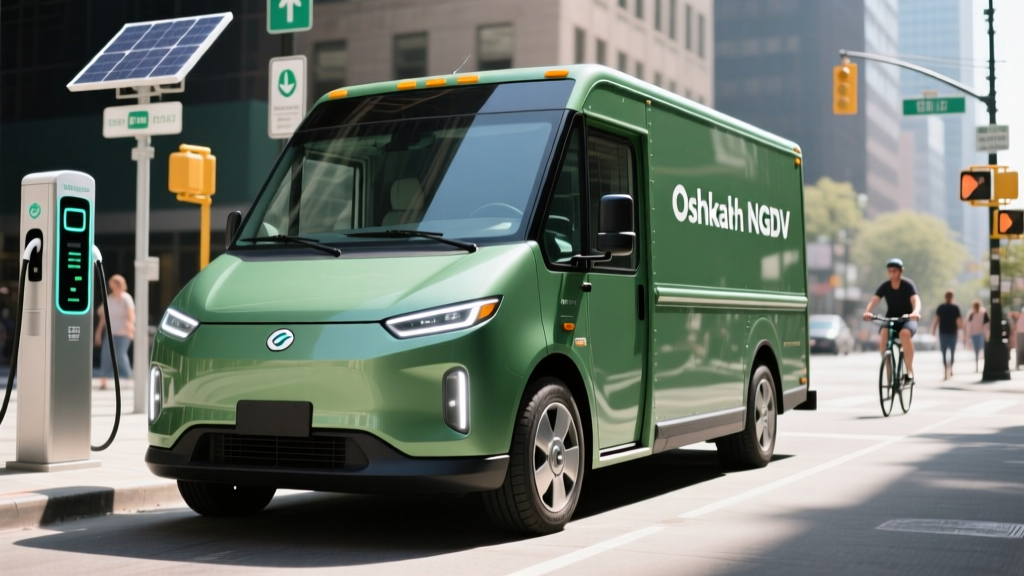
The USPS postal service electric vehicle contract is a $6.1 billion, 10-year agreement with Oshkosh Defense to build the Next Generation Delivery Vehicle (NGDV). Originally planned as 90% electric, the contract was revised to approximately 60% battery-electric and 40% low-emission gas variants. The electric NGDV carries a 45–75 kWh battery (depending on route configuration), targets roughly 100 miles of EPA range, and is designed around the postal service's stop-and-go delivery patterns — not highway cruising. As of 2026, production has scaled to thousands of units annually, with vehicles entering service across urban and suburban routes nationwide.
When the U.S. Postal Service announced its fleet modernization plan, it became one of the largest single electric-vehicle procurement commitments in American history. But the postal service electric vehicle contract isn't just a government fleet story — it's a real-world stress test for commercial EV viability, charging infrastructure demands, and total-cost-of-ownership math that every EV buyer can learn from.
The NGDV Electric Specs: What Oshkosh Actually Built
The electric NGDV is a purpose-built delivery vehicle, not a repurposed consumer van. Oshkosh designed it around a specific duty cycle: 5–15 mph average speeds, 100–200 stops per route, extensive idling for parcel handling, and a return-to-depot charging model every night.
| Specification | Value |
|---|---|
| Battery Capacity | 45 kWh (standard) / 75 kWh (extended range) |
| Estimated EPA Range | ~70 mi (45 kWh) / ~100 mi (75 kWh) |
| Real-World Route Range | ~55–85 mi (varies with climate, payload, terrain) |
| DC Fast Charge (Peak) | ~50 kW (CCS1) |
| Level 2 Charge Rate | ~19.2 kW (depot overnight charging) |
| 10–80% DC Charge Time | ~45 min (75 kWh pack at 50 kW peak) |
| Cargo Volume | ~140 cu ft |
| Payload Capacity | ~2,000 lbs |
| Drivetrain | Rear-wheel drive, single-speed reduction |
| Thermal Management | Active liquid cooling/heating |
Why the Contract Shifted from 90% to 60% Electric
The original USPS plan called for 90% of NGDV orders to be battery-electric. That number drew scrutiny from the EPA, environmental groups, and fleet analysts. But the revision to roughly 60% electric wasn't purely political — it reflected genuine operational constraints.
Here's what drove the split:
- Route-length variability: Rural routes regularly exceed 100 miles per day, sometimes reaching 150+. A 75 kWh battery at 1.5–2.0 kWh/mile (the NGDV's estimated efficiency under load) simply can't cover those distances without mid-route charging — which depot-based fleets can't accommodate.
- Depot charging infrastructure: Electrifying a single postal depot with 50–100 vehicles requires utility-grade power upgrades. Many facilities lack the panel capacity or grid proximity for simultaneous overnight charging at 19.2 kW per vehicle.
- Climate extremes: Routes in Minnesota, Montana, and Alaska face winter temperatures that reduce battery efficiency by 25–35%. The gas variant provides a range buffer in these conditions.
- Cost per vehicle: The electric NGDV carries an estimated unit cost of ~$60,000–$75,000, while the gas variant sits closer to ~$40,000–$50,000. Over a 50,000-vehicle contract, that difference is substantial.
Cost Breakdown: Electric NGDV vs. Gas Fleet Vehicle
The postal service electric vehicle contract is, at its core, a total-cost-of-ownership bet. Here's how the math works for fleet operators — and what it reveals about EV vs. gas economics that apply to consumer buyers as well.
| Cost Category | Electric NGDV (75 kWh) | Gas NGDV Variant |
|---|---|---|
| Purchase Price (est.) | $68,000 | $45,000 |
| Annual Fuel/Energy (250 days, 70 mi/day) | ~$1,750/yr ($8,750 total) | ~$4,200/yr ($21,000 total) |
| Annual Maintenance | ~$800/yr ($4,000 total) | ~$2,200/yr ($11,000 total) |
| Depot Charging Install (amortized per vehicle) | ~$5,000 | N/A |
| 5-Year Total (est.) | ~$85,750 | ~$77,000 |
The electric variant costs roughly $8,750 more over five years in this scenario, primarily due to higher upfront purchase price and depot charging infrastructure. However, this gap narrows significantly with:
- Higher annual mileage (more fuel savings per year)
- Lower commercial electricity rates (many utilities offer fleet-specific EV tariffs at $0.08–$0.12/kWh)
- Federal fleet incentives and IRA provisions for commercial clean vehicles (IRS §45W)
- Longer service life — the NGDV contract envisions 20+ year vehicle lifespans, where electric drivetrain savings compound dramatically
Over a 15-year service life, the electric NGDV is projected to save $15,000–$25,000 in fuel and maintenance compared to the gas variant — a finding consistent with analyses by the U.S. Department of Energy's EV cost tools.
What the USPS Contract Teaches Consumer EV Buyers
You're not buying a mail truck, but the USPS's experience surfaces the exact same ownership questions every EV buyer faces.
Myth vs. Fact: Fleet Lessons for Individual Buyers
| Myth | Fact |
|---|---|
| "EVs always save money." | They save on fuel and maintenance, but higher purchase price, home charger installation ($500–$2,500), and insurance premiums can offset savings in years 1–4. TCO crossover typically happens at year 4–7 depending on mileage. |
| "100 miles of range is nowhere near enough." | For the USPS, 80% of urban routes are under 70 miles/day. For consumers, the average American drives ~37 miles/day per FHWA data. Range needs depend entirely on your specific driving pattern. |
| "Cold weather makes EVs useless." | Cold weather reduces range 20–35%, but preconditioning (warming the battery while plugged in) recovers much of that loss. The NGDV uses active thermal management — as do most 2026 consumer EVs. |
| "Charging infrastructure isn't ready." | For depot/home charging, it's ready today with a Level 2 install. For road trips, the NACS/Supercharger network now covers most interstates. Rural gaps remain real. |
Charging Infrastructure: The Hidden Cost No One Budgets For
The most instructive part of the postal service electric vehicle contract isn't the trucks themselves — it's the depot charging buildout. USPS must install Level 2 (19.2 kW) chargers at thousands of facilities, and the infrastructure costs frequently exceed vehicle costs in the early years.
This maps directly to consumer ownership:
| Component | Cost Range |
|---|---|
| Level 2 charger hardware (40A–48A, hardwired) | $400–$750 |
| Electrician labor (240V circuit run, 20–60 ft) | $500–$1,500 |
| Electrical panel upgrade (if needed: 100A → 200A) | $1,500–$3,500 |
| Permits and inspection | $50–$300 |
| Total (no panel upgrade) | $950–$2,550 |
| Total (with panel upgrade) | $2,450–$6,050 |
For the USPS, multiplying this by thousands of depots explains why the contract included significant infrastructure funding. For individual buyers, a $1,000–$2,500 home charger installation is a cost that should be factored into your EV budget before purchase — not discovered afterward.
Decision Framework: What the USPS Approach Reveals About Your EV Choice
The Postal Service made its electric-vs-gas decision on a route-by-route basis. You should apply the same logic to your own driving.
If-Then EV Decision Framework
- If your daily driving is under 80 miles round-trip and you have garage/driveway access for a Level 2 charger → a battery-electric vehicle with 200+ miles EPA range covers your needs with margin for cold weather and detours. The NGDV proves this model works at fleet scale.
- If you regularly drive 150+ miles in a single day, lack home charging, or live in a region with limited DC fast-charging infrastructure → a plug-in hybrid (PHEV) with 30–50 miles of electric range gives you daily electric commuting with gas backup for longer trips. This is essentially what the USPS chose for its rural routes.
- If you need 300+ miles of range, tow frequently, or operate in extreme cold (below 0°F regularly) → consider whether current EV limitations justify a hybrid or efficient gas vehicle until battery energy density and cold-weather performance improve. The USPS acknowledged this by retaining 40% gas variants.
- If you're evaluating TCO over 7+ years, drive 12,000+ miles/year, and have access to home charging at residential electricity rates → an EV will almost certainly save you money long-term, with break-even typically at year 4–6 depending on your state's fuel and electricity costs.
What First-Time EV Buyers Should Know from the USPS Experience
The postal service electric vehicle contract surfaced several hard-won lessons that apply to anyone entering the EV market:
1. Match the vehicle to the duty cycle, not the brochure. The USPS didn't buy the longest-range battery for every truck — they matched battery size to route length. As a buyer, don't pay a $5,000 premium for a 350-mile battery if you drive 30 miles a day and charge at home every night. A 220-mile vehicle with a smaller battery charges faster, weighs less, and costs less.
2. Infrastructure cost is real and front-loaded. Whether it's a postal depot or your garage, Level 2 charging installation is a non-trivial expense. Budget for it. Get a quote from a licensed electrician before you buy the car — not after.
3. The §30D federal tax credit has strings attached. For 2026, the credit offers up to $7,500 for qualifying new EVs, but eligibility depends on MSRP caps ($55,000 for sedans, $80,000 for SUVs/trucks), buyer income limits ($150,000 single / $300,000 joint AGI), and battery critical-mineral and component sourcing requirements. Check IRS rules before assuming you qualify. The point-of-sale transfer option lets you apply the credit at purchase rather than waiting for tax filing.
4. Fleet data beats marketing claims. The USPS contract generated real operational data on EV range, charging behavior, and maintenance costs. As a consumer, seek out owner forums, fueleconomy.gov data, and independent range tests rather than relying solely on manufacturer EPA estimates.
5. Maintenance savings are genuine. The NGDV electric variant eliminates oil changes, transmission fluid, spark plugs, and exhaust system maintenance. Consumer EVs show the same pattern — brake pad life extends 2–3x thanks to regenerative braking, and electric drivetrains have far fewer wear components than internal combustion engines.
Frequently Asked Questions
Who makes the USPS electric delivery vehicle?
Oshkosh Defense (a division of Oshkosh Corporation, oshkoshdefense.com) holds the prime contract. The vehicle is called the Next Generation Delivery Vehicle (NGDV). Oshkosh beat out competitors including Workhorse and Karsan in the original procurement process.
How many electric NGDVs has USPS ordered?
The contract covers up to 50,000 vehicles over 10 years, with approximately 60% designated as battery-electric. That translates to roughly 30,000 electric NGDVs planned, though exact annual order quantities vary based on Congressional funding and operational assessments.
Can I buy an Oshkosh NGDV as a civilian?
No. The NGDV is built exclusively for USPS under a government contract. However, the contract has spurred commercial electric van development from competitors — the Ford E-Transit, Rivian EDV (built for Amazon), and BrightDrop Zevo serve similar commercial delivery roles and are available to fleet buyers.
How does the NGDV's range compare to consumer EVs?
The NGDV's 70–100 mile range is far below most 2026 consumer EVs (which typically offer 230–350+ miles EPA). But the NGDV is optimized for stop-and-go delivery routes averaging under 70 miles per day. Consumer EVs need more range because personal driving patterns are less predictable and include highway travel, which consumes energy faster than low-speed urban driving.
What does the USPS contract mean for EV charging infrastructure?
The USPS buildout is driving significant local grid upgrades at postal facilities nationwide. This infrastructure investment benefits surrounding communities by normalizing commercial EV charging and pressuring utilities to expand capacity. For individual buyers, it signals that charging infrastructure is being built at institutional scale — even if your local public network still has gaps.
Is the electric NGDV good for the environment compared to gas trucks?
Over its lifetime, yes — even accounting for battery manufacturing emissions and grid electricity sources. The Department of Energy's GREET model shows that a medium-duty electric delivery vehicle produces 40–60% fewer lifecycle greenhouse gas emissions than a comparable gas vehicle, with the advantage growing as the grid incorporates more renewable energy.