Quick Verdict: The Electric Truck That Still Sets the Bar
The 2026 Ford F-150 Lightning enters its fourth model year as the most proven full-size electric pickup on the market. While rivals like the Chevrolet Silverado EV and Ram 1500 REV have entered the arena, the Lightning benefits from iterative refinements — improved thermal management, a slightly larger extended-range battery, and Ford's latest SYNC 5 infotainment — that keep it competitive where it matters: daily drivability, charging infrastructure compatibility, and work-truck utility.
This isn't a truck for buyers chasing maximum range or 0-60 bragging rights. It's for the homeowner who wants a 320-mile EPA commuter that can tow a 5,000-pound trailer on weekends, power tools at a job site via Pro Power Onboard, and charge overnight on a Level 2 circuit without a second thought. Here's every number that matters.
Spec Table: 2026 F-150 Lightning at a Glance
| Spec | Standard Range (SR) | Extended Range (ER) |
|---|---|---|
| EPA Range | 240 miles | 320 miles |
| Battery (usable) | 98 kWh (NMC) | 135 kWh (NMC) |
| Drivetrain | Dual-motor AWD | Dual-motor AWD |
| Horsepower | 580 hp | 580 hp |
| Torque | 775 lb-ft | 775 lb-ft |
| 0-60 mph | ~4.0 sec | ~3.8 sec |
| Max DC Fast Charge | 150 kW | 155 kW |
| 10-80% DC Time | ~36 min | ~41 min |
| Level 2 Home Charge | 11.5 kW (~22 mi/hr) | 19.2 kW (~30 mi/hr) |
| Efficiency | 68 MPGe (2.0 kWh/mi) | 70 MPGe (1.9 kWh/mi) |
| Max Payload | 2,235 lbs | 1,800 lbs |
| Max Towing | 7,700 lbs | 10,000 lbs |
| Starting MSRP | $54,995 | $69,995 |
Source: Ford Motor Company, fueleconomy.gov
Range and Efficiency: What the EPA Number Doesn't Tell You
EPA Sticker: 320 miles (Extended Range)
Highway (70 mph, mild weather): ~265–280 miles
Cold weather (30°F, highway): ~220–240 miles
Towing 7,000 lbs (flat terrain): ~160–180 miles
Standard Range figures scale proportionally — expect ~75% of ER values.
The 2026 Extended Range pack uses a revised NMC (nickel-manganese-cobalt) chemistry with a marginally improved energy density over the outgoing 131 kWh pack, yielding 135 kWh usable. That translates to the 320-mile EPA figure — a 10-mile bump from the 2025 model year, attributable to both the larger pack and reduced rolling-resistance tire options now standard on Lariat and Platinum trims.
But here's the physics reality that no sticker captures: a full-size crew-cab truck pushing over 6,500 pounds with the aerodynamics of a brick wall doesn't cheat energy. At sustained 70-75 mph highway speeds, efficiency drops to roughly 2.2–2.4 kWh/mile, cutting range to around 265–280 miles in ideal conditions. Cold weather compounds the loss — the resistive cabin heater (no heat pump is offered on the Lightning, unlike the Rivian R1T) draws heavily from the pack, and lithium-ion internal resistance rises in freezing temperatures.
If your use case involves regular highway commuting in Northern climates, plan your trips around ~230 miles of usable range in winter. For city driving with regenerative braking doing heavy lifting, you'll see numbers close to — or occasionally exceeding — the EPA estimate thanks to low-speed efficiency and one-pedal driving.
Charging: Speeds, Curves, and What You'll Actually Experience
| Charging Level | Power / Connector | Rate (Extended Range) | Time (10-80%) |
|---|---|---|---|
| Level 1 (120V) | ~1.4 kW / NACS | ~3 mi/hr | N/A (days) |
| Level 2 (240V, 48A) | 11.5 kW / NACS | ~22 mi/hr | ~10 hours (0-100%) |
| Level 2 (240V, 80A) | 19.2 kW / NACS | ~30 mi/hr | ~7 hours (0-100%) |
| DC Fast Charge | 155 kW peak / NACS | Varies by SoC | ~41 min (10-80%) |
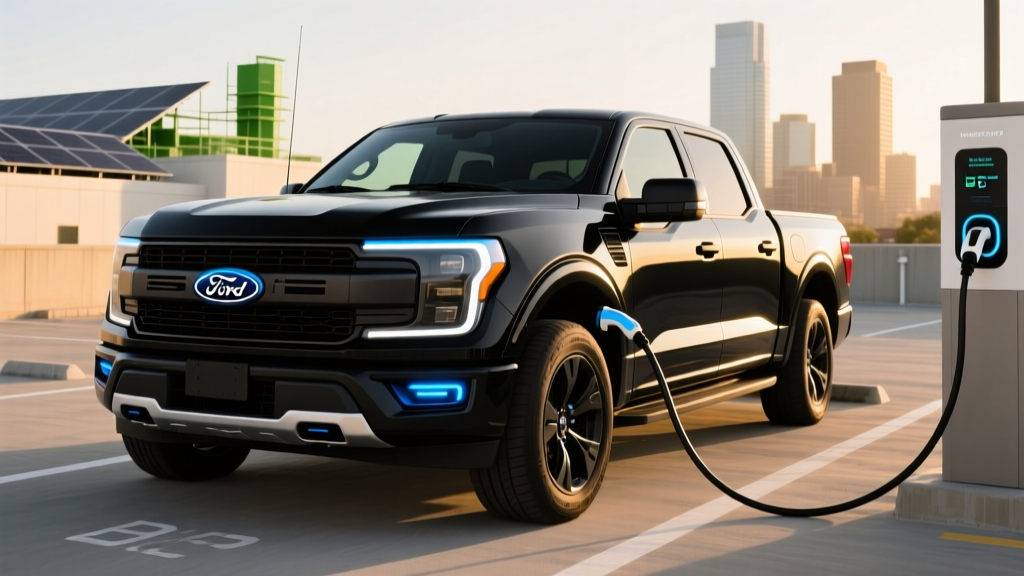
The 2026 Lightning ships with the NACS (North American Charging Standard) port natively — no adapter required for Tesla Superchargers. This is a major practical advantage: Ford owners now have access to over 20,000 Supercharger stalls nationwide, which consistently rank highest in uptime and reliability among public networks.
On DC fast charging, the Extended Range pack peaks at 155 kW. That's not class-leading — the Silverado EV 4WT peaks at 350 kW, and the Rivian R1T (Dual-Motor Max) hits ~220 kW — but it's adequate for the truck's target use case. The charge curve is relatively flat from 10% to about 60% SoC, sustaining 130-150 kW, then tapers progressively. Expect the 10-80% fill to take roughly 41 minutes at a 150+ kW stall. Above 80%, the rate drops sharply to protect battery longevity — topping from 80-100% on DC adds another 30+ minutes. Plan to unplug at 80% on road trips.
For home charging, Ford offers the Charge Station Pro (80A hardwired), which requires a 100-amp dedicated circuit. Most homes will need a panel evaluation; a 200-amp service is typically sufficient, but older homes with 100-amp panels will need an upgrade ($2,000–$4,000 installed). At 19.2 kW, the Extended Range pack fills overnight in about 7 hours — perfectly suited for daily replenishment. The included Mobile Power Cord handles 30A (240V, ~7.2 kW) for slower but viable overnight charging on a dryer outlet.
Performance and Capability: 580 HP Meets Work-Truck Duty
Every 2026 Lightning ships with dual electric motors and all-wheel drive. The 580 hp / 775 lb-ft output is identical across Standard and Extended Range packs — the difference is energy capacity, not power. The 0-60 mph sprint lands around 3.8–4.0 seconds depending on battery weight, which makes the Lightning quicker than any F-150 with a combustion V8, including the Raptor's 450-hp EcoBoost.
But straight-line speed is a party trick. The more relevant performance metrics for truck buyers are payload and towing:
- Max payload: 2,235 lbs (SR) / 1,800 lbs (ER) — the heavier ER battery reduces payload capacity
- Max towing: 7,700 lbs (SR) / 10,000 lbs (ER) with the Max Trailer Tow Package
- Bed length: 5.5 ft (standard on all Lightning crew cabs)
- Mega Power Frunk: 14.1 cu ft of lockable front trunk space with 400 lbs payload capacity
Towing is where electric trucks face their toughest physics. Pulling a 7,000-pound travel trailer at highway speeds can halve your range, dropping the ER model to roughly 160–180 miles between charges. Ford's onboard scales and Smart Hitch features help estimate the range impact in real time via the SYNC 5 navigation system, which factors trailer weight, terrain, and weather into route planning. If you tow more than a few times a year over long distances, plan charging stops carefully — DC fast-charging with a trailer attached requires pull-through stalls, still uncommon at most public stations.
Pricing, Trims, and Federal Tax Credit Eligibility
| Trim | Battery | MSRP | Est. After §30D Credit* |
|---|---|---|---|
| Pro (fleet/commercial) | SR | $54,995 | $47,495 |
| XLT | SR / ER | $59,995 / $74,995 | $52,495 / $67,495 |
| Lariat | ER | $79,995 | $72,495 |
| Platinum | ER | $96,874 | $89,374 |
*§30D credit estimates assume buyer and vehicle meet all eligibility criteria. See checklist below.
- MSRP cap: Trucks/vans/SUVs must be under $80,000 — this eliminates the Platinum trim from eligibility
- Buyer income cap: AGI ≤ $150,000 (single) / $225,000 (head of household) / $300,000 (joint)
- Battery sourcing: Critical minerals and battery components must meet phased-in domestic/free-trade-partner thresholds per IRS guidelines
- Point-of-sale transfer: Eligible buyers can apply the $7,500 credit as a down-payment reduction at the dealer, rather than waiting for tax filing
- Final assembly: Must occur in North America (the Lightning is built in Dearborn, MI ✓)
Always verify current eligibility on irs.gov and consult a tax professional. Battery-sourcing requirements tighten annually.
The Pro and XLT SR trims are the value sweet spot — both fall under the MSRP cap and, assuming battery-sourcing compliance holds for 2026, should qualify for the full $7,500 credit. The Lariat ER at $79,995 squeaks under the $80K truck cap but leaves no room for dealer-installed accessories without risking ineligibility. The Platinum, at nearly $97K, is ineligible regardless of buyer income.
Interior, Tech, and Driver Assistance
The 2026 Lightning's cabin is essentially the current-generation F-150 interior — which is a compliment. Crew cab rear legroom is a generous 43.6 inches, and the bed offers 52.8 cu ft of cargo volume. The 14.1 cu ft Mega Power Frunk is a genuine differentiator: it's weatherproof, lockable, drainable (for use as a cooler), and houses four 120V outlets plus two USB-C ports.
The SYNC 5 infotainment system runs on a 15.5-inch portrait touchscreen (12-inch on Pro/XLT) with wireless Apple CarPlay and Android Auto. Navigation includes intelligent range prediction that accounts for elevation, temperature, payload, and driving style — a feature that reduces range-anxiety guesswork on long trips.
Ford BlueCruise (hands-free driving on pre-mapped divided highways) is available on Lariat and Platinum trims and via subscription on XLT. It's a SAE Level 2 driver-assistance system — you must remain attentive and keep your eyes on the road, monitored by a driver-facing camera. It does not make the Lightning a self-driving vehicle. On compatible highway sections, it handles steering, acceleration, and braking competently, but disengages for construction zones, sharp curves, and surface streets.
Pro Power Onboard remains the Lightning's killer app for tradespeople and emergency preparedness. The system provides up to 9.6 kW of exportable 240V/120V AC power from the truck's battery through outlets in the bed, frunk, and cabin. That's enough to run a welder, circular saw, and job-site lights simultaneously — or power essential home circuits during an outage via a transfer switch (professional installation required).
Warranty and Long-Term Ownership
| Coverage | Term |
|---|---|
| Battery (high-voltage) | 8 years / 100,000 miles |
| Electric powertrain components | 8 years / 100,000 miles |
| Bumper-to-bumper | 3 years / 36,000 miles |
| Powertrain (non-EV) | 5 years / 60,000 miles |
| Corrosion perforation | 5 years / unlimited miles |
The battery warranty guarantees retention of at least 70% of original capacity over the 8-year/100,000-mile term. NMC packs in the Lightning have shown modest degradation in real-world fleet data — roughly 5–8% loss over the first 50,000 miles, with the rate slowing thereafter. Ford's thermal management system (active liquid cooling/heating) is a key factor in longevity. Avoid routinely charging to 100% on DC fast chargers, and precondition the battery before fast-charging sessions in cold weather to minimize stress on the cells.
Out-of-warranty battery replacement remains the elephant in the room: expect $18,000–$28,000 for a full pack replacement at current pricing, though module-level repair may be possible for isolated cell failures at lower cost.
How It Compares: Lightning vs. Silverado EV vs. Rivian R1T
- You need the widest dealer/service network
- Pro Power Onboard is essential for your work
- You want NACS Supercharger access without an adapter
- You value a traditional truck layout and familiar F-150 ergonomics
- Budget matters — XLT SR undercuts Silverado EV and Rivian
- You need 400+ miles of range (Silverado EV 4WT offers 492 mi EPA)
- You regularly tow over 10,000 lbs (Silverado EV tows up to 12,500 lbs)
- You want a 6.5-ft or 8-ft bed (Lightning is 5.5 ft only)
- Off-road performance is a priority (Rivian R1T Quad-Motor is far more capable)
- You want a heat pump for cold-climate efficiency
The Silverado EV 4WT wins on maximum range and towing but starts significantly higher and has a sparser Super Cruise highway network compared to Ford's BlueCruise coverage. The Rivian R1T is a more premium, adventure-oriented vehicle with superior off-road capability and a 420-mile Max pack option, but it starts above $75,000 and lacks the Lightning's commercial/trade-friendly features.
Frequently Asked Questions
What is the real-world range of the 2026 F-150 Lightning?
The Extended Range model carries a 320-mile EPA estimate. In real-world mixed driving, expect 270–290 miles in mild weather. Highway-only driving at 70+ mph reduces this to 265–280 miles. In freezing temperatures, plan for 220–240 miles. Standard Range models scale proportionally, delivering roughly 185–200 miles real-world.
How fast does the F-150 Lightning charge at home and on the road?
On a Level 2 home charger at 19.2 kW (80A), the Extended Range pack fills in roughly 7 hours, adding about 30 miles of range per hour. On DC fast charging, it peaks at 155 kW and charges from 10-80% in approximately 41 minutes. The NACS port gives native access to Tesla Superchargers — a significant infrastructure advantage.
Does the 2026 F-150 Lightning qualify for the $7,500 federal tax credit?
Trims under the $80,000 MSRP cap (Pro, XLT, and base Lariat) are potentially eligible, provided the buyer's AGI falls within IRS limits ($150K single / $300K joint) and battery-sourcing requirements are met. The Platinum trim exceeds the MSRP cap and is ineligible. Always verify on fueleconomy.gov and consult a tax professional before purchasing.
Is the F-150 Lightning worth buying over the Silverado EV or Rivian R1T?
The Lightning offers the best balance of price, capability, and infrastructure access for most truck buyers. It sacrifices maximum range and towing capacity to the Silverado EV and off-road prowess to the Rivian, but its Ford dealer network, Pro Power Onboard, native NACS charging, and starting price under $55,000 (before credits) make it the most practical electric truck for daily use and light-to-moderate work duty.
Can I use the F-150 Lightning to power my house during an outage?
Yes, with the available Ford Intelligent Backup Power system and a professionally installed home transfer switch, the Lightning can supply up to 9.6 kW to essential home circuits. A fully charged Extended Range pack (135 kWh) could power an average home's essential loads (refrigerator, furnace blower, lights, well pump) for approximately 3–5 days depending on consumption. This requires the 80A Charge Station Pro and a compatible transfer switch — budget roughly $3,000–$5,000 for the complete installation.