Before we get into the numbers, we need to address the elephant in the marina: AutoEdgeView is a site dedicated to electric cars, trucks, and street-legal vehicles. When readers ask us about the Orca electric jet ski from Taiga Motors, we have to be honest about our lane — but we can still apply our EV ownership framework to help you decide if electrifying your time on the water makes sense in 2026.
Quick Answer: Is the Orca Electric Jet Ski Worth It?
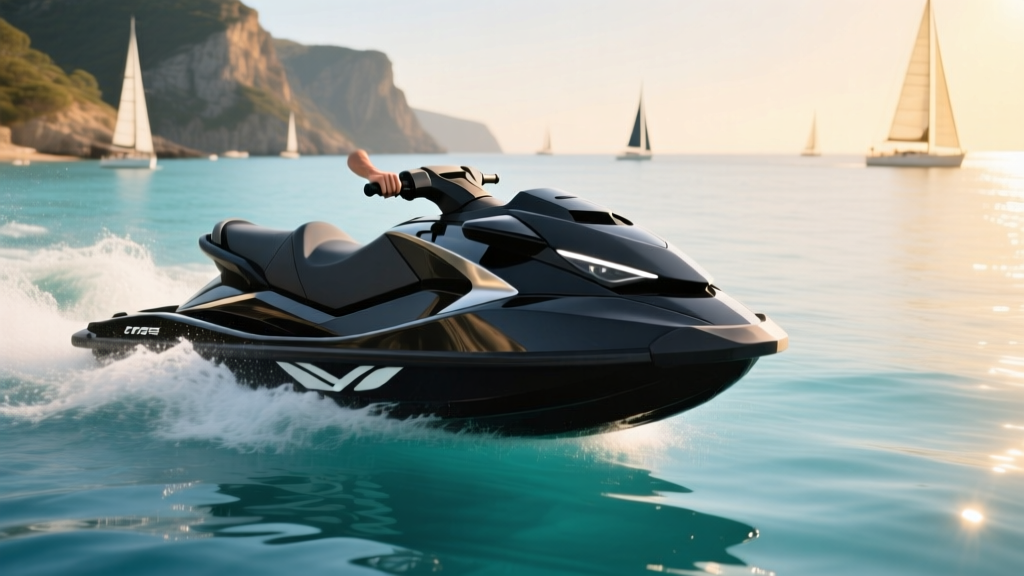
The Taiga Orca is a real, shipping electric personal watercraft with a base MSRP around $15,990–$17,490 depending on the trim (Orca, Orca Performance, Orca Carbon). It offers roughly 45 minutes of mixed riding on a ~23 kWh LFP battery, DC fast-charges to 80% in about 30 minutes, and eliminates fuel/oil/winterization costs. It is best suited for lakefront owners with dock-side 240V charging who ride in shorter sessions. It is not a replacement for a Sea-Doo or WaveRunner if you need 4+ hour range or tow-sports endurance.
Because the Orca is a marine vessel and not a street vehicle, it does not qualify for the federal §30D EV tax credit (which applies to on-highway vehicles per IRS.gov). Keep that in mind when comparing the sticker to an electric car. Below is the most practical ownership breakdown we can assemble using Taiga's published specs, marine-industry data, and our standard EV-vs-gas cost framework.
Orca Electric Jet Ski: 2026 Spec Snapshot
| Spec | Orca | Orca Performance | Orca Carbon |
|---|---|---|---|
| Base MSRP (approx.) | $15,990 | $17,490 | $22,000+ |
| Battery chemistry | LFP (lithium iron phosphate) | ||
| Battery capacity | ~23 kWh usable | ||
| Motor output | ~180 hp equiv. | ~220+ hp equiv. | ~220+ hp equiv. |
| Top speed | ~55 mph | ~65 mph | ~65 mph |
| 0–60 mph | ~4.5 sec | ~3.9 sec | ~3.9 sec |
| Ride time (mixed use) | ~45 minutes (up to ~2 hrs at low speed/eco) | ||
| Level 2 charge (240V) | ~2–3 hours to full | ||
| DC fast charge (optional) | ~30 min to 80% | ||
| Weight | ~600–650 lbs (Carbon lighter) | ||
| Warranty (typical) | Battery 5 yr; Hull 2 yr (confirm with dealer) | ||
Specs are based on Taiga Motors' published figures and may shift for the 2026 model year. Always confirm with an authorized dealer before purchase.
Orca vs. Gas PWC: Real Cost Comparison
The most common question we get: "Does going electric on the water actually save money?" The honest answer is that upfront, no — the Orca costs roughly 30–50% more than a comparable mid-tier Sea-Doo GTI or Yamaha VX. But operating costs tell a very different story over a 5-year ownership window.
| Cost Factor | Orca Electric | Gas PWC (e.g., Sea-Doo GTI) |
|---|---|---|
| Base purchase price | ~$16,000–$17,500 | ~$11,000–$13,000 |
| Fuel / electricity per season (50 hrs) | ~$150–$250 (at $0.15/kWh) | ~$600–$900 (at $3.80/gal, ~8–10 gal/hr) |
| Annual maintenance | ~$100–$200 (minimal) | ~$400–$700 (oil, spark plugs, impeller, winterization) |
| 5-year fuel/energy total | ~$750–$1,250 | ~$3,000–$4,500 |
| 5-year maintenance total | ~$500–$1,000 | ~$2,000–$3,500 |
| 5-year total cost of ownership | ~$20,000–$23,000 | ~$20,000–$25,000 |
| Federal EV tax credit | Not eligible (marine) | N/A |
By year 4 or 5, the Orca's lower operating costs typically close the gap with a gas PWC. If you ride 100+ hours per season, the math swings faster in the Orca's favor. If you ride 20 hours per year, the payback stretches past 7 years — and the gas option wins on pure economics.
Charging the Orca: What Dock-Side Power Looks Like
Here's where marine EV ownership diverges sharply from car ownership. You can't rely on a nationwide DC fast-charging network on the water. Charging infrastructure for electric PWCs is essentially DIY at your dock, lift, or garage.
| Charging Method | Power (kW) | Full Charge Time | Install Cost |
|---|---|---|---|
| Standard 120V outlet (Level 1) | ~1.4 kW | ~16–18 hours | $0 (existing outlet) |
| 240V dock outlet (Level 2) | ~6.6–7.2 kW | ~3 hours | $800–$2,500 (marine-grade GFCI, electrician) |
| DC fast charger (optional) | ~40–50 kW peak | ~30 min to 80% | $3,000–$8,000+ (commercial/marina install) |
Real-world reality check: Most Orca owners will rely on overnight Level 2 charging at their dock or home garage. If your marina doesn't offer 240V shore power and you can't install it (HOA restrictions, rental dock, etc.), Level 1 charging is painfully slow — you'll need to plan a full overnight session after every ride. This is the marine equivalent of apartment-dwelling EV owners who lack home charging, and it's a genuine dealbreaker for some buyers.
For dock-side Level 2 installs, expect to hire a licensed electrician familiar with marine-grade, GFCI-protected circuits. Saltwater environments add corrosion risk and code requirements that can push installation costs higher than a standard home EV charger install.
Battery Chemistry & Longevity: LFP on the Water
Taiga uses LFP (lithium iron phosphate) battery chemistry in the Orca, which is the same chemistry Tesla uses in its Standard Range vehicles and that we've analyzed extensively in our LFP vs. NMC battery guide. Here's why that matters for a jet ski:
- Cycle life: LFP cells typically endure 3,000–5,000+ full charge cycles before degrading to 80% capacity. At 50 rides per year, that's 60+ years of theoretical use.
- Thermal stability: LFP is inherently more resistant to thermal runaway than NMC — a meaningful safety advantage in a marine environment where water intrusion is a risk.
- Energy density trade-off: LFP is heavier per kWh than NMC. This is why the Orca weighs ~600+ lbs despite a relatively modest 23 kWh pack.
- 100% SoC tolerance: Unlike NMC, LFP can be regularly charged to 100% without accelerated degradation — useful when you want a full battery before every ride.
Taiga typically offers a 5-year battery warranty, though you should confirm the capacity retention threshold (usually 70–80%) with your dealer. Replacement cost for the full battery pack is not widely published but is estimated in the $5,000–$8,000 range based on LFP cell pricing and marine-grade packaging.
Common Orca Misconceptions — Fact-Checked
| Myth | Fact |
|---|---|
| "It qualifies for the $7,500 EV tax credit." | No. The §30D credit applies to on-highway vehicles. The Orca is a marine vessel and is not eligible per IRS rules. |
| "You can ride it all day like a gas jet ski." | Mixed-use ride time is ~45 minutes. Eco-mode extends this to ~2 hours, but aggressive riding drains the pack quickly. |
| "Electric jet skis are slow." | The Orca Performance does 0–60 in ~3.9 seconds with instant torque. It's faster off the line than most gas PWCs in its class. |
| "You can charge it anywhere on the water." | Public marine charging infrastructure is extremely limited. Plan to charge at your dock, lift, or trailer at home. |
| "The battery will die in a few years." | LFP chemistry offers 3,000+ cycles. With proper care, the battery should outlast the hull. |
Decision Framework: Is the Orca Right for You?
Buy the Orca Electric Jet Ski If:
- You own lakefront property or have a private dock with 240V access (or can install it).
- Your typical ride sessions are 30–60 minutes, not all-day endurance runs.
- You ride 40+ hours per season (the operating-cost savings compound faster).
- You value near-silent operation — a huge quality-of-life upgrade on quiet lakes and near wildlife.
- You want zero fuel, oil, or exhaust fume handling at the dock.
- You appreciate instant torque and responsive acceleration.
Stick With a Gas PWC If:
- You need 3+ hours of continuous ride time (tow sports, long-distance lake crossings).
- You ride at public marinas with no charging access and trailer to different bodies of water.
- Your budget is firmly under $12,000.
- You ride in saltwater environments where corrosion risk to high-voltage marine systems is a concern (confirm Taiga's saltwater warranty terms).
- You want the broadest dealer/service network — Sea-Doo and Yamaha have thousands of service points.
First-Time Electric PWC Buyer Checklist
If you've never owned an electric vehicle of any kind, here's what to internalize before signing the purchase agreement:
- Solve charging first. Before you order, confirm you have (or can install) a 240V outlet at your dock or garage. A licensed electrician should assess your panel capacity — marine circuits often require GFCI breakers and weatherproof enclosures.
- Understand kW vs. kWh. The Orca's battery holds ~23 kWh of energy (like a gas tank size). The charger delivers power measured in kW (like a fuel pump flow rate). A 7 kW Level 2 charger fills 23 kWh in roughly 3 hours.
- Plan for off-season storage. LFP batteries prefer partial charge (~50–70% SoC) during long storage. Don't store at 100% or 0% for months. This is different from gas PWCs where you winterize the engine.
- Insurance costs may be higher. Electric PWCs are newer to insurers and may carry a premium. Get quotes before purchasing — expect 10–25% higher than an equivalent gas PWC in the first few years.
- Service network is limited. Taiga's dealer network is growing but far smaller than BRP (Sea-Doo) or Yamaha. Confirm your nearest authorized service center before buying.
Frequently Asked Questions
How far can the Orca electric jet ski go on a single charge?
The Orca doesn't have a traditional "range" in miles like a car — ride time is the better metric. Expect ~45 minutes of mixed aggressive/moderate riding, or up to ~2 hours in eco mode at lower speeds. In distance terms, that roughly translates to 25–40 miles depending on speed and conditions.
Does the Orca qualify for any EV tax credits or incentives?
Not the federal §30D credit, which applies to on-highway vehicles. Some states or local utility districts may offer rebates for electric marine equipment — check with your state energy office and local utility. Taiga or your dealer may also be aware of regional incentive programs.
Can I use the Orca in saltwater?
Taiga has designed the Orca for both freshwater and saltwater use, but saltwater environments accelerate corrosion on all marine craft, especially those with high-voltage electrical systems. Confirm the current warranty terms for saltwater use directly with Taiga or your authorized dealer before purchasing for ocean use.
How long does the Orca battery last before needing replacement?
The LFP battery is rated for 3,000+ charge cycles. At 50 full cycles per year, that's 60+ years of theoretical use. Real-world degradation depends on storage habits, temperature exposure, and charge patterns. Taiga's 5-year battery warranty provides a baseline guarantee — confirm the specific capacity retention threshold (typically 70–80%) with your dealer.
How does the Orca compare to the Sea-Doo electric prototypes?
As of 2026, BRP (Sea-Doo's parent) has announced electric PWC development but has not released a production electric model. The Orca remains one of the only production electric performance PWCs available from an established manufacturer. If you want an electric jet ski today, Taiga is essentially your primary option.
Is the Orca street-legal or registrable as a vehicle?
The Orca is registered as a marine vessel (PWC), not a road vehicle. It requires standard boat/PWC registration through your state's boating authority. It cannot be driven on roads and is not subject to DOT/NHTSA vehicle regulations.
Disclaimer: AutoEdgeView specializes in electric cars, trucks, and street-legal vehicles. This article applies our EV ownership analysis framework to the Orca electric jet ski based on publicly available specifications from Taiga Motors and marine industry data. Always confirm current pricing, specs, warranty terms, and incentive eligibility directly with Taiga or an authorized dealer. For federal tax credit questions, consult IRS.gov or a tax professional.