From SVT Thunder to Electric Lightning: A Full-Circle Story
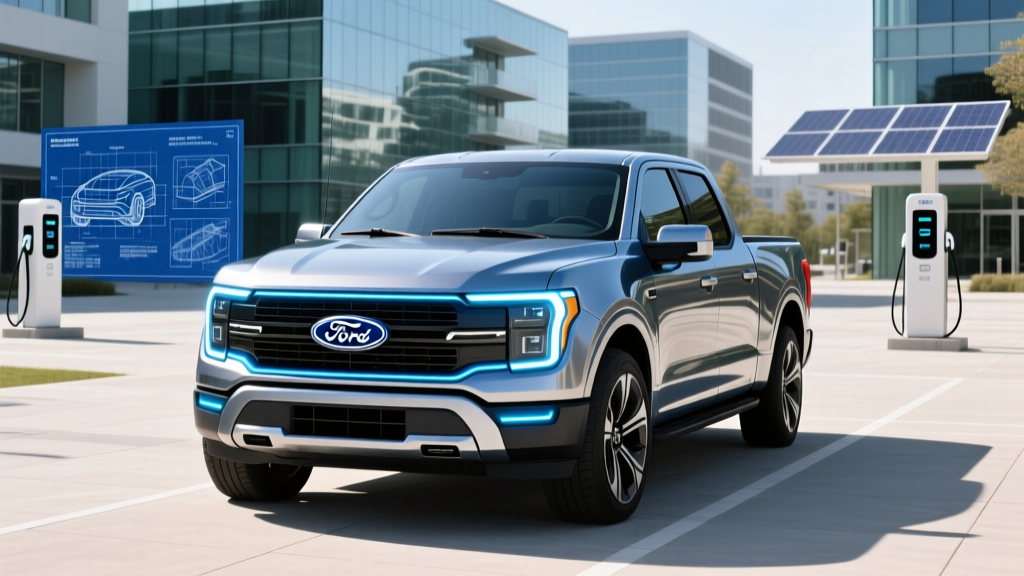
Search "F150 Lightning 1993" and you'll find one of Ford's most iconic trucks: the 1993 F-150 Lightning SVT, a 5.8L V8-powered street truck that launched Ford's performance truck lineage. More than three decades later, the Lightning nameplate has returned — this time with dual electric motors, a 131 kWh battery pack, and zero tailpipe emissions. The 2026 Ford F-150 Lightning carries the torch of its 1993 predecessor in spirit (performance-oriented, street-biased, attention-grabbing) while representing an entirely different engineering philosophy.
This review covers the current-generation F-150 Lightning as sold in the 2025–2026 model years, with a nod to where the 1993 SVT original fits in the truck's heritage. If you're cross-shopping electric pickups or wondering whether Ford's full-size EV truck lives up to its legendary nameplate, here are the exact numbers you need.
2026 F-150 Lightning: Core Specifications at a Glance
| Specification | Standard Range (Pro/XLT) | Extended Range (Lariat/Platinum) |
|---|---|---|
| EPA Estimated Range | 240 miles | 320 miles |
| Battery Capacity (Usable) | 98 kWh (LFP) | 131 kWh (NMC) |
| Battery Chemistry | Lithium Iron Phosphate (LFP) | Nickel Manganese Cobalt (NMC) |
| Drivetrain | Dual-Motor AWD | Dual-Motor AWD |
| Horsepower | 452 hp | 580 hp |
| Torque | 775 lb-ft | 775 lb-ft |
| 0–60 mph | ~4.5 sec | ~3.8 sec |
| Max DC Fast Charge | 150 kW | 150 kW |
| 10–80% DCFC Time | ~36 min | ~41 min |
| Level 2 Home Charge Rate | 11.3 kW (~25 mi/hr) | 11.3 kW (~30 mi/hr) |
| Max Towing | 7,700 lbs | 10,000 lbs |
| Max Payload | 2,235 lbs | 1,952 lbs |
| MPGe (Combined) | 68 MPGe | 66 MPGe |
| Efficiency | 49 kWh/100 mi | 51 kWh/100 mi |
Source: EPA / fueleconomy.gov
Range Reality: What the EPA Sticker Doesn't Tell You
Extended Range (320 mi EPA): Expect approximately 260–285 miles in mixed highway driving at 70–75 mph. In winter conditions (below 32°F), plan for 200–230 miles of usable range before needing to charge.
Standard Range (240 mi EPA): Real-world highway use yields roughly 195–215 miles; cold-weather drops that to 155–180 miles.
The F-150 Lightning's boxy aerodynamics and 6,000+ lb curb weight work against highway efficiency. Where the EPA test cycle includes substantial low-speed city driving (where regenerative braking recaptures energy), sustained 75-mph interstate cruising is where this truck consumes electrons fastest. In our experience, efficiency at 75 mph hovers around 55–58 kWh/100 mi unloaded — noticeably worse than the combined EPA figure.
Towing compounds the range loss dramatically. With a 5,000-lb trailer, expect range to drop by 40–50% depending on trailer profile and terrain. A 320-mile Extended Range truck towing a boxy travel trailer may deliver as few as 140–160 miles before requiring a charge stop. This is physics, not a Ford-specific flaw — every electric truck faces this limitation.
Charging Speed: DC Fast Charging and Home Setup
The Lightning uses the CCS1 connector on 2022–2024 models, with Ford offering a NACS (Tesla-style) adapter for Supercharger network access. For 2025–2026 production, Ford has transitioned to the native NACS charge port on new vehicles, eliminating the adapter requirement.
| Charging Method | Power / Rate | Miles Added per Hour | Notes |
|---|---|---|---|
| Level 1 (120V household) | ~1.4 kW | ~2–3 mi/hr | Emergency/trickle only |
| Level 2 (240V, 48A) | 11.3 kW | ~25–30 mi/hr | Full charge overnight (~8–10 hrs) |
| DC Fast Charge (peak) | 150 kW | ~170 mi in 30 min | Peak rate sustained to ~60% SoC, then tapers |
| Tesla Supercharger (via NACS) | Up to 150 kW | Varies | Access to 25,000+ stall network |
Charging curve reality: The Lightning's 150 kW peak is not sustained across the full session. On the Extended Range pack, you'll see peak rates between 10–55% State of Charge, after which the curve tapers to ~100 kW by 65%, and drops further above 80%. A 10–80% session takes approximately 41 minutes on the Extended Range and 36 minutes on Standard Range. This is slower than competitors like the Rivian R1T or Chevrolet Silverado EV, which accept higher peak DC rates.
Home charging tip: Ford includes the Mobile Power Cord (capable of 30A/240V for ~13 mi/hr). For daily use, installing a dedicated 48A Level 2 wall connector on a 60A circuit is the practical minimum for overnight replenishment. Budget $800–$2,000 for equipment plus electrician labor, depending on panel proximity and whether a service upgrade is needed.
Performance, Drivetrain, and the 1993 SVT Connection
The 1993 F-150 Lightning SVT produced 240 hp from its 5.8L Windsor V8 and hit 60 mph in about 7.6 seconds. The 2026 Extended Range Lightning makes 580 hp and reaches 60 in 3.8 seconds — supercar territory in a 6,500-lb truck. The dual-motor AWD system provides instant torque delivery with no gear shifts, and the low center of gravity (battery pack under the floor) reduces body roll compared to any gas F-150.
The independent rear suspension (a first for any F-150) improves ride quality over the solid rear axle found on gas models. On-road comfort is genuinely excellent, though off-road articulation is more limited than a live-axle truck. For the street-performance mission that the original 1993 SVT Lightning embodied, the electric version is a spiritual successor on steroids.
Pricing, Trims, and Federal Tax Credit Eligibility
| Trim | Base MSRP (2026 est.) | §30D Credit Eligibility | Effective Price (if eligible) |
|---|---|---|---|
| Pro (Standard Range) | ~$55,000 | Eligible — up to $7,500 | ~$47,500 |
| XLT (Standard Range) | ~$60,000 | Eligible — up to $7,500 | ~$52,500 |
| Lariat (Extended Range) | ~$72,000 | Eligible — up to $7,500 | ~$64,500 |
| Platinum (Extended Range) | ~$86,000 | Eligible — up to $7,500 | ~$78,500 |
Federal tax credit rules (§30D): The F-150 Lightning qualifies as a battery electric vehicle under the IRS clean vehicle credit. Key eligibility requirements for 2026:
- MSRP cap: Vans, SUVs, and pickup trucks must have an MSRP at or below $80,000. The Platinum trim may exceed this — verify window sticker pricing.
- Buyer income cap: Modified AGI must not exceed $150,000 (single), $225,000 (head of household), or $300,000 (joint).
- Battery sourcing: Critical mineral and battery component requirements phase in annually; check the DOE/FuelEconomy eligible vehicle list for current-year compliance.
- Point-of-sale transfer: You can transfer the credit to the dealer at purchase, reducing your out-of-pocket cost immediately rather than waiting for tax filing.
Always consult a tax professional for your specific situation. Credit rules are subject to legislative change.
Cargo, Interior Space, and Practicality
The Lightning's most underappreciated feature is the Mega Power Frunk — a 14.1 cubic-foot front trunk where the engine would sit on a gas F-150. It's lockable, weather-sealed, drainable, and includes four 120V outlets plus USB-C ports. It's genuinely useful for groceries, tools, or tailgate setups.
Bed: 5.5-foot bed (SuperCrew configuration) with 52.8 cu ft of volume. Rear-seat legroom: 43.6 inches — class-leading for a full-size crew cab. The flat floor (no transmission tunnel hump) makes the middle rear seat genuinely usable for an adult.
Pro Power Onboard (available 2.4 kW or 9.6 kW) turns the truck into a mobile generator. The 9.6 kW option can power most household circuits during an outage via a transfer switch — a unique capability no gas truck can match without a separate generator.
Technology and Driver Assistance
The Lightning features Ford's SYNC 4A infotainment system on a 12-inch (Pro/XLT) or 15.5-inch vertical touchscreen (Lariat/Platinum). Wireless Apple CarPlay and Android Auto are standard. Over-the-air updates via Ford Power-Up continuously add features.
Ford BlueCruise (SAE Level 2) enables hands-free driving on over 130,000 miles of pre-mapped divided highways. The driver must remain attentive — a camera monitors eye gaze. This is not self-driving; it's an advanced driver-assist system that reduces fatigue on long highway stretches. BlueCruise is complimentary for the first 90 days, then requires a subscription (~$75/month or $800/year).
Ford BlueCruise is a Level 2 driver-assistance system. The driver must remain engaged, monitor the road, and be prepared to take over at any time. It does not navigate intersections, construction zones, or unmapped roads autonomously.
Warranty and Battery Longevity
Ford covers the Lightning's high-voltage battery for 8 years or 100,000 miles (whichever comes first), with a capacity retention threshold of 70%. The electric powertrain components carry the same 8-year/100,000-mile warranty. The basic vehicle warranty is 3 years/36,000 miles.
The Standard Range pack uses LFP (lithium iron phosphate) chemistry, which offers longer cycle life and less degradation over time compared to NMC — at the cost of lower energy density (hence the smaller range). LFP packs can also be routinely charged to 100% without accelerated degradation, making them practical for daily use. The Extended Range pack uses NMC for higher energy density; Ford recommends daily charging to 80–90% with periodic 100% charges for calibration.
Pros and Cons: Honest Ownership Assessment
- 3.8-sec 0–60 in Extended Range — fastest F-150 ever sold
- Pro Power Onboard (9.6 kW) — genuine home backup & job-site utility
- 14.1 cu-ft Mega Power Frunk — best-in-class front storage
- Independent rear suspension — superior on-road ride
- NACS charge port — native Tesla Supercharger access (2025+)
- LFP battery option (Standard Range) — excellent longevity
- 150 kW peak DC charging — slower than Rivian R1T, Silverado EV
- Towing range loss of 40–50% — limits long-distance trailer trips
- Platinum trim may exceed $80K MSRP cap for §30D credit
- Weight (~6,500 lbs) — higher tire wear, longer braking distances
- BlueCruise subscription adds recurring cost after trial
- 5.5-ft bed only — no 6.5 or 8-ft bed option
Is the F-150 Lightning Worth It vs. the Competition?
The Lightning competes primarily with the Rivian R1T (smaller, more adventurous, faster charging), Chevrolet Silverado EV (larger battery, longer range, 4-wheel steering), and the Tesla Cybertruck (stainless steel, 48V architecture, polarizing design).
The Lightning's advantage is familiarity. It looks, drives, and operates like a conventional F-150 — there's no learning curve for a fleet manager or first-time EV buyer. The SuperCrew cabin is roomier than the R1T, the frunk is larger than any competitor's, and Ford's dealer network dwarfs Rivian's. If you need a full-size crew cab truck with electric powertrain benefits and don't prioritize fastest-in-class DC charging, the Lightning remains the most approachable electric pickup on the market.
If maximum range or towing range is your priority, the Silverado EV's 400+ mile EPA rating and larger battery may serve you better. If you want adventure-vehicle capability with faster charging and don't need a full-size bed, the R1T is compelling. The Lightning occupies the pragmatic middle: big enough, fast enough, familiar enough.
Frequently Asked Questions
What is the real-world range of the F-150 Lightning?
The Extended Range model is EPA-rated at 320 miles, but expect approximately 260–285 miles in real-world highway use, and 200–230 miles in freezing weather. The Standard Range model delivers roughly 195–215 miles on the highway.
How fast does the F-150 Lightning charge?
On a DC fast charger, the Lightning peaks at 150 kW and charges from 10–80% in approximately 36 minutes (Standard Range) or 41 minutes (Extended Range). On a home Level 2 charger (11.3 kW / 48A), expect roughly 25–30 miles of range added per hour, or a full overnight charge in 8–10 hours.
Does the F-150 Lightning qualify for the federal EV tax credit?
Yes — the F-150 Lightning is eligible for up to $7,500 under IRS §30D, provided the buyer meets income limits ($300K joint / $150K single), the trim MSRP does not exceed $80,000, and battery sourcing requirements are met. The credit can be transferred at the point of sale. Always verify current eligibility at fueleconomy.gov.
What was the 1993 F-150 Lightning?
The 1993 F-150 Lightning was Ford SVT's first performance truck — a regular-cab, short-bed F-150 with a 240-hp 5.8L V8, sport-tuned suspension, and unique styling. It established the Lightning nameplate as Ford's street-performance truck brand, which continued through the supercharged 2004 model before going dormant until the 2022 electric revival.
Can the F-150 Lightning power my house?
Yes — with the available 9.6 kW Pro Power Onboard system and a professionally installed home transfer switch (Ford Intelligent Power), the Lightning can supply up to 9.6 kW to your home during an outage. At that rate, a fully charged Extended Range pack (131 kWh) could power an average home for approximately 3 days, depending on consumption.
Is the Lightning good for towing?
The Lightning can tow up to 10,000 lbs (Extended Range, Max Trailer Tow Package). However, range drops by 40–50% when towing. Plan for charging stops every 100–160 miles on long towing trips, and confirm DC fast-charger availability along your route — not all stations accommodate truck-trailer combinations.