What Is Dog Mode in Tesla and Why It Matters for EV Owners
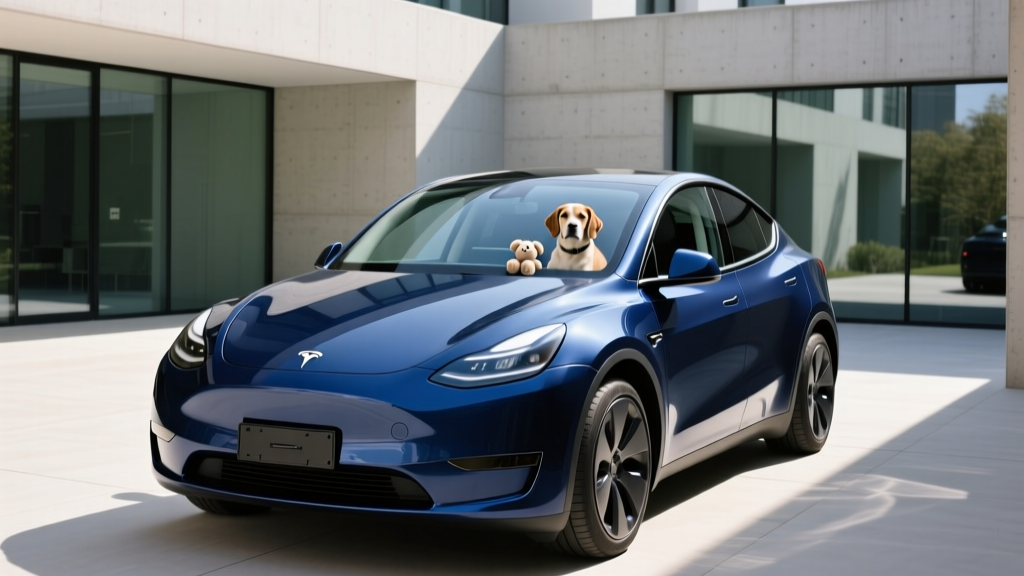
If you've ever hesitated to leave your dog in a parked car on a warm day, Tesla's Dog Mode is the feature that removes that anxiety. First introduced in 2019 and continuously refined through over-the-air updates, Dog Mode in Tesla keeps the cabin climate-controlled while you step away, displaying a clear message on the center touchscreen so passersby know your pet is safe and comfortable.
Unlike a gas car idling its A/C — which wastes fuel and emits exhaust — an EV running Dog Mode draws from its traction battery with zero tailpipe emissions. But that raises practical questions every Tesla owner or prospective buyer should answer: How much range does it cost? Which Tesla models support it in 2026? And what happens if the battery gets low?
This guide breaks down the feature across the current 2026 Tesla lineup, pairs it with the real-world range and charging specs of the vehicles that offer it, and helps you decide which Tesla best fits a pet-owning lifestyle.
How Tesla Dog Mode Actually Works
When you exit the vehicle and activate Dog Mode from the climate menu (or via the Tesla app), the car maintains a user-set cabin temperature using the electric HVAC compressor and the high-voltage traction battery. The center screen stays on and displays a message like:
"My owner will be back soon. Don't worry! The A/C is on and it's [XX]°F inside."
Key technical behaviors of Dog Mode in Tesla vehicles:
- Climate control stays active — the HVAC system runs off the main battery pack, not the 12V auxiliary battery.
- Touchscreen remains illuminated with the temperature readout and reassurance message.
- Doors remain lockable — you can lock via key fob, phone key, or the app.
- Live monitoring via the Tesla app — you can check cabin temperature and battery State of Charge (SoC) remotely.
- Low-battery safeguard — if SoC drops to approximately 20%, the car sends a push notification to your phone warning that Dog Mode will soon shut off to preserve driving range.
- No Sentry Mode conflict — Dog Mode and Sentry Mode can run simultaneously, though this increases energy draw.
Energy Consumption: How Much Range Does Dog Mode Use?
Dog Mode's energy draw depends on outside temperature, target cabin temperature, and whether Sentry Mode is also active. Based on owner-reported data and thermal modeling:
- Mild weather (70–80°F outside): ~200–300 watts continuous, consuming roughly 0.2–0.3 kWh per hour.
- Hot weather (90–105°F outside): ~800–1,500 watts continuous, consuming roughly 0.8–1.5 kWh per hour.
- Cold weather (below 30°F, heating cabin to 68°F): ~1,000–2,500 watts (heat pump-equipped models are more efficient), consuming roughly 1.0–2.5 kWh per hour.
To put that in range terms on a 2026 Tesla Model Y Long Range AWD (75 kWh usable battery, EPA 320 miles, approximately 4.3 miles per kWh):
- One hour of Dog Mode in 95°F heat: ~1.2 kWh used = ~5 miles of range lost.
- Two hours in mild weather: ~0.5 kWh used = ~2 miles of range lost.
For most errands — a 30-minute grocery run or a sit-down lunch — the range penalty is negligible. The concern arises only if you leave the car for multiple hours in extreme heat with a low starting SoC.
Which 2026 Tesla Models Support Dog Mode?
Dog Mode is available on all Tesla vehicles running software version 2019.8 or later, which effectively means every Model S, Model 3, Model X, Model Y, and Cybertruck on the road today. The Tesla software updates page confirms ongoing feature parity across the fleet. Below is a spec comparison of the current 2026 lineup most relevant to pet owners:
| Spec | 2026 Model Y LR AWD | 2026 Model 3 LR AWD | 2026 Model X LR AWD | 2026 Cybertruck AWD |
|---|---|---|---|---|
| EPA Range | 320 mi | 341 mi | 335 mi | 340 mi |
| Battery (usable kWh) | ~75 kWh (NMC) | ~75 kWh (NMC) | ~95 kWh (NMC) | ~123 kWh (NMC) |
| Max DC Fast Charge | 250 kW | 250 kW | 250 kW | 250 kW (800V arch) |
| 10–80% DC Time | ~27 min | ~25 min | ~30 min | ~22 min |
| Level 2 Home Rate | 11.5 kW (~44 mi/hr) | 11.5 kW (~44 mi/hr) | 11.5 kW (~34 mi/hr) | 11.5 kW (~30 mi/hr) |
| 0–60 mph | 4.8 sec | 4.2 sec | 3.8 sec | 3.9 sec |
| Horsepower | 384 hp | 440 hp | 670 hp | 600 hp |
| Drivetrain | Dual-Motor AWD | Dual-Motor AWD | Dual-Motor AWD | Dual-Motor AWD |
| Cargo (rear seats up) | 30.2 cu ft | 23.0 cu ft | 37.1 cu ft | 34.2 cu ft (bed) |
| MPGe (combined) | 122 MPGe | 132 MPGe | 102 MPGe | 79 MPGe |
| Efficiency (kWh/100mi) | 28 kWh | 26 kWh | 33 kWh | 47 kWh |
| Base MSRP | $44,990 | $42,490 | $74,990 | $79,990 |
| Battery Warranty | 8 yr / 120,000 mi | 8 yr / 120,000 mi | 8 yr / 150,000 mi | 8 yr / 150,000 mi |
Best Tesla for Dog Owners: Cargo, Space, and Practicality
Dog Mode keeps the cabin cool, but the physical space your pet has matters just as much. Here's how the lineup compares for pet practicality:
Model Y Long Range — The Pet-Owner Sweet Spot
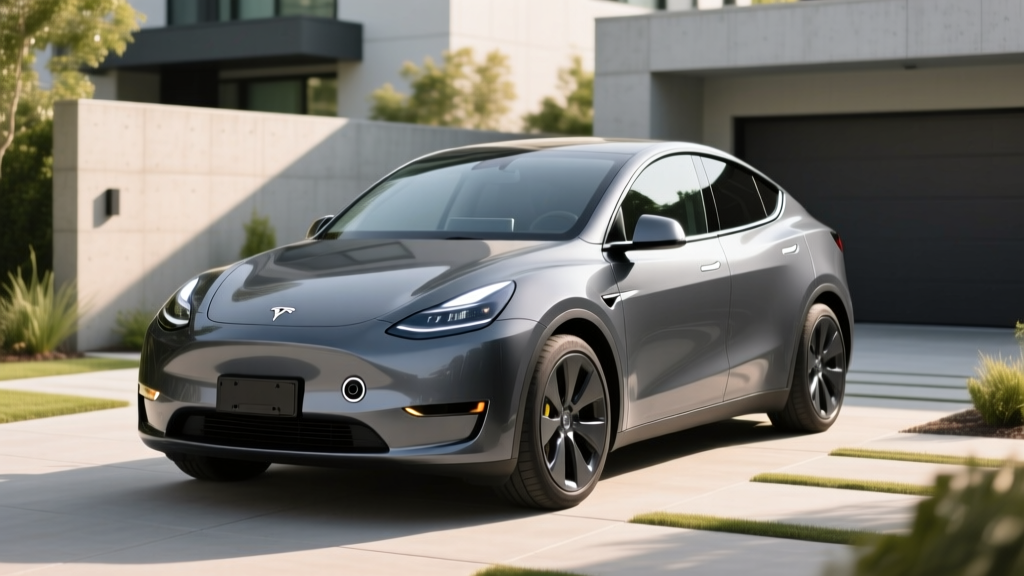
With 30.2 cu ft of cargo space behind the second row and a flat load floor when seats fold (72.1 cu ft total), the Model Y accommodates large crate setups. The rear cargo area sits low, making it easy for older dogs to jump in. The optional panoramic glass roof provides ambient light without direct heat (it's heavily tinted and UV-filtered). At $44,990 base and 122 MPGe combined, it's the most cost-effective Tesla for pet families.
Model X — Maximum Space, Premium Price
The Model X offers 37.1 cu ft behind the second row and a massive 85.7 cu ft with all rear seats folded. Falcon Wing doors create a dramatic, wide opening that makes loading a large crate or an anxious dog significantly easier than a conventional SUV hatch. However, at $74,990 base — well above the IRS §30D MSRP cap of $80,000 for SUVs — tax credit eligibility is tight once options are added. It's the best physical space, but the economics are steep.
Model 3 — Compact Dogs, Commuter Life
The sedan's 23.0 cu ft trunk is adequate for a small-to-medium dog in a soft crate, but the sedan body style means no upright standing room. If your dog rides in the back seat during drives and you primarily need Dog Mode for quick errands, the Model 3's superior efficiency (132 MPGe) and lowest price ($42,490) make it compelling.
Cybertruck — The Outlier
The Cybertruck's 34.2 cu ft bed (covered by the tonneau) is weatherproof but not climate-controlled — Dog Mode cools the cabin, not the bed. A pet would need to ride inside the cabin (limited rear-seat footroom) or in a separately ventilated bed setup. It's the least practical Tesla for dedicated pet transport despite its rugged image.
Tax Credits, Pricing, and the Cost to Own with Dog Mode
Federal tax credit eligibility under IRS §30D depends on MSRP caps, buyer income limits, and battery critical-mineral sourcing. As of 2026:
| Model | Base MSRP | §30D MSRP Cap | Income Cap (MFJ) | Max Credit | Est. After Credit |
|---|---|---|---|---|---|
| Model 3 LR AWD | $42,490 | $55,000 (sedan) | $300,000 | Up to $7,500* | ~$34,990 |
| Model Y LR AWD | $44,990 | $80,000 (SUV) | $300,000 | Up to $7,500* | ~$37,490 |
| Model X LR AWD | $74,990 | $80,000 (SUV) | $300,000 | Up to $7,500* | ~$67,490 |
| Cybertruck AWD | $79,990 | $80,000 (truck) | $300,000 | Up to $7,500* | ~$72,490 |
*Credit amount depends on critical-mineral and battery-component sourcing requirements, which have tightened annually. The point-of-sale transfer option allows the credit to be applied at purchase rather than claimed at tax filing. Consult a tax professional for your specific eligibility. MSRP caps include destination charges but not dealer options.
- MSRP cap: $55,000 for sedans (Model 3); $80,000 for SUVs and trucks (Model Y, X, Cybertruck)
- Income cap: $300,000 MFJ / $225,000 HoH / $150,000 single (modified AGI)
- Battery sourcing: Increasing percentages of critical minerals must come from U.S. FTA partners; battery components must not be from a "foreign entity of concern"
- Point-of-sale transfer: Available — reduces purchase price at dealership
- VIN registration: Required at time of sale via IRS Energy Credits Online portal
Dog Mode vs. Competitors: What Other EVs Offer
Tesla pioneered the branded "Dog Mode" concept, but by 2026 several competitors offer equivalent climate-maintenance features under different names:
- Hyundai/Kia (Pet Mode / Pet Care Mode): Available on Ioniq 5, Ioniq 6, and EV6. Maintains climate and displays a message on-screen. Energy draw similar to Tesla. However, Hyundai/Kia's public DC charging network access (via CCS adapters to NACS) adds friction for road-tripping pet owners.
- Ford (Pet Mode, via FordPass): Available on Mustang Mach-E and F-150 Lightning. Displays cabin temperature on the SYNC screen. The Mach-E's 11.5 kW Level 2 rate and 230–320 mile EPA range are competitive, but Ford's software ecosystem is less polished than Tesla's app integration.
- Rivian (Pet Mode): Available on R1S and R1T. The R1S offers excellent cargo space for large dogs. However, starting MSRPs of $75,000+ put it in Model X territory without the Supercharger network advantage.
Tesla's edge remains the Supercharger network — over 6,000 stations and 65,000+ stalls in North America as of 2026 — which means on road trips with pets, you have the most reliable, fastest DC charging infrastructure available. No CCS-to-NACS adapter needed.
Pros of Tesla Dog Mode
- Zero-emission climate control with no idling engine
- Real-time app monitoring of cabin temp and SoC
- Clear touchscreen message prevents well-meaning strangers from breaking your window
- Low-battery notification at ~20% SoC protects your driving range
- Works across the entire Tesla fleet — no trim-level restrictions
- Heat pump standard on all 2026 models improves efficiency
Cons and Limitations
- Not designed for extended absences (hours+ in extreme heat)
- Energy draw increases significantly above 95°F or below 20°F
- Running Sentry Mode simultaneously can double power consumption
- Relies entirely on traction battery — if SoC is low, you have limited runtime
- No dedicated pet camera (Sentry Mode cameras record exterior, not interior)
- Insurance premiums on Teslas run 15–30% higher than comparable non-Tesla EVs
Practical Tips for Using Dog Mode Safely
- Start with at least 30% SoC — this gives you multiple hours of runtime even in extreme heat, with a buffer above the 20% warning threshold.
- Set the cabin temperature to 72°F — this is comfortable for most breeds and doesn't overwork the compressor.
- Park in shade whenever possible — solar load on the glass roof and windows can add 20–30% to cooling demand.
- Disable Sentry Mode if not needed — Sentry Mode keeps the computer and cameras active, adding ~150–250W continuous draw on top of HVAC.
- Leave water in a spill-proof bowl — even with A/C running, hydration matters.
- Check the Tesla app before walking away — confirm Dog Mode is active and note your SoC.
- Use window sunshades for the rear — reduces radiant heat load on pets in the cargo area.
Frequently Asked Questions
Does Dog Mode work if the Tesla is turned off?
Yes. Tesla vehicles don't have a traditional "off" state — when you exit and walk away, the car enters a low-power sleep mode. Activating Dog Mode keeps the HVAC system and touchscreen running from the high-voltage battery regardless of whether you're seated in the car.
Can I monitor my dog with a camera while Dog Mode is active?
Tesla's interior camera (mounted above the rearview mirror) is primarily used for Autopilot driver monitoring and Sentry Mode event recording. As of 2026, Tesla does not offer a live interior camera feed through the app while Dog Mode is active. Some owners use a separate pet camera or a smartphone on a mount as a workaround.
How long can I leave my dog in a Tesla with Dog Mode?
Tesla's official guidance recommends short absences only. Practically, with a 75 kWh battery at 50% SoC in 90°F heat (~1.2 kWh/hr draw), you have roughly 30+ hours of theoretical runtime before hitting the 20% warning. However, animal welfare guidelines suggest no more than 1–2 hours even with climate control, and many jurisdictions have laws about unattended animals in vehicles regardless of temperature.
Does Dog Mode drain the battery if the car is parked overnight?
If you accidentally leave Dog Mode on overnight, expect 10–25 kWh of consumption over 8–12 hours depending on ambient temperature. That's 30–80+ miles of lost range. The car will notify you when SoC reaches 20% and eventually shut Dog Mode off. Always check your Tesla app after parking.
Is Dog Mode available on older Tesla vehicles?
Dog Mode was introduced in software update 2019.8 and is available on all Model S, 3, X, and Y vehicles built from approximately 2018 onward (Hardware 2.5 and later). If your Tesla's software is current, Dog Mode should appear in the climate control menu. Check Tesla's software update page for version details.
Does the Model 3's smaller battery make Dog Mode less practical?
The Model 3 Long Range AWD has a ~75 kWh usable battery — the same capacity as the Model Y Long Range. The rear-wheel-drive Model 3 uses an LFP (lithium iron phosphate) battery with ~57 kWh usable capacity. With LFP, you get less total runtime in Dog Mode (~40 hours theoretical in mild weather), but LFP batteries tolerate sustained high SoC better than NMC, meaning you can charge to 100% daily without degradation concerns — giving you a full battery to draw from.
The Verdict: Is a Tesla Worth It for Dog Owners?
Dog Mode in Tesla remains the most polished, well-integrated pet-safety climate feature in the EV market. The combination of app-based monitoring, a clear external message, a low-battery safeguard, and the Supercharger network for road trips gives Tesla a tangible advantage over competitors' implementations.
For most pet owners, the 2026 Model Y Long Range AWD at ~$37,490 after the federal credit hits the best balance of cargo space (30.2 cu ft), range (320 EPA miles), charging speed (250 kW peak, 10–80% in ~27 min), and cost. The Model X wins on pure space but at nearly double the price. The Model 3 works for smaller dogs and urban commuters. The Cybertruck, despite its rugged branding, is the least practical for pets.
The energy cost of Dog Mode is minimal for typical errand-length absences — 2 to 5 miles of range for a 30–60 minute stop in warm weather. Just start with adequate SoC, park in shade, and check the app. Your dog will thank you.