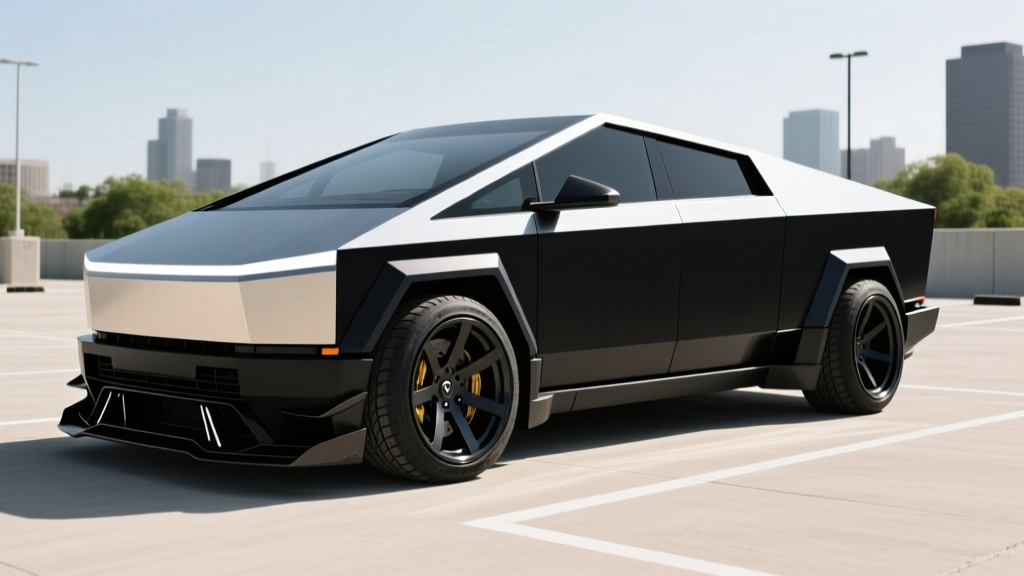
The Tesla Cybertruck already commands attention with its stainless-steel exoskeleton and angular silhouette. But a growing segment of owners is taking things further, dropping the ride height to create what the community calls a slammed Cybertruck. Whether achieved through aftermarket lowering links, adjustable suspension arms, or firmware tweaks to the factory air suspension, the lowered look trades some utility for aggressive stance and improved aerodynamics.
This review examines what you actually gain and lose when you slam a 2026 Cybertruck. We cover real-world range implications, charging speed, warranty risk, ride quality, and whether the modification makes financial and practical sense for your use case.
| Spec | AWD (Dual-Motor) | Cyberbeast (Tri-Motor) |
|---|---|---|
| EPA Range | 340 miles | 320 miles |
| Battery (usable) | ~123 kWh (NMC) | ~123 kWh (NMC) |
| Max DC Fast Charge | 250 kW | 250 kW |
| 10–80% DC Time | ~28 min | ~28 min |
| Level 2 Home Charge | 11.5 kW (~37 mi/hr) | 11.5 kW (~37 mi/hr) |
| 0–60 mph | 3.9 sec | 2.6 sec |
| Horsepower | 600 hp | 845 hp |
| Drivetrain | Dual-Motor AWD | Tri-Motor AWD |
| Efficiency (EPA) | 58 MPGe / 58 kWh/100mi | 56 MPGe / 60 kWh/100mi |
| Base MSRP | $79,990 | $99,990 |
| Battery/Drive Warranty | 8 yr / 120,000 mi | 8 yr / 120,000 mi |
What Does "Slammed" Mean on a Cybertruck?
"Slammed" in the EV truck world refers to lowering the vehicle's ride height below the factory setting. The Cybertruck ships with an adaptive air suspension offering roughly 12 inches of ground clearance in its standard mode, up to 16 inches in Extract mode for off-road use, and a lower entry/exit height.
Owners pursuing the slammed Cybertruck look typically use one of three methods:
- Aftermarket lowering links ($200–$600): Adjustable rods that trick the air suspension height sensors into dropping the truck 1–2 inches below stock. Reversible and popular in the community.
- Adjustable suspension arms ($800–$2,000): Replace factory upper or lower control arms with adjustable units, allowing more aggressive drops while maintaining alignment geometry.
- Coilover conversions ($3,000–$6,000+): Full replacement of the air suspension with static or adjustable coilovers, sacrificing adaptive ride-height capability entirely.
The mildest approach — lowering links — preserves the air suspension's functionality and lets the truck still raise for obstacles. More aggressive methods trade functionality for stance.
Real-World Range: Slammed vs. Stock Cybertruck
Real-World Expectation (Stock): ~270–295 mi highway at 70 mph; ~220–250 mi in cold weather (below 32°F)
Real-World Expectation (Slammed ~1.5 in. drop): ~280–310 mi highway (aerodynamic gain); cold-weather loss remains similar at ~15–20%
Here's where the slammed Cybertruck modification gets interesting from a physics standpoint. Lowering the truck reduces its frontal gap to the road, smoothing underbody airflow and reducing the drag coefficient. The stock Cybertruck already posts a relatively low Cd for a pickup (~0.34), and owners report modest efficiency gains of 2–5% on highway drives after a 1–2 inch drop.
On a 250-mile highway loop at 70 mph in moderate temperatures (65°F), a stock AWD Cybertruck might return around 280 miles of effective range. The same truck, lowered 1.5 inches, could stretch that to roughly 290–295 miles — a gain of 10–15 miles per charge cycle.
However, this aerodynamic benefit comes with a critical trade-off: reduced ground clearance means the truck cannot use its Extract or Off-Road modes without risking underbody contact. If you lower via coilover conversion, you lose the air suspension's adaptive damping entirely, which can degrade ride quality on rough surfaces and increase tire wear from altered camber angles.
Cold-weather range loss remains governed by battery chemistry, not ride height. The Cybertruck's NMC pack loses roughly 15–20% range below freezing regardless of whether the truck is slammed or stock, because energy is diverted to cabin heating and battery thermal management. Preconditioning via the Tesla app before departure mitigates some of this loss.
Charging Speed: Does Lowering Affect the Charge Curve?
| Level | Power | Speed |
|---|---|---|
| Level 1 (120V outlet) | ~1.4 kW | ~3–4 mi/hr |
| Level 2 (240V / 48A Wall Connector) | 11.5 kW | ~37 mi/hr |
| DC Fast Charge (V4 Supercharger) | 250 kW peak | 10–80% in ~28 min |
| DC Fast Charge (V3 Supercharger) | 250 kW peak | 10–80% in ~30 min |
Lowering the Cybertruck does not alter its battery management system, charge port hardware, or thermal conditioning. Charging speeds remain identical to stock: a peak of 250 kW on a V3 or V4 Supercharger, with the charge curve tapering significantly above 80% State of Charge (SoC).
In real-world DC fast-charging, the Cybertruck sustains roughly 200–240 kW between 10–50% SoC, then progressively tapers. The 10–80% charge takes approximately 28 minutes under ideal conditions (battery preconditioned, ambient temperature 60–80°F). Cold or hot ambient temperatures add 5–10 minutes.
One practical note for slammed Cybertruck owners: Supercharger stall clearance varies. Some older V3 stalls have curbed parking blocks or tight approach angles. A truck dropped 2+ inches may scrape on steep driveway transitions at charging stations. Scout your regular stops and consider carrying a portable ramp if you go aggressive on the drop.
For home charging, Tesla's Wall Connector at 48 amps (11.5 kW) adds roughly 37 miles of range per hour. A full overnight charge from 20% to 80% takes about 6–7 hours. The Cybertruck's onboard charger maxes at 11.5 kW, so upgrading to a 60-amp circuit provides no additional speed benefit.
Pricing, Tax Credits, and the Modification Cost Equation
| Trim | MSRP | §30D Credit Eligibility |
|---|---|---|
| AWD (Dual-Motor) | $79,990 | Likely ineligible — exceeds $80,000 truck MSRP cap by $10 after destination; verify on IRS qualified vehicles list |
| Cyberbeast (Tri-Motor) | $99,990 | Ineligible — exceeds $80,000 truck MSRP cap |
| RWD (if available) | ~$60,990 (announced) | Potentially eligible if battery sourcing and buyer income requirements met |
The 2026 Cybertruck's pricing puts the AWD and Cyberbeast trims above the IRS §30D MSRP cap of $80,000 for pickup trucks. The AWD trim at $79,990 plus destination charges typically pushes over the limit. Only a future RWD base model, if released, would likely qualify for the up-to-$7,500 federal credit — and even then, eligibility depends on battery critical-mineral sourcing requirements and buyer income caps ($300,000 joint / $150,000 single modified AGI).
Aftermarket lowering modifications add to your total cost of ownership:
- Lowering links: $200–$600 + ~$200 alignment
- Adjustable control arms: $800–$2,000 + $300–$500 alignment
- Coilover conversion: $3,000–$6,000 + professional installation ($1,000–$2,500)
None of these modifications qualify for any federal or state EV incentive. They are purely aesthetic/performance aftermarket expenses.
Performance and Handling: Lower Center of Gravity, Real Gains?
The Cybertruck is already quick: the AWD dual-motor hits 0–60 mph in 3.9 seconds, while the tri-motor Cyberbeast does it in 2.6 seconds — supercar territory from a 6,800-pound stainless-steel wedge. Lowering the truck doesn't change powertrain output, but it does alter handling dynamics.
A 1–1.5 inch drop lowers the center of gravity by roughly 1–2%, reducing body roll during cornering. On highway on-ramps and sweeping curves, a slammed Cybertruck feels more planted. The air suspension's adaptive damping still functions with lowering links, preserving ride comfort in Normal mode.
However, the Cybertruck's 35-inch all-terrain tires and heavy steering ratio mean this is never going to be a canyon carver regardless of ride height. The real handling improvement is psychological and visual: the truck looks and feels lower, more aggressive, more sports-truck than work-truck.
Towing capacity remains unchanged at 11,000 pounds for the AWD and Cyberbeast trims. However, a slammed truck with reduced suspension travel may experience more rear squat under tongue weight, and you lose the ability to raise the rear for easier trailer hitch alignment.
Warranty, Insurance, and Ownership Risks
This is where the slammed Cybertruck conversation gets serious. Tesla's 8-year / 120,000-mile battery and drive unit warranty covers defects and capacity degradation below 70% retention. But modifying the suspension can give Tesla grounds to deny warranty claims on related components.
Specifically:
- Air suspension components: Any failure of the air springs, compressor, height sensors, or control arms may be denied if aftermarket lowering hardware is installed.
- Half-shafts and CV joints: Altered ride height changes the operating angles of drive axles, potentially accelerating wear. Tesla could attribute premature half-shaft failure to the modification.
- Underbody and battery pack: Reduced ground clearance increases the risk of road-debris strikes to the battery enclosure. Physical damage to the pack from bottoming out will not be covered under warranty.
- Alignment-related tire wear: Aggressive drops without proper correction cause inner-edge tire wear. The Cybertruck's 35-inch tires cost $350–$500 each to replace.
Insurance implications vary by carrier. Most insurers will cover a modified vehicle if disclosed, but aftermarket suspension parts may not be covered in a total-loss valuation. Some specialty insurers (Hagerty, Grundy) offer agreed-value policies that include documented modifications. Always disclose lowering mods to your insurer — undisclosed modifications can void a claim.
Who Should (and Shouldn't) Slam Their Cybertruck?
- You primarily drive on paved roads and highways
- Aesthetics and stance are a top priority
- You accept the warranty risk on suspension and drivetrain components
- You want a modest highway-range efficiency gain (2–5%)
- You don't need Extract mode or serious off-road ground clearance
- You tow frequently and use the air suspension's load-leveling
- You drive on unpaved roads, snow, or off-road trails
- You want to preserve the full factory warranty
- You use the truck for work-site access with rough terrain
- You plan to sell within the warranty period and want maximum resale appeal
The slammed Cybertruck is fundamentally a lifestyle and aesthetic modification with a minor efficiency side-benefit. It suits urban and suburban owners who use the truck as a daily driver and statement piece rather than a work tool or off-road rig.
Pros and Cons of the Slammed Cybertruck Build
- Aggressive, head-turning stance that amplifies the Cybertruck's already bold design
- 2–5% highway efficiency gain from reduced aerodynamic drag
- Slightly improved cornering stability from lower center of gravity
- Reversible with lowering links (most popular method)
- Preserves air suspension functionality with mild drop
- Void or reduced warranty coverage on suspension, drivetrain, and underbody
- Increased risk of underbody/battery damage from road debris and speed bumps
- Loss of Extract mode and off-road ground clearance
- Accelerated tire wear if alignment is not properly corrected
- Potential scraping at Supercharger stations with curbed stalls or steep approaches
- No federal tax credit to offset modification costs (AWD/Cyberbeast already over MSRP cap)
FAQ: Slammed Cybertruck Questions Answered
What is the real-world range of a slammed Cybertruck?
A stock 2026 Cybertruck AWD is EPA-rated at 340 miles. Real-world highway driving at 70 mph yields roughly 270–295 miles. A slammed Cybertruck (1–1.5 inch drop) may gain 10–15 miles of highway range from improved aerodynamics, bringing real-world highway range to approximately 280–310 miles in moderate temperatures. Cold-weather range loss of 15–20% applies regardless of ride height.
How fast does the Cybertruck charge, and does lowering affect it?
The Cybertruck charges at a peak of 250 kW on DC fast chargers, reaching 10–80% in about 28 minutes under ideal conditions. Home Level 2 charging at 11.5 kW adds roughly 37 miles per hour. Lowering the truck has zero impact on charging speed, battery management, or charge-curve behavior.
Does the 2026 Cybertruck qualify for the federal EV tax credit?
The AWD ($79,990) and Cyberbeast ($99,990) trims likely exceed the IRS §30D $80,000 MSRP cap for trucks once destination fees are included. A future RWD base model may qualify, subject to battery-sourcing requirements and buyer income limits ($300K joint / $150K single). Always verify on the IRS qualified vehicles list before purchasing. Aftermarket lowering modifications do not affect credit eligibility.
Is a slammed Cybertruck worth it vs. keeping it stock?
If your priority is aesthetics and you drive primarily on paved roads, the slammed look delivers visual impact with a minor efficiency benefit. If you need the Cybertruck's full utility — off-road clearance, towing convenience, warranty protection — keeping stock ride height is the pragmatic choice. The modification is best suited for owners who view the truck as a lifestyle vehicle rather than a work tool.
What are the biggest risks of slamming a Cybertruck?
The primary risks are warranty denial on air-suspension and drivetrain components, increased underbody/battery-pack vulnerability from reduced ground clearance, accelerated tire wear from altered alignment geometry, and potential scraping at charging stations or steep driveways. Insurance claims may also be affected if modifications are not properly disclosed.
Can I reverse the lowering modification?
Yes, if you use aftermarket lowering links — the most popular method. Removing the links and reinstalling factory sensor rods restores stock ride height in under an hour. Coilover conversions and adjustable control arms are more involved to reverse and may require professional reinstallation of OEM air suspension components.