Quick Verdict: The Electric Truck That Works Like a Truck
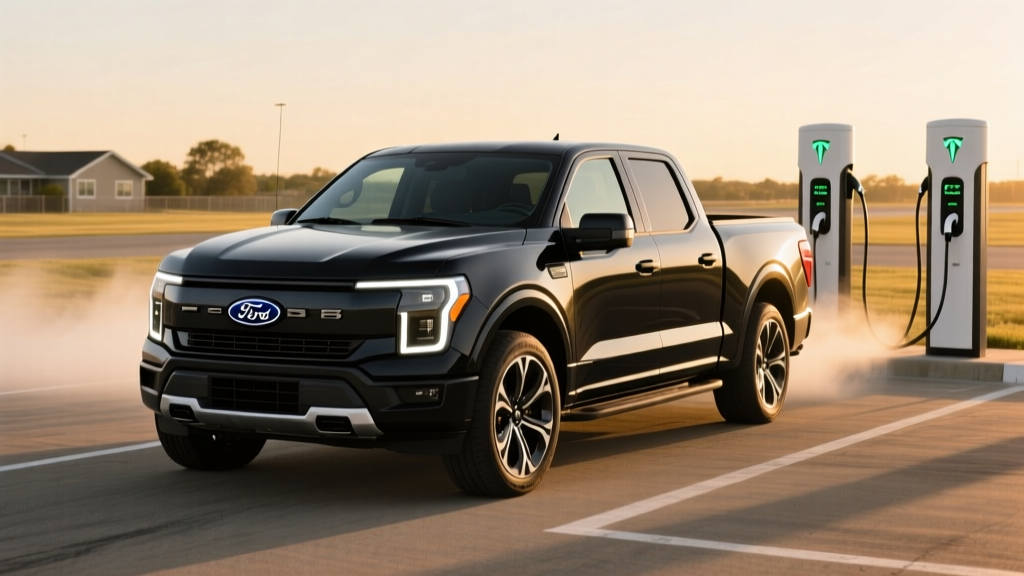
The Ford F-150 Lightning remains the benchmark for buyers who need a full-size pickup that happens to be electric — not an electric vehicle dressed up as a truck. For 2026, Ford has refined the powertrain software, slightly improved efficiency on Extended Range models, and expanded BlueCruise hands-free zones. The core value proposition is unchanged: genuine truck capability (towing, payload, a massive front trunk) paired with daily-driver comfort and the lowest cost-per-mile in the full-size electric pickup segment.
But the Lightning isn't for everyone. Extended Range models carry a premium, real-world highway range falls short of the EPA sticker (especially when towing or in cold weather), and the DC fast-charging curve tapers noticeably above 80% State of Charge. This review breaks down every number that matters — range, charging, pricing, tax credits, and ownership costs — so you can decide if the Lightning fits your driveway.
Range and Efficiency: EPA Stickers vs. Real-World Miles
The 2026 F-150 Lightning is offered with two battery packs. The Standard Range uses a 98 kWh usable lithium-ion NMC (nickel manganese cobalt) pack, while the Extended Range steps up to a 131 kWh usable NMC pack. Ford does not currently offer an LFP (lithium iron phosphate) option in the Lightning — if LFP's lower cost and longer cycle life matter to you, you'll need to look at competitors or wait for future model-year updates.
| Battery | EPA Est. Range | Real-World Highway (70 mph) | Cold Weather (20°F) | Towing (5,000-lb trailer) |
|---|---|---|---|---|
| Standard Range (98 kWh) | 240 mi | ~200–215 mi | ~165–185 mi | ~110–130 mi |
| Extended Range (131 kWh) | 320 mi | ~265–285 mi | ~215–240 mi | ~150–175 mi |
Sources: EPA fueleconomy.gov, real-world testing data. Highway figures assume 70 mph steady-state; cold-weather figures assume cabin heating active. Towing range varies heavily with trailer aerodynamics and terrain.
Efficiency on the Extended Range model rates at approximately 70 MPGe combined (about 48 kWh/100 mi), per fueleconomy.gov. The Standard Range model is slightly more efficient at around 76 MPGe combined (44 kWh/100 mi) thanks to the lighter pack. These are respectable numbers for a 6,000+ lb truck, but they underline a key point: the Lightning prioritizes capability over efficiency. If maximizing miles per kWh is your goal, a smaller EV crossover will always win.
Charging Speed: DC Fast Charge, Level 2, and the Taper Reality
Charging speed is where Lightning buyers need to pay close attention — not just peak kW numbers, but the full charge curve and home-charging practicality.
| Charging Level | Power / Rate | Time or Miles Added | Notes |
|---|---|---|---|
| DC Fast Charge (Extended Range) | Peak 150 kW | 10–80% in ~41 min | Tapers to ~50 kW above 80% SoC |
| DC Fast Charge (Standard Range) | Peak 120 kW | 10–80% in ~38 min | Smaller pack reaches 80% slightly faster |
| Level 2 Home (48A / 11.5 kW) | 11.5 kW | ~14 mi/hr (Ext. Range) | Full charge in ~11–13 hours |
| Level 2 Home (80A / 19.2 kW)* | 19.2 kW | ~23 mi/hr (Ext. Range) | Requires Ford Charge Station Pro + 100A circuit |
| Level 1 (120V outlet) | ~1.4 kW | ~2–3 mi/hr | Emergency/trickle only |
*80A charging requires the Ford Charge Station Pro and a dedicated 100-amp circuit installed by a licensed electrician. Most homes will need a panel upgrade to support this — budget $2,000–$4,000 for the electrical work alone.
The Lightning's 150 kW peak DC fast-charge rate is conservative compared to 800V rivals like the Hyundai Ioniq 5 (which peaks above 230 kW). Ford uses a 400V architecture, which limits peak charge speed but simplifies the powertrain design. In practice, the 10–80% time of roughly 41 minutes on the Extended Range is acceptable for road-trip stops, but you'll notice the taper: charging from 80–100% can add another 30+ minutes. Plan your DC fast-charging stops around the 80% mark and move on.
For daily ownership, home Level 2 charging is what matters. At 11.5 kW (the standard 48A mobile charger or most wall units), you'll recover about 14 miles of range per hour — enough to fully replenish an Extended Range pack overnight. The optional 80A Ford Charge Station Pro is a genuine advantage for high-mileage drivers who need a full battery every morning, but the electrical infrastructure cost is real.
Performance and Drivetrain
Every 2026 F-150 Lightning comes with dual motors and standard all-wheel drive. There is no rear-wheel-drive option.
| Spec | Standard Range | Extended Range |
|---|---|---|
| Horsepower | 452 hp | 580 hp |
| Torque | 775 lb-ft | 775 lb-ft |
| 0–60 mph | ~3.8 sec | |
| Drivetrain | Dual-motor AWD | Dual-motor AWD |
| Max Payload | ~2,235 lb | ~1,800 lb |
| Max Towing (with Max Tow Pkg) | 7,700 lb | 10,000 lb |
The Extended Range's 3.8-second 0–60 time makes it one of the quickest full-size pickups ever sold, but the real story is the 775 lb-ft of instant torque available from 0 rpm. That makes merging, passing, and low-speed trailering effortless. Payload and towing are where the physics of batteries shows: the heavier Extended Range pack reduces payload capacity by over 400 lb compared to the Standard Range. If you regularly haul heavy bed loads, the Standard Range actually carries more.
The Max Tow Package (available on Lariat and Platinum trims) bumps the Extended Range's tow rating to 10,000 lb — competitive with many gas F-150 configurations. Just remember that towing range drops dramatically: expect 150–175 miles before needing a charge on a flat route with a 5,000-lb trailer, and less with heavier loads or hills.
Pricing, Trims, and Federal Tax Credit Eligibility
The 2026 F-150 Lightning lineup spans four trims. Pricing below reflects base MSRP before destination charges ($1,995).
| Trim | Battery | Base MSRP | Est. After §30D Credit* |
|---|---|---|---|
| Pro | Standard Range | $52,990 | ~$45,490 |
| XLT | Standard Range | $57,990 | ~$50,490 |
| Lariat | Extended Range | $72,990 | ~$65,490 |
| Platinum | Extended Range | $87,990 | ~$80,490 |
*The IRS §30D federal tax credit provides up to $7,500 for qualifying new EVs. Eligibility depends on three factors that change frequently:
- MSRP Cap: Pickup trucks must have an MSRP at or below $80,000. The Platinum trim exceeds this — buyers will NOT receive the federal credit on Platinum models.
- Buyer Income Cap: Modified adjusted gross income must not exceed $150,000 (single), $225,000 (head of household), or $300,000 (joint filers).
- Battery Sourcing: The credit is split into two halves ($3,750 each) based on critical-mineral and battery-component sourcing requirements. Ford has worked to qualify for the full $7,500 on most Lightning trims, but component-sourcing rules tighten annually. Verify current-year eligibility on the IRS Clean Vehicle Provisions page before purchasing.
As of the 2026 model year, the Pro, XLT, and Lariat trims qualify for the full $7,500 credit for eligible buyers. The Platinum trim's MSRP exceeds the $80,000 truck cap, disqualifying it. The credit can now be transferred to the dealer at point of sale, reducing your out-of-pocket cost at purchase rather than waiting for a tax refund. Consult a tax professional to confirm your personal eligibility.
Interior, Cargo, and Technology
The Lightning's cabin mirrors the gas F-150 — which is a compliment. The available 15.5-inch vertical touchscreen (Lariat and above) runs Ford's SYNC 4A system with wireless Apple CarPlay and Android Auto, natural-language voice commands, and over-the-air updates. The Pro and XLT trims use a smaller 12-inch screen that's still fully functional.
Where the Lightning diverges from its gas sibling is the Mega Power Frunk — a 14.1 cubic-foot lockable front trunk with 400 lb of payload capacity, a drain plug, and four 120V outlets. It's genuinely useful for tools, groceries, or tailgate supplies, and it's the single feature that most convinces gas-truck owners to switch.
Cargo and passenger dimensions:
- Bed length: 5.5 ft (all trims)
- Bed volume: 52.8 cu ft
- Frunk volume: 14.1 cu ft
- Rear legroom (SuperCrew): 43.6 in
- Front legroom: 43.9 in
- Pro Power Onboard: 2.4 kW standard (Pro/XLT), 9.6 kW available (Lariat/Platinum) — turns the truck into a mobile generator with 240V and 120V outlets in the bed
The available 9.6 kW Pro Power Onboard is a standout: it can run power tools at a job site, appliances during an outage, or a full campsite setup. Ford also offers the Intelligent Backup Power system (requires the Ford Charge Station Pro and a Home Integration System), which can power essential home circuits during an outage — effectively turning the Lightning into a home battery.
On the driver-assist front, Ford's BlueCruise hands-free driving system is available on mapped divided highways. BlueCruise is an SAE Level 2 system — you must remain attentive and ready to take over at all times, even when your hands are off the wheel. It is not self-driving. The system is competent on long interstate hauls and continues to expand its hands-free road coverage via OTA updates.
Battery Warranty and Long-Term Ownership
Ford backs the Lightning's battery pack and electric powertrain with an 8-year / 100,000-mile warranty (whichever comes first), with a capacity-retention threshold of 70%. If the battery degrades below 70% of its original capacity within that period, Ford will repair or replace it. This is industry-standard and matches most competitors.
The rest of the vehicle carries a 3-year / 36,000-mile bumper-to-bumper warranty and a 5-year / 60,000-mile powertrain warranty on non-battery components.
Long-term battery degradation data on the Lightning's NMC packs is still maturing — the truck launched for the 2022 model year, so the oldest examples are approaching four years on the road. Early data from fleet operators and high-mileage owners suggests degradation in the 5–8% range at 60,000–80,000 miles, which is within expectations for liquid-cooled NMC packs. Ford's thermal management system appears effective at preserving cell health, even in hot-climate fleet use.
Insurance costs run 15–25% higher than a comparably equipped gas F-150, according to industry averages — a factor worth building into your total cost of ownership calculation.
How It Compares: Lightning vs. Rivals
| Spec | F-150 Lightning (Ext. Range) | Rivian R1T (Dual-Motor Max) | Chevrolet Silverado EV (4WT) |
|---|---|---|---|
| EPA Range | 320 mi | ~410 mi | ~380 mi |
| Peak DC Charge | 150 kW | ~200 kW | ~200 kW |
| 10–80% Time | ~41 min | ~30 min | ~35 min |
| 0–60 mph | 3.8 sec | ~3.5 sec | ~4.5 sec |
| Max Towing | 10,000 lb | 11,000 lb | 10,000 lb |
| Starting MSRP | $52,990 | ~$75,900 | ~$55,000 (WT) |
| Frunk | 14.1 cu ft | 11.0 cu ft | 10.2 cu ft |
The Lightning's primary advantage is price and familiarity. It undercuts the Rivian R1T by over $20,000 at the base level, and it drives, looks, and feels like the F-150 that millions of Americans already know. The Silverado EV is a closer competitor on price, but its unconventional styling and limited trim availability (the consumer-focused LT and RST trims carry higher MSRPs) give the Lightning an edge in broad-market appeal.
Where the Lightning falls short is charging speed and maximum range. Both the Rivian R1T Max and the Silverado EV offer longer EPA ranges and faster DC charging. If you frequently drive 300+ mile routes between chargers, or if you want the shortest possible road-trip stops, the Lightning's 150 kW peak and 320-mile ceiling are genuine limitations.
Pros and Cons
- Lowest starting price in the full-size electric truck segment
- Massive 14.1 cu ft frunk with 400-lb capacity
- 9.6 kW Pro Power Onboard turns the truck into a mobile generator
- Standard AWD and 775 lb-ft torque on every trim
- Qualifies for the full $7,500 federal tax credit (Pro/XLT/Lariat)
- Familiar F-150 cabin, controls, and dealer network
- Available home backup power (Intelligent Backup Power)
- 150 kW peak DC charge rate is slow vs. 800V competitors
- Extended Range is expensive ($72,990+ before options)
- Towing range drops to 150–175 mi — plan accordingly
- Heavy battery reduces payload vs. Standard Range and gas F-150
- Platinum trim exceeds $80K MSRP cap — no federal tax credit
- Real-world highway range is 10–15% below EPA sticker
- Only one bed length (5.5 ft) — no long-bed option
Who Should Buy the F-150 Lightning?
Choose the Lightning if: You need a real truck for work or recreation (towing, hauling, job-site power), you can charge at home, you want the lowest entry price in the electric truck segment, and you value the frunk and Pro Power Onboard as daily-use features.
Look elsewhere if: You regularly drive 300+ miles between charges (consider the Rivian R1T Max or Silverado EV 4WT for longer range), you need fast DC charging for frequent road trips, or you want a lighter, more efficiency-focused EV for commuting without truck duties.
The best-value configuration for most buyers is the XLT with the Standard Range battery at ~$57,990 MSRP. After the $7,500 federal credit (for eligible buyers), you're looking at roughly $50,490 before destination and options — a price that competes directly with well-equipped gas F-150s once you factor in fuel savings. Add the Extended Range battery only if you genuinely need the 320-mile ceiling for regular longer drives; the $15,000 premium is steep, and the added weight costs you payload.
Frequently Asked Questions
What is the real-world range of the F-150 Lightning?
The Extended Range model carries an EPA estimate of 320 miles, but expect 265–285 miles in real-world highway driving at 70 mph, and 215–240 miles in cold weather (around 20°F). The Standard Range model's 240-mile EPA figure translates to roughly 200–215 miles on the highway.
How fast does the F-150 Lightning charge?
On a DC fast charger, the Extended Range peaks at 150 kW and charges from 10–80% in approximately 41 minutes. At home on a standard Level 2 (48A/11.5 kW) charger, you'll add about 14 miles of range per hour. The optional 80A Ford Charge Station Pro adds about 23 miles per hour but requires a 100A electrical circuit.
How much does the F-150 Lightning cost after tax credits?
The base Pro trim starts at $52,990 MSRP and drops to approximately $45,490 after the $7,500 federal §30D credit for eligible buyers. The XLT comes in around $50,490 after credit. Note: the Platinum trim exceeds the $80,000 MSRP cap for trucks and does not qualify for the federal credit.
Does the F-150 Lightning qualify for the federal EV tax credit?
Yes — the Pro, XLT, and Lariat trims qualify for the full $7,500 credit under current IRS §30D rules, provided the buyer meets income limits ($150K single / $300K joint) and the vehicle meets battery-sourcing requirements. The Platinum trim does not qualify due to its MSRP exceeding the $80,000 truck cap. Always verify current eligibility before purchase.
Is the F-150 Lightning worth buying vs. the Rivian R1T or Silverado EV?
It depends on priorities. The Lightning wins on price, frunk space, dealer network familiarity, and Pro Power Onboard versatility. The Rivian R1T offers longer range and faster charging but at a significantly higher price. The Silverado EV is competitive on range and price but has limited trim availability and a less conventional design. For most truck buyers who want an EV without a radical departure from the F-150 they know, the Lightning is the pragmatic choice.
Can the F-150 Lightning power my home during an outage?
Yes, with the available Intelligent Backup Power system. This requires the Ford Charge Station Pro (80A) and the Home Integration System (a transfer switch installed by an electrician). The Lightning can supply up to 9.6 kW to essential home circuits, potentially powering a home for several days depending on usage.