Quick Verdict: Is the 2025 Macan EV Worth It?
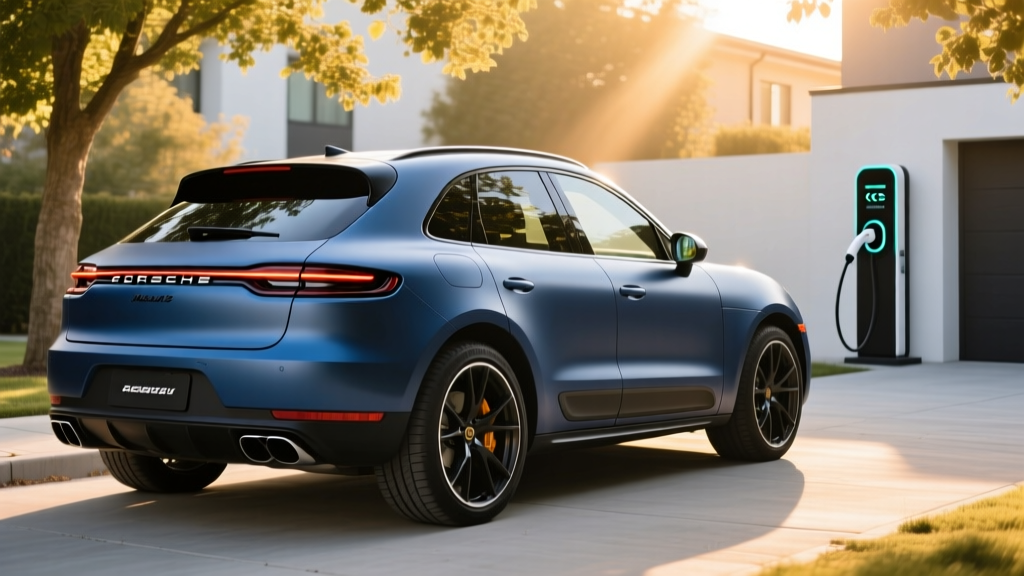
The 2025 Porsche Macan EV is a luxury electric SUV that prioritizes driving dynamics and charging speed over maximum range or value. The Macan 4 starts at $78,800 with an EPA-estimated 308 miles of range, while the performance-focused Macan Turbo starts at $105,300 with 288 miles. Both use a 100 kWh (95 kWh usable) NMC battery on Porsche's 800-volt PPE platform, enabling peak DC fast charging at 270 kW — reaching 10-80% in approximately 21 minutes under ideal conditions. It does not qualify for the federal §30D tax credit due to its MSRP exceeding the $80,000 SUV cap on the Turbo trim and foreign battery sourcing on both. If you want a Porsche that charges fast and drives like one, this is it. If you need maximum range per dollar or a tax credit, look at the Tesla Model Y, BMW iX, or Genesis GV60.
Range and Efficiency: EPA vs. Real-World Expectations
Porsche offers two trims for the 2025 model year, and the range difference between them is meaningful for buyers who road-trip regularly.
| Trim | EPA Range | Combined MPGe | kWh/100 mi | Battery (Usable) |
|---|---|---|---|---|
| Macan 4 | 308 mi | 84 MPGe | 40 | 95 kWh (NMC) |
| Macan Turbo | 288 mi | 78 MPGe | 43 | 95 kWh (NMC) |
Those EPA figures assume moderate temperatures and mixed driving. Here is what to expect in real-world conditions based on the 800V platform's efficiency profile and testing of PPE-based vehicles:
Real-World Range Estimates
- Highway (75 mph, 70°F): Expect ~250–270 mi (Macan 4), ~235–255 mi (Turbo)
- Cold weather (30°F, mixed driving): Expect ~215–245 mi (Macan 4), ~200–230 mi (Turbo)
- City/regen-heavy (65°F): Close to EPA sticker, sometimes slightly above
The Macan EV's heat pump (standard) helps limit cold-weather losses compared to EVs without active thermal management, but NMC chemistry still sees 15–25% range reduction in freezing temperatures. Source: fueleconomy.gov
Charging Speed: 800V Architecture Pays Off
The Macan EV's 800-volt Premium Platform Electric (PPE) architecture — co-developed with Audi — is its strongest ownership advantage. Higher voltage means the car can accept more power at the charger without excessive current, translating to faster charging sessions and less heat generation in the battery pack.
| Level | Power | Time | Miles Added |
|---|---|---|---|
| Level 1 (120V household) | ~1.4 kW | ~68 hours (10–80%) | ~3–4 mi/hr |
| Level 2 (240V, 48A home charger) | 11.5 kW | ~9 hours (0–100%) | ~28–30 mi/hr |
| DC Fast Charge (peak) | 270 kW | ~21 min (10–80%) | ~200+ mi in 21 min |
| DC Fast Charge (typical 150 kW station) | ~150 kW | ~30 min (10–80%) | ~140 mi in 30 min |
Charging curve reality check: The 270 kW peak is not sustained across the entire session. Expect the Macan EV to hold above 200 kW from roughly 10–40% State of Charge (SoC), then taper progressively. By 70% SoC, you are likely seeing 100–130 kW. This is normal physics for lithium-ion cells — the charge management system slows current to protect battery longevity. The 21-minute 10–80% claim assumes a 350 kW-capable charger (like an Electrify America Hypercharger) and a preconditioned battery.
Preconditioning matters: Navigate to a DC fast charger using the car's built-in navigation, and the Macan EV will automatically warm or cool the battery to optimal temperature before you arrive. Skipping this step in cold weather can add 10+ minutes to your charging session.
The Macan EV ships with the NACS (Tesla) charging port for the North American market, giving native access to Tesla Superchargers (with V4 stalls supporting higher power) as well as CCS-equipped networks via the included adapter. This is a significant practical advantage over CCS-only vehicles as the Supercharger network remains the most reliable public charging infrastructure in the U.S.
Performance: It Drives Like a Porsche
This is where the Macan EV justifies its premium pricing. Both trims feature dual-motor all-wheel drive and Porsche's adaptive air suspension with rear-axle steering (optional on Macan 4, standard on Turbo).
| Spec | Macan 4 | Macan Turbo |
|---|---|---|
| Horsepower | 402 hp | 630 hp (with Launch Control) |
| Torque | 479 lb-ft | 833 lb-ft (with Launch Control) |
| 0–60 mph | 4.9 sec | 3.1 sec |
| Top Speed | 136 mph | 161 mph |
| Drivetrain | Dual-motor AWD | Dual-motor AWD |
The Turbo's 3.1-second 0–60 time puts it in supercar territory — faster than a base 911 Carrera. But the real story is the chassis: low center of gravity from the floor-mounted battery, precise steering, and the kind of body control that makes canyon roads feel like a playground. Regenerative braking offers up to 290 kW of recuperation, enabling genuine one-pedal driving in most situations.
Cost of Ownership: Macan EV vs. Gas Macan vs. Competitors
Let's break down what owning a 2025 Macan EV actually costs compared to its gas-powered predecessor and key EV competitors.
| Category | Macan EV (Macan 4) | Gas Macan (2024 base) | BMW iX xDrive50 |
|---|---|---|---|
| Base MSRP | $78,800 | $62,900 | $87,250 |
| Federal Tax Credit (§30D) | $0 (MSRP/sourcing) | N/A | $0 (MSRP cap) |
| Fuel/Energy (5 yr, 60k mi) | ~$4,800* | ~$10,200** | ~$5,100* |
| Maintenance (5 yr) | ~$1,200 | ~$4,500 | ~$1,400 |
| Insurance (5 yr avg) | ~$14,500 | ~$11,200 | ~$15,000 |
| Est. Depreciation (5 yr) | ~$32,000 | ~$25,000 | ~$38,000 |
| Total Est. 5-Yr Cost | ~$131,300 | ~$113,800 | ~$146,750 |
*Based on $0.16/kWh national average electricity, 80% home / 20% public DC charging mix. **Based on $3.60/gal premium, 22 MPG combined. Sources: fueleconomy.gov, AAA fuel data. Insurance estimates are illustrative; get a quote for your profile.
Common Misconceptions About the Macan EV
| Myth | Fact |
|---|---|
| "It gets the $7,500 federal tax credit." | The Macan 4 ($78,800) is under the $80,000 SUV MSRP cap, but its battery components and critical minerals are sourced outside the U.S./FTA-partner supply chain required by IRS §30D rules. The Turbo ($105,300) exceeds the cap outright. Neither qualifies as of current sourcing disclosures. |
| "The range is too low for road trips." | 308 EPA miles (Macan 4) is competitive with the BMW iX (307 mi) and exceeds the Jaguar I-PACE (246 mi). With 270 kW peak charging, you add ~200 miles in 21 minutes — enough for most road-trip stops. |
| "I need a Tesla adapter for Superchargers." | The 2025 Macan EV has a native NACS port for the U.S. market. No adapter needed for Tesla Superchargers. A CCS adapter is included for non-Tesla networks. |
| "EV maintenance is free." | No oil changes, but tire wear is 20–30% faster on EVs due to weight and instant torque. Budget for tire replacement every 25,000–35,000 miles. Cabin air filters, brake fluid checks, and wiper fluid still apply. |
| "The battery will need replacing soon." | Porsche warranties the battery for 8 years / 100,000 miles with a minimum 70% capacity retention threshold. NMC batteries on 800V systems with active thermal management typically lose 8–12% capacity over 100k miles in real-world fleet data. |
Home Charging Setup: What You Actually Need
Charging a Macan EV at home is where ownership gets convenient — but the setup cost is real and varies significantly by your home's electrical panel.
| Component | Low End | High End | Notes |
|---|---|---|---|
| Level 2 Charger (48A, hardwired) | $500 | $800 | Porsche Mobile Charger Connect or ChargePoint Home Flex |
| Electrical Permit | $50 | $300 | Varies by municipality |
| Electrician Labor (simple run) | $600 | $1,200 | Panel is near garage, 60A breaker available |
| Electrician Labor (complex run) | $1,500 | $3,500 | Long wire run, conduit, or subpanel needed |
| Panel Upgrade (if needed) | $2,000 | $5,000 | Upgrading from 100A to 200A service |
| Total (no panel upgrade) | $1,150 | $2,300 | Most homes with 200A service |
| Total (with panel upgrade) | $3,150 | $7,300 | Older homes with 100A service |
The Macan EV's 11.5 kW onboard charger means you need a 60-amp circuit (48A continuous draw) to get the maximum Level 2 speed. A 40-amp circuit (32A continuous) will still add about 20 miles per hour of charging — sufficient if you drive less than 80 miles daily and charge overnight.
Critical note: Always hire a licensed electrician to assess your panel capacity before purchasing a charger. A 200-amp panel with existing heavy loads (electric range, dryer, HVAC) may not have headroom for a 60-amp EV circuit without a load-management device or panel upgrade. Final specifications should come from your electrician, not an article.
Who Should Buy the 2025 Macan EV?
Decision Framework: Is the Macan EV Right for You?
Choose the Macan 4 if:
- You want a luxury EV SUV with Porsche driving dynamics under $80,000
- You have reliable home charging (Level 2) and drive under 300 miles between charges
- You value 800V fast-charging for road trips over maximum cabin space
- You want NACS native access to Tesla Superchargers
Choose the Macan Turbo if:
- You want 630 hp and 3.1-second 0–60 performance in a daily-driver SUV
- You accept the $105,300+ price and 288-mile range as the performance trade-off
- Track-mode capability and rear-axle steering are priorities
Look elsewhere if:
- You need the federal $7,500 tax credit — the Macan EV does not qualify under current IRS §30D sourcing rules
- You need 350+ miles of EPA range — consider the Lucid Gravity or Rivian R1S
- You want three-row seating — the Macan is a compact two-row SUV with 17.1 cu ft of cargo space (behind rear seats)
- Budget is the primary concern — the Hyundai Ioniq 5 or Tesla Model Y deliver strong EV experiences for $40,000–$55,000
Interior, Tech, and Daily Livability
The Macan EV's cabin is a clear step above its gas predecessor in technology. A 12.6-inch curved digital instrument cluster sits ahead of the driver, with a 10.9-inch central touchscreen running Porsche Communication Management (PCM) and an optional 10.9-inch passenger display. Wireless Apple CarPlay and Android Auto are standard.
Cargo space is 17.1 cubic feet behind the rear seats and 48.7 cubic feet with the rear seats folded — competitive with the gas Macan but less than the BMW iX (35.5 / 77.9 cu ft). There is a small front trunk (frunk) at approximately 2.9 cubic feet, enough for charging cables and a small bag.
Driver assistance comes via Porsche InnoDrive, which includes adaptive cruise control, lane-keeping assist, and traffic sign recognition. This is an SAE Level 2 system — you must keep your hands on the wheel and eyes on the road at all times. It is not autonomous driving.
ADAS Level Clarification: Porsche InnoDrive is a Level 2 driver-assistance system per SAE International definitions. The driver remains fully responsible for vehicle operation. No production consumer vehicle sold in the U.S. offers Level 3 or higher autonomous driving as of 2026.
Warranty and Long-Term Battery Health
Porsche provides the following coverage for the 2025 Macan EV:
- Basic vehicle warranty: 4 years / 50,000 miles
- Battery warranty: 8 years / 100,000 miles (minimum 70% capacity retention)
- Corrosion warranty: 12 years, unlimited miles
- Roadside assistance: 4 years / 50,000 miles
To maximize long-term battery State of Health (SoH), follow these practices: keep daily charging to 80% SoC (the car's battery management system lets you set this limit), use DC fast charging sparingly (it's fine for road trips, but daily 270 kW sessions accelerate degradation), and precondition the battery before fast charging in extreme temperatures. The 800V PPE platform's active liquid thermal management system handles most of this automatically, but user habits still matter over a 10+ year ownership horizon.
Frequently Asked Questions
Does the 2025 Macan EV qualify for any tax credits?
As of current IRS guidance, the Macan EV does not qualify for the federal §30D clean vehicle credit. The Macan Turbo exceeds the $80,000 MSRP cap for SUVs outright. The Macan 4 falls under the cap but does not meet the critical-mineral and battery-component sourcing requirements. State and local incentives may apply — check your state's EV rebate program and consult a tax professional for your specific situation.
Can I charge the Macan EV at Tesla Superchargers?
Yes. The 2025 Macan EV has a native NACS (North American Charging Standard) port, meaning it plugs directly into Tesla Supercharger V3 and V4 stalls without an adapter. You will need to set up charging through the Tesla app or Porsche's charging integration. CCS-network chargers (Electrify America, EVgo) work via the included CCS adapter.
How does the Macan EV compare to the gas Macan on cost?
The Macan EV costs roughly $16,000 more upfront than the base gas Macan. However, you save approximately $5,400 on fuel and $3,300 on maintenance over 5 years / 60,000 miles. The net premium after savings is approximately $7,300 over five years, before factoring in higher insurance and faster depreciation on the EV. If electricity is cheap in your area (under $0.12/kWh) and you drive more than 12,000 miles per year, the gap narrows further.
What is the real-world highway range?
Expect approximately 250–270 miles at 75 mph in moderate temperatures for the Macan 4, and 235–255 miles for the Turbo. In freezing weather, subtract another 15–25%. These figures assume you are not using roof cargo boxes or towing, both of which reduce range further.
Is the Macan EV good for road trips?
Yes, with planning. The 308-mile EPA range (Macan 4) means you will stop roughly every 220–250 real-world miles for comfort and charging. The 270 kW peak charge rate means a 10–80% session takes about 21 minutes at a capable charger — comparable to a gas stop when you factor in restroom and food breaks. The NACS port opens up the entire Supercharger network, which is the most reliable long-distance charging option in the U.S.
How much does insurance cost for the Macan EV?
Expect annual premiums between $2,500 and $3,500 depending on your state, driving record, age, and coverage level. EVs generally cost 15–25% more to insure than equivalent gas vehicles due to higher repair costs (specialized body shops, battery replacement risk). Get quotes from at least three insurers before purchasing — some companies now offer EV-specific discounts.