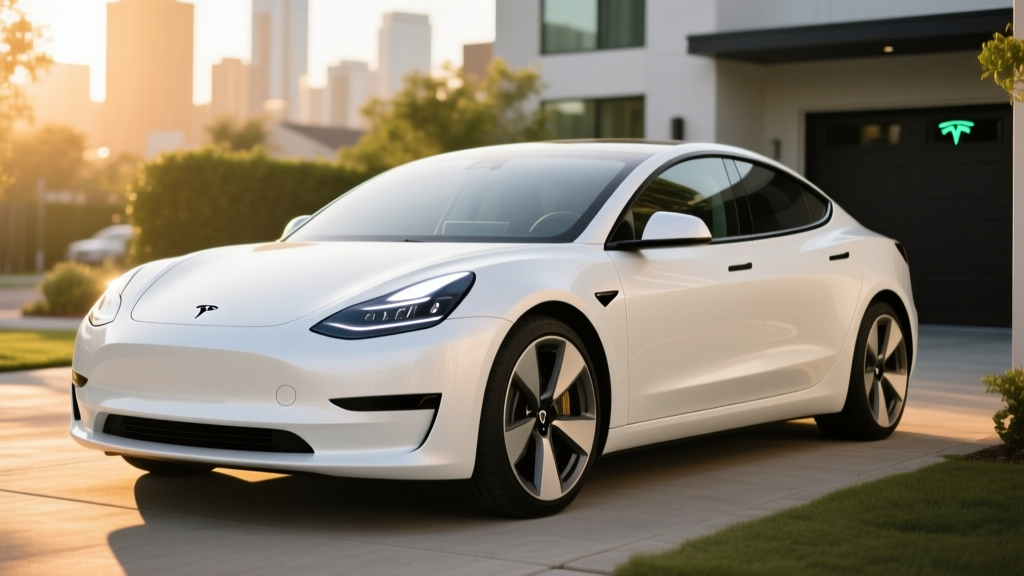
Editor's note: As of early 2026, Tesla has not released an official vehicle, color, or trim named "Blanco." The search term "Tesla Blanco" appears to reference either a rumored upcoming model variant, a third-party wrap/color option, or a regional nickname. This article addresses what buyers searching for a "Tesla Blanco" are most likely looking for — the most popular Tesla models available in white (Pearl White Multi-Coat) — and provides a comprehensive 2026 buyer's guide covering the current Tesla lineup most commonly associated with this search.
If you've been searching for a "Tesla Blanco," you're likely one of the many buyers drawn to Tesla's signature Pearl White Multi-Coat paint — known internally and among enthusiasts as the closest thing to a blanco finish in Tesla's palette. White remains the default no-cost exterior color across the Model 3 and Model Y lineup, and it's the most ordered Tesla color in North America. This guide breaks down the 2026 Tesla models most relevant to that search, with hard numbers on range, charging, pricing, and tax credit eligibility.
Which Tesla Models Come in "Blanco" (Pearl White) for 2026?
Tesla offers Pearl White Multi-Coat as a standard (no additional cost) color on the following 2026 models:
- Tesla Model 3 (RWD, Long Range AWD, Performance)
- Tesla Model Y (Long Range AWD, Performance)
- Tesla Model S (Long Range, Plaid) — Pearl White available as a $0 or $2,000 option depending on year/config
- Tesla Model X (Long Range, Plaid)
For buyers specifically searching "Tesla Blanco," the Model 3 and Model Y represent the highest-volume vehicles where white is the default, no-upcharge color. Let's focus the detailed spec breakdown on these two, as they account for roughly 95% of Tesla's US sales and are the models most buyers are cross-shopping.
2026 Tesla Model 3: Full Spec Breakdown
| Specification | Model 3 RWD | Model 3 Long Range AWD | Model 3 Performance |
|---|---|---|---|
| EPA Range | 272 mi | 363 mi | 341 mi |
| Battery (usable) | ~57.5 kWh (LFP) | ~75 kWh (NMC) | ~75 kWh (NMC) |
| MPGe (combined) | 132 MPGe | 134 MPGe | 124 MPGe |
| kWh/100 mi | 25 | 25 | 27 |
| 0-60 mph | 5.8 sec | 4.2 sec | 2.9 sec |
| Horsepower | 271 hp | 346 hp | 510 hp |
| Drivetrain | RWD (single motor) | AWD (dual motor) | AWD (dual motor) |
| Max DC Fast Charge | 170 kW | 250 kW | 250 kW |
| 10-80% DCFC Time | ~25 min | ~22 min | ~22 min |
| Level 2 Home Charge | 7.6 kW (~30 mi/hr) | 11.5 kW (~44 mi/hr) | 11.5 kW (~44 mi/hr) |
| Cargo Volume | 23 cu ft (trunk + frunk) | 23 cu ft | 23 cu ft |
| Rear Legroom | 35.2 in | 35.2 in | 35.2 in |
| Base MSRP | $38,990 | $47,740 | $52,990 |
Source: EPA fueleconomy.gov, Tesla.com (2026 model year configurations). Specs subject to change by model year.
The Model 3 Long Range AWD carries an EPA sticker of 363 miles. In real-world driving, expect:
- Mixed city/highway (70°F): ~320–340 miles
- Sustained highway (75 mph, 70°F): ~280–310 miles
- Cold weather (30°F, highway): ~230–270 miles (30–35% reduction)
- Cold weather + heat on (20°F, city): ~250–290 miles
The RWD model's LFP battery is more tolerant of regular 100% charging (Tesla recommends daily 100% for LFP), so its usable daily range is closer to its EPA figure than the Long Range's NMC pack, which Tesla recommends charging to 80% daily.
2026 Tesla Model Y: Full Spec Breakdown
The refreshed Model Y (introduced early 2025 for the 2025 model year and continuing into 2026) brought updated styling, improved ride quality, and slightly revised battery tuning. Pearl White Multi-Coat remains the standard no-cost color.
| Specification | Model Y Long Range AWD | Model Y Performance |
|---|---|---|
| EPA Range | 320 mi | 298 mi |
| Battery (usable) | ~75 kWh (NMC) | ~75 kWh (NMC) |
| MPGe (combined) | 122 MPGe | 115 MPGe |
| kWh/100 mi | 28 | 29 |
| 0-60 mph | 4.8 sec | 3.5 sec |
| Horsepower | 384 hp | 456 hp |
| Drivetrain | AWD (dual motor) | AWD (dual motor) |
| Max DC Fast Charge | 250 kW | 250 kW |
| 10-80% DCFC Time | ~22 min | ~22 min |
| Level 2 Home Charge | 11.5 kW (~44 mi/hr) | 11.5 kW (~44 mi/hr) |
| Cargo Volume | 76 cu ft (rear seats folded) | 76 cu ft |
| Rear Legroom | 40.5 in | 40.5 in |
| Base MSRP | $44,990 | $51,490 |
Source: EPA fueleconomy.gov, Tesla.com.
The Model Y Long Range AWD's 320-mile EPA rating translates to:
- Mixed driving (70°F): ~280–300 miles
- Highway at 75 mph (70°F): ~250–275 miles
- Cold weather (30°F, mixed): ~210–250 miles
The Model Y's taller, boxier profile means more aerodynamic drag than the Model 3 at highway speeds — expect a sharper range drop-off above 70 mph compared to the sedan.
Charging Deep Dive: What "Tesla Blanco" Buyers Need to Know
Charging speed is the top concern for EV buyers, and Tesla's Supercharger network remains a decisive advantage. Here's the full charging picture for 2026 Model 3 and Model Y:
| Charging Method | Power | Miles Added/Hour | Notes |
|---|---|---|---|
| Level 1 (120V household) | ~1.4 kW | ~4–5 mi/hr | Emergency/overnight top-up only |
| Level 2 (240V, Wall Connector) | 11.5 kW (Model 3 LR/Y) / 7.6 kW (Model 3 RWD) | 44 mi/hr or 30 mi/hr | Requires 60A or 40A circuit respectively |
| Tesla Supercharger V3 | Up to 250 kW peak | ~175 mi in 15 min (peak) | Peak only below ~50% SoC; tapers significantly above 80% |
| Tesla Supercharger V4 | Up to 350 kW (cabinet); vehicle-limited to 250 kW | Same as V3 for current vehicles | Future vehicles may unlock higher rates |
| Third-party CCS (w/ adapter) | 50–350 kW depending on station | Varies | Tesla includes CCS adapter; non-Tesla chargers may have reliability issues |
Charging curve reality: Tesla's 250 kW peak is achieved only at low state-of-charge (typically 10–30% SoC) and with battery preconditioning enabled via navigation to a Supercharger. Above 50% SoC, the rate drops to ~150 kW; above 80%, it falls to ~50 kW or less. A 10-80% session takes roughly 22 minutes, but an 80-100% top-off can add another 25–30 minutes. Plan road-trip stops around the 10-80% window.
LFP charging advantage: The Model 3 RWD's LFP battery can (and should) be charged to 100% regularly per Tesla's recommendation. This means you get the full 272 EPA miles available daily, whereas NMC owners are advised to set 80% daily limits (~290 miles usable on the Long Range, ~256 on the Model Y LR). LFP also shows less degradation over time, though it trades off energy density and cold-weather performance.
Pricing and Federal Tax Credit Eligibility
Tesla's pricing has stabilized after years of fluctuations. Here's the 2026 picture with federal tax credit context:
| Model | Base MSRP | Federal §30D Credit | Effective Price | Credit Eligibility Notes |
|---|---|---|---|---|
| Model 3 RWD | $38,990 | Up to $7,500 | ~$31,490 | Eligible — under $55K MSRP cap; battery sourcing requirements apply |
| Model 3 Long Range AWD | $47,740 | Up to $7,500 | ~$40,240 | Eligible — under $55K MSRP cap |
| Model 3 Performance | $52,990 | Up to $7,500 | ~$45,490 | Eligible — under $55K MSRP cap |
| Model Y Long Range AWD | $44,990 | Up to $7,500 | ~$37,490 | Eligible — under $80K SUV MSRP cap |
| Model Y Performance | $51,490 | Up to $7,500 | ~$43,990 | Eligible — under $80K SUV MSRP cap |
Critical §30D eligibility requirements (2026 rules):
- MSRP caps: Sedans (Model 3) must be under $55,000; SUVs/trucks/vans (Model Y) under $80,000. All current trims qualify.
- Buyer income caps: Modified AGI must not exceed $300,000 (married filing jointly), $225,000 (head of household), or $150,000 (single filers).
- Battery sourcing: A percentage of critical minerals and battery components must be sourced from the US or free-trade-agreement countries. Tesla's US-built batteries have generally met these thresholds, but the exact credit amount ($3,750 or $7,500) depends on current-year sourcing percentages. Verify at IRS.gov before purchasing.
- Point-of-sale transfer: As of 2024+, you can transfer the credit to the dealer at purchase, reducing the purchase price directly rather than waiting for a tax refund.
- Vehicle assembly: Must be assembled in North America. All US-market Model 3 and Model Y are built in Fremont, CA or Austin, TX — both qualify.
Always confirm eligibility with your tax professional and the IRS §30D guidance before finalizing a purchase, as sourcing rules and eligible-vehicle lists update periodically.
Warranty, Tech, and Ownership Considerations
Warranty coverage:
- Basic vehicle: 4 years / 50,000 miles
- Battery & drive unit (Model 3 RWD): 8 years / 100,000 miles, minimum 70% capacity retention
- Battery & drive unit (Model 3 LR/Performance, all Model Y): 8 years / 120,000 miles, minimum 70% capacity retention
Tesla's battery warranty guarantees at least 70% capacity retention over the warranty period. In practice, data from fleet analytics (including Recurrent Auto's public reports) shows Tesla NMC packs typically retain 88–92% capacity at 100,000 miles, with LFP packs showing even less degradation due to the chemistry's longer cycle life.
Standout tech:
- Autopilot (standard): SAE Level 2 driver-assist — adaptive cruise, lane centering, automatic emergency braking. Driver must remain fully engaged at all times.
- FSD Supervised ($8,000 option or $99/mo): Enhanced Level 2 — adds automatic lane changes, navigation-guided driving, traffic light/stop sign recognition, and city street steering. Still requires active driver supervision and hands on/near the wheel.
- 15.4" center touchscreen: All vehicle controls, media, and navigation run through a single display. No physical instrument cluster.
- Over-the-air updates: Tesla pushes feature updates, UI changes, and performance tweaks remotely — some meaningful, some cosmetic.
- Sentry Mode / Dashcam: Built-in camera recording with USB storage; popular security feature.
Neither Autopilot nor FSD Supervised is "self-driving." Both are SAE Level 2 systems — the driver is legally and practically responsible for the vehicle at all times. You must monitor the road, keep hands available for steering, and be prepared to take over instantly. FSD Supervised does not make the vehicle autonomous; it is an advanced driver-assist that can make errors at intersections, in construction zones, and in adverse weather. Only Level 4 services like Waymo operate without a human driver.
Notable drawbacks:
- No physical buttons or stalks for turn signals (2024+ Model 3 Highland uses steering-wheel touch buttons — divisive among owners)
- Rear visibility is limited; relies heavily on backup camera
- No Apple CarPlay or Android Auto — Tesla's proprietary infotainment only
- Insurance costs run 20–40% higher than comparable non-Tesla EVs in many states (verify with your insurer before purchase)
- Build quality has improved but panel-gap inconsistencies still appear on some units
Who Is This EV For? Decision Framework
Choose the Model 3 RWD ($38,990) if:
- You want the lowest entry price with full tax credit
- Your daily commute is under 100 miles round-trip
- You can charge at home and rarely road-trip more than 200 miles
- You prefer LFP battery longevity and daily 100% charging
Choose the Model 3 Long Range ($47,740) if:
- You need 300+ real-world miles for highway commuting or regular road trips
- You want AWD for snow/rain climates
- You value the faster 250 kW DC charging and 11.5 kW Level 2 rate
Choose the Model Y Long Range ($44,990) if:
- You need SUV cargo space (76 cu ft with seats folded) or regularly carry rear passengers
- You want the higher seating position and easier ingress/egress
- Your daily driving is under 250 miles and road trips are occasional
Look at competitors instead if:
- You want physical buttons and traditional controls (BMW i4, Hyundai Ioniq 6)
- You need Apple CarPlay (nearly every non-Tesla EV)
- You want a longer warranty (Hyundai/Kia offer 10-year/100,000-mile battery warranties)
- Public charging reliability is a top concern and you want access to Tesla's network via a non-Tesla (NACS-equipped Ford, Rivian, or GM vehicles now have Supercharger access with adapter)
Pros and Cons at a Glance
- Supercharger network — most reliable DC fast-charging in the US
- Class-leading efficiency (kWh/100mi)
- Strong real-world range, especially Model 3 LR
- Low running costs (electricity vs gas savings of $1,000–$2,000/yr depending on rates)
- Over-the-air updates add features post-purchase
- Pearl White is standard — no upcharge for the "blanco" look
- Full §30D credit eligibility across the lineup
- No Apple CarPlay/Android Auto
- Touchscreen-only controls require adaptation
- Insurance premiums above segment average
- FSD Supervised is expensive ($8K) and still Level 2 only
- Rear-seat space in Model 3 is tight for tall adults
- Cold-weather range loss affects LFP models more noticeably
- Turn-signal touch buttons on refreshed Model 3 are polarizing
Frequently Asked Questions
What is the real-world range of a white Tesla ("Tesla Blanco")?
For the 2026 Model 3 Long Range AWD in Pearl White Multi-Coat, expect 280–310 miles on the highway at 75 mph in mild weather, and 230–270 miles in freezing temperatures. The Model Y Long Range delivers 250–275 highway miles in mild conditions. City driving with regenerative braking can push closer to the EPA sticker.
How fast does a Tesla charge at home and on the road?
At home on a Level 2 Wall Connector (240V, 60A circuit), the Model 3 Long Range and Model Y add about 44 miles of range per hour at 11.5 kW. The Model 3 RWD charges at 7.6 kW (~30 mi/hr). On Tesla Superchargers, peak rates hit 250 kW, with a 10-80% session taking roughly 22 minutes — though the charge curve tapers significantly above 50% state of charge.
How much does a Tesla cost after the federal tax credit?
With the full $7,500 §30D credit applied, the 2026 Model 3 RWD drops to approximately $31,490, the Model 3 Long Range to ~$40,240, and the Model Y Long Range to ~$37,490. Eligibility depends on your income (under $150K single / $300K joint), battery sourcing compliance, and MSRP caps. The credit can be transferred at point of sale to reduce the purchase price directly.
Does the Tesla Model 3 and Model Y qualify for the $7,500 federal EV tax credit?
Yes — as of 2026, all US-market Model 3 and Model Y trims meet the MSRP caps ($55K sedan / $80K SUV), are assembled in North America (Fremont or Austin), and Tesla's battery supply chain has generally met the critical-mineral and component sourcing thresholds. However, the exact credit ($3,750 vs. $7,500) can shift as sourcing percentages change. Always verify at IRS.gov and with a tax professional before purchase.
Is a white Tesla worth buying vs. competitors like the Hyundai Ioniq 6 or BMW i4?
It depends on priorities. The Tesla wins on Supercharger access, efficiency, software, and price after tax credit. The Hyundai Ioniq 6 (361 mi EPA, 800V architecture for faster charging on compatible stations) and BMW i4 (more traditional controls, Apple CarPlay, premium interior) are strong alternatives. If Supercharger reliability and lowest cost-per-mile matter most, Tesla holds the edge. If interior quality, CarPlay, and a longer battery warranty are priorities, the Ioniq 6 or i4 deserve a test drive.
Is Pearl White Multi-Coat a premium color on Tesla?
No. Pearl White Multi-Coat is the standard, no-additional-cost exterior color on the 2026 Model 3 and Model Y. It's a multi-layer pearlescent finish that looks notably different from flat white paints — it has depth and subtle warmth in direct sunlight. Other colors (Solid Black, Midnight Silver, Deep Blue, Ultra Red) carry a $1,000–$2,000 upcharge depending on the model.
What's the battery warranty on a 2026 Tesla?
The Model 3 RWD (LFP battery) carries an 8-year/100,000-mile battery and drive unit warranty with a minimum 70% capacity retention guarantee. The Model 3 Long Range/Performance and all Model Y trims get 8 years/120,000 miles with the same 70% threshold. Real-world data suggests most Tesla packs retain 88–92% capacity at 100,000 miles — well above the warranty floor.
For the latest Tesla pricing, configuration options, and tax credit details, visit Tesla.com and the IRS clean vehicle credit page. Specifications and pricing reflect 2026 model year data available at time of publication and are subject to change.