The intersection of ride-hailing and electric vehicles took a significant turn when Uber and Rivian announced a strategic partnership aimed at putting Rivian vehicles on the Uber platform. For drivers considering the switch to an electric fleet vehicle and for riders curious about what it means to hail a Rivian, this partnership raises critical questions about real-world range, charging logistics, total cost of ownership, and whether a premium electric SUV or truck makes financial sense as a rideshare vehicle. This deep-dive review examines the 2026 Rivian lineup — primarily the R1S SUV and R1T truck — through the lens of the Uber partnership, covering every spec, cost, and practical consideration a driver or buyer needs.
Why Uber and Rivian Teamed Up: The Fleet Strategy
Rivian's partnership with Uber centers on a shared goal: electrifying ride-hailing at scale. Uber has committed to its Zero Emissions platform goal by 2040 and has been actively incentivizing drivers to transition to EVs through programs like Uber Green and the Zero Emissions incentive (an extra $1 per trip for eligible EV drivers in many markets). Rivian, meanwhile, needs fleet volume to supplement its direct-to-consumer sales and prove its vehicles can handle high-mileage commercial duty.
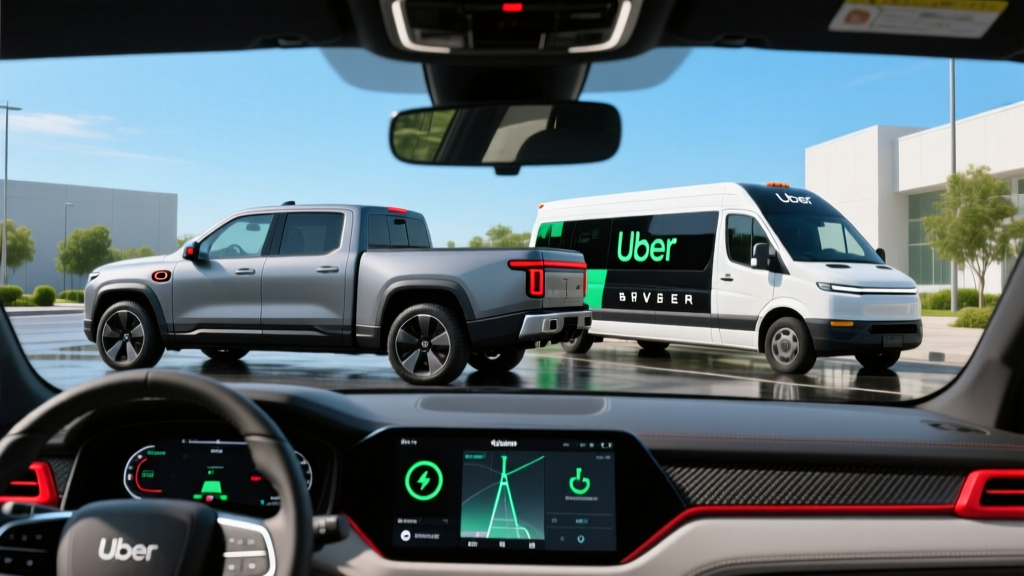
The partnership allows select Uber drivers — primarily those operating Uber Comfort, Uber Black, or Uber Green tiers in eligible metro areas — to lease or purchase Rivian vehicles at preferred rates. The R1S, with its three-row seating and premium cabin, targets the Uber Comfort and Uber Black categories, while the R1T pickup slots into specialty and utility-focused ride segments.
According to Rivian's fleet program page, the company offers dedicated fleet support including managed charging solutions, preferred service scheduling, and telematics integration compatible with ride-hailing platforms.
2026 Rivian R1S and R1T: Key Specs at a Glance
| Specification | R1S (SUV) | R1T (Truck) |
|---|---|---|
| EPA Range (Standard Battery, Dual-Motor) | ~270 mi | ~270 mi |
| EPA Range (Max Battery, Dual-Motor) | ~352 mi | ~352 mi |
| Battery Capacity (Standard) | 92 kWh (usable), LFP | 92 kWh (usable), LFP |
| Battery Capacity (Max) | 141 kWh (usable), NMC | 141 kWh (usable), NMC |
| Horsepower (Dual-Motor) | 533 hp | 533 hp |
| Horsepower (Quad-Motor) | 1,025 hp | 1,025 hp |
| 0–60 mph (Dual-Motor) | 4.5 sec | 4.5 sec |
| 0–60 mph (Quad-Motor) | 2.9 sec | 2.9 sec |
| Max DC Fast Charge | 220 kW (peak) | 220 kW (peak) |
| 10–80% DCFC Time | ~30 min (Max Battery) | ~30 min (Max Battery) |
| Level 2 Home Charge Rate | 11.5 kW (~25 mi/hr) | 11.5 kW (~25 mi/hr) |
| MPGe (Dual-Motor, Combined) | 73 MPGe | 73 MPGe |
| Efficiency (kWh/100 mi) | 46 kWh/100 mi | 46 kWh/100 mi |
| Cargo Volume (R1S, behind 3rd row) | 10.4 cu ft (46.7 cu ft behind 2nd) | N/A — see bed specs |
| Cargo Volume (R1T bed) | N/A | 54.0 cu ft (4.5-ft bed) |
| Towing Capacity | 7,700 lbs | 11,000 lbs |
| Drivetrain | Dual-Motor AWD / Quad-Motor AWD | Dual-Motor AWD / Quad-Motor AWD |
| Base MSRP (Dual-Motor Standard) | $75,900 | $69,900 |
| Battery/Powertrain Warranty | 8 yr / 175,000 mi | 8 yr / 175,000 mi |
Source: Rivian R1S specs, fueleconomy.gov. Figures reflect 2026 model-year data.
Real-World Range: What Uber Drivers Actually Get
Real-World Expectation: ~280–310 miles highway (70–75 mph); ~320–340 miles city/regenerative driving
Cold-Weather Impact: Expect 20–30% range loss in sub-freezing temperatures — a Max Battery R1S may deliver ~245–280 miles at 20°F
Rideshare Reality: A typical 10-hour Uber shift covers 150–200 miles. Even the Standard Battery (270 EPA) handles a full shift with buffer, but highway-heavy shifts in winter may require a mid-shift DC fast-charge top-up.
Range is the single most critical factor for ride-hailing drivers. A Rivian with the Max Battery pack offers enough cushion for a full day of driving without mandatory mid-shift charging — provided the route mix isn't exclusively highway at high speed in cold weather. The LFP chemistry in the Standard Battery pack is notably more tolerant of frequent 100% charges, which matters for drivers who plug in nightly and want to start each shift at full state of charge without accelerating long-term degradation.
The R1S and R1T are not efficiency champions — at 46 kWh/100 mi, they consume significantly more energy per mile than a Tesla Model Y (28 kWh/100 mi) or Hyundai Ioniq 5 (32 kWh/100 mi). This means higher per-mile electricity costs, a factor Uber drivers running tight margins must model carefully.
Charging Speed: Can a Rivian Keep Up With Full-Time Driving?
| Charging Level | Power / Rate | Miles Added per Hour | Notes |
|---|---|---|---|
| Level 1 (120V household) | 1.4 kW | ~3 mi/hr | Emergency only; not viable for rideshare |
| Level 2 (240V home, 48A) | 11.5 kW | ~25 mi/hr | Full charge in ~10–12 hrs (Max Battery) |
| DC Fast Charge (peak) | 220 kW | ~140 mi in 20 min (peak) | 10–80% in ~30 min; curve tapers sharply above 80% |
| Tesla Supercharger (with adapter) | Up to 150 kW (sustained avg) | ~100 mi/hr avg | NACS adapter included with 2026 models |
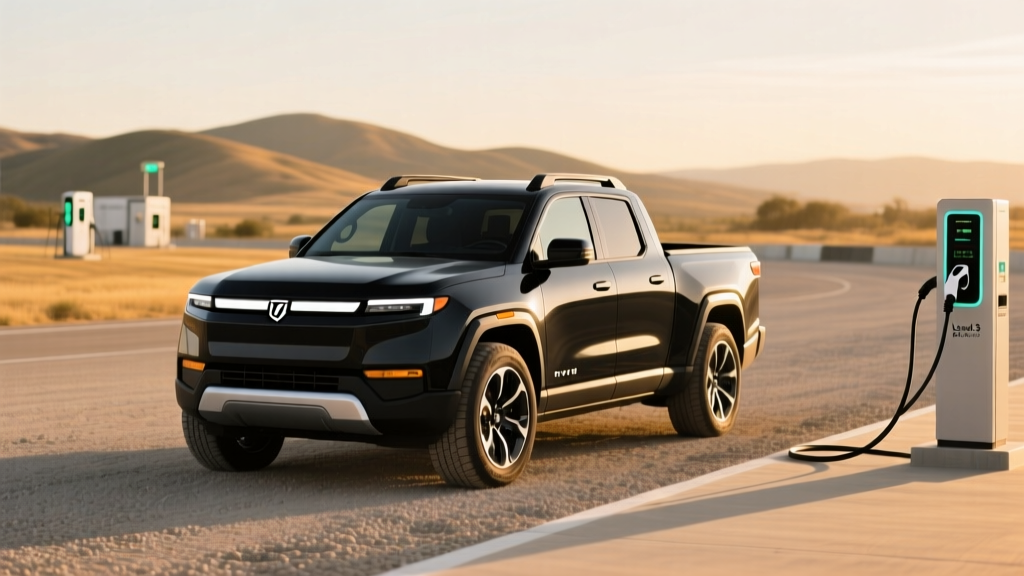
Rivian's 220 kW peak DC fast-charge rate is competitive but not class-leading — the Hyundai Ioniq 5 and Kia EV6 peak at 240 kW on 800V architecture, and Tesla's V4 Superchargers deliver up to 250 kW. The critical detail is the charge curve: Rivian's Max Battery (NMC) sustains strong charge rates up to roughly 60% SoC before tapering. Drivers should plan DC stops to charge from 10–80% rather than topping to 100%, which both slows dramatically and is unnecessary for most shifts.
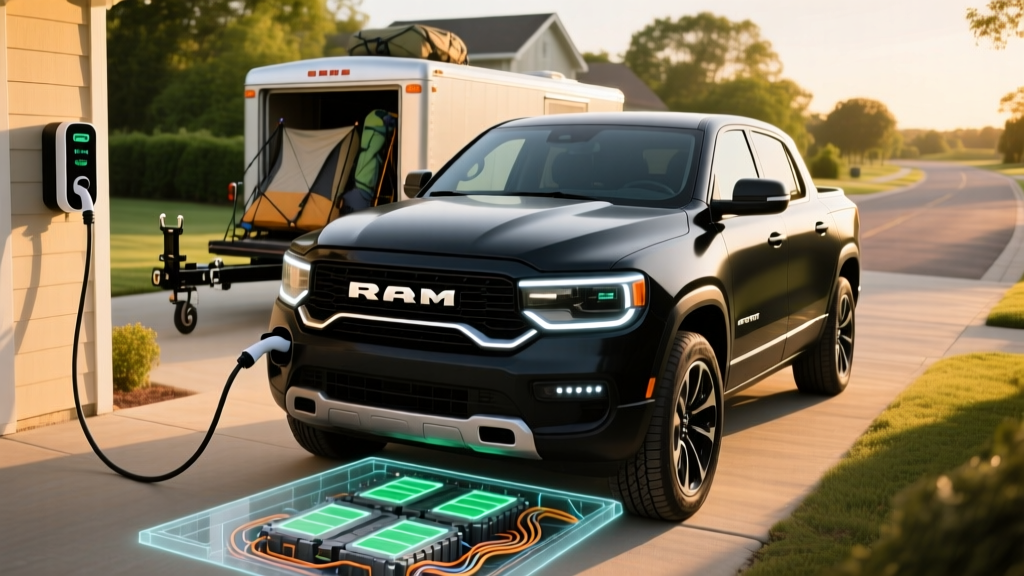
For home charging, the 11.5 kW Level 2 rate on a 240V/48A circuit is solid. A driver finishing a 200-mile shift needs roughly 8 hours on Level 2 to fully replenish the Max Battery — perfectly aligned with overnight charging. Home charger installation typically runs $800–$2,500 depending on panel capacity and conduit runs, per Rivian's home charging guide.
Pricing, Tax Credits, and the Uber Driver Math
| Model / Trim | Base MSRP | §30D Credit Eligible? | Effective Price (if eligible) |
|---|---|---|---|
| R1T Dual-Motor Standard Battery | $69,900 | Yes (MSRP under $80K truck cap) | ~$62,400 |
| R1T Dual-Motor Max Battery | $83,400 | No (exceeds $80K truck MSRP cap) | $83,400 |
| R1S Dual-Motor Standard Battery | $75,900 | Yes (MSRP under $80K SUV cap) | ~$68,400 |
| R1S Dual-Motor Max Battery | $89,900 | No (exceeds $80K SUV MSRP cap) | $89,900 |
§30D Tax Credit Rules (2026): The federal EV tax credit under IRS Section 30D provides up to $7,500 for qualifying new EVs. Eligibility depends on three factors per IRS guidelines:
- MSRP Cap: Vans, SUVs, and trucks must be under $80,000. Sedans under $55,000.
- Buyer Income Cap: AGI must not exceed $150,000 (single), $225,000 (head of household), or $300,000 (joint).
- Battery Sourcing: Critical minerals and battery components must meet escalating domestic-content thresholds that tighten annually.
- Point-of-Sale Transfer: As of 2024, eligible buyers can transfer the credit to the dealer for an upfront price reduction rather than waiting for a tax refund.
For Uber drivers, the Standard Battery R1T at ~$62,400 (after credit) represents the most affordable entry point. However, the Max Battery models — which most full-time drivers will want for range security — exceed the MSRP cap and receive no federal credit. Some states offer additional rebates (California's CVRP, for example), but these vary by jurisdiction and funding availability.
Interior, Tech, and the Rider Experience
Uber riders stepping into a Rivian R1S encounter a premium cabin that competes with luxury German SUVs. The 15.6-inch center touchscreen runs Rivian's proprietary infotainment system, which includes built-in navigation with route-based battery preconditioning for DC fast charging. Wireless Apple CarPlay and Android Auto are standard as of the 2025 refresh, a welcome addition after initial models lacked phone projection.
For the driver, the 12.3-inch digital instrument cluster and head-up display reduce distraction. Rivian's Driver+ system is a SAE Level 2 driver-assistance suite — it offers adaptive cruise control, lane-centering, and automatic lane changes on mapped highways, but it is not self-driving. The driver must maintain hands-on-wheel awareness at all times. This is comparable to Tesla's Autopilot or Ford's BlueCruise, not Waymo's Level 4 robotaxi service.
Passenger space is generous: the R1S offers 36.9 inches of third-row legroom (adequate for adults on shorter rides) and 41.1 inches in the second row. The vegan leather interior, panoramic glass roof, and camp speaker system (a removable Bluetooth speaker that docks in the center console) create a memorable rider experience that can translate to higher tips and better ratings.
Pros and Cons: Rivian as an Uber Vehicle
Pros
- 352-mile Max Battery range handles full shifts without mandatory charging
- Premium cabin elevates rider experience — supports Uber Comfort/Black tiers with higher per-mile rates
- LFP Standard Battery tolerates nightly 100% charges without accelerated degradation
- 175,000-mile battery warranty aligns with high-mileage rideshare use
- NACS adapter included — access to Tesla Supercharger network for reliable DC charging
- Strong regenerative braking reduces brake wear (a significant cost saver at 40K+ miles/year)
- OTA updates continuously add features and optimize efficiency
Cons
- High energy consumption (46 kWh/100 mi) means higher per-mile electricity cost vs. Tesla Model Y
- Max Battery trims exceed $80K MSRP cap — no $7,500 federal tax credit
- 220 kW peak DCFC is slower than 800V competitors (Ioniq 5, EV6, Lucid Air)
- Service center network still limited outside major metros — downtime risk for full-time drivers
- Insurance premiums for rideshare use on a $70K–$90K vehicle can be $300–$500/month
- Third-row access in R1S requires second-row seat tumble — slower rider entry/exit vs. minivan-style doors
- Depreciation data on Rivians is still limited; early models have seen steeper drops than Tesla
Who Should Consider a Rivian for Uber — and Who Shouldn't
Choose Rivian for Uber if:
- You operate in Uber Comfort, Uber Black, or Uber Green tiers where premium vehicles earn higher per-mile rates
- You have reliable overnight Level 2 home charging and access to DC fast chargers along your typical routes
- You value the 175,000-mile battery warranty for peace of mind at rideshare mileage levels
- You live in a metro area with a Rivian service center
Look elsewhere if:
- You drive UberX exclusively — the per-mile electricity cost and vehicle price don't pencil out against a Tesla Model Y or Chevrolet Equinox EV
- You lack home charging access and rely entirely on public infrastructure
- Your market doesn't support premium-tier ride pricing
- You need a minivan-style sliding door for rapid rider entry/exit in dense urban environments
Frequently Asked Questions
What is the real-world range of a Rivian on Uber shifts?
Expect 280–310 miles from the Max Battery pack during mixed highway/city driving at moderate temperatures. In cold weather (below 32°F), plan for 245–280 miles. The Standard Battery delivers ~220–250 miles real-world. Most 10-hour shifts covering 150–200 miles can be completed on a single charge with the Max pack.
How fast does a Rivian charge at home and on DC fast chargers?
On a 240V Level 2 home charger (48A), the Rivian adds about 25 miles of range per hour — a full overnight session replenishes a day's driving. On DC fast chargers, it peaks at 220 kW, achieving 10–80% in approximately 30 minutes with the Max Battery. Charging slows significantly above 80% SoC, so plan stops around the 10–80% window.
Does the Rivian R1S or R1T qualify for the $7,500 federal EV tax credit?
Only the Standard Battery trims qualify, because they fall under the $80,000 MSRP cap for trucks/SUVs. The R1T Dual-Motor Standard at $69,900 and the R1S Dual-Motor Standard at $75,900 are eligible — provided the buyer meets IRS income limits ($150K single / $300K joint) and the battery sourcing requirements are met for the model year. Max Battery trims exceed the cap and do not qualify. Always verify current eligibility at irs.gov.
Is a Rivian worth it vs. a Tesla Model Y for Uber?
It depends on your tier. For UberX, the Tesla Model Y is more efficient (28 vs. 46 kWh/100 mi), cheaper to buy, and has a denser Supercharger network. For Uber Comfort or Uber Black, the Rivian's premium cabin commands higher fares and tips that can offset the higher purchase and energy costs over time. Run your local per-mile rates and electricity costs before deciding.
What is Rivian's battery warranty, and does it cover rideshare use?
Rivian covers the battery and powertrain for 8 years or 175,000 miles, whichever comes first. The warranty guarantees the battery will retain at least 70% of its original capacity during the coverage period. Importantly, Rivian's warranty does not exclude commercial or rideshare use, unlike some competitors — a significant advantage for Uber drivers who may log 40,000–60,000 miles annually.
Can Rivian drivers access Tesla Superchargers?
Yes. All 2026 Rivian models ship with a NACS charge port or an included NACS adapter, granting access to Tesla's Supercharger network — currently the largest and most reliable DC fast-charging network in North America with over 25,000 stalls. This dramatically improves the public charging experience compared to CCS-only vehicles relying on Electrify America or EVgo.