Quick Answer: Should You Consider a European EV in 2026?
European-market electric vehicles like the Volkswagen ID.4, BMW iX, and Mercedes EQB offer competitive range (EPA 240–320 miles), robust build quality, and strong DC fast-charging capability (135–200+ kW peak). However, US buyers evaluating a Europe electric vehicle must weigh higher starting MSRPs ($42,000–$85,000+), variable §30D federal tax credit eligibility due to battery-sourcing rules, and a public charging network still expanding outside major metro corridors. If you have Level 2 home charging and drive under 40 miles daily, a European EV delivers excellent ownership economics. If you rely solely on public fast charging or regularly drive in sub-20°F weather, carefully model your real-world range and charging access before committing.
The European EV Landscape for US Buyers
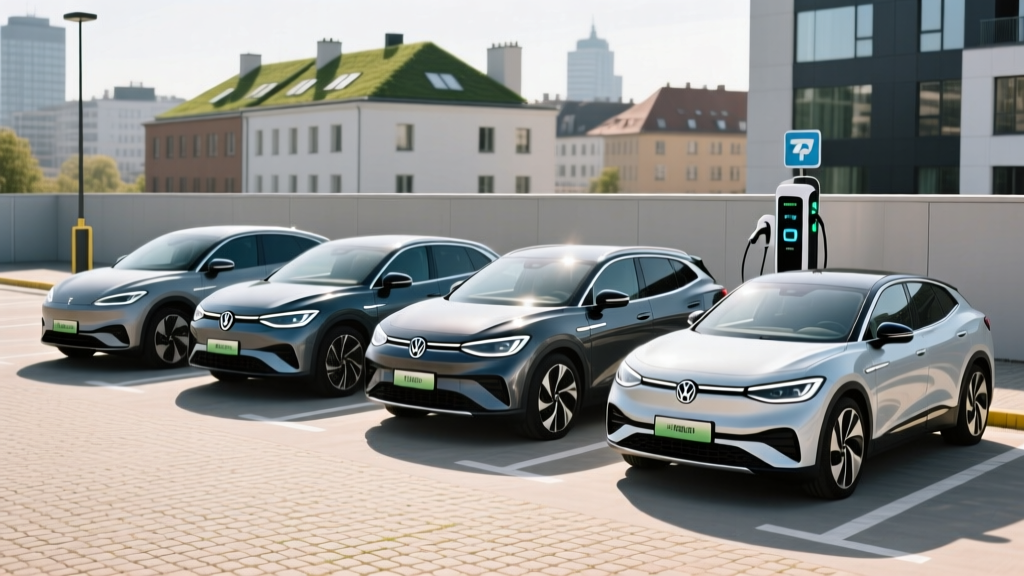
When we talk about a "Europe electric vehicle" in the US market, we're referring to EVs designed and engineered by European automakers — primarily Volkswagen Group (VW, Audi, Porsche), BMW, Mercedes-Benz, Volvo/Polestar, and Stellantis brands — that are sold Stateside. These vehicles are built on dedicated EV platforms like VW's MEB, BMW's Neue Klasse (arriving for 2026 models), and Mercedes' MMA architecture.
European EVs tend to emphasize driving dynamics, interior material quality, and long-distance touring comfort over the software-first approach of Tesla or the value proposition of Hyundai/Kia. For 2026, the competitive landscape has shifted: Chinese-made EVs face 100% US tariffs, Korean and Japanese brands have closed the gap on range and charging speed, and European OEMs are under pressure to justify premium pricing with tangible technology advantages.
Key 2026 European EVs available in the US include:
- Volkswagen ID.4 (Chattanooga, TN-built) — EPA 291 mi, 82 kWh NMC, 175 kW peak DC
- BMW i4 eDrive40 — EPA 307 mi, 83.9 kWh NMC, 205 kW peak DC
- Audi Q4 e-tron — EPA 265 mi, 82 kWh NMC, 175 kW peak DC
- Volvo EX40 — EPA 296 mi, 82 kWh NMC, 200 kW peak DC
- Porsche Macan Electric — EPA 308 mi, 100 kWh NMC, 270 kW peak DC
- Mercedes-Benz EQE SUV — EPA 279 mi, 90.6 kWh NMC, 170 kW peak DC
Real Costs: European EV vs Gas vs Hybrid
The purchase decision hinges on total cost of ownership (TCO), not just sticker price. Below is a five-year cost comparison using a mid-size European EV (VW ID.4 Pro S, ~$46,000 MSRP), a comparable gas SUV (VW Tiguan, ~$32,000), and a hybrid alternative (Toyota RAV4 Hybrid, ~$34,000). Assumes 15,000 miles/year, $0.16/kWh home electricity, $3.50/gallon gas, and 80% home / 20% public DC charging mix.
| Category | VW ID.4 (EV) | VW Tiguan (Gas) | RAV4 Hybrid |
|---|---|---|---|
| Purchase Price | $46,000 | $32,000 | $34,000 |
| Federal Tax Credit (§30D) | −$7,500* | $0 | $0 |
| Effective Purchase | $38,500 | $32,000 | $34,000 |
| Fuel/Energy (5 yrs) | $5,840 | $10,938 | $7,292 |
| Maintenance (5 yrs) | $1,800 | $4,200 | $3,600 |
| Insurance (5 yrs) | $9,750 | $7,500 | $7,800 |
| Estimated Depreciation | $16,100 | $12,800 | $11,900 |
| 5-Year TCO | $72,090 | $67,438 | $64,592 |
| Cost Per Mile | $0.48 | $0.45 | $0.43 |
*§30D credit eligibility depends on MSRP caps, buyer income limits, and battery critical-mineral sourcing requirements. The US-built ID.4 has qualified for the full credit in recent years, but always verify current eligibility at IRS.gov before purchasing. Point-of-sale transfer is available through registered dealers.
The EV wins on energy and maintenance costs — electricity at $0.16/kWh translates to roughly $0.049/mile versus $0.146/mile for the gas Tiguan at 26 MPG combined. No oil changes, fewer brake replacements (regenerative braking extends pad life), and no transmission fluid mean ~$480/year in maintenance savings. However, EV insurance premiums run 20–30% higher on average due to battery replacement costs in collision claims, and depreciation on European EVs has been steeper than Toyota hybrids.
Per-Mile Energy Cost Breakdown
| Scenario | Cost Per Mile | Annual (15k mi) |
|---|---|---|
| Home L2 charging ($0.16/kWh, 3.5 mi/kWh) | $0.046 | $690 |
| Public DC fast ($0.48/kWh avg) | $0.137 | $2,055 |
| Gas Tiguan (26 MPG, $3.50/gal) | $0.135 | $2,025 |
| RAV4 Hybrid (39 MPG, $3.50/gal) | $0.090 | $1,350 |
Key insight: if you charge 100% at home, the EV's energy cost is one-third that of gas. If you rely entirely on public DC fast charging, you're paying essentially the same per mile as a gas car — negating one of the EV's biggest financial advantages.
Range Reality: EPA Stickers vs Real-World Driving
European EVs generally use NMC (nickel manganese cobalt) battery chemistry, which offers high energy density but is more sensitive to cold-weather capacity loss than LFP (lithium iron phosphate). Here's what the EPA numbers look like versus real-world expectations:
| Model | Battery (kWh usable) | EPA Range | Highway 70 mph | Cold Weather (20°F) |
|---|---|---|---|---|
| VW ID.4 Pro S | 82 (NMC) | 291 mi | ~245 mi | ~210 mi |
| BMW i4 eDrive40 | 83.9 (NMC) | 307 mi | ~260 mi | ~225 mi |
| Audi Q4 e-tron | 82 (NMC) | 265 mi | ~220 mi | ~190 mi |
| Volvo EX40 | 82 (NMC) | 296 mi | ~250 mi | ~215 mi |
| Porsche Macan Electric | 100 (NMC) | 308 mi | ~265 mi | ~230 mi |
| Mercedes EQE SUV | 90.6 (NMC) | 279 mi | ~235 mi | ~200 mi |
Expect 15–20% range reduction at sustained highway speeds and 25–30% loss in freezing temperatures. European EVs equipped with heat pumps (standard on most 2026 VW, BMW, and Porsche models; optional or standard on Volvo/Mercedes depending on trim) mitigate cold-weather HVAC energy draw but cannot fully eliminate battery chemistry effects on available capacity.
Charging Speed and Infrastructure
Most 2026 European EVs sold in the US now feature NACS (Tesla's North American Charging Standard) ports or CCS1 with included NACS adapters, granting access to Tesla Supercharger V3/V4 stations (150–250 kW) in addition to Electrify America, EVgo, and ChargePoint networks.
| Model | Peak DC kW | 10–80% Time | Level 2 (kW) | L2 Full Charge |
|---|---|---|---|---|
| VW ID.4 Pro S | 175 kW | ~28 min | 11.5 kW | ~7.5 hrs |
| BMW i4 eDrive40 | 205 kW | ~25 min | 11 kW | ~8 hrs |
| Porsche Macan Electric | 270 kW | ~18 min | 11 kW | ~9.5 hrs |
| Volvo EX40 | 200 kW | ~27 min | 11 kW | ~7.5 hrs |
| Mercedes EQE SUV | 170 kW | ~32 min | 9.6 kW | ~9.5 hrs |
Charging curve reality check: Peak kW figures represent maximum rate at low state of charge (typically 10–20% SoC). Charging speed tapers significantly above 80% SoC to protect battery health. A "28-minute 10–80%" charge does not mean you'll reach 100% in 36 minutes — the 80–100% top-off can add another 30–45 minutes. Plan road-trip stops around 10–80% charges for maximum efficiency.
Home Level 2 installation (240V, 48-amp circuit) typically costs $800–$2,500 for the charger unit plus $500–$2,000 for electrician labor, depending on panel proximity and whether a 200-amp service upgrade is needed. Budget $1,500–$3,500 total for a reliable home setup.
Common Misconceptions About European EVs
| Myth | Fact |
|---|---|
| "European EVs can't use Tesla Superchargers" | Most 2026 models ship with NACS ports or include adapters. VW, BMW, Volvo, and Mercedes have confirmed Supercharger network access. |
| "The battery will need replacing in 5 years" | NMC batteries in European EVs are warranted for 8 years/100,000 miles at 70% capacity retention. Real-world data shows ~10–15% degradation at 100k miles with normal use. |
| "All European EVs qualify for the $7,500 tax credit" | Eligibility depends on final assembly location, battery component sourcing, and critical mineral requirements. The US-built ID.4 qualifies; imported models may not. Check fueleconomy.gov for current lists. |
| "European EVs charge slower than Teslas" | The Porsche Macan Electric at 270 kW peak charges faster than most Tesla Model Y configurations (~250 kW). BMW i4 at 205 kW is competitive with Tesla's V3 Supercharger speeds. |
| "You'll save money immediately vs gas" | Higher purchase price, insurance premiums, and potential home charging installation costs mean break-even typically occurs at year 4–6, depending on mileage and electricity rates. |
Decision Framework: Is a European EV Right for You?
Choose a European EV If:
- You have access to Level 2 home or workplace charging (this is non-negotiable for cost savings)
- Your daily commute is under 60 miles round-trip (covers 90%+ of trips on a single charge)
- You value driving refinement, cabin quietness, and build quality over lowest-possible price
- You qualify for the §30D federal credit (income under $150k single / $300k joint; MSRP under $80k for SUVs)
- You take 2–4 road trips per year and can plan around DC fast-charging stops
Choose a Hybrid Instead If:
- You live in an apartment or lack reliable home/workplace charging access
- You regularly drive 200+ miles in rural areas with sparse charging infrastructure
- Upfront budget is under $35,000 and you need maximum value per dollar
- You experience extreme cold (below 0°F) for extended periods and can't garage the vehicle
Consider a Tesla or Korean EV Over European If:
- Lowest cost per mile of range is your top priority (Tesla Model Y, Hyundai Ioniq 5)
- Software experience and OTA updates matter more than interior material quality
- You want the widest Supercharger access with no adapter needed (Tesla native)
First-Time European EV Buyer Checklist
Before signing a purchase agreement, verify these items:
- Tax credit eligibility: Confirm the specific VIN qualifies under current §30D rules at IRS.gov. Point-of-sale transfer requires dealer registration.
- Home electrical capacity: Have a licensed electrician assess your panel. A 48-amp Level 2 charger requires a 60-amp dedicated circuit. Older homes with 100-amp service may need a $1,500–$3,000 panel upgrade.
- Charging connector: Confirm whether the vehicle ships with a native NACS port or CCS1 with adapter. If adapter-based, verify it's included in the purchase price.
- Insurance quotes: Get quotes before purchase. European EV insurance can run $1,800–$2,400/year depending on model and location — 20–30% above gas equivalents.
- Preconditioning capability: Confirm the vehicle supports battery preconditioning for DC fast charging (reduces 10–80% charge times by warming the battery). Most 2026 European EVs support this via navigation-routed charging.
- Battery warranty terms: European OEMs typically offer 8 years/100,000 miles with a 70% capacity retention guarantee. Read the fine print on what voids coverage (repeated DC fast charging to 100% is generally not a warranty issue, but physical damage or unauthorized modifications are).
Frequently Asked Questions
Do European EVs hold their resale value as well as Teslas or Toyotas?
Historically, European EVs have depreciated faster than Teslas and significantly faster than Toyota hybrids. A 3-year-old VW ID.4 may retain 45–55% of MSRP versus 55–65% for a Model Y and 70%+ for a RAV4 Hybrid. This gap has narrowed as EV adoption normalizes, but European luxury EVs (Mercedes EQ, Audi e-tron) still see steeper depreciation curves. Factor this into your TCO calculations.
Can I charge a European EV at any public station in the US?
With the industry-wide shift to NACS for 2025–2026 models, compatibility is excellent. Native NACS-equipped European EVs access Tesla Superchargers, Electrify America (with NACS cables rolling out), and most networks. CCS1-equipped models still work at Electrify America, EVgo, and ChargePoint DC stations. CHAdeMO stations are increasingly rare and not relevant for European vehicles.
What happens if the battery degrades significantly after the warranty period?
Out-of-warranty battery replacement for European EVs currently ranges from $12,000–$22,000 depending on the model and battery size. However, real-world data from early-adopter markets (Norway, Netherlands) shows NMC batteries retaining 85–90% capacity at 100,000 miles with typical use patterns. Complete battery failure is rare; gradual capacity loss is the norm. Module-level repair (replacing individual degraded cells/modules rather than the full pack) is becoming available through specialist shops at $3,000–$6,000.
Are European EVs reliable compared to Japanese or Korean alternatives?
Reliability varies by model and model year. VW's ID.4 has improved significantly since its 2021 launch, with fewer software-related complaints in 2025–2026 builds. BMW's i4 and iX have scored well in owner surveys. Mercedes' early EQ models had more reported issues. Check IIHS safety ratings and owner forums for model-specific data. European EVs generally have more complex thermal management systems, which can mean higher repair costs out of warranty.
How does cold weather affect a European EV's range and charging speed?
At 20°F, expect 25–30% range loss due to reduced battery chemical efficiency and cabin heating demand. DC fast charging also slows in cold weather — a battery at 32°F may accept only 50–70 kW until it warms to optimal temperature (~70–80°F internally). Always use preconditioning (activate via the vehicle's app or navigation before arriving at a charger) to mitigate this. Garage parking in winter significantly helps preserve range and charging performance.