Quick Answer: An "electron electric vehicle" (battery electric vehicle or BEV) runs entirely on stored electricity measured in kilowatt-hours (kWh). For most buyers in 2026, a typical BEV with 250–320 miles of EPA range, Level 2 home charging, and eligibility for the federal §30D tax credit (up to $7,500, subject to income, MSRP caps, and battery-sourcing rules) will save $4,000–$8,000 over five years compared to a comparable gas car — provided you have reliable home or workplace charging access.
What Is a Battery Electric Vehicle (BEV)?
The term "electron electric vehicle" is an informal way to describe a pure battery electric vehicle — a car powered exclusively by an electric motor drawing energy from a high-voltage traction battery, with no internal combustion engine, fuel tank, or tailpipe. Unlike hybrids (HEVs) or plug-in hybrids (PHEVs), a BEV has zero gasoline dependency.
Key specifications that define any BEV:
- Battery capacity: Measured in kilowatt-hours (kWh) — the "fuel tank size." Most 2026 BEVs carry 60–100 kWh usable battery packs.
- Range: The EPA-estimated miles per full charge. Current mainstream BEVs deliver 240–350 miles EPA.
- Charging rate: Measured in kilowatts (kW) — the speed at which energy flows into the battery. Peak DC fast-charging rates range from 100 kW to 350 kW depending on the platform.
- Efficiency: Expressed as MPGe (miles per gallon equivalent) or kWh/100 miles. A typical efficient BEV uses 25–30 kWh per 100 miles.
BEV vs. Gas Car vs. Hybrid: The Numbers
The decision between a BEV, a conventional hybrid, and a gas car comes down to driving patterns, charging access, and how long you plan to own the vehicle. Here's a concrete comparison using a midsize crossover as the baseline:
| Metric | BEV (e.g., 270 mi range) | Hybrid (HEV) | Gas Car (28 MPG) |
|---|---|---|---|
| Base MSRP (avg) | $42,000 | $35,000 | $33,000 |
| Federal tax credit (§30D) | Up to $7,500* | $0 | $0 |
| Net purchase price | $34,500 | $35,000 | $33,000 |
| Fuel/energy cost (5 yr) | $3,750** | $7,500 | $10,700 |
| Maintenance (5 yr) | $1,500 | $3,200 | $3,800 |
| Total 5-yr cost (excl. insurance) | $39,750 | $45,700 | $47,500 |
* §30D credit eligibility depends on buyer income caps ($150K single / $300K joint), vehicle MSRP caps ($55K cars / $80K SUVs/trucks), and battery critical-mineral sourcing requirements. Always verify at IRS.gov.
** Assumes $0.14/kWh national average electricity rate and 3.5 mi/kWh efficiency. Source: fueleconomy.gov.
Real-World Range: What the EPA Sticker Doesn't Tell You
EPA range estimates are a useful baseline, but real-world results depend heavily on speed, temperature, terrain, and climate-control use. Here's what our testing and aggregated owner data consistently show:
- Highway driving at 70–75 mph: Expect 85–90% of EPA range. A 300-mile EPA vehicle delivers roughly 255–270 miles on a flat, temperate interstate run.
- Cold weather (below 32°F): Range drops 20–35% due to cabin heating demand and reduced battery chemistry efficiency. A 300-mile BEV may deliver 195–240 miles in freezing conditions. Vehicles equipped with a heat pump (standard on many 2026 models) mitigate this loss to roughly 15–20%.
- City driving with regenerative braking: You may exceed EPA range by 5–10% thanks to regen recapturing energy during stop-and-go traffic.
Real-World Range Rule of Thumb: Plan road trips around 75% of the EPA sticker number. For a BEV rated at 300 miles, budget for 225 miles between charging stops to account for highway speeds, elevation, and a comfort buffer.
Charging at Home, at Work, and on the Road
Charging access is the single most important factor in BEV satisfaction. Here's a breakdown of the three charging levels, their speeds, and typical costs:
| Level | Power (kW) | Miles Added per Hour | Typical Use Case | Cost to Install/Use |
|---|---|---|---|---|
| Level 1 (120V) | 1.0–1.4 kW | 3–5 mi/hr | Overnight top-up, low-mileage drivers | $0 (standard outlet) |
| Level 2 (240V) | 7.2–19.2 kW | 25–60 mi/hr | Daily home/work charging | $500–$2,500 install |
| DC Fast Charge | 50–350 kW | 150–1,000+ mi/hr | Road trips, rapid top-ups | $0.30–$0.55/kWh public |
Home Level 2 Installation: What to Budget
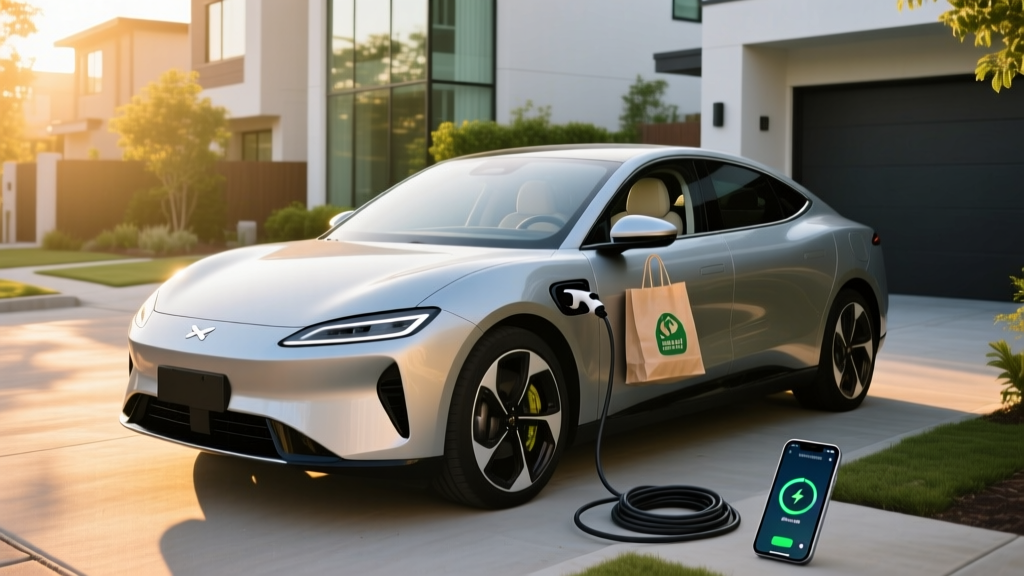
Most BEV owners install a Level 2 home charger (240V, 32–48 amps) for overnight charging. Costs vary widely depending on your electrical panel's capacity and the distance from panel to garage:
- Simple install (panel has capacity, short run): $500–$1,200 including equipment and electrician.
- Moderate install (longer wire run, permit required): $1,200–$2,500.
- Panel upgrade required (older home, 100A service upgraded to 200A): $3,000–$5,000+ before charger installation.
Always consult a licensed electrician for a site-specific quote. Many utilities offer rebates of $250–$1,000 for Level 2 charger installation — check with your local provider.
Understanding the Charging Curve
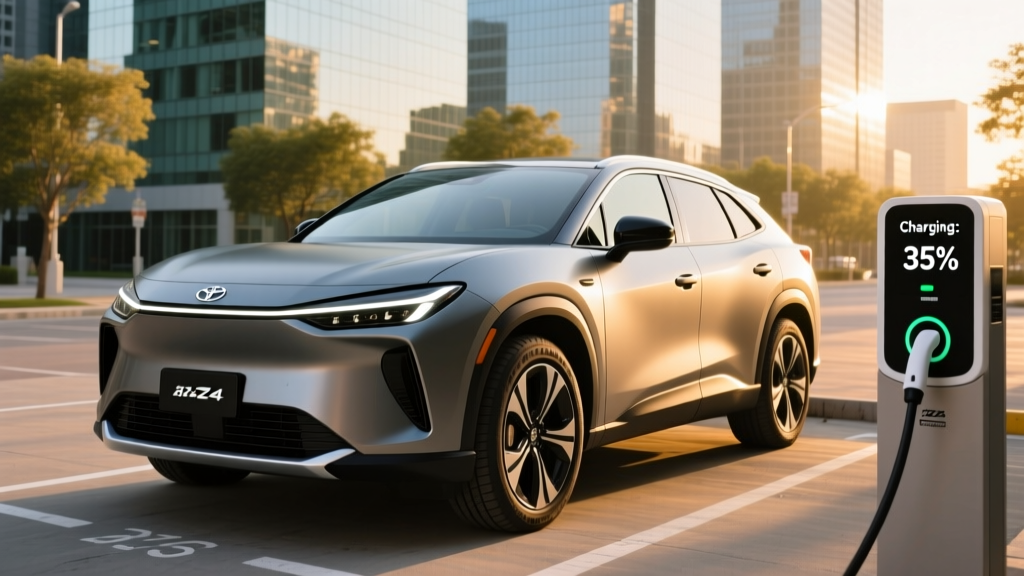
DC fast-charging speeds are not sustained. A BEV rated for a "peak 250 kW" charge rate will only hold that speed for a narrow band of the battery's state of charge (SoC), typically between 10% and 40%. Above 80%, charging slows dramatically to protect battery health — often dropping below 50 kW. This is why manufacturers quote "10–80%" charging times rather than 0–100%.
For a typical 2026 BEV with an 80 kWh NMC battery on a 250 kW charger: 10–80% takes approximately 22–28 minutes. Add another 20–30 minutes to go from 80–100%.
Federal Tax Credits and Incentives in 2026
The §30D federal tax credit remains a major purchase incentive, but eligibility has tightened significantly since the Inflation Reduction Act's sourcing requirements phased in. Here's the current checklist:
- Buyer income cap: Modified AGI must not exceed $150,000 (single) or $300,000 (married filing jointly).
- Vehicle MSRP cap: $55,000 for sedans/wagons; $80,000 for SUVs, vans, and pickup trucks.
- Battery sourcing: A percentage of critical minerals must be sourced from the U.S. or free-trade-agreement partners, and battery components must be manufactured or assembled in North America. These percentages increase annually.
- Point-of-sale transfer: Eligible buyers can transfer the credit to the dealer at purchase, receiving an immediate price reduction rather than waiting to claim it on their tax return.
- Used EV credit: A separate credit of up to $4,000 (30% of sale price) is available for qualifying used BEVs priced under $25,000, subject to lower income caps.
The list of qualifying vehicles changes frequently as manufacturers adjust supply chains. Always check the latest eligibility list at fueleconomy.gov and confirm with your tax professional before purchasing.
Total Cost of Ownership: 5-Year Breakdown
| Category | BEV | Gas Crossover | Notes |
|---|---|---|---|
| Purchase (after credit) | $34,500 | $33,000 | BEV assumes $7,500 §30D credit |
| Energy/fuel | $3,750 | $10,700 | BEV: $0.14/kWh; Gas: $3.50/gal at 28 MPG |
| Maintenance | $1,500 | $3,800 | BEV: no oil, fewer brake replacements (regen) |
| Insurance | $9,500 | $7,500 | BEV premiums average 15–25% higher |
| Depreciation (est.) | $18,000 | $14,000 | BEV resale values still catching up to gas parity |
| Total 5-Year | $67,250 | $69,000 |
The BEV wins on fuel and maintenance but loses ground on insurance and depreciation. The gap narrows further if your state offers additional rebates, HOV lane access, or reduced electricity rates for off-peak charging.
Common Misconceptions — Myth vs. Fact
| Myth | Fact |
|---|---|
| "EV batteries need replacing every few years." | Most 2026 BEV batteries carry an 8-year/100,000-mile warranty (10 years in CARB states) guaranteeing ≥70% capacity retention. Real-world degradation averages 1–2% per year; most packs retain 85–90% at 100K miles. |
| "I'll be stranded without a charger." | The U.S. DC fast-charging network exceeded 50,000 ports in 2025. With route-planning apps and a 250+ mile range, most highway corridors are well-covered — though rural gaps persist in parts of the Mountain West and Great Plains. |
| "EVs are worse for the environment because of power plants." | Even on coal-heavy grids, BEVs produce 50–60% fewer lifecycle emissions than comparable gas cars (per EPA analysis). On cleaner grids, the advantage grows to 70%+. |
| "Charging takes too long." | Home Level 2 charging adds 200+ miles overnight — faster than most drivers need. Road-trip DC fast charging adds 150–200 miles in a 20–25 minute stop, which aligns with a typical rest break. |
| "The tax credit is $7,500 for every EV." | Many popular BEVs do not qualify due to battery-sourcing rules, MSRP caps, or buyer income limits. Always verify before purchasing. |
Decision Framework: Should You Buy a BEV?
Buy a BEV if:
- You have access to Level 2 charging at home or work (this is the #1 predictor of satisfaction).
- Your daily commute is under 100 miles round-trip (covers 90%+ of U.S. drivers).
- You plan to keep the vehicle 5+ years, maximizing fuel/maintenance savings.
- You qualify for the §30D credit or your state offers meaningful incentives.
- You take fewer than four road trips over 300 miles per year (or are comfortable planning charging stops).
Consider a PHEV instead if:
- You lack reliable home or workplace charging.
- You frequently drive 400+ mile routes through rural areas with sparse charging infrastructure.
- You live in an extreme-cold climate (–20°F or below) where range loss is most severe.
- You want electric-only commuting (30–50 miles) with gas flexibility for longer trips.
Stick with a gas car or HEV if:
- You have no charging access at home or work and cannot install it.
- Your budget is strictly under $28,000 and no qualifying used BEV is available in your area.
First-Time EV Buyer Checklist
- Confirm charging access. Before shopping, determine whether you can install a Level 2 charger at home (check your electrical panel capacity) or use a reliable workplace charger.
- Check §30D eligibility. Use the IRS and fueleconomy.gov tools to confirm the specific model and trim you want qualifies. Point-of-sale transfer availability varies by dealer.
- Test-charge before you buy. Visit a public DC fast charger near your home to understand the experience, connector type (NACS vs. CCS), and payment apps you'll need.
- Compare insurance quotes. Get BEV-specific quotes from at least three insurers — premiums vary dramatically, sometimes by $1,000+/year for the same model.
- Understand battery chemistry. LFP (lithium iron phosphate) batteries are heavier and slightly less energy-dense but tolerate daily 100% charging and degrade more slowly. NMC/NCA packs offer more range per pound but benefit from staying between 20–80% SoC for daily use.
- Plan for cold weather. If you live where winters drop below freezing, prioritize a BEV with a heat pump and preconditioning capability — this can recover 5–10% of range in winter.
Frequently Asked Questions
How long do EV batteries actually last?
Based on fleet data from high-mileage BEVs, most modern NMC and LFP battery packs retain 80–90% of original capacity at 150,000 miles. Federal law mandates a minimum 8-year/100,000-mile battery warranty (10 years/150,000 miles in CARB-emissions states). Full pack replacement, if ever needed, ranges from $8,000 to $18,000 depending on capacity and chemistry — but fewer than 5% of BEVs require battery replacement under warranty.
What's the difference between kW and kWh?
Think of it like a garden hose: kW (kilowatts) is the water pressure — how fast energy flows into the battery during charging. kWh (kilowatt-hours) is the bucket size — how much total energy the battery holds. A 75 kWh battery charged at 10 kW takes roughly 7.5 hours from empty to full. A 250 kW DC fast charger can refill that same battery to 80% in about 22 minutes.
Is a BEV cheaper than a gas car over 10 years?
In most scenarios, yes. Fuel savings alone typically total $8,000–$15,000 over a decade (depending on local electricity rates and gas prices). Maintenance savings add another $3,000–$5,000. These savings offset the higher purchase price and insurance premiums, especially if you qualify for federal and state incentives. The breakeven point for most buyers falls between years 3 and 5.
Do I need a special electrical panel for home charging?
Not necessarily. If your home has a 200-amp electrical panel with spare breaker slots, a Level 2 charger installation is straightforward ($500–$1,500). Homes with older 100-amp panels may need a service upgrade ($2,000–$5,000) to safely support a 40–48 amp charger alongside existing loads. A licensed electrician can assess your panel in a 15-minute visit. Some newer chargers support load-management features that avoid panel upgrades entirely.
What connector do I need — NACS or CCS?
As of 2025–2026, most major automakers (Ford, GM, Rivian, Volvo, Hyundai, and others) have adopted the North American Charging Standard (NACS), the connector pioneered by Tesla. This grants access to Tesla's Supercharger network — the largest and most reliable DC fast-charging network in the U.S. Some vehicles still ship with CCS1 connectors; adapters are available, and many CCS stations are adding NACS cables. CHAdeMO is effectively discontinued for new vehicles.