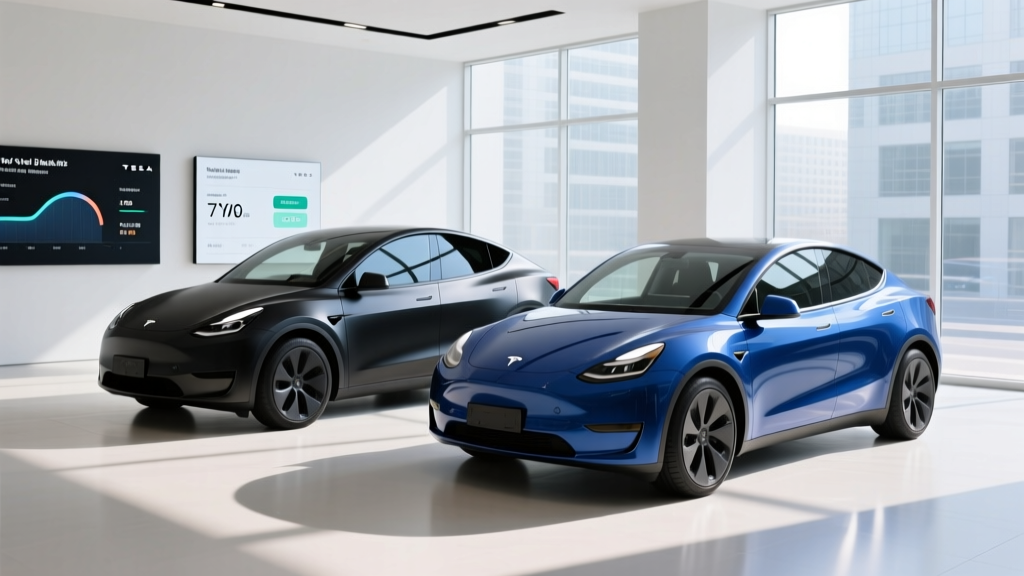
Why Tesla Year-End Deals Matter More in 2026
Every December, Tesla pushes to clear inventory and hit delivery targets — and 2026 is no exception. The automaker typically layers inventory discounts, referral credits, and subsidized Supercharging on top of existing federal incentives. For buyers watching the Tesla year-end deals cycle, the question isn't whether discounts exist, but whether the math works after accounting for the §30D federal tax credit, state rebates, and the real-world efficiency you'll actually see on the road.
This guide breaks down the two vehicles most affected by Tesla's Q4 push: the 2026 Model Y Long Range AWD and the 2026 Model 3 Long Range AWD. We'll cover EPA range versus real-world expectations, DC fast-charging curves, battery chemistry, tax credit eligibility under current IRS rules, and whether these deals genuinely beat key competitors like the Hyundai Ioniq 5, Ford Mustang Mach-E, and Chevrolet Equinox EV.
2026 Model Y Long Range AWD: The Family Hauler on Discount
The Model Y remains Tesla's volume leader and the vehicle most likely to see aggressive year-end pricing. For 2026, the Long Range AWD trim starts at an MSRP of $44,990 (before destination), and Tesla has historically offered $1,000–$3,000 in inventory discounts on in-stock units during the final two weeks of December, plus occasional free Supercharging miles or discounted FSD (Supervised) transfers.
| Spec | Value |
|---|---|
| Base MSRP | $44,990 |
| EPA Range | 320 miles |
| Battery (usable) | ~78 kWh, NMC |
| Drivetrain | Dual-motor AWD |
| Horsepower | 384 hp |
| 0–60 mph | 4.8 seconds |
| MPGe (combined) | 111 MPGe |
| Efficiency | 30 kWh/100 mi |
| Max DC Fast Charge | 250 kW (peak) |
| 10–80% DC Charge Time | ~25 minutes |
| Level 2 Home Charging | 11.5 kW (~44 mi/hr) |
| Cargo (rear seats up) | 30.2 cu ft |
| Cargo (rear seats folded) | 72.1 cu ft |
| Rear Legroom | 40.5 inches |
| Battery Warranty | 8 years / 120,000 miles |
| Basic Warranty | 4 years / 50,000 miles |
Charging Speed & Infrastructure
The Model Y Long Range supports a 250 kW peak DC fast-charge rate on Tesla's V3 and V4 Superchargers. However, that peak is only sustained between roughly 10–30% state of charge. The charging curve tapers progressively: by 60% SoC you're closer to 120 kW, and above 80% it drops to under 50 kW. A 10–80% session takes approximately 25 minutes at a V3 stall.
At home on a 48-amp Level 2 Wall Connector (11.5 kW), the Model Y recovers roughly 44 miles of range per hour of charging. A full 10–80% home charge takes about 5 hours. If your home has a 60-amp circuit available, this is the optimal setup — no panel upgrade required for most 200-amp residential services.
Interior, Tech, and Standout Features
The 2026 Model Y continues with Tesla's minimalist 15.4-inch touchscreen interface, which consolidates climate controls, navigation, and vehicle settings. Key tech highlights:
- Autopilot (standard): SAE Level 2 adaptive cruise + lane centering — requires active driver supervision at all times
- FSD (Supervised): Available as a $8,000 add-on or subscription; still Level 2, not autonomous
- Over-the-air updates: Continuous feature improvements post-purchase
- HEPA air filtration: Bioweapon Defense Mode with hospital-grade cabin filter
- Sentry Mode: 360° camera-based vehicle security recording
Notable drawbacks: the absence of a physical instrument cluster, no Apple CarPlay/Android Auto integration, and rear-seat comfort that some taller passengers find less accommodating than the Hyundai Ioniq 5 or Ford Mustang Mach-E.
2026 Model 3 Long Range AWD: The Efficiency Leader
The refreshed Model 3 (internally called "Highland") entered production in late 2024 and carries into 2026 with incremental updates. The Long Range AWD trim starts at $42,490 and is the most efficiency-focused sedan in Tesla's lineup — and typically a target for year-end inventory reduction.
| Spec | Value |
|---|---|
| Base MSRP | $42,490 |
| EPA Range | 346 miles |
| Battery (usable) | ~79 kWh, NMC |
| Drivetrain | Dual-motor AWD |
| Horsepower | 346 hp |
| 0–60 mph | 4.2 seconds |
| MPGe (combined) | 132 MPGe |
| Efficiency | 25 kWh/100 mi |
| Max DC Fast Charge | 250 kW (peak) |
| 10–80% DC Charge Time | ~22 minutes |
| Level 2 Home Charging | 11.5 kW (~48 mi/hr) |
| Cargo (trunk + frunk) | 23.0 cu ft |
| Rear Legroom | 35.2 inches |
| Battery Warranty | 8 years / 120,000 miles |
| Basic Warranty | 4 years / 50,000 miles |
Charging: Slightly Faster, Same Network
Thanks to its slightly smaller mass and refined thermal management, the Model 3 Long Range hits 80% in approximately 22 minutes on a V3 Supercharger — roughly 3 minutes quicker than the Model Y. Home charging on a Wall Connector adds about 48 miles of range per hour. Both vehicles use the NACS connector natively, meaning full access to Tesla's 20,000+ Supercharger network without adapters.
Federal Tax Credit: What the §30D Rules Mean for Your Wallet
The §30D Clean Vehicle Credit remains in effect for 2026, but eligibility is governed by strict rules around MSRP caps, buyer income, and battery component/critical-mineral sourcing. Here's how the two models stack up under current IRS guidelines:
| Model | MSRP | MSRP Cap (SUV/Sedan) | Income Cap (MFJ) | Max Credit | Effective Price* |
|---|---|---|---|---|---|
| Model Y LR AWD | $44,990 | $80,000 (SUV) | $300,000 | $7,500 | ~$37,490 |
| Model 3 LR AWD | $42,490 | $55,000 (Sedan) | $300,000 | $7,500 | ~$34,990 |
*Effective price assumes full $7,500 credit eligibility. Actual credit amount depends on battery sourcing compliance (critical minerals + component manufacturing). Point-of-sale transfer is available through registered dealers, reducing your out-of-pocket at purchase. Consult a tax professional for your specific situation.
Key §30D requirements for 2026:
- MSRP cap: $80,000 for SUVs/pickups/vans (Model Y qualifies); $55,000 for sedans (Model 3 qualifies)
- Buyer AGI cap: $300,000 married filing jointly; $225,000 head of household; $150,000 single
- Battery sourcing: Escalating percentages of critical minerals and battery components must be sourced from the US or FTA partners — this determines whether you receive the full $7,500 or a partial $3,750
- Point-of-sale transfer: You can transfer the credit to the dealer at purchase, reducing the sale price directly rather than waiting for a tax refund
Pros and Cons: The Honest Ownership Picture
Pros
- Class-leading Supercharger network reliability — consistently the most dependable DC fast-charging ecosystem
- Exceptional efficiency: Model 3 achieves 132 MPGe combined, reducing electricity costs to roughly $0.04–$0.06/mile depending on utility rates
- Over-the-air updates add features post-purchase (improved regen profiles, UI refinements, entertainment options)
- Strong resale value relative to non-Tesla EVs, though depreciation has increased since 2023 price cuts
- Practical cargo space: Model Y offers 72.1 cu ft with seats folded — competitive with compact SUVs
Cons
- No Apple CarPlay or Android Auto — all navigation and media run through Tesla's proprietary system
- Minimalist interior lacks physical controls for climate, mirrors, and glovebox — divisive among buyers
- Repair costs and insurance premiums remain above segment average; collision coverage can be 20–40% higher than comparable ICE vehicles
- Rear-seat comfort in the Model 3 is tighter than competitors; the Model Y rear bench is better but still firm
- FSD (Supervised) remains a Level 2 driver-assist system despite the name — it does not make the vehicle autonomous
Is a Tesla Year-End Deal Worth It vs. the Competition?
The Model Y and Model 3 face serious competition in 2026. Here's how they compare to the most relevant alternatives:
| Spec | Tesla Model Y LR | Hyundai Ioniq 5 LR AWD | Ford Mach-E Ext. Range |
|---|---|---|---|
| Base MSRP | $44,990 | $49,950 | $48,495 |
| EPA Range | 320 mi | 290 mi | 312 mi |
| Peak DC Charge | 250 kW | 350 kW (10–80% in ~18 min) | 150 kW |
| MPGe Combined | 111 | 110 | 101 |
| Cargo (seats up) | 30.2 cu ft | 27.2 cu ft | 29.7 cu ft |
| §30D Credit Eligible | Yes (up to $7,500) | Partial ($3,750) | Yes (up to $7,500) |
The takeaway: The Ioniq 5 charges faster on 350 kW Electrify America stations, but Tesla's Supercharger network is more ubiquitous and reliable on road trips. The Mach-E offers a more traditional interior with physical controls but trails in efficiency. If a year-end discount brings the Model Y below $42,000 before incentives, it becomes the value leader in the segment — especially when the full §30D credit applies.
Who Should Buy a Tesla in the 2026 Year-End Sales?
Based on real-world ownership dynamics, here's the decision framework:
Choose the Model Y Long Range if:
- You need SUV cargo space for a family of 4+ and prioritize Supercharger access for road trips
- Your daily commute is under 80 miles round-trip (home charging covers 95% of driving)
- You qualify for the full §30D credit and can take delivery before December 31 to lock in 2026 pricing
Choose the Model 3 Long Range if:
- Efficiency and range are your top priorities — 346 miles EPA is hard to beat at this price
- You primarily drive solo or with one passenger and don't need SUV cargo height
- You want the lowest cost-per-mile EV sedan available after tax credits (~$35,000 effective)
Look elsewhere if:
- You require Apple CarPlay, physical buttons, or a traditional dealership service experience
- You live in an area with limited Supercharger coverage and rely on third-party networks (the Ioniq 5's 350 kW CCS charging is an advantage on Electrify America)
- Your household income exceeds the §30D AGI caps — at full MSRP, competitors with lower starting prices may offer better value
Frequently Asked Questions
What is the real-world range of the 2026 Tesla Model Y and Model 3?
The Model Y Long Range delivers approximately 260–285 miles in real-world highway driving and 210–240 miles in cold weather. The Model 3 Long Range achieves 280–310 miles highway and 240–270 miles in winter conditions. Both fall short of their EPA ratings in sustained high-speed or cold-weather use, which is typical for all EVs.
How fast do the Model Y and Model 3 charge?
Both vehicles peak at 250 kW on Tesla V3/V4 Superchargers. The Model 3 reaches 80% in approximately 22 minutes; the Model Y takes about 25 minutes. At home on an 11.5 kW Level 2 Wall Connector, expect 44–48 miles of range per hour of charging.
Does the Tesla Model Y or Model 3 qualify for the $7,500 federal tax credit?
Both models are eligible, but the actual credit amount depends on battery-sourcing compliance (critical minerals and component manufacturing thresholds that escalate yearly). As of 2026, Tesla's US-built battery cells and North American mineral sourcing generally qualify both vehicles for the full $7,500 — but always verify on the fueleconomy.gov credit lookup for the specific VIN before purchasing.
How much does a Tesla cost after year-end deals and tax credits?
With a typical year-end inventory discount of $1,000–$2,000 and the full $7,500 §30D credit, the Model Y Long Range can effectively cost $35,500–$37,000, and the Model 3 Long Range can drop to $33,000–$35,000. Point-of-sale transfer allows you to apply the credit at purchase rather than waiting for tax season.
Is Autopilot or FSD actually self-driving?
No. Both Autopilot and FSD (Supervised) are SAE Level 2 driver-assistance systems. The driver must remain fully engaged, monitor the road, and be prepared to take over at any time. Tesla's naming has drawn scrutiny from NHTSA, and buyers should understand these are convenience features, not autonomous driving capabilities.
How does Tesla's battery warranty compare?
Tesla covers the Model Y and Model 3 battery and drive unit for 8 years or 120,000 miles (whichever comes first), with a guaranteed minimum capacity retention of 70%. This is competitive with Hyundai's 10-year/100,000-mile warranty and Ford's 8-year/100,000-mile coverage. Real-world degradation data from Tesla's fleet suggests most packs retain 90%+ capacity at 100,000 miles, though individual results vary based on charging habits and climate exposure.