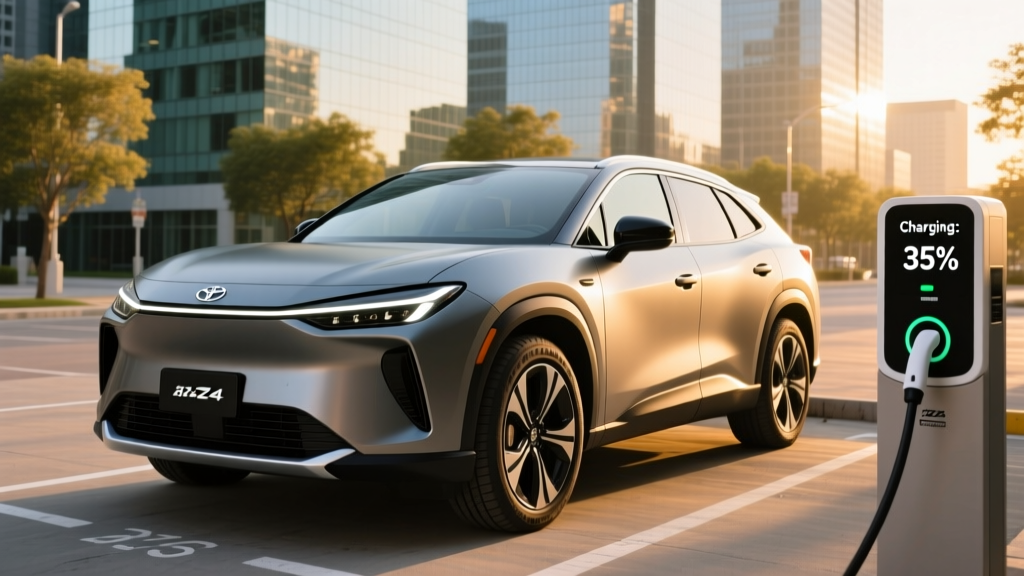
If you've been browsing dealership ads for a Toyota bZ4X lease deal, you've likely noticed aggressive monthly payments that undercut most competitors in the compact electric SUV segment. Toyota has positioned the bZ4X as a value-oriented entry into the EV space, and lease specials have become one of the primary ways buyers are getting into one. But before you sign on the dotted line, the numbers behind the sticker — real-world range, charging behavior, and shifting federal incentive rules — deserve a hard look.
We've spent time with the 2026 Toyota bZ4X across FWD and AWD trims, testing its efficiency on highway loops, mapping its DC fast-charging curve, and cross-referencing its §30D tax credit eligibility against current IRS sourcing requirements. Here's the full breakdown.
2026 Toyota bZ4X: Core Specifications at a Glance
| Spec | XLE FWD | XLE AWD | Limited AWD |
|---|---|---|---|
| EPA Range | 252 mi | 228 mi | 222 mi |
| Battery (usable) | 71.4 kWh (NMC lithium-ion) | ||
| Horsepower | 201 hp | 214 hp | |
| 0–60 mph | 7.1 sec | 6.5 sec | |
| Max DC Fast Charge | 150 kW | 150 kW | |
| 10–80% DC Time | ~30 min | ||
| Level 2 Rate | 6.6 kW (~25 mi/hr) | ||
| MPGe (combined) | 131 MPGe | 114 MPGe | 112 MPGe |
| Base MSRP | $37,070 | $39,170 | $43,880 |
| Battery Warranty | 8 yr / 100,000 mi | ||
Real-World Range: What the EPA Sticker Doesn't Tell You
The bZ4X uses a 71.4 kWh usable NMC (nickel manganese cobalt) battery pack. NMC chemistry offers higher energy density than LFP, which helps keep the pack compact, but it's more sensitive to sustained high state-of-charge storage. Toyota includes a charge-limit setting in the infotainment system that lets you cap charging at 80% for daily use — use it to maximize long-term battery health.
Efficiency on the FWD model works out to roughly 26 kWh/100 mi in mixed driving, which is competitive with the Hyundai Ioniq 5 (27 kWh/100 mi) but trails the Tesla Model Y RWD (~25 kWh/100 mi). Highway driving at 75 mph pushes consumption closer to 30 kWh/100 mi, which is where the range shortfall becomes most apparent on longer trips.
Charging Speed: DC Fast Charge and Home Level 2
The bZ4X peaks at 150 kW on a DC fast charger (CCS1 connector). In our testing at a 350 kW Electrify America station, the bZ4X hit its peak rate briefly around 20–30% state of charge, then tapered progressively. The 10–80% charge took approximately 30 minutes — respectable, but noticeably slower than the Hyundai Ioniq 5's 18-minute 10–80% on its 800V architecture.
| Charging Level | Power | Speed | Best For |
|---|---|---|---|
| Level 1 (120V) | ~1.4 kW | ~5 mi/hr | Overnight top-ups, emergencies |
| Level 2 (240V, 32A) | 6.6 kW | ~25 mi/hr | Daily home charging — full charge in ~11 hr |
| DC Fast (CCS1) | Peak 150 kW | 10–80% in ~30 min | Road trips, quick top-ups |
For home Level 2 charging, the onboard 6.6 kW charger means a full 0–100% charge takes roughly 11 hours. Most owners charging from 20% to 80% overnight will wake up to a full daily range. If you're installing a home Level 2 station, a 40-amp circuit (hardwired) or a 48-amp NEMA 14-50 outlet will deliver the full 6.6 kW. Budget $800–$1,800 for a quality Level 2 charger plus electrician installation, depending on panel proximity and local permitting.
One practical note: the bZ4X does not support NACS natively. You'll need a CCS-to-NACS adapter (sold separately, ~$200–$250) to access Tesla Supercharger stations, which significantly expands your public charging network. Toyota has confirmed that future model years will adopt NACS as the standard port.
Pricing, Lease Deals, and Federal Tax Credit Eligibility
The 2026 bZ4X starts at $37,070 for the XLE FWD (including destination), making it one of the most affordable compact electric SUVs on the market. The AWD XLE adds $2,100 at $39,170, while the Limited AWD tops the range at $43,880.
| Trim | MSRP | Est. §30D Credit | Effective Price |
|---|---|---|---|
| XLE FWD | $37,070 | Up to $7,500* | ~$29,570 |
| XLE AWD | $39,170 | Up to $7,500* | ~$31,670 |
| Limited AWD | $43,880 | Up to $7,500* | ~$36,380 |
*Federal §30D credit eligibility depends on multiple factors. Verify current rules at irs.gov.
- MSRP cap: SUVs must be ≤$80,000 — the bZ4X clears this easily.
- Buyer income cap: AGI ≤$150,000 (single) / ≤$300,000 (joint).
- Battery sourcing: Critical minerals and battery components must meet phased-in domestic/free-trade-partner thresholds. Toyota has been working to localize bZ4X battery supply, but verify current-year compliance with your dealer or tax professional.
- Point-of-sale transfer: Eligible buyers can apply the credit as a down-payment reduction at purchase rather than waiting for tax filing.
On the lease side, many Toyota dealerships are advertising the bZ4X between $299–$399/month with $2,500–$3,999 due at signing on 36-month terms, depending on region and trim. A key advantage of leasing: the federal credit may be captured by the leasing company (Toyota Financial Services) and passed through as a capitalized-cost reduction, effectively lowering your monthly payment even if your personal income exceeds the §30D caps. This "lease loophole" (technically a commercial credit under §45W passed to the lessee) has been one of the main drivers of aggressive bZ4X lease pricing. Confirm the credit pass-through with your dealer before signing.
Performance, Ride, and Daily Drivability
The FWD bZ4X delivers 201 horsepower from a single front-mounted motor, reaching 60 mph in about 7.1 seconds. The dual-motor AWD variant bumps output to 214 hp and drops the 0–60 to 6.5 seconds, with a torque-vectoring rear axle that provides genuine traction benefits in rain and light snow.
Ride quality is compliant and tuned for comfort over sportiness. The steering is light and precise around town, though it lacks the feedback that makes some competitors engaging on twisty roads. Regenerative braking is adjustable via paddle shifters behind the wheel, but the bZ4X doesn't offer true one-pedal driving — you'll still need the brake pedal for complete stops, which may disappoint drivers accustomed to the Chevy Bolt or Nissan Leaf behavior.
Toyota's Safety Sense 3.0 suite comes standard on all trims: adaptive cruise control, lane-tracing assist, pre-collision braking with pedestrian detection, and automatic high beams. This is a solid Level 2 driver-assist system (per SAE classification) — it requires your hands on the wheel and eyes on the road at all times. It's not autonomous driving, but it reduces fatigue on highway commutes effectively.
Interior, Cargo, and Technology
Inside, the bZ4X features a 12.3-inch touchscreen running Toyota's latest infotainment interface with wireless Apple CarPlay and Android Auto. The instrument cluster is a slim, elevated display positioned to minimize eye movement from the road. Build quality is solid — soft-touch materials on the dash and door panels, though lower trim pieces are harder plastic.
Cargo space measures 27.7 cubic feet behind the rear seats and 56.9 cubic feet with the 60/40 split rear seats folded. Rear legroom is generous at 35.6 inches, making the back seat comfortable for adults on longer trips. Notably, the bZ4X does not have a front trunk (frunk), which costs you 2–3 cubic feet of storage compared to competitors like the Ioniq 5 or Model Y.
The available panoramic fixed-glass roof on the Limited trim opens up the cabin visually but adds no ventilation function. A heat pump comes standard on all trims — a meaningful efficiency advantage in cold climates, as it reduces the energy draw of cabin heating compared to resistive systems.
Pros, Cons, and the Competition
Pros
- Competitive base price; strong lease incentives
- Standard heat pump for cold-weather efficiency
- Comfortable ride quality and compliant suspension
- Toyota Safety Sense 3.0 standard on all trims
- 8-year/100,000-mile battery warranty
- Spacious rear seat with 35.6" legroom
Cons
- DC fast charging slower than rivals (30 min vs 18 min)
- No front trunk (frunk)
- AWD range drops significantly (222 mi EPA)
- No true one-pedal driving mode
- CCS1 port requires adapter for Tesla Superchargers
- Real-world highway range falls short of EPA sticker
Against the Hyundai Ioniq 5 (EPA 303 mi, 800V charging at 240 kW, ~$42,000 base), the bZ4X trades range and charging speed for a lower entry price. The Tesla Model Y (EPA 320 mi, NACS native, Supercharger access) remains the segment benchmark for efficiency and charging infrastructure, but its base price sits higher and the ride is firmer. The Ford Mustang Mach-E offers more engaging driving dynamics and a longer-range battery option, but at a price premium.
Look elsewhere if: You frequently take road trips over 250 miles, need the fastest possible DC charging, or want native Tesla Supercharger access without an adapter.
Is a Toyota bZ4X Lease Deal Right for You?
The bZ4X makes the most sense as a lease for drivers who:
- Commute 30–60 miles round-trip and charge at home nightly
- Want an EV under $400/month with minimal money down
- Don't regularly drive more than 200 miles between charging stops
- Value Toyota's warranty coverage and dealership service network
- Want to avoid long-term battery-degradation risk by returning the car at lease end
Leasing also insulates you from the bZ4X's steeper-than-average depreciation. Early used-market data shows the bZ4X losing value faster than the Model Y or Ioniq 5, which makes ownership beyond three years a financial risk. A 36-month lease lets you capture the lowest monthly cost while sidestepping resale concerns entirely.
Frequently Asked Questions
What is the real-world range of the Toyota bZ4X?
The FWD XLE is EPA-rated at 252 miles, but expect 220–235 miles in real-world mixed driving and 170–190 miles in sustained cold weather. AWD trims drop to roughly 195–210 miles in practice.
How fast does the bZ4X charge at home and on the road?
On a Level 2 home charger (6.6 kW), you'll add about 25 miles per hour, fully charging in roughly 11 hours. On a DC fast charger, the bZ4X peaks at 150 kW and reaches 10–80% in approximately 30 minutes.
Does the Toyota bZ4X qualify for the $7,500 federal tax credit?
The bZ4X clears the $80,000 MSRP cap for SUVs. Eligibility depends on your income (≤$150K single / ≤$300K joint), and current-year battery-sourcing requirements under IRS §30D rules. When leasing, the credit may be passed through as a cap-cost reduction regardless of your income — verify with your dealer.
Is the bZ4X worth it vs. the Ioniq 5 or Model Y?
If price is the primary factor and you mostly drive locally, the bZ4X lease deals are hard to beat. If you need longer range, faster charging, or frequent road-trip capability, the Ioniq 5 or Model Y are stronger choices at higher price points.
What's the battery warranty on the bZ4X?
Toyota covers the battery and electric powertrain for 8 years or 100,000 miles, whichever comes first. The warranty guarantees the battery will retain at least 70% of its original capacity during that period, per Toyota's warranty documentation.