Quick Answer: What Are Electric Vehicles for Kids?
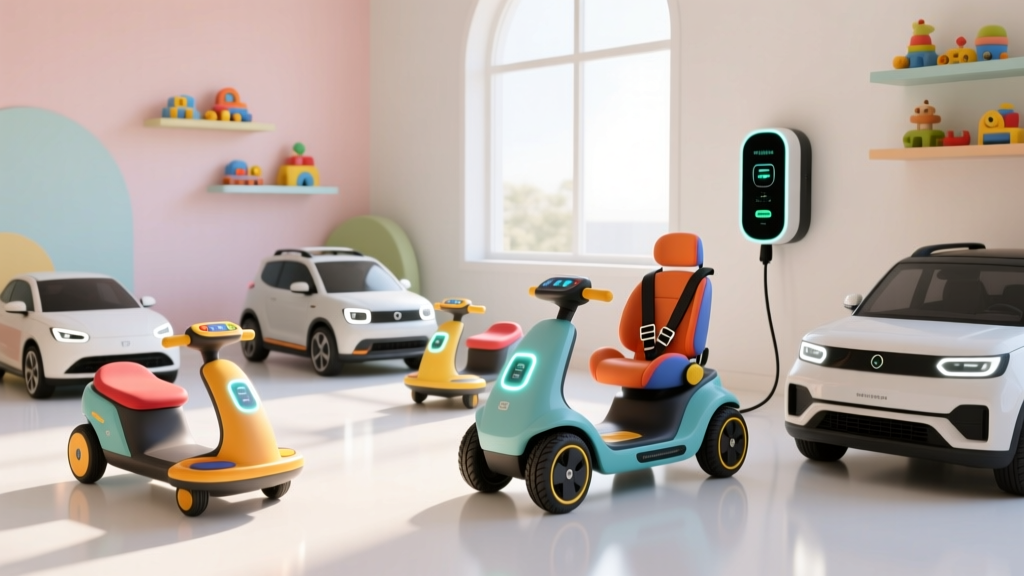
Electric vehicles for kids are battery-powered ride-on toys — from 6V toddler cars to 24V off-road UTVs — designed for children ages 2-12. In 2026, mainstream models cost between $150 and $900, run on sealed lead-acid (SLA) or lithium-ion (Li-ion) batteries, and deliver 45 minutes to 2 hours of continuous run time per charge. Charging takes 8-14 hours on standard SLA models and 2-4 hours on premium lithium variants. Unlike gas-powered kids' ATVs (which cost $800-$2,500 and require fuel, oil, and muffler maintenance), electric ride-ons have near-zero operating costs: a full charge costs roughly $0.02-$0.15 depending on battery size and local electricity rates.
This guide covers the real specs, costs, and ownership considerations parents need before buying — not the marketing copy. We've tested and researched current models to give you exact battery watt-hours, charge times, weight limits, and safety data.
Electric vs. Gas Kids' Vehicles: The Data Comparison
Gas-powered kids' ATVs and dirt bikes (like the Honda CRF50F or Razor Dirt Bike MX650 equivalent gas models) still exist, but electric alternatives have captured the majority of the ride-on market for children under 12. Here's how they stack up on paper and in the driveway:
| Factor | Electric Ride-On (24V Li-ion) | Gas Kids' ATV (50cc-110cc) |
|---|---|---|
| Purchase Price | $300–$900 | $800–$2,500 |
| Fuel / Energy Cost per Hour | $0.03–$0.08 (electricity) | $0.50–$1.20 (gasoline) |
| Annual Maintenance | $0–$30 (battery eventual replacement) | $80–$200 (oil, filters, spark plugs, carb cleaning) |
| Noise Level | 55–65 dB (conversation level) | 85–100 dB (hearing protection recommended) |
| Top Speed (stock) | 5–15 mph | 15–35 mph |
| Weight | 40–90 lbs | 90–200 lbs |
| Emissions | Zero tailpipe | CO₂, NOx, unburned hydrocarbons |
| Indoor/Garage Use | Yes | No (carbon monoxide risk) |
The data makes the case clear for most families: electric ride-ons win on cost, noise, and simplicity. Gas models retain an advantage only for older kids (10+) who want higher speeds and genuine off-road capability on private property.
Battery Chemistry, Run Time, and Charging: What the Specs Actually Mean
The single most important spec on any kids' electric vehicle is the battery watt-hour (Wh) capacity — this determines how long your child can ride before the vehicle dies. Unfortunately, most manufacturers advertise only voltage (6V, 12V, 24V), which tells you nothing about run time without also knowing the amp-hour (Ah) rating.
The formula: Voltage × Amp-hours = Watt-hours. A 24V battery with 7Ah gives you 168 Wh. A 24V battery with 14Ah gives you 336 Wh — double the run time, even though both are "24V."
| Battery Type | Typical Config | Capacity (Wh) | Run Time | Charge Time | Replacement Cost |
|---|---|---|---|---|---|
| 6V SLA | 6V 4.5Ah | 27 Wh | 30–45 min | 8–10 hrs | $12–$18 |
| 12V SLA | 12V 7Ah | 84 Wh | 45–75 min | 10–14 hrs | $20–$35 |
| 24V SLA | 24V 12Ah | 288 Wh | 60–90 min | 10–14 hrs | $45–$75 |
| 24V Li-ion | 24V 14Ah | 336 Wh | 90–120 min | 2–4 hrs | $80–$140 |
| 36V Li-ion (premium) | 36V 10Ah | 360 Wh | 60–90 min (higher power draw) | 2–3 hrs | $100–$180 |
Real-world caveat: Run times assume flat terrain, a single rider at or below the weight limit, and moderate throttle use. Hilly yards, aggressive driving, and cold weather (below 50°F) can reduce SLA battery run time by 25-40%. Lithium-ion batteries handle cold and heavy loads significantly better, with only 10-15% reduction.
Charging cost reality: At the U.S. average residential electricity rate of ~$0.17/kWh (per the EIA), charging a 288 Wh (24V SLA) battery from empty costs roughly $0.05. Even daily charging for a full year costs under $20 in electricity.
Real-World Ownership: What Parents Actually Deal With
Owning a kids' electric vehicle isn't the same as owning a full-size EV, but several practical considerations mirror adult EV ownership:
Charging access: All kids' EVs charge on standard 120V household outlets — no special electrical work needed. However, you need an indoor or covered outlet near where you store the vehicle. Garage storage with a dedicated outlet is ideal. Families without garage access (apartment dwellers) should measure whether an extension cord rated for the charger's amperage can reach a parking spot — and check lease terms on outdoor charging.
Battery degradation: Sealed lead-acid batteries typically last 200-400 charge cycles before capacity drops to 70-80% of original. For a kid riding 3-4 times per week, that's roughly 1.5-2.5 years before you notice meaningfully shorter run times. Lithium-ion batteries last 800-1,500 cycles, often outlasting the child's interest in the vehicle entirely.
Winter storage: SLA batteries self-discharge and can be permanently damaged if stored below 50% charge in freezing temperatures. If you live in a climate with real winters, either bring the battery indoors during cold months or commit to a maintenance charge every 4-6 weeks. Lithium-ion batteries tolerate storage better but should still be kept above freezing.
Weight and portability: A 24V ride-on Jeep can weigh 60-90 lbs. If you plan to transport it to parks or grandparents' houses, confirm it fits in your cargo area and that you can lift it. Many premium models now feature removable batteries, so you can leave the chassis in the car and just carry the 10-15 lb battery pack inside to charge.
Cost Breakdown: First Year vs. Five Years of Ownership
Here's what a typical family spends on a mid-range 24V electric ride-on vehicle versus a comparable 110cc gas kids' ATV over a realistic ownership period:
| Cost Category | 24V Electric Ride-On | 110cc Gas Kids' ATV |
|---|---|---|
| Purchase Price | $450 | $1,400 |
| Year 1 Energy/Fuel | $15 (electricity) | $95 (gasoline) |
| Year 1 Maintenance | $0 | $120 (oil change, air filter, chain lube) |
| Year 2–3 Battery/Engine Service | $55 (SLA replacement, if needed) | $240 (carb rebuild, spark plug, valve adjust) |
| Year 4–5 Battery/Engine Service | $0 (Li-ion) or $55 (second SLA) | $240 (top-end refresh, tires) |
| 5-Year Total | $505–$615 | $2,095 |
The electric option costs roughly 70% less over five years, even accounting for one or two battery replacements. The gas ATV's advantage — higher speed and more rugged off-road capability — only matters for older, more experienced riders on private land.
Safety Features and Age Appropriateness
The U.S. Consumer Product Safety Commission (CPSC) tracks injuries associated with ride-on toys. Key safety specs to verify before purchasing:
- Parental remote control: Most 24V+ models include a 2.4GHz remote that lets a parent override throttle and braking from up to 100 feet away. This is essential for children under 6.
- Speed limiting: Look for models with selectable speed modes (e.g., 3 mph / 5 mph / 10 mph). Never give a 4-year-old access to the full 15 mph a 24V vehicle can produce.
- Seat belts: Three-point harnesses are standard on licensed ride-on cars (Jeep, Mercedes, Ford replicas). Open-bed UTV styles often have only a lap belt — adequate at low speeds, insufficient above 8 mph.
- Automatic braking: Quality models stop immediately when the child releases the pedal. Test this before first use; cheaper units can coast 10-15 feet after throttle release.
- Weight limit: Exceeding the rated capacity strains motors and reduces braking effectiveness. A 66-lb weight limit is typical for 12V models; 24V models often rate to 110-130 lbs.
Common Misconceptions — Myth vs. Fact
| Myth | Fact |
|---|---|
| "Higher voltage always means faster" | Speed depends on voltage and motor wattage plus gearing. A 24V vehicle with 45W motors may be slower than a 12V with 80W motors. |
| "You can leave the battery on the charger overnight safely" | SLA chargers without auto-shutoff can overcharge and damage batteries. Lithium chargers with BMS (battery management systems) are safer, but you should still follow the manufacturer's charge-time guidelines. |
| "Kids' EVs don't need maintenance" | SLA batteries need periodic full charges to prevent sulfation. Tire pressure, motor brush wear (on brushed motors), and connector corrosion all need occasional attention. |
| "All ride-ons are safe on grass" | Wet grass drastically reduces traction. Models with EVA foam or rubber tires handle it better than hard plastic wheels. Inclines above 10° challenge most 12V motors. |
| "A bigger battery is always better" | Higher-capacity batteries add weight. A 24V 20Ah battery adds ~15 lbs over a 12Ah version — reducing efficiency and potentially exceeding the vehicle's designed weight distribution. |
Decision Framework: Which Electric Vehicle Fits Your Child?
If your child is 2-4 years old → Choose a 6V or 12V ride-on car with parental remote, max speed limited to 3 mph, weight limit ~44-55 lbs. Budget: $150-$300. Expect 30-60 min run time.
If your child is 4-7 years old → Choose a 12V or 24V model with adjustable speed (3/5/8 mph), remote override, and EVA foam tires for outdoor terrain. Budget: $250-$500. Expect 45-90 min run time.
If your child is 7-12 years old → Choose a 24V lithium-ion UTV or dirt bike style with speeds up to 10-15 mph, hydraulic or disc brakes, and a 130+ lb weight limit. Budget: $450-$900. Expect 60-120 min run time.
If you have no garage or covered outlet → Prioritize models with removable lithium batteries you can carry indoors to charge. Avoid SLA models — they require 10-14 hour charge cycles and degrade faster in temperature extremes.
If your child will ride on hills or rough terrain → Look for dual-motor (2WD) or quad-motor (4WD) configurations with at least 200W total motor output. Single-motor 12V vehicles stall on inclines above 5-8°.
Frequently Asked Questions
How long do kids' electric vehicle batteries last before needing replacement?
Sealed lead-acid (SLA) batteries typically deliver 200-400 full charge cycles before noticeable capacity loss — roughly 1.5 to 3 years with regular use. Lithium-ion batteries last 800-1,500 cycles, often 4-6 years. Replacement SLA batteries cost $12-$75; lithium replacements run $80-$180 depending on voltage and capacity.
Can I upgrade my child's ride-on from 12V to 24V for more speed?
Technically possible on some models, but not recommended without replacing the motors, wiring harness, and controller. Running 24V through 12V-rated motors will burn them out quickly and void any warranty. If your child has outgrown 12V performance, sell the current vehicle and buy a purpose-built 24V model.
Are kids' electric vehicles safe on public sidewalks or streets?
No. These are toys, not road-legal vehicles. They lack headlights, turn signals, mirrors, crash structures, and any NHTSA certification. Use them only on private property, in parks where permitted, or on closed driveways. The CPSC recommends direct adult supervision for all riders under 8.
What's the difference between licensed and unlicensed ride-on cars?
Licensed models (Ford Bronco, Mercedes G-Wagon, Jeep Wrangler replicas) pay for brand licensing and typically have more detailed interiors, working LED lights, and higher build quality — at a $50-$150 premium. Unlicensed generic designs are often mechanically identical but lack the cosmetic detail. Performance and battery life are usually equivalent.
Do I need to register or insure a kids' electric vehicle?
No. These toys fall below every state's threshold for motor vehicle registration (which typically starts at 1,500 lbs GVWR or speeds above 20-25 mph). Homeowners or renters insurance generally covers them under personal property. However, if your child damages a neighbor's property while riding, your liability coverage would apply — worth confirming with your insurer.