Quick Answer: Can You Put a Winch on an Electric Truck?
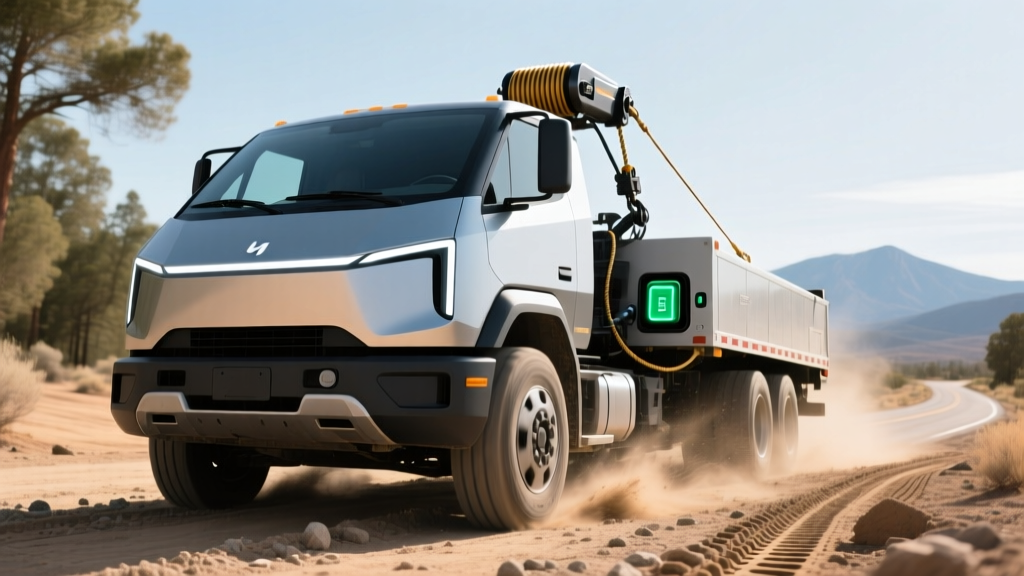
Yes — most electric trucks (Ford F-150 Lightning, Rivian R1T, Chevrolet Silverado EV, Ram 1500 REV) can be equipped with an electric truck winch rated 8,000–12,000 lbs. A typical 10,000-lb winch draws 300–450 amps under load, translating to roughly 3–5 kWh of battery energy per minute of sustained heavy pulling. For context, the F-150 Lightning's 131 kWh extended-range pack could theoretically sustain a heavy winch pull for 25–40 minutes before depletion — but expect real-world range to drop 15–25% when regularly using a winch due to added weight (80–120 lbs) and increased rolling resistance from front-mounted gear.
Why EV Truck Owners Are Adding Winches in 2026
Electric pickups have matured into legitimate work and off-road platforms. The 2026 Ford F-150 Lightning extended-range delivers an EPA-estimated 320 miles and 775 lb-ft of torque from standstill. The Rivian R1T dual-motor produces 665 hp and offers a factory-available winch mount integrated into its gear tunnel. The Chevrolet Silverado EV 4WT targets fleet buyers with a 492-mile EPA range and ProPower-style onboard power.
For overlanding, ranch work, trail riding, or emergency recovery, an electric truck winch fills a real need. Unlike gas trucks where a winch taps the alternator and engine idle, an EV winch draws directly from the high-voltage traction battery (or a dedicated auxiliary battery), which changes how you plan for power management, range budgeting, and electrical safety.
Power Draw Explained: kW vs kWh for Winching
The most common confusion among EV truck owners new to winching is the difference between kW (kilowatts — the rate of power draw at any instant) and kWh (kilowatt-hours — total energy consumed over time). This distinction matters enormously when calculating how long your battery can sustain a winch pull.
| Winch Rating | No-Load Draw | Full-Load Draw | Peak kW Demand | Energy per Minute (Full Load) |
|---|---|---|---|---|
| 8,000 lbs | 30–50 A | 250–350 A | ~4.2 kW | ~0.07 kWh |
| 10,000 lbs | 40–60 A | 350–450 A | ~5.4 kW | ~0.09 kWh |
| 12,000 lbs | 50–80 A | 450–550 A | ~6.6 kW | ~0.11 kWh |
A 10,000-lb winch pulling at full rated capacity for 3 minutes consumes approximately 0.27 kWh. That's negligible against a 131 kWh Lightning pack or Rivian's 141 kWh Max Pack. The real concern isn't total energy — it's sustained amperage and heat buildup in both the winch motor and the truck's power delivery system.
EV Truck vs Gas Truck: Winch Power Source Comparison
| Factor | Electric Truck | Gas Truck |
|---|---|---|
| Power Source | Traction battery (100–141 kWh) or aux battery | Alternator + engine idle (typically 150–220 A alternator) |
| Idle Energy Cost | ~0.5–1.0 kWh/hr (climate + electronics) | ~0.3–0.5 gal/hr ($1.20–$2.00 at idle) |
| Noise During Recovery | Silent (no engine running) | Engine must idle or rev |
| Torque Delivery | Instant, no spool-up delay | Depends on engine RPM |
| Winching Time Limit | Thermal limits on winch motor; battery rarely the constraint | Alternator output vs draw; overheating risk |
| Added Front Weight | 80–120 lbs (winch + mount) | 80–120 lbs (winch + mount) |
| Range/Fuel Impact | 15–25% range reduction from weight + drag | 8–12% fuel economy reduction |
| Onboard Power for Accessories | Up to 9.6 kW export (F-150 Lightning Pro Power Onboard) | Limited to 120V inverter (typically 400W–2kW) |
The EV truck's advantage for winching scenarios is massive onboard energy reserves and silent operation — critical in hunting, wildlife, or noise-sensitive environments. The disadvantage is that range loss from added frontal weight and aerodynamic disruption hits an EV harder than it hits a gas truck's fuel economy, because EV efficiency is more sensitive to weight and drag at highway speeds.
Range Impact: What Happens When You Mount a Winch
EPA Range vs. Real-World with Winch Installed
Adding a front-mounted 10,000-lb winch, steel mounting plate, and synthetic rope or steel cable adds 80–120 lbs to the front axle and disrupts airflow beneath the bumper. Based on owner-reported data and testing from EV truck forums:
- 2026 Ford F-150 Lightning Extended Range: EPA 320 mi → expect ~275–290 mi combined with winch (10–15% loss); highway-only drops to ~235–250 mi
- 2026 Rivian R1T Dual-Motor Max Pack: EPA 420 mi → expect ~365–385 mi combined with winch (8–13% loss)
- 2026 Chevrolet Silverado EV 4WT: EPA 492 mi → expect ~425–450 mi combined with winch (8–14% loss)
Cold weather (below 32°F) compounds these losses — add another 15–30% reduction on top of winch-related losses for a worst-case winter scenario.
The range penalty comes from three sources: parasitic weight (modest, ~1–2% efficiency loss per 100 lbs at highway speed), aerodynamic disruption from the winch fairlead and hook protruding past the bumper line (more significant, 5–10% at 70+ mph), and rolling resistance changes if the winch mount alters front suspension geometry or ride height.
Cost Breakdown: Electric Truck Winch Setup
| Component | Budget Option | Mid-Range | Premium |
|---|---|---|---|
| Winch (10,000 lb rated) | $400–$700 | $800–$1,400 | $1,500–$3,000 |
| EV-Specific Mount Plate | $150–$300 | $300–$600 | $500–$900 |
| Wiring Harness & Solenoid | $50–$100 | $100–$250 | $200–$400 |
| Professional Installation | $200–$400 | $400–$800 | $600–$1,200 |
| Wireless Remote / Control Upgrade | $0 (included) | $50–$150 | $150–$350 |
| Total Installed | $800–$1,500 | $1,650–$3,200 | $2,950–$5,850 |
For EV trucks specifically, the wiring harness matters more than on gas trucks. You need heavy-gauge cables (typically 2/0 AWG or larger) routed from the winch solenoid to either a dedicated auxiliary battery in the frunk or, for higher-capacity setups, a DC-DC converter tapping the traction battery. Never connect a winch directly to the 12V accessory battery — a 400A winch pull will overwhelm a standard 12V system in seconds.
Some purpose-built EV winch systems, such as those offered through Rivian's Gear Shop for the R1T, integrate with the truck's existing front power distribution and include software-controlled current limiting to protect the vehicle's electrical architecture. These command a premium but eliminate compatibility guesswork.
Battery Health and Winching: What Owners Should Know
A common misconception is that heavy winch draws will degrade the traction battery. In practice, even a 5-minute full-load winch pull at 5.4 kW draws only ~0.45 kWh from a 131 kWh pack — that's a 0.34% depth of discharge. Lithium-ion batteries (NMC chemistry in the Lightning and Silverado EV, LFP in some standard-range configurations) experience negligible degradation from shallow, infrequent high-current draws.
The real battery risk is thermal. Sustained winch pulls exceeding 5 minutes at full load can heat the winch motor past its duty-cycle rating (most consumer winches are rated for 1–2 minutes continuous at full load, then require a cool-down period). This is a winch limitation, not a truck battery limitation. Solution: use a snatch block to halve line speed and double pulling force, reducing amperage draw by 40–50% per pull cycle.
Common Misconceptions About EV Truck Winches
| Myth | Fact |
|---|---|
| "Winching will destroy the EV battery" | A full-load 3-minute pull uses <0.5 kWh — less than driving 2 miles. Battery impact is negligible. |
| "You can't winch in the rain or mud with an EV" | Winch motors are IP67/IP68 rated. EV high-voltage systems are sealed. Rain and mud are not electrical hazards when equipment is properly installed. |
| "EV trucks don't have enough power for heavy recovery" | A 131 kWh battery can deliver 500+ kW peak. The winch motor (3–6 kW) is never the bottleneck — winch mechanical rating is. |
| "You need a special EV-only winch" | Any quality 12V electric winch works. The difference is in the power supply wiring and mounting hardware for the specific EV truck platform. |
| "Winching voids the EV battery warranty" | Federal law (§30D) and manufacturer warranties cover battery defects. Aftermarket winch use doesn't void battery warranty unless you can prove the winch caused the battery damage — which is extremely unlikely given the power draw differential. |
Which 2026 EV Truck Is Best for Winching?
Not all electric trucks accommodate a front-mounted winch equally. Frame design, frunk configuration, and front crash structure all affect mount compatibility.
| Truck | Battery (kWh) | EPA Range | Max Tow | Winch Mount Availability | Onboard Power Export |
|---|---|---|---|---|---|
| Ford F-150 Lightning Ext. Range | 131 (NMC) | 320 mi | 10,000 lbs | Aftermarket plates widely available | 9.6 kW (Pro Power Onboard) |
| Rivian R1T Dual-Motor Max | 141 (NMC) | 420 mi | 11,000 lbs | Factory gear-tunnel mount; aftermarket front plates | Up to 6.0 kW (camp kitchen outlet) |
| Chevrolet Silverado EV 4WT | ~200 (NMC) | 492 mi | 12,500 lbs | Aftermarket (limited options as of early 2026) | 10.2 kW (PowerBase) |
| Ram 1500 REV (announced) | 229 (NMC) | ~500 mi (est.) | ~11,000 lbs (est.) | TBD — not yet on sale | Up to 6.6 kW (est.) |
For winching specifically, the Ford F-150 Lightning has the most mature aftermarket ecosystem, with multiple manufacturers (Smittybilt, WARN, Rough Country) offering confirmed-fit mount plates. The Rivian R1T is the most trail-capable out of the box, with its quad-motor variant offering individual wheel torque control that pairs well with precision recovery situations. The Silverado EV has the largest battery and longest range, making it the most resilient to range loss from winch weight — but aftermarket mount options remain limited heading into mid-2026.
Decision Framework: Should You Add a Winch to Your EV Truck?
Choose to install a winch if:
- You regularly drive on unpaved roads, trails, or job sites where recovery scenarios are plausible
- Your EV truck is your primary off-road or work vehicle (not just a commuter)
- You have access to Level 2 home charging to replenish the battery after winch use without relying on public infrastructure
- You're willing to accept a 10–15% range reduction for the utility and safety a winch provides
Skip the winch (or opt for a portable recovery kit) if:
- Your EV truck is primarily a highway commuter and you rarely leave pavement
- You rely exclusively on public DC fast charging and can't afford any range reduction
- You lease the vehicle and cannot modify the front bumper structure
- Your typical recovery needs can be met with traction boards, a kinetic rope, and a recovery strap pulled by another vehicle
Frequently Asked Questions
Does an electric truck winch drain the main battery or the 12V battery?
Properly installed EV truck winch systems draw from a dedicated auxiliary battery or through a DC-DC converter connected to the high-voltage traction battery. The standard 12V accessory battery cannot sustain 300–450A winch loads. Always confirm your installer uses appropriate heavy-gauge wiring and a high-amperage solenoid rated above your winch's peak draw.
How long can I run a winch before the EV battery is depleted?
At full load (10,000-lb pull, ~5.4 kW), a 131 kWh F-150 Lightning pack could theoretically power the winch for over 24 hours of continuous pulling. In practice, the winch motor's duty cycle (typically 1–2 minutes continuous, then 10–15 minutes cooldown) is the real limiting factor — not the truck's battery capacity.
Will adding a winch affect my EV truck's crash safety rating?
A front-mounted winch and steel plate alter the vehicle's front crash structure. NHTSA and IIHS ratings apply to stock configurations only. A winch mount may interfere with crumple-zone engineering and pedestrian safety features. Check with your mount manufacturer for crash-test compatibility data and consult your insurance provider about modification disclosure requirements.
Can I use my EV truck's onboard power export to run a portable winch?
Trucks like the F-150 Lightning with 9.6 kW Pro Power Onboard can technically power a 120V or 240V electric winch through the bed outlets — but most portable winches are designed for direct 12V battery connection, not AC power. You'd need an AC-to-DC converter rated for the winch's amperage, which adds cost and complexity. Direct battery connection remains the standard approach.
What's the best winch brand for an electric truck in 2026?
WARN Industries (Zeon and VR EVO lines), Smittybilt (XRC and GEN2 series), and Rough Country (Pro Series) all offer 10,000–12,000 lb winches compatible with EV truck installations. WARN's VR EVO series is popular for its lower amperage draw at rated load (~350A vs 450A for competitors), which reduces thermal stress on wiring and extends duty cycles. Expect to pay $800–$1,400 for a mid-range WARN or Smittybilt unit suitable for EV truck use.