The Short Answer on Electric Temu Jet Boats
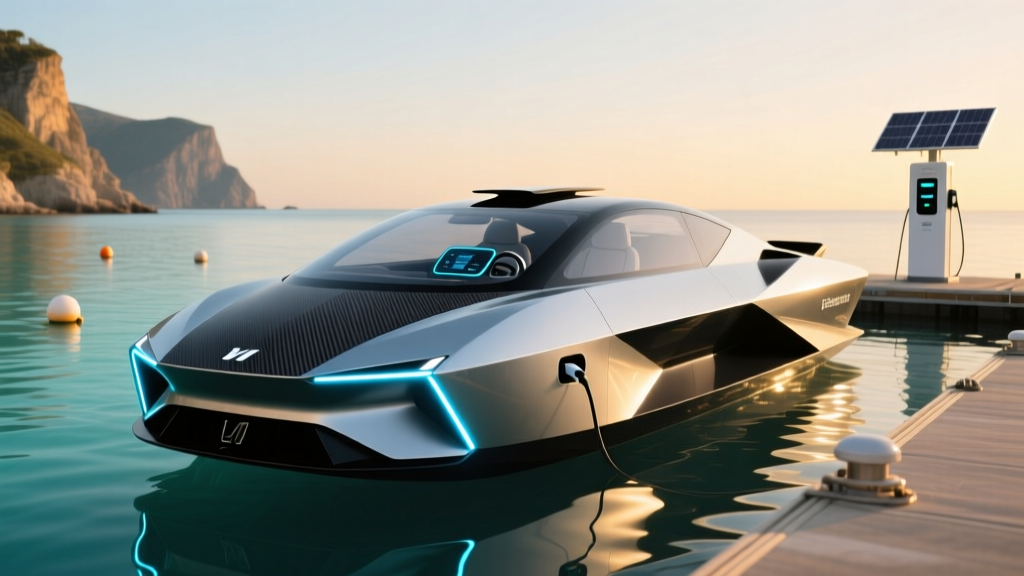
Electric jet boats sold on Temu and similar ultra-low-cost marketplaces are typically small, low-power personal watercraft (often 1–5 kW motors, 48V lithium battery packs) priced between $300 and $2,500. They are not comparable to full-size gas jet boats (which run 150–300+ HP) and are best understood as electric river/lake toys or inflatable jet-drive dinghies. Before ordering, verify the battery chemistry (LFP vs. generic lithium-ion), actual watt-hours of the pack, whether any marine safety certification (USCG, CE) is documented, and whether parts/service exist in the US. Most buyers are better served by established marine EV brands like Torqeedo, RAND, or Candela if they need reliable, documented performance.
If you've been browsing Temu or AliExpress and stumbled on listings for "electric jet boats" priced at a fraction of what a conventional gas-powered jet boat costs, you're not alone. Search interest in budget electric watercraft has climbed as EV adoption broadens beyond cars. But buying a vehicle — or vessel — sight-unseen from an overseas marketplace carries risks that don't show up in the product photos. This guide breaks down what these products actually are, the real ownership math, and how to decide whether one makes sense for you.
What an "Electric Temu Jet Boat" Actually Is
Most listings under this search term fall into three categories:
- Inflatable jet-drive boats with a 48V or 60V brushless DC motor (typically 1,000–5,000 watts / 1.3–6.7 HP), a small lithium battery pack, and a handheld tiller. Top speeds: 5–15 mph. Price: $400–$2,000.
- Electric outboard motor kits marketed as "jet boat" systems — essentially an electric outboard with a jet-drive lower unit that bolts onto a hull you supply. Power: 2–10 kW. Price: $800–$3,500.
- Small rigid-hull electric runabouts (8–12 feet) with integrated electric jet drives. These are rarer on Temu and typically ship via freight. Price: $2,000–$8,000.
None of these are equivalent to a 200 HP gas jet boat capable of 50+ mph. They're closer to electric kayaks or motorized dinghies. Understanding this upfront prevents the most common buyer disappointment.
Battery, Motor, and Range: The Numbers That Matter
When evaluating any electric watercraft, the same EV principles apply: battery capacity (kWh) determines range, motor power (kW) determines speed, and efficiency (watt-hours per mile or per hour of use) determines real-world runtime.
| Spec | Temu Generic (1–5 kW class) | Torqeedo Cruise 10.0 (Established) | Gas Jet Boat (200 HP baseline) |
|---|---|---|---|
| Motor Power | 1–5 kW (1.3–6.7 HP) | 10 kW (equivalent ~20 HP) | ~150 kW (200 HP) |
| Battery Capacity | 1.0–3.5 kWh (often unverified) | 5.0–12.8 kWh (LFP, documented) | N/A (gas tank, 20–40 gal) |
| Battery Chemistry | Often unspecified Li-ion; some claim LFP | LFP (lithium iron phosphate) | N/A |
| Top Speed | 5–15 mph | ~18–22 mph (planing hull dependent) | 45–65 mph |
| Runtime (moderate throttle) | 30–90 minutes | 2–5 hours | 4–8 hours |
| Charge Time (standard outlet) | 4–8 hours (120V) | 5–10 hours (120V); faster with 240V | N/A (refuel in 5 min) |
| Price | $400–$3,500 | $6,000–$18,000 | $25,000–$60,000+ |
| USCG / CE Certification | Rarely documented | Yes | Yes |
Key distinction: kW (kilowatts) measures power output — how fast the motor can push the boat. kWh (kilowatt-hours) measures energy stored in the battery — how long you can run before recharging. A 3 kW motor drawing from a 2 kWh battery will drain that battery in roughly 40 minutes at full throttle. Most Temu listings conflate or obscure these numbers.
Real Costs: Purchase, Charging, Maintenance, and Insurance
The sticker price is only the beginning. Here's a realistic 3-year ownership cost breakdown for a typical Temu-class electric jet boat versus a comparable small gas outboard setup and an established-brand electric system.
| Cost Category | Temu Electric Jet Boat (~$1,500) | Small Gas Outboard (9.9 HP, ~$3,000) | Established Marine EV (~$8,000) |
|---|---|---|---|
| Purchase Price | $1,500 | $3,000 | $8,000 |
| Shipping / Freight | $0–$200 (often included) | $0–$100 | $200–$500 |
| Energy/Fuel (100 hrs/yr × 3 yrs) | $90–$150 (electricity at $0.15/kWh) | $450–$700 (gas at ~$3.50/gal) | $90–$150 |
| Maintenance (3 yrs) | $0–$50 (minimal moving parts) | $300–$600 (oil, impeller, winterization) | $50–$150 |
| Battery Replacement Risk | $200–$500 (if cells degrade or fail; no warranty support likely) | $0 | $0–$1,500 (under warranty in most cases) |
| Insurance (if available) | Often uninsurable (no USCG cert) | $150–$400/yr | $150–$400/yr |
| Estimated 3-Year Total | $1,790–$2,400 | $3,900–$4,800 | $8,490–$10,300 |
The takeaway: The Temu boat wins on upfront cost but carries real risk — if the battery fails in year two with no warranty recourse, your "cheap" boat just doubled in cost. The established EV marine brand costs 4–5× more upfront but offers warranty, parts, and insurability. The gas outboard sits in the middle on total cost but offers range and refueling convenience no budget electric setup can match.
Charging Logistics: What EV Owners Already Know
If you already own an EV, you understand charging infrastructure. The same principles apply to electric watercraft, but with added complexity:
- Level 1 (120V household outlet): Most Temu-class boats charge this way. Expect 4–8 hours for a full charge on a 2–3 kWh pack. This is fine for weekend lake use if you charge overnight.
- Level 2 (240V): Rarely supported on budget boats. Established brands like Torqeedo offer 240V chargers that cut charge times to 2–4 hours.
- Dock/marina charging: Many marinas offer 120V shore power. Verify amperage (15A vs 20A circuits) before relying on this.
- Solar trickle charging: Some buyers pair a 200–400W solar panel with a charge controller to extend range on multi-day trips. This adds $300–$800 but can meaningfully extend runtime in sunny conditions.
Cold-water and cold-weather note: Lithium batteries lose 15–30% of usable capacity in temperatures below 40°F (4°C). If you boat in shoulder seasons or northern climates, plan for significantly reduced runtime. LFP chemistry handles cold slightly better than generic NMC cells, but neither performs well below freezing. Never charge a lithium battery below 32°F — this can cause permanent cell damage and fire risk.
Common Misconceptions — Myth vs. Fact
| Myth | Fact |
|---|---|
| "A 5 kW electric motor equals 5 HP gas" | 5 kW ≈ 6.7 HP at peak, but electric motors deliver instant torque and maintain power at low RPM more efficiently. Real-world thrust depends heavily on the jet-drive impeller design, which is often poor on budget units. |
| "It's a jet boat, so it goes fast" | Jet drive efficiency is lower than propeller drive at low speeds. A 3 kW electric jet boat may cruise at 8–10 mph — fine for calm rivers, inadequate for open water or towing. |
| "No maintenance means no problems" | Electric motors are low-maintenance, but lithium batteries degrade. Budget packs with no battery management system (BMS) or thermal management can swell, lose capacity rapidly, or become fire hazards. Always verify the BMS is present and functional. |
| "I can use it anywhere" | Many lakes and waterways restrict motorized craft or require registration, hull identification numbers (HIN), and safety equipment. A Temu boat may lack the documentation needed for legal registration in your state. |
| "It qualifies for the federal EV tax credit" | The IRS §30D clean vehicle credit applies to highway-capable vehicles with 4+ wheels. Boats and watercraft do not qualify. |
How This Compares to Your EV Ownership Experience
If you drive a battery-electric vehicle, you're already familiar with range estimation, charging curves, and the gap between advertised and real-world performance. Those instincts transfer directly to electric boats — but the stakes are higher on water.
In a car, running out of charge means a tow truck. In a boat, it means drifting. Always plan for a 30–40% battery reserve on any outing, especially in current or wind. A 2 kWh battery giving you 60 minutes at moderate throttle should realistically be treated as a 40-minute battery if you want a safety margin.
EV owners also know that peak charge rates are not sustained rates. The same applies to electric boat motors: a "5 kW peak" motor may sustain only 2–3 kW continuously before thermal throttling kicks in. Budget motors rarely publish sustained power ratings — a red flag worth investigating before purchase.
Decision Framework: Should You Buy One?
Buy a Temu-class electric jet boat if:
- You want a low-cost, low-speed electric runabout for calm, small lakes or slow rivers
- You can charge at home or at a dock with 120V access
- You accept the risk of no warranty, no US parts support, and potential registration hurdles
- Your use case is 1–2 people, light cargo, under 10 mph, under 60 minutes per outing
- You're technically inclined enough to troubleshoot electrical issues yourself
Buy an established marine EV brand (Torqeedo, ePropulsion, RAND) if:
- You need documented specs, warranty, and US-based service
- You plan to use the boat frequently (50+ hours/year) and need reliability
- You want to insure the boat or register it legally in all states
- You need higher speeds (15+ mph) or longer runtime (2+ hours)
- You're pairing the motor with a quality hull and want matched-system engineering
Stick with gas (or wait) if:
- You need 30+ mph speeds, open-water capability, or towing power
- You boat in remote areas with no charging access
- You need 4+ hours of continuous runtime
- You want to resell the boat with documented value retention
First-Time Electric Boat Buyer Checklist
Before clicking "Buy" on any electric watercraft from an overseas marketplace, verify these items:
- Battery chemistry and capacity: Demand the exact kWh and chemistry (LFP preferred for safety and cycle life). If the listing says "lithium battery" without specifics, walk away.
- BMS presence: A battery management system protects against overcharge, over-discharge, and cell imbalance. No BMS = fire risk.
- Motor continuous (not peak) power rating: Ask the seller for the sustained kW rating, not the marketing peak.
- Marine certification: Check for USCG compliance or CE marking. Without these, registration and insurance may be impossible.
- Return policy and shipping origin: Temu's buyer protection covers non-delivery and gross misrepresentation, but returning a heavy, lithium-battery-containing product internationally is expensive and sometimes prohibited by carrier hazmat rules.
- State registration requirements: Contact your state's boating authority before purchase. Many states require a HIN, manufacturer's statement of origin (MSO), and proof of compliance with federal safety standards — documents Temu sellers rarely provide.
- Connector and charger compatibility: Verify the charger is UL-listed or equivalent. Cheap, uncertified chargers are a leading cause of lithium battery fires.
Frequently Asked Questions
Can I register a Temu electric jet boat in my state?
It depends on your state, but it's often difficult. Most states require a manufacturer's statement of origin (MSO), a hull identification number (HIN) assigned by a USCG-recognized manufacturer, and compliance with federal construction standards. Temu sellers rarely provide these documents. Contact your state's boat registration office before purchasing.
How long do the batteries in budget electric boats last?
Generic lithium-ion packs without quality BMS systems typically deliver 300–500 charge cycles before significant degradation (20%+ capacity loss). That translates to roughly 2–4 years of moderate weekend use. LFP batteries, when present, can deliver 2,000+ cycles. The difference is substantial — and a key reason to verify chemistry before buying.
Is it safe to buy a lithium battery boat from Temu?
There is real risk. Lithium batteries require proper cell matching, BMS protection, and thermal management. Budget manufacturers may cut corners on all three. There have been documented fires from cheap lithium marine batteries. If you buy, insist on a battery with a visible, named BMS brand (e.g., Daly, JBD) and never charge unattended.
How does electric boat efficiency compare to gas?
Electric motors are 85–95% efficient at converting stored energy to thrust. Gas outboards are 25–35% efficient. This means a 2 kWh electric system delivers roughly the same usable energy as burning 0.6 gallons of gas — but gas stores far more energy per unit weight, which is why gas boats still dominate for range and speed.
Do electric boats qualify for any tax credits or incentives?
No. The federal §30D clean vehicle tax credit applies only to qualified highway motor vehicles with at least four wheels. Boats, personal watercraft, and off-road vehicles do not qualify. Some states offer separate clean-energy rebates for electric marine equipment — check your state's energy office — but these are uncommon and typically apply to commercial fleets.
What's the best alternative to a Temu electric jet boat?
For personal use on small lakes, consider ePropulsion or Torqeedo electric outboards paired with a quality inflatable or rigid-hull dinghy. For higher performance, look at US-built electric runabouts from brands like RAND or the foiling Candela C-8 (though the latter starts above $300,000). For budget buyers who need range and speed, a used 9.9 HP gas outboard on a used aluminum hull remains the most practical option under $3,000.
Electric watercraft are genuinely compelling for the right use case — quiet, emission-free, low-maintenance operation on calm water. But the gap between a $1,200 Temu listing and a $12,000 Torqeedo system isn't just brand markup. It's the difference between documented battery chemistry and an unmarked shrink-wrapped pack, between USCG compliance and an unregistered hull, between a 3-year warranty and an overseas return address that may not exist next month. Know exactly what you're buying, verify every spec, and plan for the day the battery needs replacing — because on the water, unlike in your driveway, there's no AAA to call.