The Electric SUV Market in 2026: The Short Answer
The U.S. electric SUV market now spans from the ~$30,000 Chevrolet Equinox EV (EPA 319 miles) to the $90,000+ Tesla Model X and Rivian R1S, with mainstream models averaging 280–330 miles of EPA range and 10–80% DC fast-charge times of 18–30 minutes. For most buyers with home Level 2 charging, a mainstream electric SUV costs roughly $0.04–$0.06 per mile to fuel versus $0.12–$0.16 for a comparable gas SUV, saving $1,200–$2,000 annually on energy alone. However, upfront purchase prices remain $5,000–$10,000 higher than gas equivalents, insurance averages 15–25% more, and cold-weather range drops of 20–30% are real. The right choice depends on your daily mileage, home charging access, climate, and whether you qualify for the federal §30D tax credit (up to $7,500, subject to income, MSRP caps, and battery-sourcing rules).
Where the Electric SUV Market Stands in 2026
The electric SUV segment has matured past early-adopter territory. As of the 2026 model year, buyers can choose from roughly 25 battery-electric SUVs across compact, midsize, and full-size classes. Prices range from the low $30Ks to well over $100K, though the volume sits in the $40K–$60K band where models like the Tesla Model Y, Hyundai Ioniq 5, Kia EV6, Ford Mustang Mach-E, Chevrolet Blazer EV, and Nissan Ariana compete directly with gas-powered Toyota RAV4 and Honda CR-V territory.
Key market shifts for 2026:
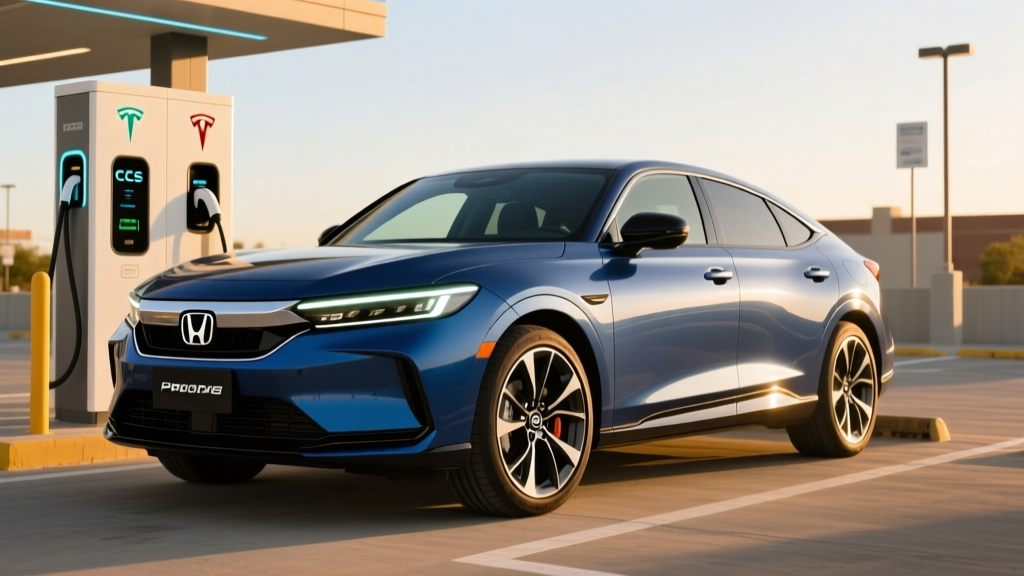
- NACS adoption is nearly universal. Ford, GM, Rivian, Volvo, and others now ship with the Tesla North American Charging Standard (NACS) port natively, granting access to the Supercharger network. Legacy CCS vehicles use adapters.
- LFP battery chemistry is mainstream. Tesla, Ford (base Mustang Mach-E), and several Chinese-market entrants use lithium iron phosphate (LFP) packs — lower energy density but longer cycle life, no cobalt, and tolerance for regular 100% charging.
- Real DC fast-charge speeds have plateaued around 200–350 kW peak for mainstream models, with 800V architectures (Hyundai/Kia E-GMP, Porsche Macan EV) enabling 10–80% in roughly 18 minutes at compatible chargers.
- Used electric SUV prices have dropped substantially, with 2–3-year-old Model Ys and Mach-Es often available in the $22,000–$32,000 range, eligible for the separate used-EV credit (up to $4,000 under §25E).
Electric SUV vs. Gas SUV vs. Hybrid: The Numbers
The most common buyer question is whether an electric SUV actually saves money versus a gas or hybrid alternative. Below is a data-driven comparison of representative 2026 models in the midsize crossover segment.
| Metric | Hyundai Ioniq 5 (SEL AWD) | Toyota RAV4 Hybrid (XLE AWD) | Honda CR-V (EX-L AWD, Gas) |
|---|---|---|---|
| Base MSRP | $47,900 | $34,900 | $36,800 |
| Fed. Tax Credit (§30D) | Up to $7,500* | N/A | N/A |
| Effective Price After Credit | ~$40,400 | $34,900 | $36,800 |
| EPA Range / Tank | 290 mi (84 kWh usable, NMC) | ~580 mi (14.5 gal tank) | ~437 mi (14.0 gal tank) |
| EPA Efficiency | 110 MPGe / 30 kWh/100mi | 39 MPG combined | 28 MPG combined |
| Fuel/Energy Cost per Mile | $0.045 (home L2 avg) | $0.095 ($3.50/gal) | $0.132 ($3.70/gal) |
| Annual Fuel/Energy (12,000 mi) | $540 | $1,140 | $1,584 |
| 10–80% DC Fast Charge | ~18 min (peak 240 kW, 800V) | 5 min (gas pump) | 5 min (gas pump) |
| 0–60 mph | 5.1 sec (320 hp) | 7.4 sec (219 hp) | 7.8 sec (190 hp) |
| Battery/Powertrain Warranty | 10 yr / 100,000 mi | 10 yr / 150,000 mi (hybrid system) | 5 yr / 60,000 mi (powertrain) |
* §30D eligibility requires buyer income under $150K single / $300K joint, vehicle MSRP under $80K for SUVs, and compliance with critical-mineral and battery-component sourcing rules. Confirm current-year rules at IRS.gov. Point-of-sale transfer is available at participating dealers.
The Ioniq 5's effective purchase price after the tax credit is competitive with the gas CR-V, and annual energy savings of roughly $1,000 versus gas compound over ownership. However, the RAV4 Hybrid offers the lowest upfront cost, longest single-fill range, and zero charging-infrastructure dependency — a rational choice for apartment dwellers or frequent road-trippers in charging-desert regions.
Real Costs of Electric SUV Ownership: A 5-Year Breakdown
Purchase price is only part of the equation. Below is a realistic 5-year / 60,000-mile total cost of ownership (TCO) estimate for a mainstream electric SUV versus a gas equivalent, assuming home Level 2 charging and 12,000 miles/year.
| Cost Category | Electric SUV (e.g., Ioniq 5 AWD) | Gas SUV (e.g., CR-V AWD) |
|---|---|---|
| Purchase Price (after credit) | $40,400 | $36,800 |
| Home Level 2 Charger Install | $800–$2,000 (one-time) | $0 |
| Energy/Fuel (5 years) | $2,700 | $7,920 |
| Maintenance (5 years) | $1,200 (tires, cabin filter, fluid top-offs) | $3,500 (oil, filters, brakes, spark plugs) |
| Insurance (5-year avg) | $10,500 (~$2,100/yr) | $8,400 (~$1,680/yr) |
| Estimated Depreciation | $18,000 (45% over 5 yr) | $15,000 (41% over 5 yr) |
| Total 5-Year Cost | ~$73,600–$74,800 | ~$71,620 |
Sources: EPA fueleconomy.gov for efficiency data; insurance averages from industry aggregates (individual premiums vary significantly by state, driving record, and carrier). Depreciation estimates based on current used-market trends for 2022–2024 models.
The electric SUV's TCO is close to the gas equivalent over five years, with the gap narrowing substantially if you keep the vehicle 7–10 years (where maintenance savings compound and depreciation flattens). The break-even point typically lands between years 4 and 6, depending on local electricity rates, insurance premiums, and whether you qualified for the full tax credit.
What First-Time Electric SUV Buyers Must Know
If you're entering the electric SUV market for the first time, these are the realities that spec sheets don't highlight.
Real-World Range vs. EPA Stickers
The EPA range figure assumes a mix of city and highway driving at moderate temperatures. In practice:
- Highway driving at 75+ mph reduces range by 10–20% versus the EPA combined number. An Ioniq 5 with a 290-mile EPA rating will deliver roughly 240–260 miles on a flat highway at 75 mph.
- Cold weather (below 30°F) causes 20–30% range loss due to battery chemistry resistance and cabin heating demands. That same 290-mile vehicle may show 200–220 miles in January in Minnesota. Vehicles equipped with heat pumps (standard on most 2026 Hyundai/Kia/Tesla models) mitigate this by 5–10 percentage points versus resistive heaters.
- Charging curve taper matters. A "peak 240 kW" charge rate only applies between roughly 10–50% State of Charge (SoC). Above 80%, the rate drops to 50 kW or less to protect the battery. A "10–80% in 18 minutes" claim is accurate, but 10–100% may take 40+ minutes. Plan road-trip stops accordingly.
Range Reality Check: 2026 Ioniq 5 AWD
EPA Rated: 290 miles
Real-World Highway (75 mph, 70°F): ~250–260 miles
Real-World Highway (75 mph, 20°F): ~200–220 miles
Real-World City (mixed, 60°F): ~280–300 miles (regen braking recovers energy)
Home Charging Is Non-Negotiable for Most Owners
Over 80% of EV charging happens at home. Without access to Level 2 (240V) home charging, ownership becomes significantly less convenient and more expensive (public DC fast charging costs $0.30–$0.50/kWh versus $0.12–$0.18/kWh for residential electricity). Before buying:
- Confirm you have a dedicated 240V circuit or can install one. A NEMA 14-50 outlet on a 50-amp circuit delivers ~9.6 kW (roughly 30–35 miles of range per hour of charging).
- Budget $800–$2,000 for a licensed electrician to install the circuit and a Level 2 charger (e.g., ChargePoint Home Flex, Emporia Level 2). Older homes may require a panel upgrade ($1,500–$3,000 additional).
- If you live in an apartment or condo without charging access, a PHEV (plug-in hybrid) like the Toyota RAV4 Prime (42 miles electric-only range, then 38 MPG on gas) may be a more practical bridge.
Battery Longevity and Warranty
Modern EV batteries are engineered for longevity. Most manufacturers warrant the battery pack for 8 years / 100,000 miles (10 years in California Air Resources Board states) with a capacity-retention threshold of 70%. Real-world degradation data from fleet operators and owner surveys shows:
- NMC (Nickel Manganese Cobalt) batteries typically lose 8–12% capacity over 100,000 miles.
- LFP (Lithium Iron Phosphate) batteries degrade more slowly — often 5–8% over the same distance — and tolerate regular 100% charging without accelerated wear.
- Out-of-warranty battery replacement costs range from $8,000 to $18,000 depending on pack size, though replacements before 150,000 miles are statistically uncommon for liquid-cooled packs.
Common Electric SUV Market Misconceptions
| Myth | Fact |
|---|---|
| "The battery will need replacing in 5 years." | Modern liquid-cooled packs routinely exceed 150,000 miles with 85–90% capacity retention. The 8–10 year / 100,000+ mile warranty reflects manufacturer confidence. |
| "EVs are worse in cold weather." | Range drops 20–30% in sub-freezing temps — real, but manageable. EVs start instantly in cold (no cranking), and preconditioning while plugged in warms the battery and cabin using grid power, preserving range. |
| "There aren't enough charging stations." | The U.S. has over 65,000 public charging ports (including 20,000+ DC fast chargers). The Tesla Supercharger network alone adds 5,000+ stalls annually. However, rural corridors and some apartment-heavy urban areas remain underserved — plan accordingly. |
| "EVs are worse for the environment because of battery mining." | Lifecycle emissions analyses (including battery manufacturing) show EVs produce 50–70% fewer greenhouse gas emissions over their lifetime than gas vehicles, even on coal-heavy grids. As grids decarbonize, the advantage grows. Source: EPA Green Vehicles. |
| "I can't take a road trip in an EV." | A 2026 Ioniq 5 can charge 10–80% in ~18 minutes at a 350 kW-capable Electrify America or Supercharger station. A 600-mile trip requires 2 charging stops of 20–25 minutes each — comparable to meal and rest breaks on a gas-car road trip. |
| "All electric SUVs qualify for the $7,500 tax credit." | Eligibility is strict: buyer AGI must be under $150K (single) / $300K (joint), SUV MSRP must be under $80,000, and the battery must meet critical-mineral and component-sourcing thresholds that shift annually. Always verify at fueleconomy.gov's tax credit tool. |
Decision Framework: Which SUV Type Is Right for You?
Choose a Battery-Electric SUV If:
- You have (or can install) Level 2 home charging.
- Your daily driving is under 200 miles round-trip (covers 95%+ of U.S. commutes).
- You qualify for the §30D tax credit, narrowing the price gap with gas.
- You want minimal maintenance (no oil changes, fewer brake replacements due to regen braking).
- You value instant torque, quiet operation, and lower per-mile energy cost.
Choose a Plug-In Hybrid (PHEV) SUV If:
- You lack reliable home or workplace charging but want some electric-only driving (30–42 miles typical for models like the RAV4 Prime or Hyundai Tucson PHEV).
- You regularly take 400+ mile road trips through areas with sparse DC fast-charging infrastructure.
- You want electric commuting without range anxiety, accepting the maintenance burden of a gas engine.
Choose a Traditional Hybrid (HEV) SUV If:
- You have zero charging access and prioritize lowest upfront cost.
- You want 35–40 MPG combined with no behavioral changes — no plugging in, no route planning around chargers.
- You plan to keep the vehicle 10+ years and value the proven long-term reliability of Toyota/Honda hybrid powertrains.
Stick with a Gas SUV If:
- You tow frequently (gas/diesel SUVs still dominate above 5,000-lb towing; EV towing range loss can exceed 40%).
- You live in a region with extreme cold (-20°F regular lows) and limited charging infrastructure.
- Your budget is firmly under $30,000 and you buy new (the cheapest electric SUVs start around $30K before credits).
2026 Electric SUV Market: Models to Watch by Budget
Under $35,000 (after incentives)
- Chevrolet Equinox EV (2LT): MSRP ~$33,600; EPA 319 mi (FWD); 85 kWh NMC; peak 150 kW DC (10–80% ~30 min); 213 hp. Eligible for §30D. Best value-per-mile-of-range in the segment.
- Used Tesla Model Y (2022–2023): $22,000–$28,000; EPA 310–330 mi; Supercharger access native. Eligible for the §25E used-EV credit (up to $4,000, income-capped).
$40,000–$55,000
- Hyundai Ioniq 5 (SEL AWD): $47,900; EPA 290 mi; 84 kWh NMC; peak 240 kW (800V, 10–80% ~18 min); 320 hp. Strong charging speed, spacious cabin, V2L capability.
- Tesla Model Y (Long Range AWD): ~$48,000; EPA 320 mi; ~75 kWh NMC; peak 250 kW (10–80% ~20 min); 384 hp. Best Supercharger-network access, lowest energy consumption per mile.
- Kia EV6 (GT-Line AWD): ~$52,000; EPA 282 mi; 77.4 kWh NMC; peak 240 kW (800V, ~18 min); 320 hp. Sportier handling than Ioniq 5, similar platform.
$60,000+
- Rivian R1S (Dual-Motor AWD): ~$79,900; EPA 352 mi (Max pack, 141 kWh NMC); peak 220 kW (10–80% ~25 min); 533 hp. Three-row seating, serious off-road capability, MSRP exceeds §30D $80K cap for SUVs.
- BMW iX (xDrive50): ~$87,000; EPA 324 mi; 111.5 kWh NMC; peak 200 kW (~30 min); 516 hp. Luxury segment benchmark for ride quality and cabin materials.
Frequently Asked Questions
Do electric SUVs hold their resale value?
Depreciation for EVs has been steeper than gas vehicles over the past three years, driven by Tesla's aggressive price cuts, rapid technology improvements, and battery-health concerns among used buyers. Expect 40–50% depreciation over 5 years for mainstream models, versus 35–45% for comparable gas SUVs. However, the gap is narrowing as the market stabilizes and as battery longevity data accumulates. Buying used (2–3 years old) lets the original owner absorb the steepest depreciation.
How much does it cost to install a home Level 2 charger?
A typical installation — 50-amp 240V circuit, NEMA 14-50 outlet, and a smart Level 2 charger (ChargePoint, Emporia, Wallbox) — runs $800–$2,000 if your electrical panel has capacity. If your home has a 100-amp panel that's already near capacity, a panel upgrade to 200 amps adds $1,500–$3,000. Always get a quote from a licensed electrician before purchasing the vehicle. Some utilities offer rebates of $200–$500 for charger installation.
What happens if the battery fails out of warranty?
Full battery pack replacement costs $8,000–$18,000 depending on the vehicle (a Chevrolet Equinox EV pack is on the lower end; a Rivian R1S Max pack is on the higher end). However, catastrophic battery failure is rare. More commonly, individual modules can be replaced for $1,500–$4,000. Independent EV repair shops are increasingly offering module-level service. The risk is real but statistically low — roughly comparable to a gas vehicle's transmission replacement risk at high mileage.
Are electric SUVs safe in crashes?
Yes. The low-mounted battery pack creates a low center of gravity, reducing rollover risk. The IIHS has awarded Top Safety Pick+ ratings to the Ioniq 5, Model Y, and EV6. NHTSA 5-star overall ratings are common across the segment. The battery pack is housed in a reinforced enclosure and is designed to disconnect in a collision. Fire risk from battery thermal events is statistically lower than gasoline fire risk per vehicle-mile traveled, according to NHTSA and NFPA data.
Can I charge an electric SUV with solar panels?
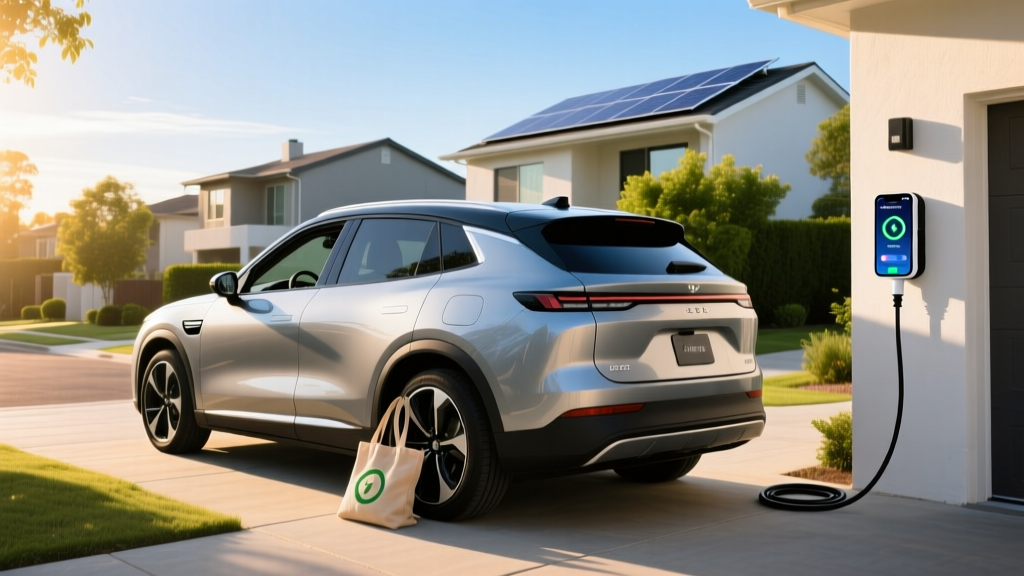
Yes, and it's one of the most cost-effective ownership scenarios. A typical home solar system (8–10 kW) generates enough surplus energy to cover 8,000–12,000 miles of EV driving annually, depending on your climate and system size. With net metering or a home battery (Tesla Powerwall), you can effectively fuel your SUV for near-zero marginal cost after the solar system payback period (typically 6–9 years). This is the strongest economic case for EV ownership.
Should I wait for solid-state batteries?
Solid-state batteries promise higher energy density (potentially 400+ mile ranges in compact SUVs), faster charging, and improved safety. However, mass-market availability is not expected before 2028–2030, and initial deployment will likely be in premium vehicles at high prices. If you need a vehicle now, current lithium-ion technology is mature, well-warrantied, and cost-competitive. Waiting 3–4 years for solid-state means 3–4 more years of gas fuel costs and maintenance.