Quick Answer: What Is an Electric Steering Gearbox?
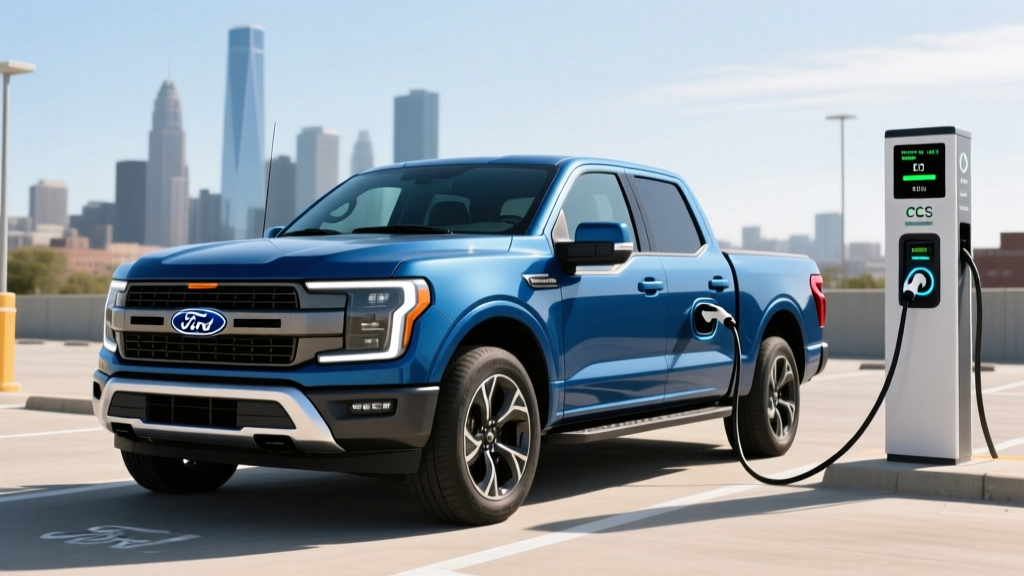
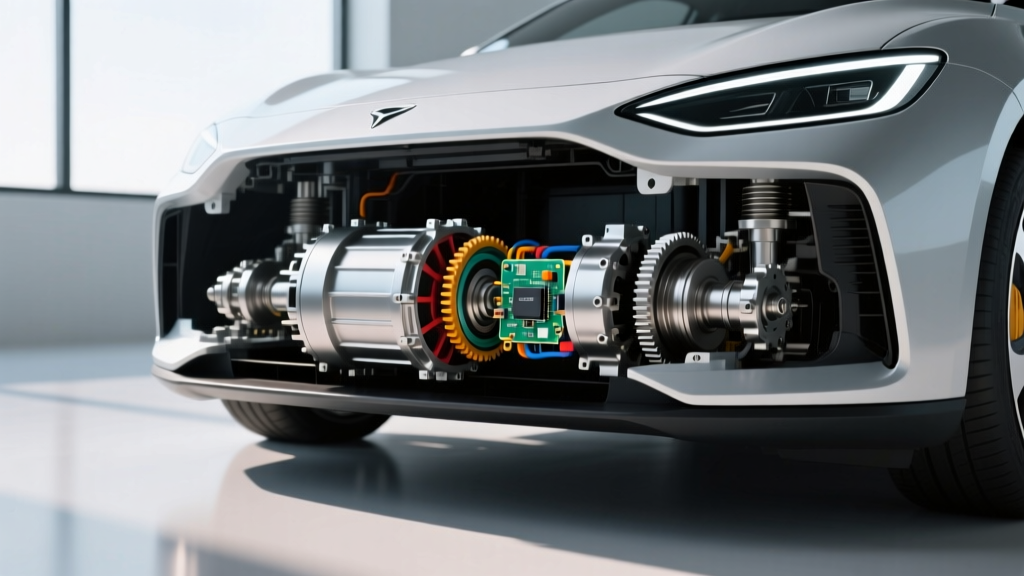
An electric steering gearbox (more precisely called an electric power steering or EPS rack-and-pinion assembly) replaces the hydraulic pump, fluid lines, and belt-driven system found in gas cars with an electric motor mounted directly on or near the steering rack. In virtually every modern EV — from the Tesla Model 3 to the Hyundai Ioniq 5 to the Ford F-150 Lightning — the electric steering gearbox draws power from the high-voltage or 12V electrical system rather than the engine. Typical replacement cost runs $800 to $2,500 depending on the vehicle, and unlike hydraulic systems, there is no power-steering fluid to change. Most EPS racks are designed to last 150,000+ miles with zero scheduled maintenance.
How Electric Steering Gearboxes Actually Work in EVs
When you turn the wheel of an EV, a torque sensor on the steering column detects your input and sends a signal to an electronic control unit (ECU). That ECU commands an electric motor — typically a brushless DC motor producing 30–80 Nm of assist torque — to apply force to the rack-and-pinion gear assembly. The result is smooth, variable power assistance that adjusts based on vehicle speed: lighter at parking-lot speeds, firmer at highway speeds.
In a gasoline car with hydraulic power steering, the engine drives a pump via a serpentine belt, pressurizing fluid that pushes a piston inside the steering rack. That system runs continuously whenever the engine is on, parasitically consuming roughly 2–5 horsepower. An electric steering gearbox eliminates that drag entirely, which contributes modestly to EV efficiency — typically recovering 0.5–1.5% in overall energy consumption, or roughly 1–4 Wh/mile on a vehicle averaging 250–300 Wh/mile.
Most EVs use one of two EPS architectures:
- Column-assist EPS (C-EPS): The electric motor is mounted on the steering column above the rack. Common in lighter vehicles like the Chevrolet Bolt EV and Nissan Leaf.
- Rack-assist EPS (R-EPS or DP-EPS): The motor is mounted directly on or alongside the steering rack, delivering assist closer to the wheels. Used in heavier EVs like the Ford F-150 Lightning, Rivian R1T, and Tesla Model Y, where greater assist force is needed.
For steer-by-wire systems — like the one in the Tesla Cybertruck and the Lexus RZ 450e — there is no physical mechanical connection between the steering wheel and the rack at all. Instead, the electric steering gearbox receives electronic signals from the wheel and actuates the rack independently. These systems use redundant motors and ECUs for safety, and replacement costs are higher: $2,000–$4,000+ for the full assembly.
EV vs. Gas Car Steering: Cost and Maintenance Compared
The electric steering gearbox is one of many EV components that reduces recurring maintenance. Here is how the steering-related costs compare over a typical 10-year, 150,000-mile ownership period:
| Item | EV (Electric Steering Gearbox / EPS) | Gas Car (Hydraulic Power Steering) |
|---|---|---|
| Power steering fluid flush | $0 (no fluid) | $100–$200 every 50,000 mi ($200–$600 total) |
| Serpentine belt replacement | $0 (no belt-driven pump) | $150–$350 every 60,000–100,000 mi |
| Power steering pump failure | N/A | $400–$800 (common at 100,000+ mi) |
| Steering rack/gearbox replacement | $800–$2,500 (rare, usually 150,000+ mi) | $1,200–$2,800 (more common due to seal leaks) |
| Hose and seal leaks | $0 (no hydraulic lines) | $200–$600 over ownership |
| Total estimated steering maintenance | $0–$300 | $1,000–$2,500+ |
The data is clear: an electric steering gearbox saves most owners $700 to $2,000+ over the life of the vehicle by eliminating fluid, hoses, pumps, and belt-driven components. The trade-off is that when an EPS rack does fail, the part itself can be more expensive because it integrates the motor and ECU.
Real-World Failure Rates and What Goes Wrong
Electric steering gearboxes are among the more reliable components in a modern EV. Based on owner survey data and service bulletins, EPS rack failure before 100,000 miles is uncommon — affecting roughly 1–3% of vehicles depending on the model. When failures do occur, they typically fall into a few categories:
- Torque sensor failure: The sensor that reads steering input drifts or fails, causing erratic assist or a "steering assist fault" warning. Repair: $300–$800 for sensor replacement; some racks require full assembly replacement.
- Motor burnout: Rare, but can happen in vehicles frequently subjected to extreme lock-to-lock maneuvering (e.g., daily tight parallel parking). The motor overheats and the ECU disables assist. Repair: usually full rack replacement, $1,200–$2,500.
- ECU or wiring fault: Corrosion in connectors or a software glitch causes loss of assist. Often fixable with a software update ($0–$150) or connector cleaning. This is the most common EPS issue and the least expensive.
- Mechanical wear in the rack: Tie-rod ends and bushings still wear mechanically, just as in any car. These are $150–$400 per side to replace and are not unique to EVs.
One EV-specific consideration: the additional weight of EV battery packs (often 1,000–2,000 lbs more than an equivalent gas car) places more load on the steering rack, especially during low-speed turning. Heavier EVs like the GMC Hummer EV (~9,000 lbs) use reinforced R-EPS systems with higher-torque motors to compensate. This means the steering gearbox in a heavy EV works harder than one in a lighter vehicle, which can accelerate mechanical wear on bushings and tie-rod ends.
Electric Steering and ADAS: Why It Matters for Autopilot and Lane-Keeping
Every Level 2 driver-assistance system — Tesla Autopilot, Ford BlueCruise, GM Super Cruise, Hyundai Highway Driving Assist — relies on the electric steering gearbox to execute steering commands. The ADAS computer sends torque requests to the EPS ECU, which then applies steering force without driver input.
Reminder: All consumer driver-assist systems (Autopilot, FSD Supervised, BlueCruise, Super Cruise) are SAE Level 2. The driver must remain engaged and ready to take over at all times. These systems are not self-driving. Only Level 4 robotaxi services like Waymo operate without a human driver.
Because ADAS depends on precise steering actuation, the EPS system in an EV with advanced driver assist is held to tighter tolerances than a basic EPS in a car without lane-keeping. If the torque sensor drifts by even a small amount, the ADAS system may detect a mismatch between commanded and actual steering angle and disengage. This is why some EV owners report that a "steering calibration" is required after tire rotations or alignment work — the ADAS system needs the EPS to report accurate position data.
If you are buying an EV specifically for its ADAS features, ask the dealer or service center whether the steering rack has been replaced or recalibrated, especially on a used vehicle. A poorly calibrated EPS rack can cause lane-keeping to feel "twitchy" or to drift within the lane.
Common Misconceptions About EV Steering Systems
| Myth | Fact |
|---|---|
| "EVs still need power steering fluid changes" | No modern EV uses hydraulic power steering. All use electric steering gearboxes with zero fluid. The DOE's EV technology overview confirms this. |
| "If the battery dies, you lose steering completely" | Even with the main traction battery depleted, EVs maintain a 12V auxiliary system that powers the EPS motor. If the 12V battery also dies, the mechanical rack-and-pinion connection still allows manual steering — it just requires significantly more effort, similar to any car with the engine off. |
| "Electric steering feels numb compared to hydraulic" | Early EPS systems (circa 2010–2015) earned this reputation. Modern EPS racks in 2025–2026 EVs use high-resolution torque sensors and sophisticated damping algorithms. Most drivers cannot distinguish the feel from a well-tuned hydraulic system. Performance EVs like the Porsche Taycan and BMW i4 are specifically praised for steering feedback. |
| "Steer-by-wire is unsafe because there's no physical connection" | Steer-by-wire systems use triple-redundant motors and ECUs. If one motor fails, a backup immediately takes over. The NHTSA has not flagged steer-by-wire as a systemic safety concern. The mechanical rack in a conventional EPS can also fail (e.g., a broken tie rod). |
| "Replacing an EV steering gearbox costs $5,000+" | For conventional EPS racks, replacement parts run $800–$2,500. Only steer-by-wire systems in vehicles like the Cybertruck approach $3,000–$4,000+. Labor adds $200–$500 depending on the shop. |
Decision Framework: What EV Buyers Should Know About Steering
If you're buying a new EV:
- If you prioritize low maintenance costs: Any EV with a conventional EPS rack (C-EPS or R-EPS) eliminates hydraulic fluid, pump, belt, and hose maintenance. This is standard on 99% of 2025–2026 EVs.
- If you want the most advanced ADAS: Choose a vehicle with a high-resolution EPS rack designed for tight ADAS integration (Tesla, GM Super Cruise, Ford BlueCruise vehicles). Ask about steering calibration procedures during pre-delivery inspection.
- If you're considering a steer-by-wire vehicle (Cybertruck, Lexus RZ): Understand that replacement costs are higher ($2,000–$4,000+), but the redundancy engineering is robust. Test-drive to evaluate whether you adapt to the lack of mechanical road feel.
If you own an EV and notice steering issues:
- If the steering wheel vibrates or pulls: Check alignment and tire wear first ($80–$150 alignment). This is rarely a gearbox issue.
- If you see a "Steering Assist Fault" warning: This is usually a sensor or software issue. A dealer diagnostic scan ($0–$150) often resolves it with a software update. Do not ignore it — the system may reduce assist, making steering heavier.
- If steering feels notchy or has play: The mechanical rack or tie-rod ends may be worn. This is a $300–$800 repair at most shops and is covered under the powertrain or component warranty if within 5 years/60,000 miles on most brands.
Warranty Coverage and Replacement Cost Breakdown
Most automakers cover the electric steering gearbox under the basic vehicle warranty (typically 3 years/36,000 miles) or the powertrain/component warranty (5 years/60,000 miles). Hyundai and Kia cover EPS components under their 5-year/60,000-mile basic warranty and 10-year/100,000-mile powertrain warranty. Tesla covers the steering rack under its 4-year/50,000-mile basic warranty.
If you are outside warranty, here is what to expect for out-of-pocket replacement costs on popular 2025–2026 EVs:
| EV Model | EPS Type | Part Cost (OEM) | Labor (2–4 hrs) | Total Estimate |
|---|---|---|---|---|
| Tesla Model 3 / Model Y | R-EPS | $1,100–$1,600 | $300–$500 | $1,400–$2,100 |
| Hyundai Ioniq 5 / Kia EV6 | R-EPS | $900–$1,400 | $250–$400 | $1,150–$1,800 |
| Ford F-150 Lightning | R-EPS (heavy-duty) | $1,300–$2,000 | $350–$500 | $1,650–$2,500 |
| Chevrolet Bolt EV / EUV | C-EPS | $700–$1,100 | $200–$350 | $900–$1,450 |
| Tesla Cybertruck | Steer-by-wire | $2,500–$3,500 | $400–$600 | $2,900–$4,100 |
| BMW i4 / iX | R-EPS | $1,400–$2,200 | $350–$500 | $1,750–$2,700 |
Aftermarket and remanufactured EPS racks are available for some models at 40–60% of OEM pricing, but they are less common for EVs than for gas cars due to the integrated electronics. For ADAS-equipped vehicles, OEM or OEM-certified replacement is strongly recommended to ensure sensor calibration compatibility.
Frequently Asked Questions
Can I drive an EV if the electric steering gearbox fails completely?
Yes, but with significant effort. The mechanical rack-and-pinion connection between the steering wheel and the wheels remains intact even if the electric motor or ECU fails. You will lose power assist, making the steering wheel very heavy at low speeds — similar to driving a car with the engine off. At highway speeds, the effort is manageable but not comfortable. Pull over safely and have the vehicle towed if the assist warning light appears.
Does the electric steering gearbox drain the EV battery when parked?
No. The EPS motor only draws power when the vehicle is on and the steering wheel is being turned. When parked and powered off, the steering ECU is in a sleep state drawing negligible current (milliamps). It does not contribute to vampire drain.
Will a lift kit or larger tires on my EV affect the steering gearbox?
Yes. Larger, heavier tires increase the load on the steering rack motor, especially at low speeds and full lock. On EVs like the Ford F-150 Lightning or Rivian R1T, going more than one tire size up from stock can accelerate EPS motor wear and may trigger overheating protection during repeated tight turns. If you modify tire size, consider having the EPS ECU recalibrated if the manufacturer offers that option.
Is the steering gearbox covered under the EV battery warranty?
No. The federal-mandated EV battery warranty (minimum 8 years/100,000 miles per IRS and EPA guidelines) covers only the traction battery pack. The steering gearbox falls under the basic or powertrain warranty, which is typically 3–5 years / 36,000–60,000 miles. Check your specific warranty booklet.
Do all EVs use the same type of electric steering gearbox?
No. As detailed above, lighter EVs tend to use column-assist EPS (C-EPS), while heavier EVs and trucks use rack-assist EPS (R-EPS). A small number of 2025–2026 vehicles use steer-by-wire with no mechanical linkage. The type affects feel, replacement cost, and ADAS integration precision.
How do I know if my EV's steering rack needs replacement versus just an alignment?
Alignment issues cause pulling to one side, uneven tire wear, or an off-center steering wheel — but steering feel remains smooth. A failing steering gearbox typically produces clunking noises when turning, notchy or jerky assist, visible play in the steering wheel (more than 1–2 inches of free movement), or a dashboard warning light. If you experience any of the latter symptoms, have a technician inspect the rack directly.
Sources: U.S. Department of Energy / fueleconomy.gov — EV Technology Overview; NHTSA — Electric Vehicle Safety; manufacturer service documentation and owner forums for Tesla, Hyundai, Ford, and BMW.