The Electric Truck That Refuses to Pretend It Isn't a Truck
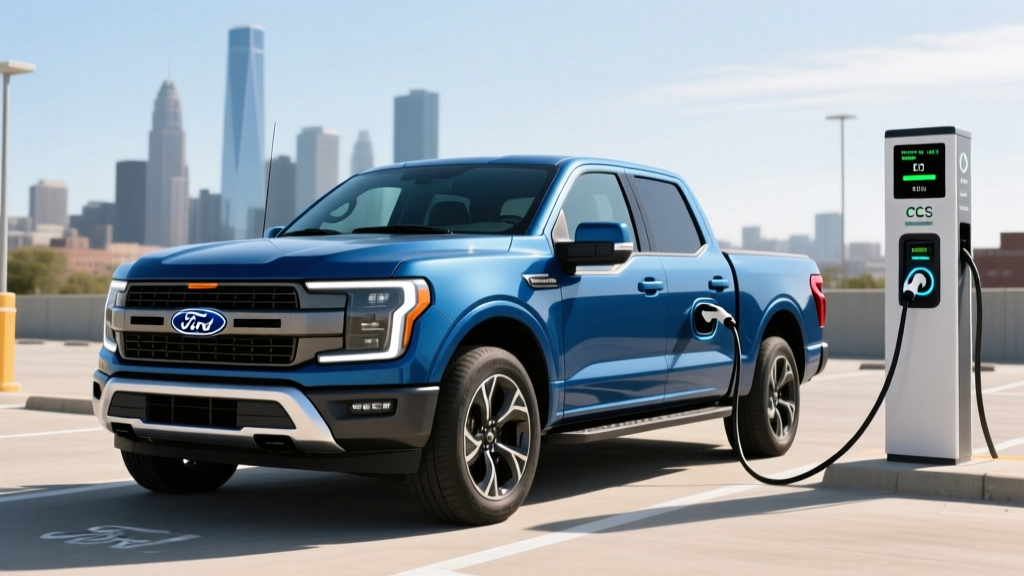
The 2024 Ford F-150 Lightning occupies a rare position in the EV market: it's a full-size pickup that makes almost no compromises on truck utility while delivering genuine electric efficiency. With dual-motor AWD standard across all trims, a usable battery ranging from 98 kWh to 131 kWh, and a payload capacity that actually rivals some gas F-150s, the Lightning asks fewer lifestyle sacrifices than most EVs. But with a starting MSRP of $54,995 (before any incentives), real-world range that can dip below 200 miles under load, and DC fast-charging that peaks at 150 kW rather than the 250+ kW some rivals offer, it demands a clear-eyed look at the numbers before you sign.
This review covers every trim from the Pro to the Platinum, breaks down real-world range versus EPA estimates, maps the charging curve, and clarifies exactly who qualifies for the federal §30D tax credit under current IRS rules.
Specs at a Glance: 2024 F-150 Lightning by Trim
| Spec | Pro / XLT (Std Range) | XLT / Lariat (Ext Range) | Platinum (Ext Range) |
|---|---|---|---|
| EPA Range | 240 mi | 320 mi | 300 mi |
| Battery (usable) | 98 kWh (NMC) | 131 kWh (NMC) | 131 kWh (NMC) |
| Horsepower | 452 hp | 580 hp | 580 hp |
| Torque | 775 lb-ft | 775 lb-ft | 775 lb-ft |
| 0–60 mph | ~3.8 sec | ~3.8 sec | |
| Max DC Fast Charge | 120 kW | 150 kW | 150 kW |
| 10–80% DC Time | ~44 min | ~41 min | ~41 min |
| Level 2 Home Charge | 11.3 kW (30 mi/hr) | 19.2 kW (52 mi/hr)* | 19.2 kW (52 mi/hr)* |
| Max Payload | 2,235 lb | 1,952 lb | 1,800 lb |
| Max Towing | 7,700 lb | 10,000 lb† | 10,000 lb† |
| Base MSRP | $54,995 | $69,995 (XLT ER) | $96,874 |
| EPA MPGe (combined) | 68 MPGe | 66 MPGe | 66 MPGe |
| Efficiency | 49 kWh/100mi | 51 kWh/100mi | 51 kWh/100mi |
*19.2 kW Level 2 requires the optional 80A Ford Charge Station Pro and a hardwired 100A dedicated circuit. Standard mobile cord on a 240V/32A outlet delivers ~7.7 kW (~21 mi/hr). †10,000-lb towing requires the Max Trailer Tow Package.
Real-World Range: What the EPA Number Doesn't Tell You
EPA sticker: 240 mi (Std Range) / 320 mi (Ext Range)
Real-world highway (70 mph, moderate weather): ~200–220 mi (Std) / ~270–290 mi (Ext)
Cold weather (below 30°F, highway): ~155–180 mi (Std) / ~210–240 mi (Ext)
Towing 5,000-lb trailer: ~120–150 mi regardless of battery
The Extended Range pack's 320-mile EPA figure is legitimate for mixed suburban driving in mild conditions. But physics governs a 6,500-lb brick-shaped truck differently than a sedan. At sustained highway speeds of 70–75 mph, expect to consume roughly 55–60 kWh/100mi, which drops the Extended Range truck to around 270 miles before you hit the low-state-of-charge warning. In winter, the battery's internal resistance increases and cabin heating draws heavily — even with the standard heat pump on higher trims, a 25–35% range reduction is typical below freezing.
The Standard Range 98 kWh pack is best understood as a commuter battery: 240 EPA miles translates to roughly 200 highway miles, which works for daily drives under 80 miles round-trip with home charging. If your routine involves regular highway trips over 180 miles one-way, the Extended Range pack is not optional — it's essential.
Towing is where the Lightning's range story becomes critical. Pulling even a modest 5,000-lb travel trailer pushes consumption to 85–110 kWh/100mi. Ford's onboard range calculator adjusts estimates when you input trailer weight, and it's brutally honest: plan on 120–150 miles between charges when towing. This is the Lightning's most significant limitation versus diesel and gas trucks on long hauls.
Charging Speed: DC Fast, Level 2, and the Curve Reality
Charging is where kW (power, or how fast energy flows) and kWh (energy, or how much the battery holds) diverge in practical importance. The Lightning's peak DC rate of 150 kW on Extended Range models is adequate but no longer class-leading — the Rivian R1T and newer Silverado EV accept higher peak rates. More importantly, the Lightning's charge curve tapers significantly above 80% state of charge.
| Charging Level | Power (kW) | Miles Added/Hour | Full Charge Time |
|---|---|---|---|
| Level 1 (120V household) | ~1.4 kW | ~3 mi/hr | ~72–95 hours |
| Level 2 (240V/32A mobile cord) | ~7.7 kW | ~21 mi/hr | ~13–17 hours |
| Level 2 (240V/48A Wall Connector) | ~11.5 kW | ~30 mi/hr | ~9–12 hours |
| Level 2 (Ford Charge Station Pro, 80A) | 19.2 kW | ~52 mi/hr | ~5–7 hours |
| DC Fast Charge (Std Range peak) | 120 kW | ~155 mi in 30 min | 10–80% in ~44 min |
| DC Fast Charge (Ext Range peak) | 150 kW | ~190 mi in 30 min | 10–80% in ~41 min |
The 10–80% DC fast-charge time of roughly 41 minutes for the Extended Range pack is competitive for road trips but means you'll spend more time at Electrify America or Tesla Supercharger stations (via the included NACS adapter for 2024 models) than you would in a Hyundai Ioniq 5, which completes the same session in about 18 minutes. The difference is the Lightning's massive battery — 131 kWh takes longer to fill even at 150 kW, and the charge rate tapers to roughly 60–70 kW once you pass 80% SoC.
For home charging, the 19.2 kW Ford Charge Station Pro is a significant investment: the unit costs around $1,300 and requires a licensed electrician to install a dedicated 100-amp circuit. Most homes' existing 200A panels may not support this without a panel upgrade ($1,500–$3,000). A more realistic setup for most buyers is a 48A Level 2 wall connector on a 60A circuit, delivering roughly 11.5 kW — enough to fully replenish the Extended Range pack overnight in about 11 hours.
Performance and Drivetrain: Dual-Motor AWD Standard
Every 2024 F-150 Lightning ships with dual electric motors and all-wheel drive — there's no RWD option. The Standard Range trucks produce 452 hp and 775 lb-ft of torque, while Extended Range models bump output to 580 hp with the same 775 lb-ft. The result is a 0–60 mph sprint of approximately 3.8 seconds for the Extended Range trucks, which is genuinely quick for a vehicle weighing over 6,500 pounds.
More relevant to truck buyers is the instant torque delivery: there's no turbo lag, no downshift delay. Throttle response from a stop is immediate, and highway passing maneuvers require zero planning. The low center of gravity from the under-floor battery pack reduces body roll compared to gas F-150s, though the ride quality on rough pavement is firm — the solid rear axle (shared with the gas F-150) transmits more impact than the Rivian R1T's independent rear suspension.
Off-road, the Lightning offers respectable capability with its standard terrain modes and available FX4 Off-Road Package on XLT and Lariat trims, adding skid plates, off-road-tuned shocks, and an electronic locking rear differential. Ground clearance sits at 8.9 inches, adequate for fire roads and moderate trails but less than purpose-built off-roaders.
Pricing, Trims, and Federal Tax Credit Eligibility
Ford restructured Lightning pricing for the 2024 model year after significant 2023 increases. Here's the current trim breakdown:
| Trim | Battery | Base MSRP | As-Tested Range |
|---|---|---|---|
| Pro | 98 kWh Std | $54,995 | $56,000–$60,000 |
| XLT | 98 kWh Std | $59,995 | $62,000–$72,000 |
| XLT | 131 kWh Ext | $69,995 | $73,000–$82,000 |
| Lariat | 131 kWh Ext | $76,995 | $80,000–$90,000 |
| Platinum | 131 kWh Ext | $96,874 | $98,000–$105,000 |
All trims fall under the IRS §30D MSRP cap of $80,000 for trucks, meaning Pro, XLT, and Lariat models can potentially qualify for the full $7,500 federal tax credit — provided you meet all other requirements. The Platinum trim, starting at $96,874, exceeds the cap and does not qualify.
- MSRP cap: ≤$80,000 for trucks/vans/SUVs (Platinum excluded)
- Buyer income cap: AGI ≤$150,000 (single) / ≤$300,000 (joint) / ≤$225,000 (head of household)
- Battery sourcing: Critical minerals and battery components must meet phased-in percentages from US/FTA countries — Ford has confirmed most Lightning trims meet 2024 thresholds, but verify the specific VIN at fueleconomy.gov
- Point-of-sale transfer: You can transfer the credit to the dealer at purchase to reduce the sale price by up to $7,500 — this works even if you owe less than $7,500 in taxes
- Assembly: Must be assembled in North America (Lightning is built in Dearborn, MI ✓)
Rules are subject to IRS updates. Consult a tax professional and verify your specific VIN before purchase.
With the full $7,500 credit applied, an XLT Standard Range drops from $59,995 to an effective $52,495 — competitive with well-equipped gas F-150 XLTs once you factor in fuel savings. The Lariat Extended Range at $76,995 minus $7,500 comes to $69,495, which is strong value for a 320-mile AWD truck with 580 hp.
Cargo, Passenger Space, and the Mega Power Frunk
The Lightning's most talked-about feature remains its front trunk (frunk): 14.1 cubic feet of lockable, drainable, weather-sealed storage under the hood. It includes four 120V outlets, two USB-C ports, and LED lighting. In practice, it swallows two carry-on bags plus a backpack, or a full set of power tools, or a week's groceries — and the powered open/close is a genuine convenience feature, not a gimmick.
The 5.5-foot bed offers 52.8 cubic feet of volume, matching the gas F-150 SuperCrew short-box. Payload ranges from 1,800 lb (Platinum) to 2,235 lb (Pro Standard Range) — notably, the Standard Range trucks can carry more payload than Extended Range models because the smaller battery weighs roughly 300 lb less. Maximum towing reaches 10,000 lb with the Max Trailer Tow Package on Extended Range trims.
Inside, the SuperCrew cab provides 43.9 inches of front legroom and 43.6 inches of rear legroom — identical to the gas F-150 SuperCrew and enough for adults in the back seat on long trips. The available 15.5-inch vertical touchscreen (Lariat and Platinum, running SYNC 4A) dominates the dash and handles navigation, media, and vehicle settings. The smaller 12-inch screen on Pro and XLT trims is more conventional but still functional.
Battery Warranty, Degradation, and Long-Term Ownership
Ford covers the Lightning's battery pack with an 8-year/100,000-mile warranty against defects and excessive capacity loss. The threshold: if the battery drops below 70% of its original capacity within that period, Ford will repair or replace it. This aligns with industry standards and federal requirements for EV battery coverage.
The Lightning uses NMC (nickel manganese cobalt) chemistry in both battery sizes. NMC offers higher energy density than LFP (lithium iron phosphate), which is why the Extended Range pack fits 131 kWh in the same physical space. The trade-off: NMC batteries degrade slightly faster than LFP over thousands of cycles and are more sensitive to sustained 100% state-of-charge storage. Ford recommends daily charging to 80–90% for battery longevity, using the truck's built-in charge-limit setting.
Based on fleet data from commercial Lightning operators and Ford's own projections, expect approximately 8–12% capacity loss over the first 100,000 miles under normal use. For a 320-mile Extended Range truck, that means roughly 280–295 miles of range at 100,000 miles — still very usable.
Out-of-warranty battery replacement is the elephant in the room: current estimates for a 131 kWh Lightning pack run $20,000–$28,000 including labor, based on Ford dealer parts pricing. This is a real long-term ownership cost to weigh if you plan to keep the truck past 150,000 miles.
Driver Assistance and Technology
The Lightning includes Ford Co-Pilot360 2.0 as standard: automatic emergency braking, blind-spot monitoring with trailer coverage, lane-keeping assist, rear cross-traffic alert, and a 360-degree camera system. The available BlueCruise hands-free driving system (standard on Platinum, available on Lariat) is an SAE Level 2 driver-assistance system — it handles steering, acceleration, and braking on pre-mapped divided highways, but you must remain attentive and the system monitors your eyes via an infrared camera.
BlueCruise is NOT self-driving. The driver must remain engaged, eyes on the road (or ready to resume control), and is legally responsible for the vehicle at all times. It operates only on approximately 130,000 miles of pre-qualified divided highways in the US and Canada.
BlueCruise 1.0 (included on 2024 models) handles lane-centering and adaptive cruise competently. The available BlueCruise 1.3 or 1.4 updates (depending on build date and OTA status) add lane-change assist and improved curve-speed management. In real-world use, it reduces fatigue on long highway stretches significantly, but it disengages in construction zones, on undivided roads, and in heavy rain — at which point you must take over immediately.
The Pro Power Onboard system deserves separate mention: it provides up to 9.6 kW of exportable 120V/240V power from the truck's battery via bed-mounted and frunk outlets. This powers job-site tools, tailgate setups, or — with the optional Home Integration System — can serve as a backup generator for your house during outages, running essential circuits for up to three days on a full Extended Range charge.
Pros, Cons, and the Verdict
- Standard AWD and 775 lb-ft torque on every trim
- 14.1 cu-ft Mega Power Frunk with 120V outlets
- Pro Power Onboard (up to 9.6 kW) for home backup and job-site use
- Extended Range achieves genuine 270+ mi highway range
- Qualifies for $7,500 §30D credit on trims under $80K MSRP
- Competitive payload (2,235 lb) and 10,000-lb towing
- BlueCruise hands-free driving on qualified highways
- NACS adapter included for Tesla Supercharger access
- DC fast-charge peak of 150 kW is slower than newer competitors
- 10–80% DC charge takes ~41 min — noticeable on road trips
- Real-world range drops sharply when towing (120–150 mi)
- Extended Range adds ~300 lb, reducing payload capacity
- Platinum trim exceeds $80K MSRP cap — no tax credit
- Rear solid-axle ride is firm on rough pavement
- 19.2 kW home charging requires expensive panel/circuit upgrade
- Range in cold weather drops 25–35% below freezing
Who Should Buy the F-150 Lightning — And Who Shouldn't
- You need a full-size truck for work (payload, towing, job-site power) and want to eliminate fuel costs
- Your daily commute is under 100 miles round-trip and you can charge at home
- You value Pro Power Onboard for home backup or job-site use
- You want a comfortable, tech-forward daily driver that also handles weekend hauling
- You qualify for the §30D credit and target a trim under $80K MSRP
- You regularly tow heavy trailers over 200 miles — range becomes a serious constraint
- You need 250+ kW DC fast charging for frequent road trips (consider Rivian R1T or Silverado EV)
- Your home electrical panel can't support a 60A+ circuit for Level 2 charging
- You want independent rear suspension for smoother unloaded ride quality (Rivian R1T)
Frequently Asked Questions
What is the real-world range of the 2024 F-150 Lightning?
The Extended Range (131 kWh) achieves approximately 270–290 miles at highway speeds in moderate weather, dropping to 210–240 miles in sub-freezing cold. The Standard Range (98 kWh) delivers about 200–220 highway miles in mild conditions. Towing a 5,000-lb trailer cuts range to roughly 120–150 miles regardless of battery size.
How fast does the F-150 Lightning charge at home and on the road?
On DC fast chargers, the Extended Range model peaks at 150 kW and charges from 10–80% in approximately 41 minutes. At home on a standard 240V/32A outlet, expect roughly 21 miles of range per hour. With the optional 80A Ford Charge Station Pro (19.2 kW), you get about 52 miles per hour — but this requires a dedicated 100A circuit and likely an electrical panel upgrade.
Does the 2024 F-150 Lightning qualify for the $7,500 federal tax credit?
Pro, XLT, and Lariat trims with an MSRP at or below $80,000 can qualify for the full $7,500 §30D credit, provided the buyer's AGI is within IRS limits ($150K single / $300K joint) and the battery meets critical-mineral and component-sourcing requirements. The Platinum trim exceeds the MSRP cap and does not qualify. Verify your specific VIN at fueleconomy.gov before purchase.
Is the F-150 Lightning worth buying versus the Rivian R1T or Silverado EV?
The Lightning wins on value, frunk utility, Pro Power Onboard, and BlueCruise availability. The Rivian R1T offers faster DC charging, independent rear suspension, a more refined ride, and a quad-motor option — but starts significantly higher and doesn't qualify for the tax credit at most trims. The Chevy Silverado EV (4WT and RST) offers up to 440 miles of EPA range and faster DC charging but has been slow to reach dealerships and starts above the MSRP cap on higher trims. For most buyers wanting a work-and-commute truck under $70K after incentives, the Lightning XLT Extended Range is the strongest value proposition.
How long will the Lightning's battery last?
Ford warranties the battery for 8 years or 100,000 miles against capacity loss below 70%. Based on NMC chemistry degradation curves and fleet data, expect 8–12% capacity loss over 100,000 miles under normal charging habits (daily charge to 80–90%). Out-of-warranty replacement currently costs an estimated $20,000–$28,000.
Can the F-150 Lightning power my house during an outage?
Yes, with the optional Ford Home Integration System (approximately $5,000 installed, including a wall-mounted inverter and transfer switch). The Extended Range battery can power essential home circuits — refrigerator, lights, HVAC fan, outlets — for up to three days on a full charge. The truck automatically reconnects to the grid when power returns.
Sources: EPA Fuel Economy — 2024 Ford F-150 Lightning, Ford F-150 Lightning Official Specifications, IRS §30D Clean Vehicle Credit Guidelines.