The Real Electric School Bus Cost: Beyond the Sticker Price
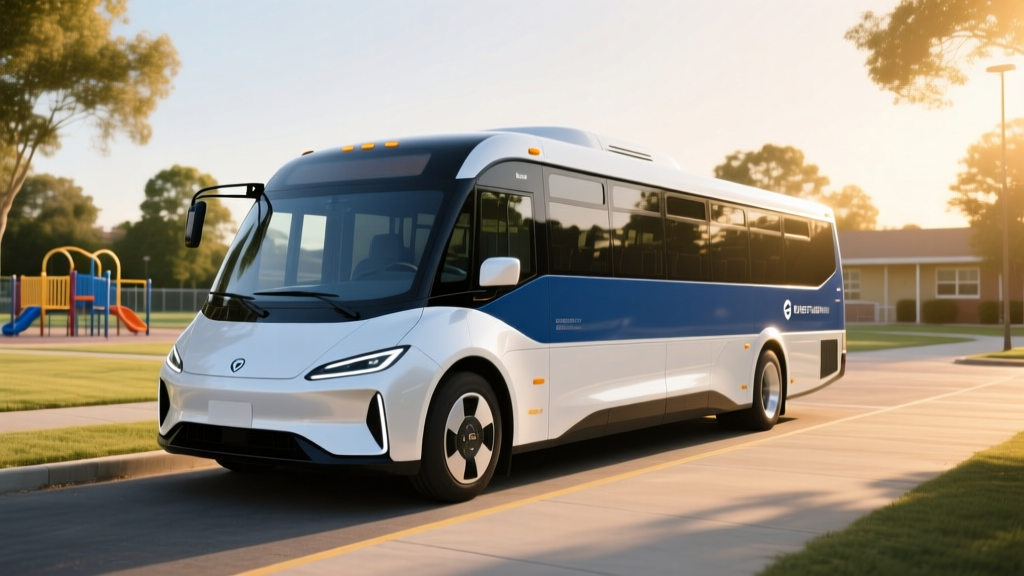
When fleet managers and school districts first encounter the electric school bus cost, the headline number induces sticker shock: a new Type C electric school bus from manufacturers like Blue Bird, IC Bus, or Thomas Built Buses typically runs $300,000 to $390,000 in 2026 — roughly 2.5 to 3 times the price of an equivalent diesel bus at $110,000 to $140,000. But purchase price is only the opening chapter of the financial story.
The total cost of ownership (TCO) over a 5- to 15-year service life tells a fundamentally different tale. Electric school buses slash fuel and maintenance expenses dramatically, and when stacked with federal, state, and utility incentives, the payback period has compressed to 5–8 years for many high-mileage routes. This guide dissects every cost layer — purchase, charging infrastructure, electricity vs. diesel, maintenance, insurance, depreciation, and incentive eligibility — so district transportation directors and fleet procurement officers can model the economics with real numbers.
5-Year Total Cost of Ownership: Electric vs. Diesel School Bus
The following table models a realistic 5-year ownership scenario for a standard Type C (72-passenger) school bus driven 15,000 miles per year — typical for a two-route daily schedule with extracurricular trips. We use a representative electric bus at $340,000 MSRP and a comparable clean-diesel bus at $125,000.
| Cost Category | Electric Bus | Diesel Bus | Notes |
|---|---|---|---|
| Purchase Price (MSRP) | $340,000 | $125,000 | Before any incentives |
| Federal Tax Credit / Incentives | −$40,000 | $0 | IRC §30D + Commercial Clean Vehicle (§45W) up to $40K for GVWR >14,000 lbs |
| State/Utility Rebates (avg.) | −$75,000 | $0 | Varies widely; EPA Clean School Bus Program grants available |
| Effective Purchase Cost | $225,000 | $125,000 | After incentives applied |
| Fuel / Electricity (5 yrs) | $22,500 | $67,500 | $0.15/mi electric vs. $0.45/mi diesel (see breakdown below) |
| Maintenance (5 yrs) | $12,000 | $37,500 | No oil, filters, DEF, exhaust aftertreatment; regen saves brakes |
| Insurance (5 yrs) | $42,000 | $35,000 | EV premiums typically 15–25% higher due to repair costs |
| Charging Infrastructure (amortized) | $18,000 | $0 | Level 2 depot charger + installation, spread over bus life |
| Depreciation (5 yrs) | $95,000 | $50,000 | EV residual ~30%; diesel residual ~35% |
| Net 5-Year Cost | $189,500 | $215,000 | Electric saves ~$25,500 over 5 years |
The crossover point — where cumulative electric savings overtake the higher upfront cost — typically arrives around Year 6 to Year 8, depending on route mileage, local diesel prices, and the depth of incentives secured. For a 12- to 15-year bus service life, lifetime savings of $80,000 to $150,000 per vehicle are well-documented in fleet studies from the EPA Clean School Bus Program.
Fuel Cost Per Mile: Electricity vs. Diesel in Real-World Operation
The single largest operational savings for electric school buses comes at the fuel pump — or rather, the charging depot. Here's the math with 2026 energy and fuel prices:
| Metric | Electric Bus | Diesel Bus |
|---|---|---|
| Energy Consumption | ~2.2 kWh/mile | ~6.5 mpg (diesel) |
| Energy Unit Cost | $0.13/kWh (commercial depot rate, national avg.) | $3.85/gallon (ULSD, 2026 avg.) |
| Cost Per Mile | $0.29/mile | $0.59/mile |
| Annual Fuel Cost (15K mi/yr) | $4,350 | $8,850 |
| 5-Year Fuel Cost | $21,750 | $44,250 |
Key variables that shift these numbers:
- Time-of-use (TOU) utility rates: Districts charging overnight at off-peak rates of $0.07–$0.09/kWh can drop electric cost per mile to $0.15–$0.20, widening the advantage to 3:1 over diesel.
- Demand charges: Some commercial utility tariffs add demand charges ($10–$20/kW peak) that can add $0.03–$0.08/mile if the depot isn't managed with smart-charge software.
- Cold-weather efficiency loss: Battery electric buses in northern climates (Minnesota, Maine, Montana) can see 20–35% range and efficiency reduction in sub-20°F weather due to cabin heating loads and battery internal resistance. Plan for ~2.8–3.0 kWh/mile in deep winter, raising cost to ~$0.39/mile — still well below diesel.
- Regenerative braking: Stop-and-go school bus routes (frequent stops every 0.3–0.5 miles) are ideal for regen recovery, recapturing 15–25% of energy that would otherwise be lost as brake heat.
Maintenance Savings: Where Electric Buses Leave Diesel Behind
School bus maintenance budgets are notoriously heavy. Diesel buses require oil changes every 5,000–10,000 miles, diesel exhaust fluid (DEF) refills, diesel particulate filter (DPF) regenerations and replacements, selective catalytic reduction (SCR) system service, fuel filter changes, and turbocharger maintenance. Electric buses eliminate nearly all of this.
| Maintenance Item | Diesel Bus (Annual) | Electric Bus (Annual) |
|---|---|---|
| Oil & Filter Changes | $1,200 | $0 |
| DEF Fluid | $450 | $0 |
| DPF/SCR Aftertreatment | $1,800 (amortized) | $0 |
| Fuel System (filters, injectors) | $600 | $0 |
| Brake Pads/Shoes | $1,400 | $350 (regen extends life 3–4x) |
| Coolant & Belts | $500 | $200 |
| Transmission Service | $400 | $0 (single-speed reduction gear) |
| Electrical/Battery Diagnostics | $200 | $600 |
| HVAC / Cabin Systems | $500 | $550 (heat pump service) |
| Tires | $1,200 | $1,400 (heavier vehicle weight) |
| Total Annual Maintenance | $7,250 | $3,100 |
The net maintenance savings of approximately $4,150 per bus per year compounds to $20,750 over five years. Over a 15-year service life, that's over $60,000 in maintenance savings alone — enough to cover a significant portion of the initial price premium.
Battery replacement consideration: Current lithium iron phosphate (LFP) battery packs in school buses — typically 150–220 kWh usable capacity — are warrantied for 8–10 years or 200,000+ miles with guaranteed 70–80% capacity retention. Replacement cost, if needed post-warranty, runs $40,000–$70,000 in 2026. Most districts plan for a mid-life battery swap around Year 10–12, which should be factored into long-term TCO models.
Federal Tax Credits and Incentive Programs (2026 Rules)
IRC §45W — Commercial Clean Vehicle Credit
For school districts and fleet operators purchasing electric buses as commercial vehicles (GVWR over 14,000 lbs), the IRC §45W Commercial Clean Vehicle Credit provides up to $40,000 per vehicle. This is the primary federal incentive for school bus electrification.
- Vehicle requirement: Must be a qualified clean vehicle — battery electric (BEV) or fuel cell — with GVWR over 14,000 lbs for the $40,000 maximum (under 14,000 lbs caps at $7,500).
- Battery capacity: Minimum 15 kWh battery capacity for vehicles over 14,000 lbs (easily met — school bus packs are 150–220 kWh).
- Final assembly: Vehicle must undergo final assembly in North America (verify via VIN decoder at NHTSA).
- MSRP caps: Unlike §30D for passenger vehicles, §45W has no MSRP cap for commercial vehicles — a $390,000 bus qualifies fully.
- Income caps: §45W has no buyer income limitation — available to all qualifying commercial purchasers, including tax-exempt entities via direct pay.
- Tax-exempt entities (public school districts): Under the Inflation Reduction Act's "elective pay" (direct pay) provision, tax-exempt government entities can receive the credit as a direct payment from the IRS — effectively a cash rebate, not just a tax offset.
- Point-of-sale transfer: §45W does not currently offer point-of-sale transfer like §30D; the credit is claimed on the annual tax return (or via direct-pay election for exempt entities). Plan cash flow accordingly.
- Transferability: Commercial credits under §45W can be transferred to an eligible taxpayer (e.g., the dealer or a third party) for cash, subject to IRS rules.
IRC §30D — Clean Vehicle Credit (for lighter buses / non-commercial purchases)
If a Type A electric school bus (smaller, cutaway-van chassis, GVWR under 14,000 lbs) is purchased by a private contractor rather than a government entity, the §30D Clean Vehicle Credit may apply — up to $7,500. However, §30D carries strict limitations:
- MSRP cap: Vans/SUVs/pickups: $80,000; sedans: $55,000. (Most Type A buses exceed this.)
- Buyer income cap: $150K single / $225K head of household / $300K joint.
- Battery sourcing: Critical minerals and battery component requirements that phase in stricter percentages annually through 2029.
- Point-of-sale transfer: Available — the buyer can transfer the credit to the dealer for an immediate price reduction.
For the vast majority of school bus purchases, §45W is the applicable federal credit, and its $40,000 value and lack of MSRP/income caps make it far more impactful.
EPA Clean School Bus Program
The EPA's Clean School Bus Program, funded by the Bipartisan Infrastructure Law, provides $5 billion through 2026 in grants and rebates specifically for school bus electrification. Individual district awards have ranged from $175,000 to $375,000 per bus, often covering the entire price differential between electric and diesel. Application rounds are competitive and oversubscribed — districts should apply early and often.
State, Local, and Utility Incentives (Vary by Region)
Beyond federal programs, dozens of states and utilities offer additional incentives. These vary enormously by jurisdiction and change frequently. Examples as of early 2026:
- California (CARB/HYRA): Up to $240,000 per bus through the Hybrid and Zero-Emission Truck and Bus Voucher Incentive Project (HVIP), plus utility make-ready infrastructure funding from PG&E, SCE, and SDG&E.
- New York (NYTVIP): Up to $185,000 per Class 5–8 electric bus through the New York Truck Voucher Incentive Program.
- Colorado: School District Fleet Electrification grants up to $100,000 per bus, plus Xcel Energy charging infrastructure rebates.
- Utility make-ready programs: Over 60 U.S. utilities offer depot charging infrastructure rebates covering 50–100% of installation costs ($15,000–$80,000 per charger). Contact your local utility's commercial EV programs team.
Always verify current incentive availability with your state energy office and local utility — programs exhaust funding and rules change annually.
Charging Infrastructure: The Hidden Upfront Cost
Electric school buses require depot charging infrastructure — typically Level 2 (19.2 kW AC) or DC fast chargers (60–150 kW) installed at the bus barn. This is a significant capital expense that diesel buses don't carry.
| Component | Cost Range | Notes |
|---|---|---|
| Level 2 Charger (19.2 kW, dual-port) | $5,000–$8,000 per unit | Sufficient for overnight charging (8–10 hrs for full pack) |
| DC Fast Charger (60 kW) | $25,000–$45,000 per unit | For mid-day top-up or shorter depot windows |
| Electrical Panel Upgrade | $10,000–$50,000 | Many bus depots need 480V 3-phase service upgrade |
| Trenching & Conduit | $5,000–$25,000 | Depends on distance from transformer to parking stalls |
| Utility Transformer Upgrade | $15,000–$75,000 | For fleets of 5+ buses; lead time 6–18 months |
| Smart Charge Management Software | $2,000–$5,000/yr | Staggered charging to avoid demand charges |
| Total Per-Bus Infrastructure (fleet of 10) | $18,000–$40,000 | Amortized per bus; utility rebates often offset 50–100% |
Critical planning note: Engage your utility's commercial EV team 12–18 months before bus delivery. Transformer upgrades and 3-phase service extensions can have lead times exceeding 12 months, and this is the single most common cause of electric bus deployment delays.
Insurance Costs: The Premium Reality
Electric school buses carry insurance premiums 15–25% higher than their diesel counterparts. For a diesel bus insured at $7,000/year, expect $8,050–$8,750/year for the electric equivalent.
The reasons are structural, not negotiable:
- Higher replacement value: A $340,000 bus costs more to insure than a $125,000 bus — physical damage coverage scales with vehicle value.
- Specialized repair network: High-voltage battery and powertrain repairs require certified EV technicians, and the repair ecosystem for heavy-duty electric vehicles is still maturing. Insurers price in longer repair times and higher labor rates.
- Battery replacement risk: A collision that damages the battery pack can result in a total-loss declaration, since battery replacement can exceed $70,000.
- Parts availability: Proprietary EV drivetrain components have longer lead times than commodity diesel parts, increasing rental/loss-of-use exposure.
Some districts mitigate this by self-insuring or participating in municipal risk pools. As the EV bus fleet grows and the repair ecosystem matures (expected through 2028–2030), insurance premiums should moderate.
Depreciation and Resale Value Trends
Electric school bus depreciation is the least predictable cost category, because the market for used electric school buses is still nascent. As of 2026:
- Diesel school buses typically retain 30–40% of purchase value at Year 5 and 15–20% at Year 10. The secondary market is deep and well-understood.
- Electric school buses currently retain an estimated 25–35% at Year 5, but this carries wider uncertainty. Key factors:
Factors supporting EV residual value:
- Battery health data (State of Health / SoH) provides transparent, verifiable remaining life — unlike diesel engines where internal condition is opaque.
- Growing demand from districts in states with zero-emission bus mandates (California requires 100% ZEB purchases by 2035; New York by 2027 for new contracts).
- Lower operating costs make used electric buses attractive to budget-constrained districts and private contractors.
Factors pressuring EV residual value:
- Rapid technology advancement — newer buses with 250-mile range make early-generation 120-mile buses less desirable.
- Battery replacement uncertainty for second-life buyers.
- Limited secondary market liquidity — few used electric school buses have changed hands yet.
Most districts model conservative 30% residual value at Year 5 for electric buses and plan for a 12–15 year service life (rather than early resale), which minimizes depreciation impact.
Real-World Range and Route Planning
Electric school buses in 2026 typically carry 150–220 kWh LFP battery packs delivering EPA-estimated range of 100–150 miles. However, real-world range varies significantly:
- Ideal conditions (60–75°F, flat terrain, moderate speeds): 120–140 miles usable
- Highway-heavy routes (55 mph sustained): 90–110 miles (aerodynamic drag and no regen benefit)
- Cold weather (below 20°F with cabin heating): 70–100 miles (20–35% range reduction)
- Stop-and-go urban routes (frequent regen): Can match or exceed EPA estimates due to regenerative braking recovery
Most school bus routes run 40–70 miles daily, well within electric range even in worst-case conditions. Routes exceeding 100 miles daily, or those in extreme cold climates without depot heating, require careful modeling and may need mid-day DC fast charging or route splitting.
Frequently Asked Questions
How much does it really cost to own an electric school bus over 5 years?
After applying typical federal ($40,000 §45W credit) and state/utility incentives ($50,000–$150,000), the effective 5-year total cost of ownership for an electric school bus is approximately $180,000–$220,000, compared to $200,000–$230,000 for a diesel bus — inclusive of purchase, fuel, maintenance, insurance, infrastructure, and depreciation. The electric bus typically breaks even between Years 6–8 and saves $80,000–$150,000 over a 15-year service life.
Do school districts qualify for the federal tax credit?
Yes. Public school districts — as tax-exempt government entities — qualify for the IRC §45W Commercial Clean Vehicle Credit (up to $40,000 per bus) through the "elective pay" (direct pay) provision. This allows tax-exempt entities to receive the credit as a direct payment from the IRS rather than a tax offset. Private school bus contractors also qualify under standard §45W rules. Consult a tax professional or your district's finance office for specific filing procedures.
How much do I save on fuel and maintenance per year?
At 15,000 miles per year with national average diesel at $3.85/gal and commercial electricity at $0.13/kWh, annual fuel savings are approximately $4,500 per bus. Combined with maintenance savings of ~$4,150/year (no oil, DEF, DPF, or exhaust service; reduced brake wear), total annual operational savings run $8,000–$9,000 per bus. Districts with off-peak electricity rates below $0.09/kWh can see combined annual savings exceeding $10,000.
Are electric school buses more expensive to insure?
Yes — typically 15–25% higher annual premiums due to higher vehicle replacement value, a specialized repair network, and battery damage risk. For a bus with a $7,000/year diesel insurance premium, expect $8,050–$8,750/year for the electric equivalent. Self-insured districts and municipal risk pools can mitigate this differential.
How well do electric school buses hold their value?
Estimated 5-year residual value for electric school buses is 25–35%, roughly comparable to diesel buses (30–40%) but with greater uncertainty due to a nascent secondary market. As zero-emission bus mandates expand and the used EV bus market matures through 2028–2030, residual values are expected to stabilize. Most districts maximize value by operating buses for 12–15 years rather than early resale.
What is the battery warranty and replacement cost?
Most 2026 electric school bus battery packs (LFP chemistry, 150–220 kWh) carry warranties of 8–10 years or 200,000+ miles, guaranteeing 70–80% capacity retention. Post-warranty replacement costs approximately $40,000–$70,000 in 2026, with costs declining roughly 8–12% annually as LFP cell prices continue to fall. Plan a mid-life battery budget for Year 10–12.