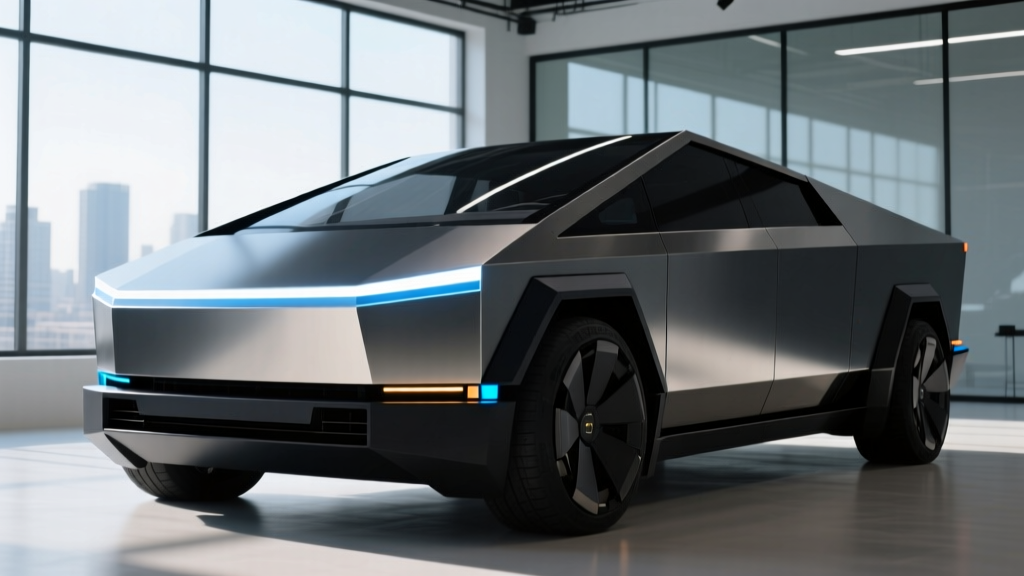
The Tesla Cybertruck launched with polarizing styling, a stainless-steel exoskeleton, and a 48-volt electrical architecture that pushed industry boundaries. But real-world ownership since late 2023 has exposed gaps: range that falls short of the EPA sticker on the highway, a peak charge rate that tapers aggressively, and a price that crept well above initial promises. As Tesla reportedly evaluates a mid-cycle update, the Cybertruck redesign concept circulating among analysts and EV enthusiasts targets the exact pain points owners report daily. This profile breaks down what a 2027-model-year refresh should deliver — grounded in current battery technology, charging infrastructure realities, and the competitive truck landscape — and what buyers should consider today versus waiting.
Current Cybertruck Baseline: What Needs Fixing
Before projecting a redesign, it's worth anchoring to the 2025 Cybertruck specs as they stand. The tri-motor Cyberbeast and dual-motor AWD variants share a structural battery pack using 4680-format NMC cells with approximately 123 kWh of usable capacity. The single-motor RWD, originally promised as a lower-cost entry, remains unavailable as of early 2026.
| Spec | AWD Dual-Motor | Cyberbeast Tri-Motor |
|---|---|---|
| EPA Range | 340 mi | 320 mi |
| Battery (usable) | ~123 kWh, NMC 4680 | ~123 kWh, NMC 4680 |
| Peak DC Fast Charge | ~250 kW (Supercharger V3) | ~250 kW |
| 10–80% DC Time | ~35 min | ~35 min |
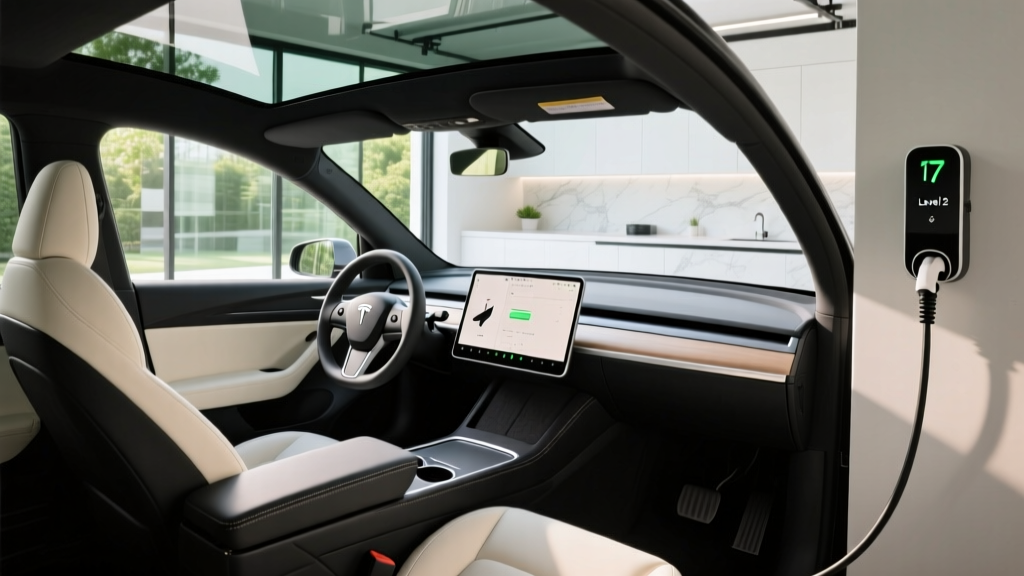
| Level 2 Charge Rate | 11.5 kW (~37 mi/hr) | 11.5 kW |
| 0–60 mph | 4.1 sec | 2.6 sec |
| Horsepower | 600 hp | 845 hp |
| Drivetrain | Dual-Motor AWD | Tri-Motor AWD |
| Efficiency | ~2.2 kWh/mi (45 MPGe) | ~2.4 kWh/mi (42 MPGe) |
| Base MSRP | $79,990 | $99,990 |
| Battery Warranty | 8 yr / 120,000 mi | 8 yr / 120,000 mi |
These numbers look competitive on paper, but owner forums and independent testing reveal consistent complaints that any serious Cybertruck redesign concept must address.
Projected 2027 Redesign: Range and Battery Chemistry
The most credible redesign proposals center on two battery upgrades: a transition to a higher-nickel NMC formulation (or potentially a partial LFP option for a base RWD trim) and a move to an 800-volt architecture similar to what Hyundai's E-GMP and GM's Ultium platforms already support.
Current 2025 AWD EPA: 340 miles. In highway testing at 75 mph with moderate climate use, expect ~260–285 miles. In cold weather (below 32°F), range drops an additional 15–25%, yielding roughly 210–240 miles on the highway in winter conditions. The Cyberbeast's heavier tri-motor setup and wider tires reduce real-world highway range to approximately 240–260 miles in fair weather.
Projected 2027 redesign target: A 135–140 kWh pack with improved cell energy density and 800V efficiency gains could push the EPA rating to 380–400 miles, with real-world highway range closer to 300–330 miles.
A higher-energy-density 4680 cell — which Tesla has been steadily refining at its Texas Gigafactory — could add 10–15% more kWh without increasing pack volume. Pairing that with the aerodynamic refinements (a redesigned tonneau cover seal, active air dam, and gap-filling tailgate) would close the efficiency gap versus the Rivian R1T Dual-Max, which achieves 352 miles EPA from a 149 kWh pack.
Charging Speed: The 800V Imperative
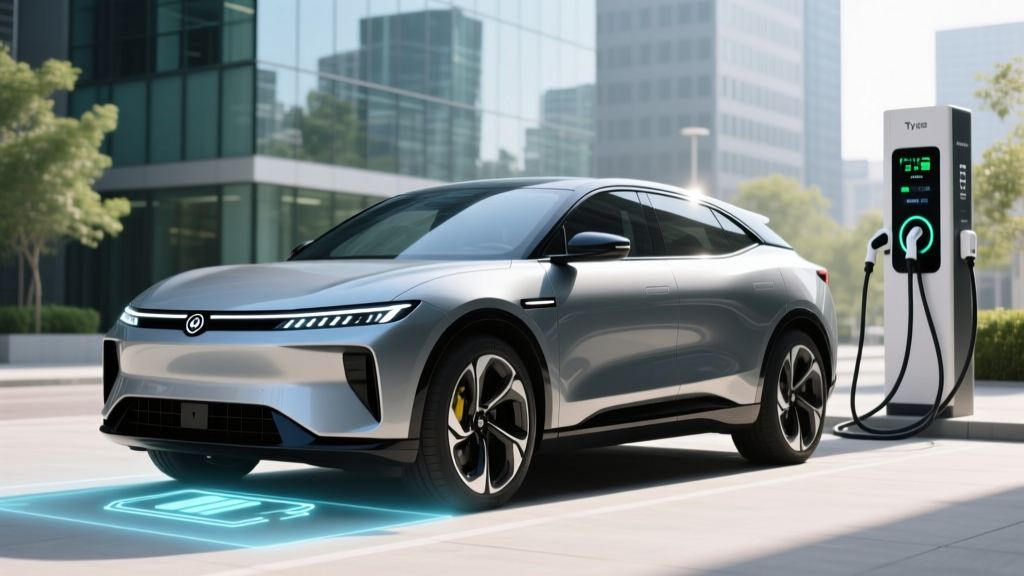
The current Cybertruck's ~250 kW peak on Tesla's V4 Superchargers is adequate but increasingly uncompetitive. The 10–80% charge time of roughly 35 minutes trails the Hyundai Ioniq 5 (18 minutes on a 350 kW charger) and the 800V-equipped Porsche Macan Electric. A redesign must adopt 800V to unlock 350+ kW peak charging.
| Metric | 2025 Current | 2027 Redesign (Projected) |
|---|---|---|
| Architecture | ~400V (native) | 800V (projected) |
| Peak DC Fast Charge | ~250 kW | ~350–400 kW |
| Sustained DC (10–60%) | ~180–220 kW | ~280–340 kW |
| 10–80% Time | ~35 min | ~18–22 min (projected) |
| Level 2 Home (240V/48A) | 11.5 kW / ~37 mi/hr | 19.2 kW / ~58 mi/hr (projected) |
| Connector | NACS (native) | NACS (native) |
| Preconditioning | Automatic via nav | Automatic + manual override (projected) |
The charge curve matters as much as peak kW. The current Cybertruck ramps down sharply above 60% State of Charge (SoC), spending most of a charging session well below its peak rate. An 800V pack with improved thermal management would sustain higher power deeper into the curve, cutting real road-trip stop times by 30–40%. For home charging, bumping the onboard charger from 11.5 kW to 19.2 kW (80A circuit) would fully replenish the pack in roughly 7 hours instead of 11 — a meaningful difference for high-mileage drivers who rely on overnight top-ups.
Performance, Drivetrain, and Efficiency Targets
The Cyberbeast's 2.6-second 0–60 time needs no improvement — it's already absurdly quick for a 6,800-pound truck. But the dual-motor AWD's 4.1-second run could drop to ~3.5 seconds with next-gen inverters using silicon carbide (SiC) MOSFETs and revised motor winding. More importantly, efficiency gains from an 800V system (lower current = less resistive heat loss) and a potential heat pump upgrade for cabin and battery conditioning would improve the Cybertruck's ~2.2 kWh/mi consumption.
The current truck lacks a heat pump — Tesla uses resistive heating for the cabin, which is a significant range penalty in cold climates. Adding a heat pump (as Tesla already uses in the Model Y and refreshed Model 3) could recover 10–15% of winter range loss, one of the most impactful single upgrades in a redesign.
Pricing, Trim Levels, and Federal Tax Credit Eligibility
Price remains the Cybertruck's most contentious issue. The originally promised $39,900 base price never materialized; the cheapest current model is the $79,990 AWD. A credible redesign concept must reintroduce an accessible entry point.
| Trim | 2025 MSRP | 2027 Projected MSRP | Est. After §30D Credit |
|---|---|---|---|
| RWD Base (not currently available) | N/A | $59,990 (projected) | ~$52,490* |
| AWD Dual-Motor | $79,990 | $74,990 (projected) | ~$67,490* |
| Cyberbeast Tri-Motor | $99,990 | $94,990 (projected) | Ineligible (over $80K cap) |
*Assumes full $7,500 §30D credit. Eligibility depends on buyer income, battery sourcing, and MSRP caps. See IRS §30D guidelines for current-year rules.
- MSRP Cap: Trucks/SUVs/vans must be under $80,000 MSRP (including options). The Cyberbeast at $99,990 is ineligible.
- Income Limits: AGI ≤ $150K (single), $225K (head of household), $300K (joint).
- Battery Sourcing: Critical minerals and battery components must meet escalating domestic/free-trade-partner thresholds. Tesla's 4680 supply chain is still ramping domestic sourcing.
- Point-of-Sale Transfer: Eligible buyers can apply the credit as an immediate price reduction at purchase.
- Consult a tax professional — eligibility varies by individual circumstances and rules update annually.
Cargo, Towing, and Practicality
The Cybertruck's 6-foot bed offers ~67 cu ft of cargo volume (bed + frunk combined: approximately 121 cu ft total enclosed storage). The vault-style bed with power-retractable tonneau is a standout, but the sloped bed floor and angular wheel wells limit flat-load utility compared to a conventional 5.5-foot bed on the Ford F-150 Lightning (which offers 78 cu ft in the bed alone plus a massive 14.1 cu ft Mega Power Frunk).
Towing capacity stands at 11,000 lbs (AWD/Cyberbeast), competitive with the F-150 Lightning's 10,000 lbs and Rivian R1T's 11,000 lbs. However, towing at maximum capacity cuts range roughly in half — expect ~150–170 real-world miles while towing 10,000+ lbs, consistent with all electric trucks. The Cybertruck's integrated trailer brake controller and tow/haul mode are well-executed, but the lack of a physical instrument cluster (all info routes through the 18.5" center screen) is a usability complaint among truck buyers who prefer dedicated gauge readouts for trailer monitoring.
Interior passenger space accommodates six (3-across bench front and rear), with ~41 inches of rear legroom — adequate but not class-leading. The Rivian R1T offers a more traditional crew-cab layout with slightly more rear-seat comfort for long trips.
Tech, Driver Assistance, and Standout Features
The Cybertruck ships with Tesla's latest hardware suite (HW4/AI5 cameras and processing) and supports Autopilot (standard) and Full Self-Driving (Supervised) as a paid add-on or subscription.
Autopilot and FSD (Supervised) are SAE Level 2 driver-assistance systems. The driver must remain fully engaged, monitor the road, and be prepared to take over instantly. These are not self-driving systems. Only Level 4 services like Waymo operate without a human driver in defined geographic zones.
Unique Cybertruck tech includes steer-by-wire (no mechanical linkage between the steering yoke and wheels), rear-wheel steering for a tight 34-foot turning circle, and the 48-volt electrical architecture that reduces wiring harness weight by ~70%. The stainless-steel exoskeleton eliminates the need for paint, cutting production complexity but making dent repair extremely difficult and expensive — a real ownership concern.
- Yoke steering is polarizing; a round wheel option is not available, complicating low-speed maneuvers for some drivers.
- No Apple CarPlay or Android Auto — Tesla's proprietary infotainment only.
- Stainless-steel body repair requires specialized Tesla-certified body shops; insurance premiums reflect this.
- Range under tow or in cold weather drops significantly — plan charging stops accordingly.
- Rear visibility is limited; the truck relies heavily on camera feeds displayed on the center screen.
Who Should Buy the Cybertruck — And Who Should Wait
- Tri-motor Cyberbeast delivers supercar-level acceleration in a truck form factor
- Stainless-steel exoskeleton is highly dent- and corrosion-resistant
- 48V architecture and steer-by-wire represent genuine engineering innovation
- NACS native — full access to the Tesla Supercharger network (17,000+ stalls)
- 11,000-lb towing with integrated trailer tech
- Frunk + vault bed + under-bed storage offer flexible cargo options
- Real-world highway range 60–80 miles below EPA sticker
- Charge speed (250 kW peak, ~35 min 10–80%) trails 800V competitors
- Base price far above original promise; Cyberbeast ineligible for §30D credit
- Yoke-only steering, no CarPlay, limited rear visibility
- Cold-weather range loss is severe without a heat pump
- Body repair costs and insurance premiums are above segment average
Buy the current Cybertruck if: You need a truck now, prioritize acceleration and tech novelty, live in a mild climate, have reliable home charging, and can absorb the real-world range compromise. The AWD at $79,990 may still qualify for the $7,500 credit if sourcing rules align.
Wait for the 2027 redesign if: You regularly drive highway routes over 250 miles, live in a cold-weather state, want faster DC charging (350+ kW), need a heat pump for winter efficiency, or want a sub-$60K entry point. The 800V architecture and higher-density cells would address the Cybertruck's biggest ownership complaints.
Consider competitors if: You value proven reliability, conventional truck ergonomics, or CarPlay. The Ford F-150 Lightning offers more cargo space and a lower starting price; the Rivian R1T offers better rear-seat comfort and a more traditional driving position.
Frequently Asked Questions
What is the real-world range of the current Cybertruck?
The 2025 AWD Dual-Motor is EPA-rated at 340 miles, but highway driving at 75 mph yields approximately 260–285 miles in fair weather and 210–240 miles in freezing temperatures. The Cyberbeast delivers roughly 240–260 real-world highway miles. A 2027 redesign with a denser battery and heat pump could push real-world highway range above 300 miles.
How fast does the Cybertruck charge at home and on DC fast chargers?
On a DC fast charger (Tesla V4 Supercharger), the current Cybertruck peaks at ~250 kW and charges from 10–80% in approximately 35 minutes. At home on a Level 2 wall connector (240V/48A), it charges at 11.5 kW, adding roughly 37 miles of range per hour — a full charge takes about 11 hours. An 800V redesign could cut DC 10–80% time to 18–22 minutes and boost Level 2 to ~19.2 kW.
Does the Cybertruck qualify for the $7,500 federal EV tax credit?
The AWD Dual-Motor at $79,990 MSRP falls under the $80,000 truck cap and may qualify, depending on buyer income limits (≤$300K joint), battery critical-mineral sourcing compliance, and point-of-sale transfer availability. The Cyberbeast at $99,990 exceeds the MSRP cap and is ineligible. Always verify current-year rules on IRS.gov and consult a tax professional.
Is the Cybertruck worth buying versus the F-150 Lightning or Rivian R1T?
The Cybertruck excels in acceleration, tech innovation, and Supercharger network access. The F-150 Lightning wins on cargo volume, starting price, and conventional truck familiarity. The R1T leads in rear-seat comfort, build quality consistency, and adventure-oriented features. If real-world range and charge speed are top priorities, waiting for the redesign or choosing the R1T Max Pack (352 mi EPA) may be the better call.
What is the biggest improvement a Cybertruck redesign should deliver?
An 800-volt architecture enabling 350+ kW DC charging and a heat pump for cold-weather efficiency. These two changes would cut charge-stop times by ~40% and recover 10–15% of winter range loss — directly addressing the top two owner complaints.
Is the Cybertruck's steer-by-wire system safe and reliable?
Steer-by-wire eliminates the mechanical column, using redundant electronic actuators. Tesla's system includes triple-redundant controllers and a backup power supply. It is legal for road use in all 50 states. However, it requires adaptation — the yoke's variable ratio feels different from a conventional wheel, and some drivers report fatigue on long highway drives. NHTSA has not issued any recalls related to the Cybertruck's steer-by-wire system as of early 2026.