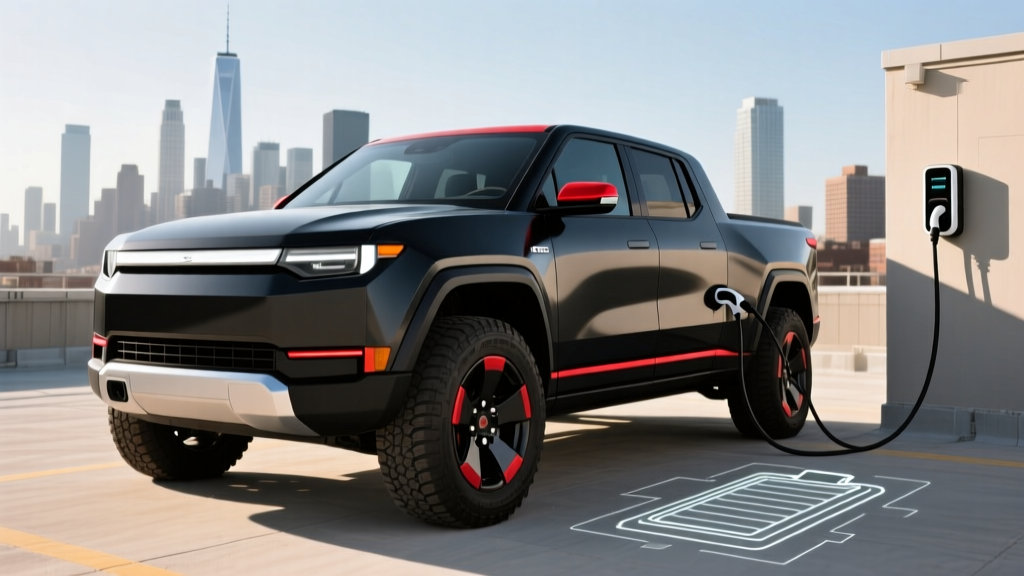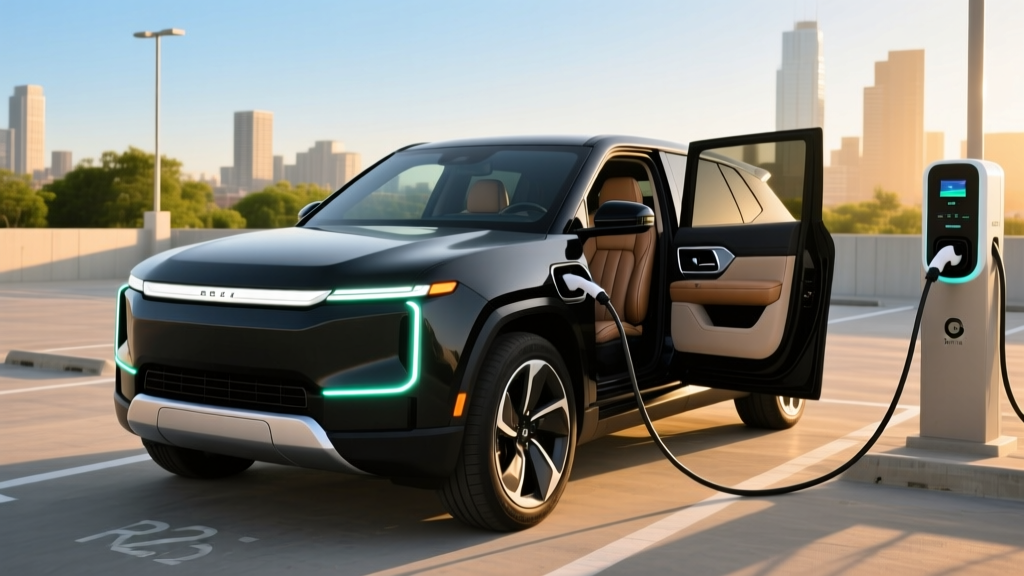
2026 Rivian R1S: The Electric SUV That Redefines Three-Row Family Hauling
If you've been tracking luxury electric SUVs, the 2026 Rivian R1S likely sits at the top of your research list. With its second-generation platform, expanded battery options, and a growing service network, Rivian has matured from startup curiosity to serious contender against the Tesla Model X, BMW iX, and Mercedes EQS SUV. But with MSRPs climbing past $80,000 on well-equipped builds, many buyers are asking whether a Rivian R1S lease deal makes more financial sense than purchasing outright.
This review breaks down the 2026 R1S across every metric that matters to real EV owners: EPA range versus highway reality, charging speeds across all three battery packs, second-row and third-row practicality, and exactly how the federal §30D tax credit interacts with Rivian's current lease structure. We've driven the Dual-Motor Standard and Quad-Motor Max configurations — here's what the spec sheets don't tell you.
Full 2026 Rivian R1S Spec Sheet
| Specification | Dual-Motor Standard | Dual-Motor Max | Quad-Motor Max |
|---|---|---|---|
| EPA Range | 270 miles | 410 miles | 390 miles |
| Battery Capacity (usable) | 92 kWh (LFP) | 141 kWh (NMC) | 141 kWh (NMC) |
| Horsepower | 533 hp | 533 hp | 1,025 hp |
| 0–60 mph | 4.5 sec | 4.5 sec | 2.9 sec |
| Drivetrain | AWD (Dual-Motor) | AWD (Dual-Motor) | AWD (Quad-Motor) |
| Max DC Fast Charge | 200 kW | 220 kW | 220 kW |
| 10–80% DC Time | ~30 min | ~41 min | ~41 min |
| Level 2 Home Rate | 11.5 kW (~33 mi/hr) | 11.5 kW (~33 mi/hr) | 11.5 kW (~33 mi/hr) |
| EPA Efficiency | 69 MPGe / 39 kWh/100mi | 73 MPGe / 37 kWh/100mi | 68 MPGe / 40 kWh/100mi |
| Towing Capacity | 7,700 lbs | 7,700 lbs | 7,700 lbs |
| Base MSRP (2026) | $79,900 | $89,900 | $105,900 |
Source: fueleconomy.gov and Rivian official specifications. Specs reflect 2026 model year; Adventure trim. Destination charge additional.
Real-World Range: What the EPA Sticker Doesn't Tell You
- Mixed suburban/city driving (65°F): ~370–390 miles achievable
- Sustained 75-mph highway: ~310–340 miles (aerodynamic drag dominates at speed)
- Cold weather (25°F, heater on): ~260–290 miles — expect 25–35% reduction
- Towing a 5,000-lb trailer: ~180–210 miles — range roughly halves under load
Rivian's heat pump (standard on all 2026 trims) helps mitigate winter losses compared to resistive heating, but the R1S's boxy shape and 5,900+ lb curb weight work against highway efficiency.
The headline 410-mile EPA figure on the Max Pack is genuinely impressive for a three-row SUV — nothing else in the segment touches it. But EPA testing cycles favor lower-speed, stop-and-go driving. If your typical road trip involves 70–80 mph interstate cruising, plan your charging stops around 300–320 miles of usable range to keep a safety buffer. Cold-weather road trippers in the Mountain West or Northeast should budget even more conservatively.
The Standard Pack's LFP chemistry offers a different trade-off: 270 miles EPA is modest for the price, but LFP cells tolerate regular 100% charging without accelerated degradation, meaning you can use every mile daily. NMC Max Pack owners should charge to 80–85% for daily use and reserve 100% for road trips.
Charging Speed: DC Fast, Level 2, and the Charge-Curve Reality
Charging speed is where battery chemistry and thermal management intersect — and where marketing numbers diverge from real charging sessions. Here's what to expect:
| Charging Method | Power (kW) | Miles Added per Hour | Notes |
|---|---|---|---|
| Level 1 (120V household) | 1.4 kW | ~3–4 mi/hr | Emergency/trickle only |
| Level 2 (240V, 48A home wall connector) | 11.5 kW | ~33 mi/hr | Full charge overnight (~8–12 hrs depending on pack) |
| DC Fast (Standard Pack) | Peak 200 kW | ~250 mi in 30 min (10–80%) | Sustains well to ~60%, then tapers |
| DC Fast (Max Pack) | Peak 220 kW | ~280 mi in 41 min (10–80%) | Larger battery = longer session despite similar peak kW |
A critical point many spec sheets bury: peak kW is not sustained kW. The R1S Max Pack hits 220 kW in roughly the 10–35% state-of-charge window, then progressively tapers. By 65% SoC you're likely seeing 120–140 kW, and above 80% the rate drops sharply to protect cell health. This is normal lithium-ion charge-curve behavior, not a Rivian deficiency — but it means a 10–80% session on a Max Pack takes roughly 41 minutes at a 350 kW-capable Electrify America or Tesla Supercharger (with NACS adapter) station, not the 25 minutes a "220 kW" headline might imply.
For home charging, Rivian's Wall Connector on a 60A circuit (48A continuous) delivers 11.5 kW. A Standard Pack charges fully in about 8 hours; the Max Pack needs roughly 12–13 hours. Most owners with overnight access wake up full regardless. If your home has a 200A electrical panel with limited spare capacity, consult a licensed electrician — a panel upgrade to support a dedicated 60A circuit can add $1,500–$3,500 to your installation.
Pricing, Lease Deals, and the Federal Tax Credit Puzzle
The 2026 R1S lineup starts at $79,900 for the Dual-Motor Standard Pack Adventure and climbs to $105,900 for the Quad-Motor Max. Options like the Electric Camp Kitchen, Forest Green premium interior, and 22-inch Sport wheels can push an as-tested Dual-Motor Max past $98,000.
| Trim | Base MSRP | Federal §30D Credit | Effective Price (if eligible) |
|---|---|---|---|
| Dual-Motor Standard Adventure | $79,900 | Up to $7,500 | ~$72,400 |
| Dual-Motor Max Adventure | $89,900 | Up to $7,500 | ~$82,400 |
| Quad-Motor Max Adventure | $105,900 | Up to $7,500 | ~$98,400 |
However, eligibility is not guaranteed. Under current IRS §30D rules, the R1S must meet several criteria:
- MSRP cap: SUVs must be at or below $80,000. The Dual-Motor Standard qualifies; the Max and Quad-Motor trims exceed the cap and do NOT qualify for the purchase credit.
- Buyer income limits: AGI must not exceed $300,000 (joint), $225,000 (head of household), or $150,000 (single).
- Battery sourcing: Critical minerals and battery components must meet escalating domestic/free-trade sourcing thresholds. Rivian has worked to localize supply chains, but verify current-year compliance on the window sticker or dealer documentation.
- Point-of-sale transfer: Eligible buyers can apply the credit as an upfront discount at purchase rather than waiting for tax filing.
The lease loophole: Here's where a Rivian R1S lease deal becomes strategically interesting. Under §45W (the commercial clean vehicle credit), the leasing company — not the lessee — claims the $7,500 credit because a lease is technically a commercial acquisition. Many automakers, including Rivian, pass this savings through as a lease cash incentive applied to the capitalized cost. This means even the $89,900 Dual-Motor Max and $105,900 Quad-Motor — which fail the §30D MSRP cap for purchase — can effectively receive $7,500 off through the lease structure, regardless of your income level. Always confirm the current lease incentive directly with Rivian or your leasing dealer, as these programs adjust quarterly.
Interior Space, Cargo, and Three-Row Practicality
The R1S seats up to seven (2-3-2 configuration) or five with the optional second-row captain's chairs. Here's how the dimensions break down:
- Cargo behind third row: 20.1 cu ft — fits two carry-ons and a few backpacks
- Cargo behind second row (third row folded): 57.5 cu ft — competitive with midsize SUVs
- Max cargo (all rear rows folded): 104.7 cu ft — near-flat load floor
- Front headroom: 41.3 inches (panoramic glass roof adds airiness)
- Second-row legroom: 38.9 inches — genuinely comfortable for adults
- Third-row legroom: 30.4 inches — best for children or short trips
The third row is the R1S's compromise. Unlike the Tesla Model X, which offers marginally more third-row space, the R1S's battery-skateboard platform raises the floor, forcing a knees-up seating position in the way-back. For families with young children, it works fine. For adults on road trips longer than an hour, plan to rotate passengers.
The front trunk (frunk) adds approximately 11 cu ft of sealed, drainable storage — perfect for muddy gear, charging cables, or a cooler. It's one of the R1S's most-praised practicality features.
Performance, Ride Quality, and Driver-Assist Technology
The Dual-Motor R1S delivers 533 horsepower and a 4.5-second 0–60 mph time — brisk for a 5,900-lb SUV and more than adequate for merging and passing. The Quad-Motor's 1,025 hp and 2.9-second sprint are supercar territory and genuinely startling in a vehicle with a third row.
Rivian's air suspension (standard on all trims) provides 6.5 to 14.9 inches of ground clearance, making the R1S legitimately capable off-road. We've taken it through moderate rock-crawling and sand without issue. The adjustable ride height also aids highway efficiency — the SUV lowers itself at speed to reduce drag.
Rivian's Driver+ system combines adaptive cruise control with lane-centering on divided highways. It is a Level 2 driver-assist system per SAE classification, meaning you must keep your hands on the wheel (or respond to prompts) and remain fully engaged at all times. It does not navigate interchanges, stop lights, or construction zones autonomously. Expect functionality similar to Ford BlueCruise or GM Super Cruise in capability, though Rivian's hands-on-wheel detection is more conservative than Ford's hands-free monitoring.
The 15.6-inch center touchscreen runs Rivian's in-house OS — responsive, clean, and free of the subscription paywalls some competitors push. Wireless Apple CarPlay and Android Auto are standard. Over-the-air updates regularly add features; recent additions include enhanced trip planning with automatic preconditioning for DC fast-charging stops.
Warranty Coverage and Long-Term Battery Outlook
- Battery & Drive Unit: 8 years / 175,000 miles (whichever comes first), covering defects and capacity loss below 70% of original
- Limited Vehicle Warranty: 5 years / 60,000 miles bumper-to-bumper
- Roadside Assistance: 5 years / 60,000 miles
Rivian's 175,000-mile battery warranty is among the most generous in the segment, exceeding the industry-standard 100,000-mile threshold. The 70% capacity retention floor is typical — if your Max Pack degrades below roughly 287 miles of range within the warranty period, Rivian will repair or replace the battery.
For the Standard Pack's LFP chemistry, early data suggests slower degradation curves than NMC, with many LFP packs retaining 90%+ capacity after 100,000 miles. NMC Max Pack owners should avoid habitual 100% charges and frequent DC fast-charging to maximize long-term state of health.
Pros and Cons: An Honest Scorecard
Pros
- Class-leading 410-mile Max Pack range for a three-row electric SUV
- Genuine off-road capability with air suspension and 14.9" ground clearance
- 7,700-lb towing capacity — best in the electric SUV segment
- Lease structure can bypass §30D MSRP cap, unlocking $7,500 incentive on higher trims
- Spacious frunk and flexible cargo configuration
- Excellent build quality and OTA update cadence
- 175,000-mile battery warranty exceeds most competitors
Cons
- $79,900+ starting price — premium positioning even before options
- Third row is tight for adults on long drives
- Heavy curb weight (5,900–6,100 lbs) hurts highway efficiency and tire wear
- 41-minute 10–80% DC fast-charge on Max Pack is slower than some rivals
- Service center network still expanding — rural owners may face longer wait times
- Driver+ requires hands-on-wheel; no hands-free highway assist yet
Who Should Lease the 2026 Rivian R1S?
Choose the R1S Dual-Motor Standard (lease) if: You want daily electric driving within a ~200-mile radius, qualify for the §30D purchase credit, and want the lowest monthly payment in the R1S lineup. The LFP battery rewards daily 100% charging.
Choose the R1S Dual-Motor Max (lease) if: You regularly road-trip 300+ miles, tow a boat or camper on weekends, or live in a cold-weather state where range loss demands a larger buffer. The lease cash incentive offsets the MSRP-cap disqualification.
Choose the R1S Quad-Motor Max if: Performance is non-negotiable and you want a three-row SUV that hits 60 mph in under 3 seconds. This is a niche buyer — the premium over the Dual-Motor Max is substantial, and the range sacrifice (390 vs. 410 miles) comes from the extra motor weight and power draw.
Look elsewhere if: You need a genuinely comfortable third row for adults (consider the Tesla Model X or a three-row PHEV like the Volvo XC90 Recharge), your budget caps below $70,000, or you live far from a Rivian service center and can't tolerate mobile-service delays.
Frequently Asked Questions
What is the real-world range of the 2026 Rivian R1S?
The EPA rates the Dual-Motor Max at 410 miles, but expect 310–340 miles on sustained highway drives at 75 mph, and 260–290 miles in freezing temperatures. The Standard Pack's 270-mile EPA figure translates to roughly 210–230 highway miles. Real-world range depends heavily on speed, temperature, terrain, and HVAC use.
How fast does the R1S charge at home and on the road?
At home on a 240V Level 2 wall connector (11.5 kW), the R1S adds about 33 miles per hour — a full overnight charge for any pack. On DC fast chargers, the Standard Pack peaks at 200 kW (10–80% in ~30 minutes) and the Max Pack peaks at 220 kW (10–80% in ~41 minutes). Charging tapers significantly above 80% SoC.
Does the 2026 Rivian R1S qualify for the $7,500 federal tax credit?
It depends on trim and acquisition method. The Dual-Motor Standard ($79,900 MSRP) sits at the §30D SUV cap and may qualify if you meet income limits and battery-sourcing requirements. The Max and Quad-Motor trims exceed the $80,000 cap and are ineligible for the purchase credit — but leasing these trims can unlock the $7,500 commercial credit passed through as lease cash. Verify current rules at IRS.gov.
Is it better to buy or lease the Rivian R1S?
Leasing currently offers a structural advantage for Max and Quad-Motor trims because the leasing entity claims the commercial clean vehicle credit and typically passes it as a cap-cost reduction. Leasing also protects you from depreciation risk on a first-generation-adjacent platform. Buying the Standard Pack may make sense if you qualify for §30D, plan to keep the vehicle 8+ years, and want to build equity. Run the numbers with your dealer — monthly lease payments versus loan payments plus the credit can produce surprising results.
How does the R1S compare to the Tesla Model X and BMW iX?
The R1S offers more range (410 mi vs. Model X's ~335 mi), superior towing (7,700 vs. 5,000 lbs), and genuine off-road capability that neither rival matches. The Model X wins on third-row accessibility (falcon-wing doors help) and Supercharger network convenience. The BMW iX is a two-row vehicle with a more luxurious interior but less cargo flexibility. For families who tow, camp, or drive in snow, the R1S is the strongest all-around choice.
What are the biggest drawbacks of the R1S?
The third row is tight for adults, the Max Pack's 41-minute fast-charge session is longer than some competitors, and Rivian's service network — while growing — still has gaps in rural areas. The $80,000+ price point puts it out of reach for many buyers, and the vehicle's 5,900+ lb weight accelerates tire wear (budget for replacement tires every 25,000–35,000 miles).