Quick Answer: Is an Electric Rubbish Truck Worth It in 2026?
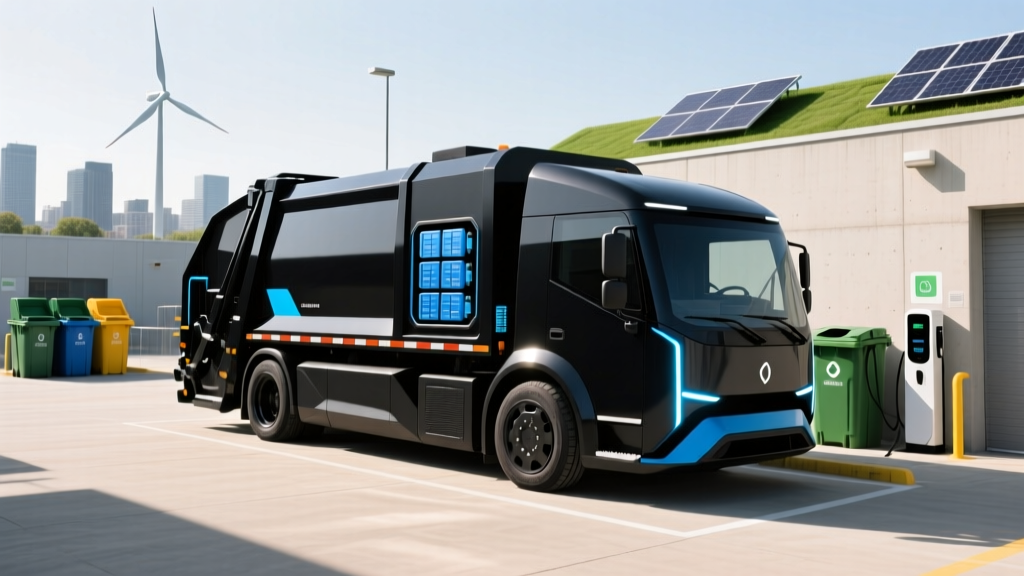
An electric rubbish truck (also called an electric refuse collection vehicle or battery-electric waste truck) typically costs between $450,000 and $650,000 upfront — roughly 1.8× to 2.5× the price of a comparable diesel Class 8 refuse truck. However, fleet operators consistently report 50–70% lower fuel costs and 40–60% lower maintenance costs over the vehicle's 10–12 year service life. Payback periods range from 5 to 8 years depending on route density, electricity rates, and available incentives like the EPA Clean School Bus and Clean Heavy-Duty Vehicles programs. Real-world range for current models sits between 75 and 150 miles per charge — sufficient for most single-shift residential collection routes but tight for extended commercial runs.
The Electric Rubbish Truck Landscape in 2026
Municipalities and private waste haulers are increasingly evaluating battery-electric refuse trucks as diesel costs rise and zero-emission mandates tighten in cities like Los Angeles, New York, and Seattle. The heavy-duty EV market has matured considerably since early pilot programs: manufacturers now offer production-model electric rubbish trucks with validated route data, established charging infrastructure partnerships, and improving battery longevity.
The primary players in the North American electric refuse truck market as of 2026 include:
- BYD 8F — Class 8 battery-electric refuse chassis with 282 kWh LFP battery, ~120-mile real-world range
- Peterbilt 520EV — Class 8 electric refuse truck with up to 4 battery packs (210–370 kWh NMC), ~110–150-mile range depending on configuration
- Mack LR Electric — Class 8 refuse truck with 394 kWh NMC battery, ~110-mile real-world range with compaction load
- Volvo VNR Electric (refuse config) — Available in 150–375 kWh configurations, ~90–140-mile range
- Oshkosh / McNeilus e-Refuse — Integrated electric chassis and body, ~100-mile range
Body manufacturers like Heil, McNeilus, and Labrie now offer electrically-driven compaction systems designed to integrate with these chassis — eliminating the need for hydraulic PTO systems and their associated fluid maintenance.
Range, Battery Specs, and Route Reality
Range is the single most scrutinized spec for any electric rubbish truck buyer. Unlike consumer EVs, refuse trucks operate under extreme variable loads: an empty truck leaving the yard may weigh 33,000 lbs, while a fully loaded truck approaching the transfer station can exceed 62,000 lbs GVW. Compaction cycles, stop-start frequency (often 800–1,200 stops per route), and accessory power draw all affect energy consumption.
| Model | Battery (kWh usable) | Chemistry | EPA/Stated Range | Real-World Range (loaded) | Peak DC Charge Rate | 10–80% Charge Time |
|---|---|---|---|---|---|---|
| BYD 8F | 282 kWh | LFP | ~150 mi | ~95–120 mi | 150 kW | ~90 min |
| Peterbilt 520EV (4-pack) | 370 kWh | NMC | ~150 mi | ~110–140 mi | 150 kW | ~110 min |
| Mack LR Electric | 394 kWh | NMC | ~130 mi | ~85–110 mi | 150 kW | ~120 min |
| Volvo VNR Electric (6-battery) | 375 kWh | NMC | ~150 mi | ~100–130 mi | 250 kW | ~70 min |
Real-World Range Warning: Manufacturer range claims assume moderate loads and flat terrain. Fleet operators should budget for 25–40% range reduction in cold climates (below 32°F), hilly routes, or high-compaction-duty cycles. A truck rated at 150 miles may deliver only 90–100 miles in a Minneapolis winter with full compaction use.
Most residential collection routes cover 60–90 miles per shift, which fits within current EV capabilities — but fleet managers need a 20–30% buffer for detours, traffic delays, and battery degradation over the vehicle's life. Route auditing software from firms like Route Refresher and GeoWaste can model energy consumption per route before committing to electric chassis.
Charging Infrastructure: What Fleets Actually Need
Charging an electric rubbish truck is fundamentally different from consumer EV charging. These vehicles require depot-based DC fast charging or high-power Level 2 overnight charging — not public networks.
| Level | Power (kW) | Charge Time (10–80%) | Use Case | Infrastructure Cost per Stall |
|---|---|---|---|---|
| Level 2 (AC) | 19.2–40 kW | 8–14 hours | Overnight depot charging; single-shift ops | $15,000–$40,000 |
| DC Fast Charge | 50–150 kW | 1.5–3 hours | Opportunity charging between shifts; faster turnaround | $50,000–$120,000 |
| High-Power DC | 150–350 kW | 45–90 min | Multi-shift operations; rapid top-up | $100,000–$250,000 |
Most single-shift residential fleets opt for Level 2 overnight charging at the depot, which aligns with off-peak electricity rates (often $0.06–$0.12/kWh). A typical overnight session consumes 200–350 kWh per truck, costing roughly $12–$42 per full charge depending on local utility rates.
Depot electrical upgrades are the hidden cost. A fleet of 10 electric refuse trucks charging simultaneously at 40 kW each requires 400 kW of continuous power — equivalent to a small industrial facility. Most depots need a utility service upgrade ($100,000–$500,000), new switchgear, transformer upgrades, and trenching for conduit. Work with your utility's commercial EV team early; lead times for transformer upgrades can exceed 12–18 months.
Electric vs Diesel Rubbish Truck: Total Cost of Ownership
The purchase price gap is significant, but total cost of ownership (TCO) tells a different story over a 10–12 year refuse truck lifecycle.
| Cost Category | Diesel Class 8 Refuse | Battery-Electric Refuse |
|---|---|---|
| Purchase Price (chassis + body) | $250,000–$320,000 | $450,000–$650,000 |
| Federal / State Incentives | $0 | −$40,000 to −$150,000* |
| Fuel / Energy (10 years) | $180,000–$240,000 | $45,000–$90,000 |
| Maintenance (10 years) | $95,000–$130,000 | $40,000–$65,000 |
| Charging Infrastructure (allocated per truck) | $0 | $25,000–$60,000 |
| Battery Replacement (if needed, year 8–10) | $0 | $0–$80,000 (warranty dependent) |
| Estimated 10-Year TCO | $525,000–$690,000 | $520,000–$785,000 |
*Incentives include EPA Clean Heavy-Duty Vehicles Program grants, state voucher programs (e.g., California HVIP, New York Truck Voucher Incentive Program), and utility make-ready rebates. Federal §45W commercial clean vehicle credit provides up to $40,000 for vehicles over 14,000 lbs GVWR. Consult IRS guidelines and a tax professional for eligibility.
The TCO crossover point typically occurs around year 5–7 for high-utilization routes. Fleets running 5 days/week, 48+ weeks/year see the fastest payback. Part-time or seasonal routes may never justify the upfront premium without substantial incentives.
Maintenance, Longevity, and Battery Degradation
Electric refuse trucks eliminate a long list of diesel maintenance items: no engine oil changes, no diesel particulate filter (DPF) regeneration, no DEF fluid, no transmission fluid (most use direct-drive or 2-speed gearboxes), and fewer brake replacements thanks to regenerative braking handling 40–60% of deceleration duty.
However, electric trucks introduce their own maintenance considerations:
- Battery degradation: Expect 15–25% capacity loss over 10 years with daily deep cycling. LFP chemistry (BYD) generally degrades more slowly than NMC in high-temperature, high-cycle applications.
- Thermal management system: Battery cooling loops require coolant service and pump replacement over the vehicle life.
- Electric compaction system: Electrically-driven packer blades have fewer wear points than hydraulic systems but require specialized high-voltage technicians for repairs.
- Tire wear: Heavy battery packs increase axle loads; expect 10–15% faster tire wear on steer axles.
Most manufacturers offer 5-year/200,000-mile battery warranties with a guaranteed capacity retention threshold (typically 70–80% of original capacity). Read the fine print: some warranties exclude degradation from DC fast charging above a certain frequency or from operation in extreme ambient temperatures.
Common Misconceptions About Electric Rubbish Trucks
| Myth | Fact |
|---|---|
| "Electric trucks can't handle hilly routes." | Electric motors produce peak torque from 0 RPM, making them excellent on grades. However, climbing consumes significantly more energy — budget 30–50% more kWh/mile on hilly routes vs flat terrain. |
| "The battery will need replacing every 3–4 years." | Modern LFP and NMC heavy-duty packs are engineered for 3,000–5,000 full charge cycles before reaching 80% capacity. At one cycle per day, that's 8–14 years of service. |
| "Charging takes too long for multi-shift ops." | DC fast charging at 150–250 kW can replenish 10–80% in 45–90 minutes. Fleets running two shifts can opportunity-charge during driver changeover. Some operators deploy a 1:1.5 truck-to-route ratio to allow charging rotation. |
| "Electric refuse trucks are silent, which is a safety risk." | Most models include acoustic vehicle alerting systems (AVAS) that emit warning sounds below 18 mph, as required by NHTSA FMVSS 141. |
| "The grid can't handle depot charging." | Most depots can phase charging over 8–10 hours overnight. Smart charge management software (e.g., ChargePoint Fleet, Amply Power) staggers sessions to stay within utility demand limits and avoid peak-rate charges. |
Decision Framework: Should Your Fleet Go Electric?
Choose an Electric Rubbish Truck If:
- Your routes are under 100 miles per shift (with a 20% buffer for weather and detours)
- You operate from a central depot where overnight charging can be installed
- Your municipality or state offers substantial incentive programs (voucher, grant, or utility rebate)
- You have a 5+ year commitment to the routes (to achieve TCO payback)
- Your fleet has or can hire high-voltage certified technicians (or has a dealer service agreement)
- You face zero-emission mandates or community pressure to reduce diesel particulates in residential neighborhoods
Stick With Diesel (or Wait) If:
- Your routes regularly exceed 120+ miles per shift with limited mid-day charging options
- You operate in extreme cold climates (sustained sub-zero temps) without heated depot storage
- Your depot has no feasible path to electrical service upgrades (rural locations, utility capacity constraints)
- You run part-time or seasonal routes that won't accumulate enough operational savings to offset the purchase premium
- Your existing maintenance team has no EV training pipeline and no dealer support within 100 miles
Frequently Asked Questions
What federal incentives exist for electric rubbish trucks in 2026?
The IRS §45W Commercial Clean Vehicle Credit provides up to $40,000 for qualified commercial EVs over 14,000 lbs GVWR. The EPA's Clean Heavy-Duty Vehicles Program (funded by the Inflation Reduction Act) offers competitive grants covering up to $240,000 per vehicle for eligible fleets. Many states layer additional vouchers on top — California's HVIP, for example, can provide $120,000–$165,000 per Class 8 electric refuse truck. Always verify current program status and eligibility with the administering agency.
How long does it take to charge an electric refuse truck overnight?
At a 40 kW Level 2 depot charger, a 300 kWh battery requires approximately 7–8 hours for a full charge from near-empty — well within a typical overnight window. At 19.2 kW (a more common Level 2 rate for heavy-duty), expect 14–16 hours. Most fleets don't fully deplete batteries daily; a truck returning with 30% SoC needs only 5–6 hours at 40 kW to reach full.
Can electric rubbish trucks operate in cold weather?
Yes, but with significant range reduction. Battery chemistry becomes less efficient below 32°F, and cabin/battery heating draws additional power. Expect 25–40% range loss in sustained sub-freezing conditions. Fleets in northern climates should spec larger battery packs, use battery preconditioning features, and consider heated depot storage to mitigate cold-soak effects.
What happens if the battery fails out of warranty?
Battery replacement for a Class 8 electric refuse truck costs $60,000–$120,000 depending on pack size and chemistry. However, most fleet operators report that batteries outlast the vehicle's chassis life (10–12 years). Some fleets repurpose degraded packs (at 70–80% capacity) for stationary depot energy storage before recycling. Negotiate battery replacement terms and guaranteed buyback pricing into your purchase agreement.
Do electric refuse trucks require specialized mechanics?
Yes. High-voltage systems (400–800V DC) require technicians with EV-specific safety certification. Manufacturers like Mack, Volvo, and Peterbilt offer training programs, and community colleges increasingly provide heavy-duty EV technician certificates. Budget $3,000–$8,000 per technician for initial training and ongoing certification. Many fleets negotiate maintenance-included service contracts with the dealer for the first 3–5 years.
How does an electric rubbish truck compare to a CNG (compressed natural gas) refuse truck?
CNG refuse trucks cost roughly $280,000–$350,000 and offer lower fuel costs than diesel but higher than electric. CNG eliminates some diesel emissions but still produces NOx and particulates. CNG refueling infrastructure is expensive ($500,000+ for a fast-fill station) and CNG tanks require replacement every 15–20 years. Electric trucks have lower operating costs and zero tailpipe emissions, but higher upfront costs and different infrastructure needs. The choice often depends on existing infrastructure, local energy prices, and emission-reduction mandates.