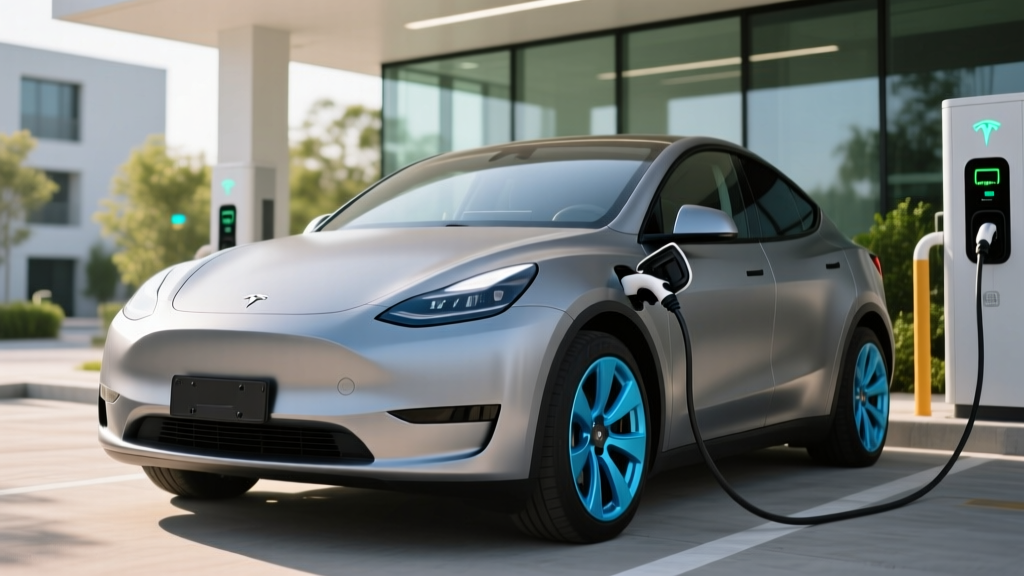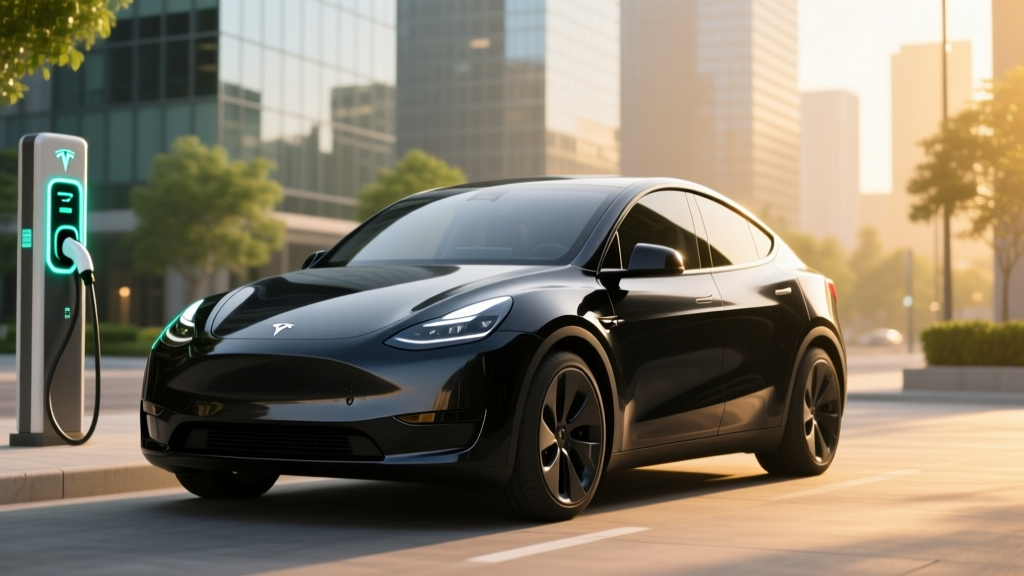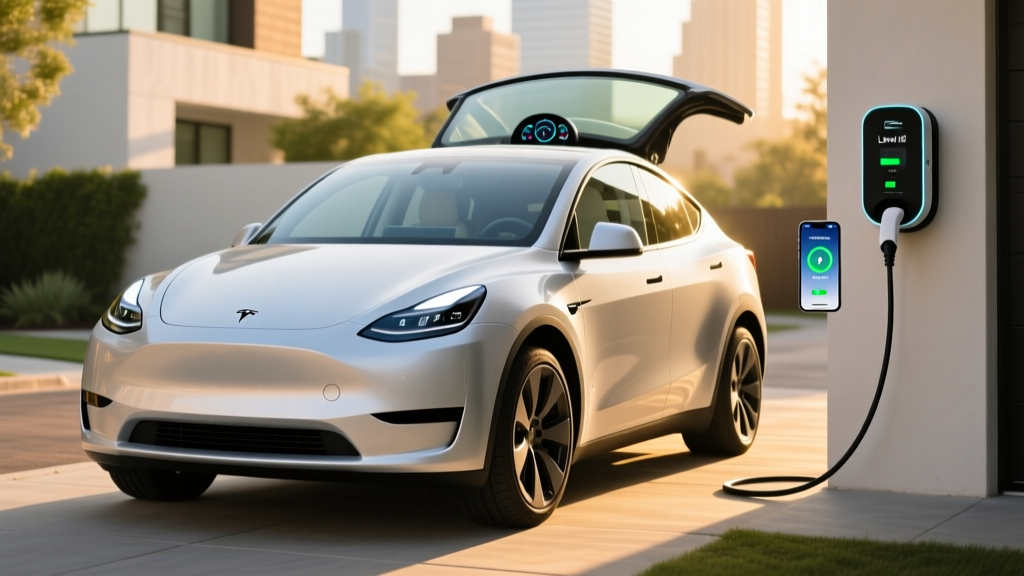
Quick Verdict: Is the Tesla Model Y Still the Safest EV SUV?
The 2026 Tesla Model Y (Juniper refresh) remains one of the most crash-tested, data-scrutinized electric vehicles on the road. Buyers searching for Tesla safety ratings will find top marks from both NHTSA and IIHS, but the real story extends beyond star ratings into active safety tech, structural battery integration, and the limitations of driver-assistance systems like Autopilot and FSD Supervised.
This review covers the full ownership picture: real-world range versus the EPA sticker, DC fast-charging curves, battery chemistry differences across trims, current federal tax credit eligibility, and how the Model Y stacks up against the Hyundai Ioniq 5, Ford Mustang Mach-E, and Chevrolet Equinox EV.
Tesla Safety Ratings: NHTSA and IIHS Breakdown
The 2026 Tesla Model Y carries forward the strong safety legacy of its predecessor, with structural advantages from the skateboard platform and low center of gravity provided by the under-floor battery pack.
NHTSA Scores
The National Highway Traffic Safety Administration (NHTSA) awarded the Model Y an overall 5-Star Safety Rating. Key sub-scores include:
- Frontal Crash: 5 Stars (driver and passenger)
- Side Crash: 5 Stars
- Rollover Risk: 5 Stars (approximately 9.3% risk, among the lowest in the SUV segment)
IIHS Ratings
The Insurance Institute for Highway Safety (IIHS) has evaluated the Model Y across multiple crashworthiness and crash-avoidance categories. The vehicle has historically earned Good ratings in moderate overlap front, side, roof strength, and head restraint tests. For the Juniper refresh, IIHS testing is ongoing, but Tesla's structural carryover and updated restraint systems suggest continued top performance.
Tesla's Autopilot and Full Self-Driving (Supervised) are SAE Level 2 driver-assistance systems. The driver must remain attentive, keep hands on the wheel, and be prepared to take over at any moment. Only Level 4 services like Waymo operate without a human driver. Tesla's active safety features (automatic emergency braking, lane departure avoidance) operate independently of FSD and are standard on all trims.
Range, Battery, and Efficiency: Real-World Numbers
The 2026 Model Y is offered in three configurations, each with distinct battery chemistry and range profiles.
| Spec | Long Range RWD | Long Range AWD | Performance |
|---|---|---|---|
| EPA Range | 320 mi | 305 mi | 285 mi |
| Battery (usable) | ~75 kWh NMC | ~75 kWh NMC | ~75 kWh NMC |
| MPGe (combined) | 122 MPGe | 115 MPGe | 110 MPGe |
| Efficiency | 28 kWh/100mi | 29 kWh/100mi | 31 kWh/100mi |
| 0-60 mph | 5.8 sec | 4.8 sec | 3.5 sec |
| Horsepower | ~330 hp | ~384 hp | ~456 hp |
| Drivetrain | RWD (single motor) | AWD (dual motor) | AWD (dual motor) |
| Base MSRP | $44,990 | $47,990 | $52,490 |
The EPA rates the Long Range RWD at 320 miles, but real-world results vary significantly:
- Highway (70-75 mph): Expect ~260-280 miles. Aerodynamic drag dominates at speed.
- City / stop-and-go: Can exceed EPA at ~310-330 miles thanks to regenerative braking.
- Cold weather (below 32°F): Plan for 20-30% range loss, yielding ~220-255 miles on the Long Range AWD. The heat pump helps but cannot fully offset cabin and battery heating demands.
- Towing (if equipped): Range drops roughly 40-50% when towing near the 3,500-lb limit.
All current Model Y trims use NMC (nickel manganese cobalt) battery chemistry, which offers higher energy density than LFP but benefits from keeping the state of charge between 20-80% for daily driving. Tesla recommends charging to 100% only for road trips.
Charging Speed: DC Fast Charge and Home Level 2
The Juniper Model Y retains the NACS (North American Charging Standard) connector native to the Supercharger network. Here's what charging looks like in practice:
| Charging Level | Power / Rate | Speed | Notes |
|---|---|---|---|
| Level 1 (120V) | ~1.4 kW | ~3-5 mi/hr | Emergency/trickle only |
| Level 2 (240V, 48A) | 11.5 kW | ~37 mi/hr | Full overnight charge (~8 hrs for 10-100%) |
| DC Fast (V3 Supercharger) | Peak 250 kW | 10-80% in ~25 min | Sustained ~150 kW average; tapers above 60% |
| DC Fast (V4 Supercharger) | Peak 250+ kW | 10-80% in ~22 min | Newer stalls; preconditioning required for peak |
Charging curve reality: The Model Y peaks at 250 kW only briefly between roughly 10-30% state of charge. From 50-80%, speeds taper to 80-120 kW. This is why the 10-80% time (~25 minutes) is the most useful metric — not the peak kW number. Always navigate to a Supercharger using the car's built-in routing to trigger battery preconditioning, which warms the pack for faster charging.
At home, a Tesla Wall Connector on a 60A circuit delivers up to 11.5 kW (48A continuous), adding roughly 37 miles of range per hour. Most owners charging from 20-80% overnight will wake to a full daily charge in under 5 hours.
Pricing, Tax Credits, and Total Cost
The 2026 Model Y lineup starts at $44,990 for the Long Range RWD. Here's how federal incentives apply under current IRS §30D rules:
| Trim | MSRP | Est. Fed Credit | Effective Price |
|---|---|---|---|
| Long Range RWD | $44,990 | Up to $7,500* | ~$37,490* |
| Long Range AWD | $47,990 | Up to $7,500* | ~$40,490* |
| Performance | $52,490 | Up to $7,500* | ~$44,990* |
Eligibility is not automatic. Verify your situation with a tax professional.
- ✅ MSRP Cap: SUVs/vans/pickups must be ≤$80,000. All Model Y trims qualify.
- ✅ Income Cap: AGI ≤$300,000 (joint), ≤$225,000 (head of household), ≤$150,000 (single).
- ⚠️ Battery Sourcing: Credit splits into $3,750 (critical minerals) + $3,750 (battery components). Tesla's supply chain has partially met these requirements, but exact eligibility shifts by production batch. Confirm the specific VIN's eligibility at fueleconomy.gov.
- ✅ Point-of-Sale Transfer: The credit can be transferred to the dealer at purchase, reducing your out-of-pocket cost immediately (effective Jan 2024 onward).
- ⚠️ Tax Liability: The credit is non-refundable — you need sufficient federal tax liability to claim it if not using point-of-sale transfer.
*Effective price assumes full $7,500 credit eligibility. Your actual credit may be $3,750 or $0 depending on battery sourcing compliance and your income. Consult a tax professional.
Cargo, Interior Space, and Daily Practicality
The Model Y's crossover form factor delivers strong utility:
- Cargo (rear seats up): 30.2 cu ft
- Cargo (rear seats folded): 72.1 cu ft
- Front trunk (frunk): 4.1 cu ft
- Rear legroom: 41.6 inches
- Front headroom: 41.0 inches
- Seating: 5-passenger standard; 7-passenger option available on Long Range AWD ($3,000, reduces cargo)
The Juniper refresh brought a quieter cabin (acoustic glass), ventilated front seats, ambient lighting, and a rear-seat touchscreen for climate/entertainment controls. The minimalist interior remains polarizing — no physical stalks (turn signals are on the steering wheel), no instrument cluster, and all climate controls live on the 15.4-inch center display.
Standout Tech and Notable Drawbacks
- Best-in-class Supercharger network access (17,000+ stalls in North America)
- Over-the-air updates continuously add features
- Top NHTSA 5-star and strong IIHS safety scores
- Lowest energy consumption in class (~28 kWh/100mi)
- Strong resale value relative to EV peers
- Sentry Mode, Dog Mode, and frunk add daily utility
- No physical turn-signal stalk or gear selector (touchscreen/steering-wheel dependent)
- Ride quality firm on 20-inch wheels; road noise improved but still present
- FSD Supervised ($8,000 or $99/mo) is Level 2, not autonomous — buyer beware of marketing
- No Apple CarPlay or Android Auto
- 7-seat option severely limits cargo and third-row legroom
- Insurance premiums 15-25% above segment average
Warranty coverage: Tesla provides a 4-year/50,000-mile basic vehicle warranty and an 8-year/120,000-mile battery and drive unit warranty (Long Range/Performance). The battery warranty guarantees at least 70% capacity retention over the warranty period.
Model Y vs. Key Competitors: Which Is Safer?
| Vehicle | NHTSA Overall | IIHS Top Safety Pick | EPA Range | Starting MSRP |
|---|---|---|---|---|
| Tesla Model Y LR AWD | 5 Stars | Yes (2024+) | 305 mi | $47,990 |
| Hyundai Ioniq 5 | 5 Stars | TSP+ | 305 mi (Long Range) | $42,600 |
| Ford Mustang Mach-E | 5 Stars (select trims) | TSP | 320 mi (Ext Range) | $43,995 |
| Chevrolet Equinox EV | 5 Stars | Pending | 319 mi (3RS) | $33,000 |
All four competitors earn 5-star NHTSA ratings, but the Model Y's combination of the Supercharger network, efficiency, and Tesla's active-safety data fleet gives it an edge for road-trip-heavy buyers. The Ioniq 5 charges faster on non-Tesla DC networks (up to 350 kW, 10-80% in ~18 min on 800V architecture) and offers physical controls. The Equinox EV wins on price.
- Choose Model Y if: You road-trip frequently, want the most reliable public charging network, value OTA updates, and prioritize crash safety data.
- Choose Ioniq 5 if: You want faster DC charging on CCS networks, prefer physical buttons, and want a more comfortable ride.
- Choose Equinox EV if: Budget is your top priority and you mostly drive locally with home charging.
Frequently Asked Questions
What is the real-world range of the 2026 Tesla Model Y?
The EPA rates the Long Range RWD at 320 miles, but expect 260-280 miles on highway trips at 70+ mph, and 220-255 miles in sub-freezing temperatures. City driving with regenerative braking can match or exceed the EPA estimate.
How fast does the Model Y charge at home and on the road?
On a Level 2 home charger (11.5 kW), the Model Y adds ~37 miles per hour, fully charging overnight in ~8 hours. On a V3 Supercharger (250 kW peak), 10-80% takes approximately 25 minutes, though sustained speeds average ~150 kW due to charge-curve tapering above 60%.
Does the 2026 Model Y qualify for the $7,500 federal tax credit?
All Model Y trims fall under the $80,000 SUV MSRP cap. However, the full $7,500 credit depends on battery critical-mineral and component sourcing requirements, which shift by production batch. Check your specific VIN at fueleconomy.gov and verify income eligibility (≤$300K joint, ≤$150K single) with a tax professional. The credit can be applied at point of sale.
Is the Tesla Model Y the safest electric SUV?
The Model Y holds a 5-star NHTSA overall rating and strong IIHS scores, placing it among the safest EV SUVs alongside the Hyundai Ioniq 5 and Volvo EX30. Tesla's low center of gravity and large crumple zones contribute to excellent crash performance. However, "safest" depends on which specific crash scenario and active-safety features you prioritize.
Is Full Self-Driving worth the extra cost?
FSD Supervised ($8,000 or $99/month) is a Level 2 driver-assist system — you must remain fully engaged. It handles highway lane changes, navigation-guided exits, and some city streets, but requires constant supervision. For most buyers, the included Autopilot (adaptive cruise + lane centering) is sufficient. FSD's value proposition depends on your commute complexity and tolerance for beta software.
How does the Model Y's safety compare to gas SUVs?
The Model Y's 5-star NHTSA rating matches or exceeds most gas-powered compact SUVs (Toyota RAV4, Honda CR-V also earn 5 stars). The EV's structural advantage comes from the rigid battery pack mounted low in the chassis, which reduces rollover risk and provides a large frontal crumple zone without an engine block.