Quick Answer: Is the Electric Renault Zoe Worth Buying?
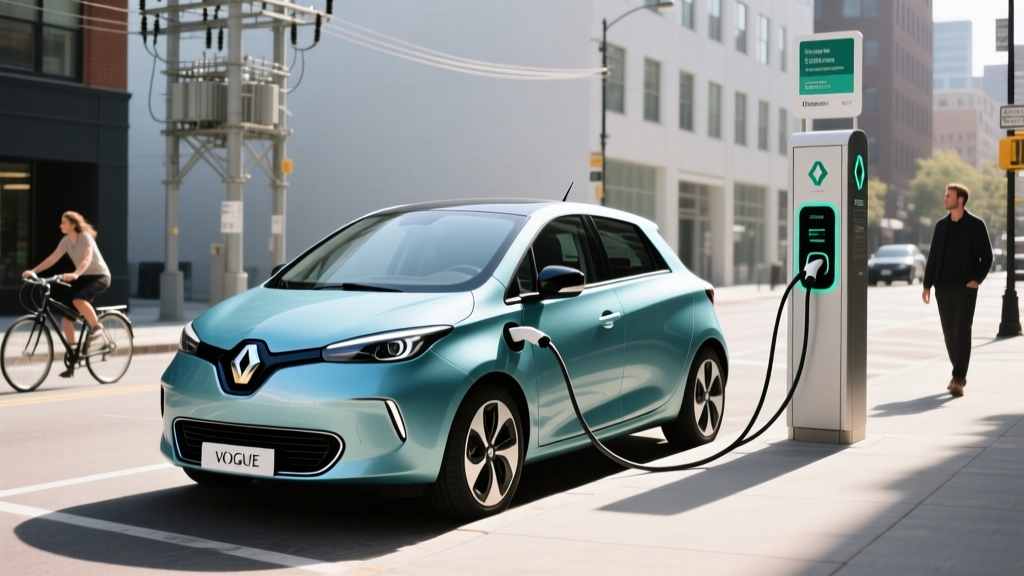
The electric Renault Zoe remains one of Europe's most affordable compact EVs, offering a WLTP range of up to 245 miles (395 km) from its 52 kWh battery. However, US buyers cannot purchase the Zoe new — Renault does not sell vehicles in the American market. For European shoppers, the Zoe delivers practical city-and-suburb mobility with low running costs, but DC fast charging tops out at 50 kW, making long road trips less convenient than rivals like the Peugeot e-208 or VW ID.3. If you're considering a used Zoe import or evaluating it as a European-market benchmark, this guide covers every ownership number you need.
Renault Zoe Range and Efficiency: WLTP vs Real World
The Zoe's 52 kWh lithium-ion battery (NMC chemistry, usable capacity approximately 48 kWh) powers a front-mounted electric motor producing either 107 hp (R110) or 134 hp (R135). Renault quotes a WLTP range of 245 miles for the R110 variant, with the more powerful R135 rated at approximately 238 miles.
EPA vs WLTP Reality Check: The Zoe is not EPA-rated because it isn't sold in the US. WLTP figures tend to run 10-15% higher than EPA estimates for equivalent vehicles. Expect a real-world range of approximately 190-210 miles in mixed driving, dropping to 150-170 miles in sustained highway use or cold weather (below 40°F / 5°C). City driving with regenerative braking can push closer to the 230-mile mark.
| Variant | Motor Output | Battery (Usable) | WLTP Range | Est. Real-World Range | Efficiency (WLTP) |
|---|---|---|---|---|---|
| Zoe R110 | 107 hp / 80 kW | 52 kWh (~48 kWh) | 245 mi / 395 km | 190-210 mi | ~16.5 kWh/100km |
| Zoe R135 | 134 hp / 100 kW | 52 kWh (~48 kWh) | 238 mi / 383 km | 185-205 mi | ~17.2 kWh/100km |
The Zoe uses a heat pump on higher trims, which reduces cabin-heating energy draw in winter — a meaningful advantage for cold-climate European buyers. However, like all EVs without a dedicated battery-heating system, DC charging speeds slow considerably below freezing.
Charging Speeds: Home, Public, and the 50 kW Limitation
Understanding the difference between kW (power, or how fast energy flows) and kWh (energy, or how much the battery holds) is essential for evaluating the Zoe's charging profile.
| Charging Level | Power (kW) | Time (0-100%) | Miles Added per Hour |
|---|---|---|---|
| Level 1 (Standard Outlet, 2.3 kW) | 2.3 kW | ~22-24 hours | ~7-9 mi/hr |
| Level 2 (Wallbox, 7.4 kW single-phase) | 7.4 kW | ~7-8 hours | ~28-32 mi/hr |
| Level 2 (22 kW three-phase AC) | 22 kW | ~2.5-3 hours | ~80-95 mi/hr |
| DC Fast Charge (CCS) | 50 kW peak | 10-80% in ~50 min | ~120-140 mi/hr (peak) |
The Zoe's standout AC feature is its Chameleon Charger, which can accept up to 22 kW on three-phase AC — far faster than most rivals limited to 7.4 or 11 kW. This makes public AC chargers in European cities highly useful. However, the 50 kW DC fast-charging cap is the Zoe's biggest limitation in 2026. Competitors like the Peugeot e-208 (100 kW DC) or the VW ID.3 (up to 130 kW DC) add range much faster on motorway trips.
The DC charge curve tapers significantly above 80% state of charge. Expect the 50 kW peak to sustain only up to roughly 50-60% SoC, then drop to 30-35 kW through 80%, and below 15 kW beyond that. This is typical for small-battery EVs without active battery thermal management during DC charging.
Cost Breakdown: Purchase Price, Running Costs, and Savings
For European buyers, the Zoe's total cost of ownership is compelling — particularly when home charging is available. Below is a cost comparison using UK pricing as a representative market.
| Cost Category | Renault Zoe R110 (EV) | Ford Fiesta 1.0 EcoBoost (Gas) | Difference |
|---|---|---|---|
| Purchase Price (new, base) | ~£28,000 | ~£21,000 | +£7,000 EV |
| Fuel / Electricity (5 yr, 50k mi) | ~£2,800 (home charging) | ~£6,200 | -£3,400 EV |
| Maintenance (5 yr) | ~£800 | ~£2,200 | -£1,400 EV |
| Insurance (5 yr avg) | ~£3,500 | ~£2,800 | +£700 EV |
| Road Tax / VED | £0 | ~£750 | -£750 EV |
| Total 5-Year Cost | ~£35,100 | ~£32,950 | +£2,150 EV |
The Zoe's higher purchase price is partially offset by dramatically lower fuel and maintenance costs. If you drive more than 10,000 miles annually or lack access to cheap home charging (relying on public DC at £0.50-0.70/kWh), the math shifts. At public fast-charger rates, 5-year electricity costs could reach £4,500-5,500 — narrowing the savings gap significantly.
US Buyers Note: Because the Zoe is not sold in the US, it does not qualify for the IRS §30D federal tax credit of up to $7,500. American shoppers should look at EPA-rated alternatives like the Chevy Bolt EV, Nissan Leaf, or Hyundai Kona Electric, which do qualify (subject to MSRP caps, income limits, and battery-sourcing requirements).
EV vs Gas vs Hybrid: Where Does the Zoe Fit?
| Attribute | Renault Zoe (BEV) | Toyota Yaris Hybrid (HEV) | Ford Fiesta (Gas) |
|---|---|---|---|
| Powertrain | Battery Electric | Self-Charging Hybrid | Gasoline Turbo |
| Range / Tank | ~200 mi real-world | ~500 mi (10.5 gal tank) | ~400 mi (11 gal tank) |
| Efficiency | ~3.8 mi/kWh | ~65 MPG combined | ~45 MPG combined |
| CO₂ Emissions (tailpipe) | 0 g/km | ~92 g/km | ~120 g/km |
| Refuel/Recharge Time | 7-8 hr (L2) / 50 min (DC) | 3 min | 3 min |
| Maintenance Needs | Minimal (no oil, filters) | Moderate (engine + hybrid) | Regular (oil, filters, belts) |
| Best For | City/suburb, home charging | Mixed driving, no plug needed | Long trips, low upfront cost |
The Zoe makes the most sense for drivers who can charge at home overnight and whose daily trips stay under 80 miles round-trip. The Toyota Yaris Hybrid, by contrast, requires no behavioral change — you fuel it like any gas car and get excellent MPG without range planning. For drivers who regularly exceed 200 miles per trip or lack home charging access, a hybrid or efficient gas car remains more practical in 2026.
Real-World Ownership Considerations
Home Charging Access Is Non-Negotiable
The Zoe's economics depend heavily on overnight Level 2 charging at home. A 7.4 kW wallbox fully replenishes the battery in 7-8 hours — plug in at night, wake up to a full charge. Installation in Europe typically costs €500-1,200 depending on electrical panel capacity and cable run distance. Without home charging, you'll rely on public AC or DC chargers at significantly higher per-kWh costs and less convenience.
Cold-Weather Range Loss
In temperatures below freezing, expect a 20-30% range reduction. The Zoe's heat pump (standard on most trims) mitigates cabin-heating energy draw, but the battery itself loses efficiency in cold conditions. A 245-mile WLTP rating becomes roughly 150-170 real-world miles on a cold winter highway run. Preconditioning the battery while plugged in helps, but the Zoe lacks the active battery thermal management systems found in larger, more expensive EVs.
Battery Degradation and Warranty
Renault provides an 8-year / 100,000-mile (160,000 km) battery warranty, guaranteeing at least 66% capacity retention. Real-world degradation data from European Zoe fleets suggests most 52 kWh batteries retain 85-90% capacity after 5 years and 60,000 miles — well above the warranty threshold. LFP chemistry is not used in the Zoe; its NMC cells offer higher energy density but slightly faster long-term degradation than LFP packs.
Common Misconceptions About the Renault Zoe
| Myth | Fact |
|---|---|
| "The Zoe can't handle motorway trips." | It can, but the 50 kW DC cap means ~50-minute stops for 10-80%. Plan for longer breaks than in a 150 kW-capable EV. |
| "EV batteries need replacing every few years." | Zoe batteries routinely exceed 90% capacity at 5 years. Full replacement (€8,000-12,000) is rarely needed within the warranty period. |
| "You can buy a Zoe in the US." | Renault has no US presence. The Zoe is a European, UK, and select international market vehicle only. |
| "Charging is more expensive than gas." | At home rates (€0.20-0.30/kWh), the Zoe costs roughly €4-6 per 100 km. Gas at €1.70/L for a 45 MPG car costs ~€10-12 per 100 km. |
| "The 22 kW AC charger works everywhere." | Only where three-phase AC is available. Most home installations and many public chargers are single-phase, limited to 7.4 kW. |
Decision Framework: Should You Buy the Zoe?
Choose the Renault Zoe If:
- You live in Europe and want an affordable, proven compact EV under €30,000
- You have reliable home or workplace Level 2 charging access
- Your daily driving is under 80 miles and rarely involves 200+ mile single trips
- You value low running costs and zero tailpipe emissions for city driving
- Three-phase AC is available at your home or frequent public chargers (to use the 22 kW capability)
Look Elsewhere If:
- You live in the US (Renault is not available; consider the Chevy Bolt EV or Hyundai Kona Electric)
- You regularly take motorway trips exceeding 150 miles and need faster DC charging (look at the VW ID.3 or Peugeot e-208 with 100+ kW DC)
- You lack any form of home or workplace charging and would rely entirely on public infrastructure
- You need more than 10.6 cu ft (300 L) of boot space — the Zoe's cargo area is compact
- You want the latest ADAS features — the Zoe's driver-assistance suite is basic compared to 2026 rivals
Frequently Asked Questions
Can I import a Renault Zoe to the United States?
Importing a Zoe to the US is technically possible under certain NHTSA exemptions (vehicles over 25 years old, or through a Registered Importer for compliance modifications), but it is impractical and expensive for a current-generation vehicle. You would face crash-test compliance costs, EPA certification hurdles, and no dealer support for service or warranty claims. US buyers are far better served by EPA-rated EVs with domestic service networks.
How does the Zoe's 50 kW DC charging compare to rivals?
The 50 kW peak is the Zoe's weakest spec in 2026. The Peugeot e-208 charges at up to 100 kW (10-80% in ~27 minutes), the VW ID.3 at up to 130 kW (~22 minutes), and the MG4 at up to 135 kW (~20 minutes). On a long trip, the Zoe adds roughly 80 miles of range in 30 minutes at peak, while a 100 kW rival adds approximately 150 miles in the same time.
Is the Renault Zoe still in production?
As of early 2026, Renault has begun phasing out the Zoe in favor of the new Renault 5 E-Tech, which offers similar pricing with more modern styling, improved DC charging, and an updated infotainment platform. Remaining Zoe stock may be available at discounted prices in select European markets, but buyers should verify local availability with dealers.
What's the real cost per mile to drive the Zoe?
At a European home electricity rate of €0.25/kWh and real-world efficiency of ~17 kWh/100km, the Zoe costs approximately €0.043 per kilometer (roughly €4.30 per 100 km or £0.055 per mile). Compare this to a 45 MPG gas car at €1.70/L: approximately €0.095 per kilometer — more than double the Zoe's cost.
Does the Zoe qualify for any purchase incentives?
Incentive eligibility varies by country. In France, the bonus écologique was reduced and restructured in 2024-2025, with eligibility depending on vehicle price, buyer income, and environmental scoring. In the UK, the Plug-in Car Grant ended in 2022, though some local authorities offer residential charging grants. Always check current government incentive programs in your specific country before purchasing. The Zoe does not qualify for the US IRS §30D credit, as it is not sold or EPA-certified in the United States.