Quick Verdict: The Scandinavian EV That Rewards Detail-Oriented Buyers
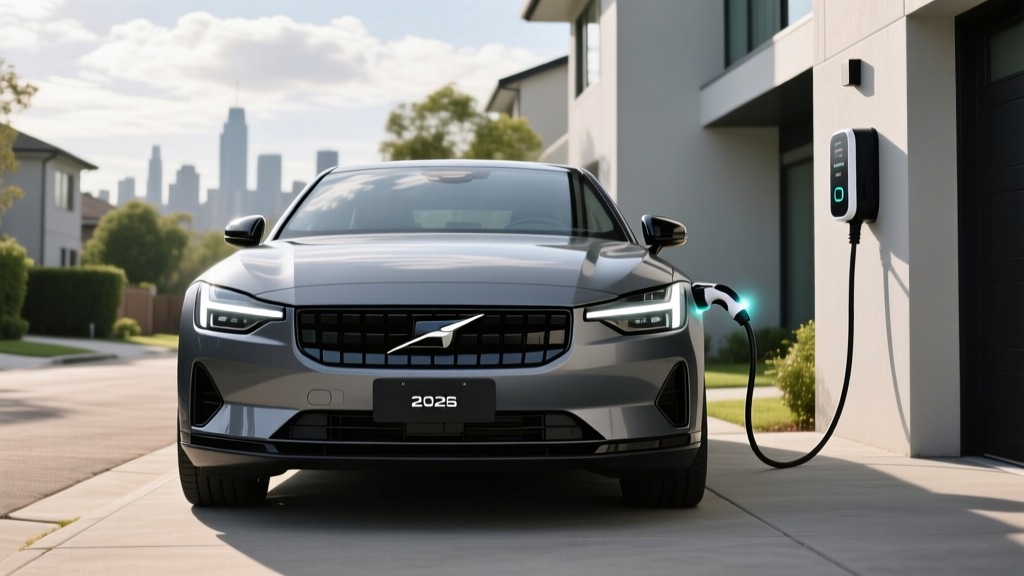
The electric Polestar 2 occupies a specific niche in the premium EV sedan market: it's the anti-Tesla choice for buyers who want Scandinavian minimalism, tactile build quality, and genuinely engaging driving dynamics without shouting about it. For 2026, Polestar has refined the lineup with a Long Range Single Motor variant that pushes EPA range to 320 miles, while the Dual Motor Performance model continues to deliver sports-sedan acceleration at a sub-$60,000 price point.
But the Polestar 2 isn't for everyone. Rear-seat space trails key rivals, the infotainment system — while clean — lacks the app ecosystem of competitors, and federal tax credit eligibility requires careful attention to IRS sourcing rules. This review breaks down every number that matters before you sign.
Range, Battery, and Efficiency: What the EPA Says vs. What You'll Actually Get
- Long Range Single Motor (LRSM): EPA 320 mi — expect ~270–290 mi highway, ~240 mi in freezing temps
- Long Range Dual Motor (LRDM): EPA 298 mi — expect ~250–270 mi highway, ~220 mi in freezing temps
- Standard Range Single Motor (SRSM): EPA 268 mi — expect ~225–240 mi highway, ~200 mi in freezing temps
These estimates assume 70–75 mph highway driving. City-only driving with regenerative braking can push results closer to or slightly above EPA stickers. Cold-weather losses of 20–30% are typical for NMC packs without consistent preconditioning.
All 2026 Polestar 2 variants use an 82 kWh usable lithium-ion battery pack (78 kWh for the Standard Range model) built with NMC (nickel manganese cobalt) chemistry. NMC offers higher energy density than LFP, which translates to more range in a smaller, lighter pack — but it also means you'll want to follow the 20–80% daily charging guideline to minimize long-term degradation. Polestar's thermal management system includes a heat pump (standard on all trims for 2026), which helps preserve range in cold climates by efficiently warming the cabin without drawing heavily from the traction battery.
| Trim | Battery (usable kWh) | Chemistry | EPA Range | MPGe (combined) | kWh/100 mi |
|---|---|---|---|---|---|
| Standard Range SM | 78 | NMC | 268 mi | 115 MPGe | 29 |
| Long Range SM | 82 | NMC | 320 mi | 122 MPGe | 27 |
| Long Range DM | 82 | NMC | 298 mi | 108 MPGe | 31 |
| LRDM w/ Performance | 82 | NMC | 276 mi | 100 MPGe | 34 |
Efficiency figures place the Long Range Single Motor among the more efficient premium EV sedans. At 27 kWh/100 mi, it edges out the BMW i4 eDrive40 (28 kWh/100 mi) and sits close to the Tesla Model 3 Long Range (25 kWh/100 mi), per fueleconomy.gov.
Charging Speed: DC Fast Charging and Home Level 2
Charging speed is where buyers need to look past peak kW numbers and understand the full charge curve. The 2026 Polestar 2 peaks at 200 kW on a DC fast charger, but that peak is sustained only between roughly 10–35% state of charge. From there, the curve tapers progressively — dropping to ~150 kW by 50% and ~80 kW past 70%.
| Charging Level | Power / Rate | Time or Miles Added | Notes |
|---|---|---|---|
| Level 1 (120V) | ~1.4 kW | ~4 mi/hr | Emergency/trickle only |
| Level 2 (240V, 48A) | 11 kW | ~33 mi/hr; full charge ~8 hr | Home charging sweet spot |
| DC Fast Charge (peak) | 200 kW | 10–80% in ~26 min | Peak sustained ~10–35% SoC |
| DC Fast Charge (avg) | ~130 kW avg | 20–80% in ~30 min | Real-world average across curve |
The 10–80% time of roughly 26 minutes is competitive but not class-leading — the Hyundai Ioniq 6 and Kia EV6, with their 800V architectures, manage 10–80% in about 18 minutes. For road-trippers who charge frequently on DC fast networks, that difference compounds. However, the Polestar 2's NACS-compatible charge port (standard for 2026 in North America) grants native access to Tesla Supercharger stations, significantly expanding reliable fast-charging coverage on long routes.
For home charging, the onboard 11 kW AC charger is a strong point. On a 48-amp Level 2 circuit (the most common residential installation), you'll add roughly 33 miles of range per hour. A typical overnight session from 30% to 80% takes about 4.5 hours — easily managed with scheduled charging during off-peak utility hours.
Performance and Driving Dynamics
The Polestar 2's driving character is one of its strongest selling points. The single-motor variants send 299 horsepower and 361 lb-ft of torque to the rear wheels, delivering a 0–60 mph time of 5.9 seconds. That's quick enough for effortless highway merging and satisfying around-town acceleration.
The Dual Motor model pairs front and rear motors for all-wheel drive, producing 421 horsepower and 546 lb-ft of torque. Without the Performance Pack, 0–60 mph arrives in 4.3 seconds. With the Performance Pack (which includes Öhlins dampers, Brembo brakes, and a software boost), the sprint drops to 3.9 seconds — firmly in sports-sedan territory.
| Trim | Drivetrain | Horsepower | Torque (lb-ft) | 0–60 mph |
|---|---|---|---|---|
| Standard Range SM | RWD | 299 | 361 | 6.2 sec |
| Long Range SM | RWD | 299 | 361 | 5.9 sec |
| Long Range DM | AWD | 421 | 546 | 4.3 sec |
| LRDM w/ Performance | AWD | 476 | 546 | 3.9 sec |
Ride quality on the standard suspension strikes a firm-but-compliant balance. The Performance Pack's manually adjustable Öhlins dampers are track-capable but noticeably stiffer on rough pavement — a trade-off buyers should test-drive before committing. Steering is precise and well-weighted, and the low center of gravity (battery pack mounted under the floor) keeps body roll minimal through corners. One-pedal driving with adjustable regen levels is intuitive, though the maximum regen setting doesn't quite bring the car to a complete stop like some competitors.
Interior, Tech, and Cargo Space
Inside, the Polestar 2 reflects its Volvo-adjacent heritage: clean lines, high-quality materials, and an emphasis on ergonomics over screen size. The centerpiece is a vertically oriented 11.2-inch touchscreen running Polestar's Android Automotive OS — the same platform underpinning newer Volvo and Polestar models. Google Maps, Google Assistant, and the Play Store are built in, meaning native navigation is excellent and voice commands are reliable. Apple CarPlay is wireless.
The 12.3-inch digital driver display is clear and customizable but relatively compact compared to competitors' full-width screens. A head-up display is available on higher trims. The standard 13-speaker Harman Kardon audio system delivers strong sound quality, and the panoramic glass roof (standard on Long Range trims) creates an airy cabin feel — though it lacks a shade, which can make the interior warm on sunny days.
Driver-assistance technology includes adaptive cruise control with stop-and-go, lane-centering assist, blind-spot monitoring, and rear cross-traffic alert. Polestar's Pilot Pack adds a more advanced lane-centering system and evasive steering assist. Per NHTSA guidelines, these are SAE Level 2 features — the driver must remain fully engaged at all times. The Polestar 2 has earned a Top Safety Pick+ rating from the IIHS.
Cargo and passenger space is where the Polestar 2 reveals its most notable limitation versus rivals:
- Rear trunk: 14.4 cu ft (liftback design improves usability)
- Front trunk (frunk): 1.4 cu ft (small — fits a charging cable bag)
- Rear legroom: 34.0 inches (tighter than the Tesla Model 3 at 35.3 in and Hyundai Ioniq 6 at 36.0 in)
- Front headroom: 40.1 inches
- Rear headroom: 36.7 inches (the sloping roofline cuts into space for taller passengers)
The liftback rear hatch is a practical advantage for loading bulky items, but overall cargo capacity trails the Tesla Model 3 (23 cu ft trunk) and significantly trails crossovers like the Model Y. If you regularly carry four adults or need maximum cargo volume, the Polestar 2's dimensions deserve an honest assessment before purchase.
Pricing, Trims, and Federal Tax Credit Eligibility
| Trim | Base MSRP | Est. As-Tested* | §30D Credit Eligibility | Est. After Credit |
|---|---|---|---|---|
| Standard Range SM | $49,950 | $52,500 | Up to $7,500 (if sourcing rules met) | ~$42,450 |
| Long Range SM | $53,450 | $56,800 | Up to $7,500 (if sourcing rules met) | ~$45,950 |
| Long Range DM | $56,950 | $61,200 | Up to $7,500 (if sourcing rules met) | ~$49,450 |
| LRDM w/ Performance | $61,950 | $65,500 | Up to $7,500 (if sourcing rules met) | ~$54,450 |
*As-tested prices include common options and destination. Actual dealer pricing may vary.
Federal tax credit eligibility for the Polestar 2 under IRS §30D requires meeting several conditions simultaneously. The vehicle must have an MSRP at or below $55,000 for sedans (this cap applies to the Polestar 2, meaning the LRDM and Performance trims may exceed the cap depending on options). The buyer must meet income thresholds: $150,000 modified AGI for single filers, $225,000 for head of household, and $300,000 for joint filers. Additionally, the battery must meet critical-mineral and component-sourcing requirements that phase in progressively — always verify current eligibility on the official fueleconomy.gov tax credit page and consult a tax professional before relying on the credit.
- Vehicle MSRP ≤ $55,000 (sedan cap) — confirm by trim and options
- Buyer MAGI ≤ $150K single / $225K HOH / $300K joint
- Battery critical-mineral and component sourcing requirements met
- Vehicle assembled in North America (Polestar 2 is manufactured in China — this may disqualify it from the new-vehicle credit; verify current status with the IRS)
- Point-of-sale transfer available if eligible — reduces purchase price at the dealer
- Used-EV credit (§25E) of up to $4,000 may apply for pre-owned Polestar 2 purchases
Critical note on assembly location: The Polestar 2 is manufactured in Luqiao, China. Under current §30D rules, new EVs must undergo final assembly in North America to qualify for the new-vehicle credit. This has historically disqualified the Polestar 2 from the $7,500 credit. Always confirm current eligibility directly with the IRS or your dealer before purchase. Some state and local incentives may still apply regardless of assembly location.
Warranty and Long-Term Ownership
Polestar backs the 2026 Polestar 2 with a competitive warranty package:
- Limited vehicle warranty: 4 years / 50,000 miles
- Battery & powertrain warranty: 8 years / 100,000 miles (covers battery if capacity drops below 70% of original)
- Corrosion warranty: 12 years, unlimited miles
- Roadside assistance: 4 years / unlimited miles
The 70% capacity-retention threshold is standard for the industry but worth noting — if your 82 kWh pack degrades to 57.4 kWh within 8 years or 100,000 miles, Polestar will repair or replace it. Real-world NMC degradation data from early Polestar 2 owners (2021–2023 models) suggests typical capacity loss of 5–8% over the first 60,000 miles when following recommended charging practices (avoiding sustained 100% SoC, minimizing DC fast charging frequency, using preconditioning).
Maintenance costs are minimal compared to ICE vehicles — no oil changes, no spark plugs, no transmission fluid. Expect to replace cabin air filters annually, check brake fluid every 2 years (regenerative braking significantly extends pad life), and rotate tires every 7,500 miles. Insurance premiums for the Polestar 2 tend to run 10–20% above comparable ICE sedans, reflecting higher repair costs and EV-specific parts pricing.
Pros, Cons, and Who Should Buy the Electric Polestar 2
- Distinctive Scandinavian design with premium build quality
- Up to 320 mi EPA range (Long Range Single Motor)
- NACS charge port — native Tesla Supercharger access
- Engaging driving dynamics, especially with Performance Pack
- Standard heat pump for cold-weather efficiency
- Android Automotive OS with native Google Maps
- Top Safety Pick+ from IIHS
- Rear-seat and cargo space trail key competitors
- DC fast charging (200 kW peak) slower than 800V rivals
- Manufactured in China — likely ineligible for §30D new-vehicle credit
- Panoramic glass roof lacks a shade
- Limited service center network vs. Tesla or legacy brands
- Firm ride on Performance Pack Öhlins dampers
- Choose the Polestar 2 if: You prioritize design, build quality, and driving engagement over maximum interior space; you commute solo or with one passenger most days; you want native Supercharger access without an adapter; and you value understated premium branding.
- Look elsewhere if: You regularly carry four adults or need large cargo capacity (consider the Tesla Model Y or Hyundai Ioniq 5); you want the fastest DC charging available (Ioniq 6 or EV6 with 800V); you need the $7,500 federal credit to make the math work; or you live far from a Polestar service center.
Frequently Asked Questions
What is the real-world range of the electric Polestar 2?
The Long Range Single Motor delivers an EPA-estimated 320 miles, but expect approximately 270–290 miles on highway road trips at 70–75 mph and roughly 240 miles in sub-freezing temperatures. City driving with regenerative braking can yield results closer to or slightly above the EPA figure. The Dual Motor variant's real-world highway range is approximately 250–270 miles.
How fast does the Polestar 2 charge?
On a DC fast charger, the Polestar 2 peaks at 200 kW and charges from 10–80% in approximately 26 minutes. The average charge rate across the full curve is around 130 kW due to tapering above 35% SoC. On a 48-amp Level 2 home charger, the 11 kW onboard charger adds roughly 33 miles of range per hour, fully replenishing the battery in about 8 hours.
Does the Polestar 2 qualify for the federal EV tax credit?
Likely not for new-vehicle purchases. The Polestar 2 is manufactured in China, and current §30D rules require North American final assembly. Additionally, the sedan MSRP cap of $55,000 may exclude higher trims. State and local incentives may still apply. Always verify current eligibility on fueleconomy.gov and consult a tax professional.
Is the Polestar 2 worth buying vs. the Tesla Model 3 or Hyundai Ioniq 6?
The Polestar 2 offers superior build quality and a more distinctive design than both rivals, plus native Supercharger access. However, the Tesla Model 3 Long Range provides more rear-seat space, faster charging (250 kW peak), and likely qualifies for the $7,500 federal credit. The Hyundai Ioniq 6 offers 800V ultra-fast charging (10–80% in ~18 min) and more interior room. If design and driving feel are your top priorities, the Polestar 2 is compelling; if range-per-dollar and charging speed matter most, the Model 3 or Ioniq 6 may be stronger choices.
What is the battery warranty on the Polestar 2?
Polestar covers the high-voltage battery and electric powertrain for 8 years or 100,000 miles, whichever comes first. The warranty triggers if battery capacity drops below 70% of its original usable capacity. The standard vehicle warranty is 4 years / 50,000 miles.
How does cold weather affect the Polestar 2's range?
Expect a 20–30% range reduction in sustained sub-freezing temperatures. The standard heat pump mitigates cabin-heating energy draw, but the NMC battery itself is less efficient in cold conditions. Preconditioning the battery while plugged in (using the Polestar app to schedule departure times) can recover some of this loss and improve DC fast-charging speeds in winter.