The Quick Answer on the Electric Mustang GT
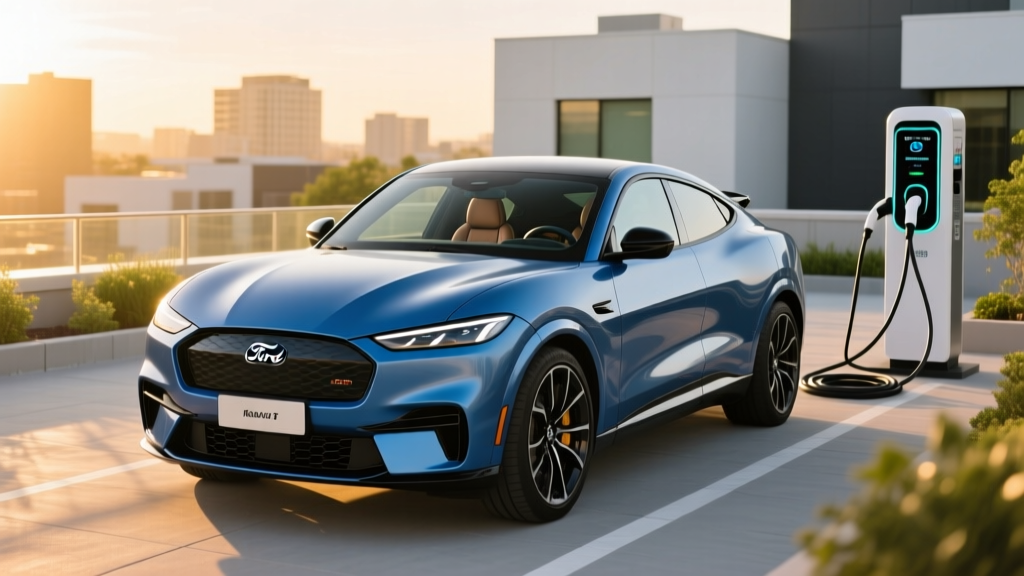
If you're searching for an electric Mustang GT, you're looking for the Ford Mustang Mach-E GT — Ford's performance EV wearing the Mustang badge. For 2026, the Mach-E GT delivers 480 horsepower, a 0-60 mph time of 3.3 seconds, and an EPA-estimated 304 miles of range from its 91 kWh usable extended-range battery. Pricing starts around $59,990 before incentives. It's a legitimate performance EV that undercuts the gas Mustang GT on running costs while matching or exceeding its acceleration. However, real-world highway range drops to roughly 250-265 miles, cold-weather driving can shave 20-30% off that figure, and the Mach-E GT does not currently qualify for the full $7,500 federal §30D tax credit due to battery-sourcing requirements. Read on for the complete ownership picture.
2026 Mustang Mach-E GT: Core Specifications
Before evaluating whether the electric Mustang GT fits your garage, here are the hard numbers that define this vehicle. Ford has refined the Mach-E GT through successive model years, and the 2026 version carries forward the powertrain upgrades introduced in 2024 with minor software and efficiency tweaks.
| Specification | 2026 Mustang Mach-E GT |
|---|---|
| Powertrain | Dual-motor AWD |
| Horsepower | 480 hp |
| Torque | 634 lb-ft (Performance Edition: 700 lb-ft) |
| 0-60 mph | 3.3 seconds (Performance Edition) |
| Battery (usable) | 91 kWh, NMC chemistry |
| EPA Range | 304 miles |
| MPGe (combined) | 84 MPGe |
| Efficiency | 40 kWh/100 mi |
| Max DC Fast Charge Rate | 150 kW peak |
| 10-80% DC Fast Charge Time | ~36 minutes |
| Level 2 Charge Rate | 10.5 kW ( onboard charger) |
| Level 2 0-100% Time | ~10 hours |
| Charging Port | NACS (native Tesla Supercharger access) |
| Cargo Volume | 29.7 cu ft (rear) + 4.7 cu ft (frunk) |
| Towing Capacity | Not rated for towing (GT trim) |
| Battery Warranty | 8 years / 100,000 miles |
| Base MSRP | $59,990 |
Real-World Range vs. EPA Sticker
The EPA rates the Mach-E GT at 304 miles. In real-world highway driving at 70-75 mph, expect approximately 250-265 miles before needing a charge. In freezing temperatures (below 32°F), range can drop to 210-240 miles depending on cabin heating use. Ford's heat pump (standard on 2026 models) helps mitigate cold-weather losses compared to older EVs without thermal management upgrades, but the physics of lithium-ion chemistry and cabin heating still take a toll. Plan road trips around 200-mile segments in winter for a comfortable buffer.
Electric Mustang GT vs. Gas Mustang GT: The Data
The most common cross-shopping question: how does the Mach-E GT stack up against the traditional gas-powered Mustang GT? These are fundamentally different vehicles — a four-door electric crossover versus a two-door muscle coupe — but the performance and cost comparisons are instructive.
| Metric | 2026 Mach-E GT (Electric) | 2026 Mustang GT Coupe (Gas, 5.0L V8) |
|---|---|---|
| Base MSRP | $59,990 | $44,090 |
| Horsepower | 480 hp | 486 hp |
| Torque | 634 lb-ft | 418 lb-ft |
| 0-60 mph | 3.3 sec | 4.2 sec |
| Fuel/Energy Cost per Mile | ~$0.045 (home charging at $0.13/kWh) | ~$0.18 (at $3.50/gal, 19 MPG combined) |
| Annual Fuel/Energy (12,000 mi) | ~$540 | ~$2,210 |
| Annual Maintenance Estimate | ~$350 | ~$750 |
| EPA Range / Tank Range | 304 mi (EPA) | ~340 mi (16-gal tank) |
| Refuel/Recharge Time | 10-80% in ~36 min (DC) | ~5 min at gas station |
| Cargo Practicality | 29.7 cu ft + frunk, 4 doors | 13.5 cu ft trunk, 2 doors |
The Mach-E GT wins decisively on acceleration (instant electric torque), running costs, and daily practicality. The gas Mustang GT wins on purchase price, refueling speed, driving engagement (manual transmission available, exhaust note), and range certainty on long road trips. Neither is objectively "better" — they serve different priorities.
Real Ownership Costs: 5-Year Breakdown
Sticker price is only the beginning. Here's what five years of ownership actually looks like for the electric Mustang GT, assuming 12,000 miles per year and national-average electricity rates.
| Cost Category | Mach-E GT (5 Years) | Gas Mustang GT (5 Years) |
|---|---|---|
| Purchase Price (base) | $59,990 | $44,090 |
| Federal Tax Credit (§30D) | $0-$3,750 (see below) | $0 |
| Fuel/Energy (60,000 mi total) | $2,700 (mostly home charging) | $11,050 |
| Maintenance (5 years) | $1,750 | $3,750 |
| Insurance (avg annual) | $12,500 ($2,500/yr) | $9,500 ($1,900/yr) |
| Estimated Depreciation | $24,000 (~40%) | $17,600 (~40%) |
| 5-Year Total Cost | ~$74,190 (after max credit) | ~$50,790 |
Key takeaway: The Mach-E GT saves roughly $8,350 in fuel and maintenance over five years compared to the gas Mustang GT. However, the higher purchase price, elevated insurance premiums (typical for performance EVs), and steeper depreciation mean the gas Mustang GT remains the cheaper vehicle to own over five years by approximately $15,000-$23,000 depending on credit eligibility. The Mach-E GT makes financial sense if you prioritize performance-per-dollar in daily driving, value the practicality of a crossover, and plan to keep the vehicle beyond five years where fuel savings compound.
Federal Tax Credit Reality (§30D)
As of 2026, the Mustang Mach-E GT's eligibility for the federal §30D clean vehicle credit is limited. The credit amount depends on battery component manufacturing and critical-mineral sourcing requirements that shift annually. The Mach-E GT may qualify for $3,750 (partial credit) or $0 depending on the specific battery batch and current-year sourcing thresholds. Additionally, the buyer must meet income caps ($150,000 single / $300,000 joint modified AGI) and the vehicle must be under the $80,000 MSRP cap for SUVs (the Mach-E GT qualifies as an SUV for this purpose). Always verify current eligibility on fueleconomy.gov before purchasing, and consult a tax professional for your specific situation. Point-of-sale transfer is available if you qualify.
Charging the Electric Mustang GT: What You Need
Owning the Mach-E GT means understanding your charging options. Ford transitioned the Mach-E to the NACS (North American Charging Standard) port for 2025 and beyond, giving native access to Tesla Supercharger stations — a significant infrastructure advantage.
| Charging Level | Power (kW) | Miles Added per Hour | Typical Use Case |
|---|---|---|---|
| Level 1 (120V household) | 1.2 kW | ~3 mi/hr | Emergency / overnight trickle |
| Level 2 (240V home/public) | 10.5 kW (max) | ~26 mi/hr | Daily home charging |
| DC Fast Charge | Up to 150 kW peak | ~150+ mi/hr (at peak) | Road trips |
Home Charging Setup
The Mach-E GT's 10.5 kW onboard charger means a 48-amp Level 2 home station (like a Ford Charge Station Pro or a ChargePoint Home Flex) will add about 26 miles of range per hour and fully recharge the 91 kWh battery in roughly 10 hours. Installation costs vary widely:
- Equipment: $400-$750 for a quality 48-amp Level 2 charger
- Electrician (240V/60A circuit): $800-$2,500 depending on panel proximity
- Panel upgrade (if needed): $1,500-$3,500 for older homes with 100A service
- Permit: $50-$200 depending on jurisdiction
Total home charging installation typically runs $1,250-$3,500 for homes with adequate electrical panels. Always get a quote from a licensed electrician before committing to a vehicle purchase if home charging access is uncertain.
DC Fast Charging Realities
The Mach-E GT peaks at 150 kW on DC fast chargers. However, like all EVs, it doesn't sustain peak rate for the entire session. The charge curve typically holds 130-150 kW from 10-50% state of charge, then tapers to 80-100 kW through 60-70%, and drops further above 80%. A 10-80% session takes approximately 36 minutes at a capable station. Preconditioning the battery (initiated automatically when you navigate to a charger in the Ford Sync system) is essential for achieving these speeds, especially in cool weather.
Common Misconceptions About the Electric Mustang GT
| Myth | Fact |
|---|---|
| "It's not a real Mustang." | The Mach-E GT produces more torque than any stock gas Mustang ever made (634 lb-ft vs. 418 lb-ft for the 5.0L V8). It wears the badge with legitimate performance credentials, though it is a crossover, not a coupe. |
| "The battery will need expensive replacement in a few years." | Ford warranties the battery for 8 years/100,000 miles against degradation below 70% capacity. NMC batteries in liquid-cooled packs like Ford's typically retain 85-90% capacity at 100,000 miles based on industry data. Full replacement, if ever needed outside warranty, currently runs $12,000-$18,000 but is rare. |
| "You can't road-trip an EV." | With the NACS port and Tesla Supercharger network access, the Mach-E GT can use 17,000+ Supercharger stalls nationwide. A 500-mile trip requires one 30-40 minute charging stop — feasible with planning via the FordPass or A Better Routeplanner apps. |
| "EVs cost more to insure, always." | The Mach-E GT does carry higher premiums than the gas Mustang GT (roughly $500-$700/year more) due to repair costs and performance classification. However, lower-trim Mach-E models often cost similar to comparable gas crossovers to insure. |
| "The range is 304 miles, so I'll always get 304 miles." | EPA range is a laboratory estimate. Sustained highway driving, cold weather, hilly terrain, and aggressive acceleration all reduce range. Budget 200-250 miles for real-world comfort on the GT trim. |
Who Should Buy the Electric Mustang GT?
Decision Framework: Is the Mach-E GT Right for You?
Choose the electric Mustang Mach-E GT if:
- You have reliable Level 2 home charging access (garage or dedicated driveway outlet)
- Your daily commute and errands fall under 150 miles round-trip
- You want sports-car acceleration (3.3-second 0-60) with four-door crossover practicality
- You value near-silent daily driving and instant torque over exhaust note and manual shifting
- You take road trips 3-5 times per year and can plan around 30-minute charging stops
- You live in a region with mild winters, or you have a second vehicle for extreme cold days
Stick with the gas Mustang GT (or reconsider) if:
- You lack home charging access and would rely entirely on public infrastructure
- You regularly drive 300+ miles in a single day and don't want to plan charging stops
- You live in a region with harsh winters and limited DC fast-charging infrastructure
- The $15,000+ purchase price premium over the gas GT doesn't fit your budget
- Driving engagement — manual transmission, engine sound, lightweight feel — is your top priority
- You plan to keep the vehicle under 4 years (fuel savings won't offset the price gap)
First-Time EV Buyer Essentials
If the Mach-E GT would be your first electric vehicle, here are the ownership realities that no brochure will tell you:
Home charging is non-negotiable for convenience. Level 1 (120V) charging adds only 3 miles per hour — insufficient for daily use of a performance vehicle. Before purchasing, confirm you can install a 240V/48A Level 2 charger. If you live in an apartment or condo without charging access, consider whether public charging infrastructure near your home or workplace is sufficient.
Learn the charge curve. The "150 kW peak" figure applies only to the middle portion of the battery's state of charge. Charging from 80-100% on DC fast charging is painfully slow (the car restricts current to protect the battery). For road trips, charge to 80% and go — don't wait for a full battery.
Winter reduces range, period. The Mach-E GT's heat pump helps, but expect 20-30% range loss below freezing. Preconditioning the cabin and battery while plugged in at home mitigates this significantly. If your winter commute is under 80 miles each way, you'll be fine year-round.
Tire costs are higher. EVs are heavier and deliver instant torque, which accelerates tire wear. Expect to replace tires every 25,000-35,000 miles on the Mach-E GT, and budget $800-$1,400 for a set of EV-rated tires.
Regenerative braking changes how you drive. The Mach-E offers multiple regen settings including a one-pedal driving mode. Most EV owners adapt within a week and prefer it, but it takes practice.
Frequently Asked Questions
Does the Mustang Mach-E GT qualify for the $7,500 federal tax credit?
As of 2026, the Mach-E GT may qualify for a partial credit of $3,750 or $0, depending on battery-sourcing compliance for the specific production batch. The full $7,500 credit requires meeting both critical-mineral and battery-component manufacturing thresholds under IRS §30D rules. Buyer income caps ($150K single / $300K joint) and the $80K MSRP cap for SUVs also apply. Verify current eligibility on fueleconomy.gov and consult a tax professional.
How long does it take to charge the Mach-E GT at home?
On a 48-amp Level 2 home charger (240V), the Mach-E GT charges at 10.5 kW and takes approximately 10 hours from empty to full. In practice, most owners plug in nightly and wake up with a full battery, adding 50-80 miles overnight depending on the day's driving.
Can the Mach-E GT use Tesla Superchargers?
Yes. The 2025+ Mach-E models come with a native NACS port, meaning they can plug directly into Tesla Supercharger stalls without an adapter. This gives access to over 17,000 Supercharger locations across the U.S. — currently the most reliable DC fast-charging network.
What is the real-world range of the electric Mustang GT?
The EPA rates the Mach-E GT at 304 miles. Real-world highway driving at 70-75 mph typically yields 250-265 miles in moderate temperatures. In freezing weather, expect 210-240 miles. Aggressive driving (frequent hard acceleration) further reduces range.
Is the Mach-E GT faster than the gas Mustang GT?
In a straight line, yes. The Mach-E GT Performance Edition hits 0-60 mph in 3.3 seconds, beating the gas Mustang GT's 4.2-second time. The electric version also delivers its full 634 lb-ft of torque instantly from a standstill, making it feel even quicker in everyday driving. The gas GT offers a more engaging experience on winding roads due to lighter weight and available manual transmission.
How much does insurance cost for the Mach-E GT?
Expect $2,200-$2,800 per year depending on your location, driving record, and coverage level. That's roughly $500-$700 more annually than a gas Mustang GT, reflecting the higher repair costs and replacement values typical of performance EVs. Get quotes from multiple insurers before purchasing.
Will the battery need replacement?
Likely not within typical ownership. Ford warrants the battery for 8 years/100,000 miles with a capacity retention threshold of 70%. Industry data on liquid-cooled NMC packs shows most retain 85-90% capacity at 100,000 miles. If replacement is ever needed out of warranty, current costs range from $12,000-$18,000, though prices are expected to decline as battery technology advances.