The Quick Answer: Is the Electric MINI Countryman Worth It?
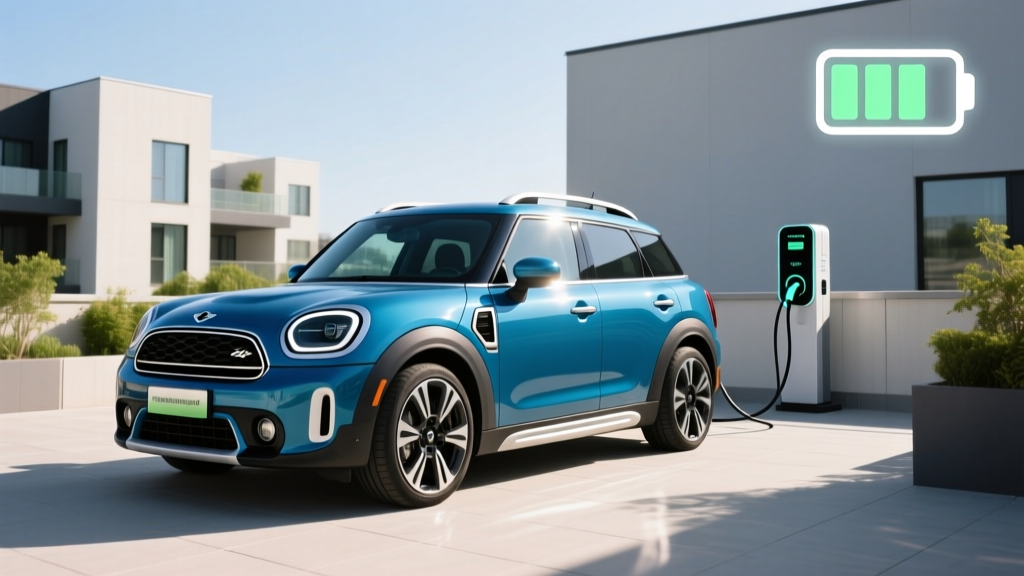
The 2026 Electric MINI Countryman (SE ALL4) delivers an EPA-estimated 238 miles of range from a 66.5 kWh (usable) NMC battery, with DC fast charging peaking at 130 kW (10–80% in roughly 30 minutes). Starting at $40,900 MSRP, it qualifies for a partial or full §30D federal tax credit depending on battery-sourcing compliance and your income. It costs roughly $540/year to charge at home (15,000 mi at $0.16/kWh) versus about $1,875/year in gas for the equivalent gas Countryman (29 MPG combined at $3.63/gal). The real trade-off: slower DC charging than rivals, modest range for the price, and a firm ride. It's best for urban/suburban buyers who value MINI's design and handling over maximum efficiency.
Range, Battery & Charging: The Numbers That Matter
MINI positions the Countryman SE ALL4 as its largest electric crossover, sharing the BMW Group FAAR platform with the iX1. Here's what the powertrain actually delivers:
| Spec | 2026 MINI Countryman SE ALL4 |
|---|---|
| EPA Range | 238 miles |
| Real-World Highway (70 mph) | ~200–215 miles |
| Cold-Weather Estimate (30°F) | ~175–195 miles |
| Battery (Usable) | 66.5 kWh, NMC chemistry |
| Drivetrain | Dual motor AWD, 308 hp, 364 lb-ft |
| 0–60 mph | 5.4 seconds |
| Max DC Fast Charge | 130 kW (CCS/NACS adapter) |
| 10–80% DC Charge Time | ~30 minutes |
| Level 2 AC Charge (11 kW) | ~6.5 hours (0–100%) |
| Efficiency | 105 MPGe combined (32 kWh/100mi) |
| Battery Warranty | 8 years / 100,000 miles (≥70% capacity) |
| Base MSRP | $40,900 (before incentives) |
Real-World Range Reality: The EPA's 238-mile figure assumes mixed driving at moderate temperatures. On sustained highway trips above 70 mph, expect 200–215 miles. In freezing conditions with cabin heat, plan for 175–195 miles. The Countryman's boxy shape and 4,400-lb curb weight hurt highway efficiency compared to sleeker crossovers like the Hyundai Ioniq 5.
Charging Curve Reality Check
The 130 kW peak charge rate is respectable but not class-leading. Unlike Hyundai/Kia's 800V architecture (peaking at 240+ kW), the Countryman uses a 400V system. In practice, the 130 kW peak holds from roughly 10–40% State of Charge (SoC), then tapers to ~80 kW through 60%, and drops further above 80%. A 10–80% session takes about 30 minutes at a 150+ kW charger. For road trips, this means slightly longer stops than an Ioniq 5 or Tesla Model Y, but acceptable for most drivers who combine charging with meal breaks.
Electric vs Gas Countryman: Total Cost Breakdown
The gas-powered MINI Countryman S ALL4 starts around $36,500 and returns 29 MPG combined. Let's compare five-year ownership costs head-to-head, assuming 15,000 miles/year and national average energy prices.
| Cost Category (5 Years) | Electric Countryman SE ALL4 | Gas Countryman S ALL4 |
|---|---|---|
| Base MSRP | $40,900 | $36,500 |
| Est. Federal Tax Credit (§30D) | −$3,750 to −$7,500* | $0 |
| Effective Purchase Price | $33,400–$37,150 | $36,500 |
| Fuel/Energy (75,000 mi) | $2,700 (home L2 @ $0.16/kWh) | $9,375 (29 MPG @ $3.63/gal) |
| Maintenance | $1,200 (cabin filter, fluid top-offs, tire rotation) | $3,500 (oil changes, brakes, transmission fluid) |
| Insurance (avg) | $9,500 ($1,900/yr) | $8,000 ($1,600/yr) |
| Estimated Depreciation | $18,000 | $15,500 |
| 5-Year Total Cost | $46,800–$50,550 | $72,875 |
*§30D credit amount depends on critical-mineral and battery-component sourcing compliance. The point-of-sale transfer option lets you apply the credit as a down payment. Verify current-year eligibility at IRS.gov. Income caps apply: $150K single / $300K joint.
The electric Countryman wins on operating costs by a wide margin — saving roughly $6,675 on fuel and $2,300 on maintenance over five years. Higher insurance premiums (typically 15–20% more for EVs) eat back about $1,500 of that. Net savings still favor the EV, especially if you qualify for the full tax credit.
Real-World Ownership: What First-Time EV Buyers Must Know
Home Charging Is Non-Negotiable for Most Owners
The Countryman's 11 kW onboard charger means a full Level 2 charge takes about 6.5 hours — overnight for most people. But you need access. If you own a home with a 240V outlet or can install a Level 2 charger (typically $500–$1,500 for equipment plus $800–$2,500 for electrician labor, depending on panel capacity), daily charging is effortless and cheap. If you rely solely on public charging, your cost per mile roughly doubles (DC fast charging averages $0.35–$0.50/kWh), and convenience drops significantly.
Panel upgrade warning: Older homes with 100-amp electrical panels may need a $2,000–$4,000 service upgrade to support a 48-amp Level 2 circuit. Get a licensed electrician's assessment before committing.
Cold Weather and Driving Patterns
NMC batteries lose 15–30% of their range in sustained sub-freezing temperatures, primarily from cabin heating demands and reduced battery efficiency. The Countryman includes a heat pump (standard), which recovers some efficiency versus resistive heating, but cold-weather range still drops to roughly 175–195 miles. If your daily commute exceeds 80 miles round-trip in a cold climate, this vehicle may feel limiting in winter.
Public Charging Network Compatibility
MINI has adopted the NACS (Tesla) connector for 2025+ models in North America, but CCS adapters are available for existing infrastructure. You'll have access to Tesla Superchargers (via adapter or native port depending on build date), Electrify America, EVgo, and ChargePoint networks. Reliability varies — Electrify America and Tesla Superchargers consistently rank highest in uptime. Plan road trips around PlugShare or A Better Routeplanner for real-time charger availability.
Common Misconceptions: Myth vs Fact
| Myth | Fact |
|---|---|
| "EV batteries need replacing every 5 years" | MINI warranties the battery for 8 years/100,000 miles at ≥70% capacity. Real-world NMC degradation averages 10–15% over 8 years based on BMW Group fleet data. |
| "The $7,500 tax credit applies to everyone" | §30D has income caps ($150K single/$300K joint), MSRP caps ($80K SUVs), and battery-sourcing requirements that may reduce the credit to $3,750 depending on the build month. Always check current IRS guidance. |
| "EVs cost more to insure" | Often true — 15–20% higher premiums on average due to repair costs and parts pricing. Get a quote before buying. Some insurers offer EV-specific discounts. |
| "I'll save money even on public DC charging" | At $0.40/kWh average, DC fast charging costs roughly $0.13/mile — comparable to a 28 MPG gas car at $3.63/gal. Savings come from home Level 2 charging at $0.04–$0.05/mile. |
| "The Countryman charges as fast as a Tesla" | At 130 kW peak, the Countryman adds ~100 miles in 15 minutes. A Tesla Model Y on V3 Superchargers peaks at 250 kW, adding ~175 miles in 15 minutes. Plan longer stops accordingly. |
Decision Framework: Should You Buy the Electric MINI Countryman?
Buy the Electric MINI Countryman if:
- You have home Level 2 charging access (or can install it)
- Your daily driving is under 120 miles round-trip
- You value MINI's distinctive design, go-kart handling feel, and premium interior
- You qualify for at least a partial §30D tax credit
- You want AWD capability without a gas engine
Consider a competitor (Ioniq 5, Model Y, EV6) if:
- You take frequent road trips over 300 miles and need faster DC charging (200+ kW)
- Maximum range (300+ miles EPA) is your top priority
- You rely exclusively on public charging and need the widest network compatibility
- You need maximum cargo space (Countryman offers 26.7 cu ft behind rear seats vs 30+ in mid-size crossovers)
Consider the gas or plug-in hybrid Countryman if:
- You live in an apartment without charging access and public infrastructure is sparse
- You regularly drive in extreme cold (-10°F or below) where range loss compounds
- Your budget is strictly under $35,000 and you don't qualify for the tax credit
FAQ: Electric MINI Countryman Ownership Questions
Does the 2026 Electric MINI Countryman qualify for the full $7,500 federal tax credit?
It depends on battery-sourcing compliance at the time of manufacture. Vehicles meeting both critical-mineral and battery-component requirements qualify for the full $7,500; those meeting only one requirement get $3,750. The point-of-sale transfer option allows you to apply the credit directly as a down payment at the dealer. Buyer income must not exceed $150K (single) or $300K (joint), and MSRP must stay under the $80,000 SUV cap. Confirm eligibility with your dealer and cross-reference IRS §30D guidance before signing.
How much does it cost to charge the Electric Countryman at home?
At the national average residential rate of $0.16/kWh, a full 66.5 kWh charge costs about $10.64 and delivers roughly 238 miles. That works out to about $0.045 per mile. Driving 15,000 miles per year costs approximately $540 in electricity — roughly one-quarter the cost of fueling the gas Countryman.
Is the Electric Countryman good for road trips?
It's adequate but not ideal. With 238 miles of EPA range (closer to 200–215 highway), you'll stop every 2.5–3 hours on long trips. The 130 kW peak charge rate means 30-minute stops for a 10–80% charge. That's slower than the Ioniq 5 (18 minutes) or Model Y (15–20 minutes). If road trips are frequent, a faster-charging competitor will save you hours over a year.
How does the MINI Countryman SE ALL4 compare to the Tesla Model Y?
The Model Y Long Range offers more EPA range (320+ miles), faster DC charging (250 kW peak), more cargo space (30+ cu ft), and access to the Supercharger network natively. The Countryman counters with a more distinctive design, a more traditional luxury interior with physical controls, and a slightly lower starting price. For pure utility and road-trip efficiency, the Model Y wins. For character and urban charm, the MINI holds its own.
What maintenance does the Electric Countryman require?
Minimal compared to gas vehicles. Expect cabin air filter replacements ($50–$100 every 2 years), brake fluid checks (regenerative braking extends pad life significantly), tire rotations, and windshield washer fluid. There are no oil changes, spark plugs, transmission fluid, or exhaust components. Budget roughly $200–$300 per year for scheduled maintenance.
Will the battery need replacing, and what does it cost?
Battery replacement is rare within the first 10–12 years. NMC chemistry typically degrades 10–15% over 8 years. MINI's warranty covers replacement or repair if capacity falls below 70% within 8 years/100,000 miles. Out-of-warranty replacement costs range from $10,000–$16,000 based on current BMW Group pricing, though costs are expected to decline as battery manufacturing scales.