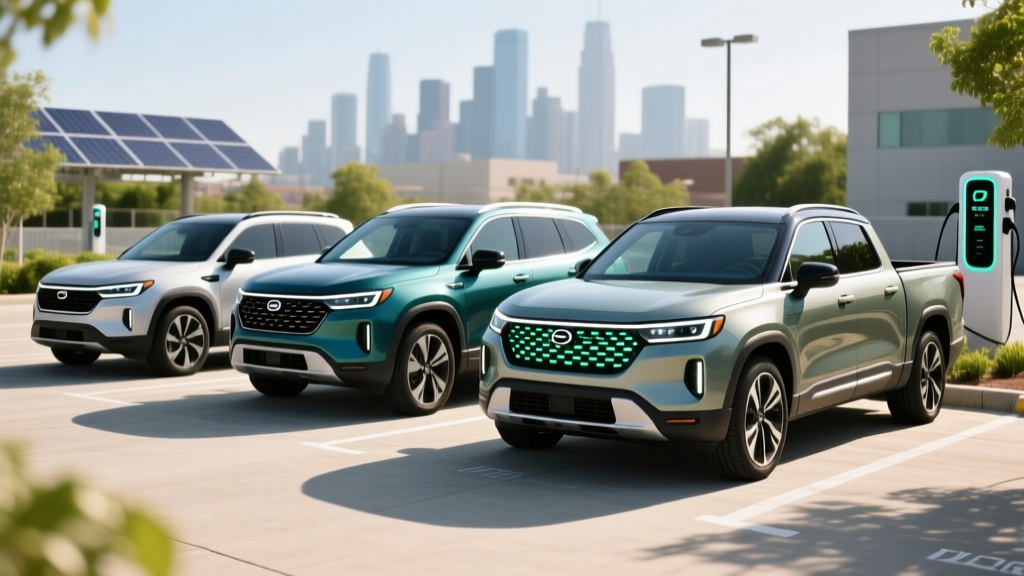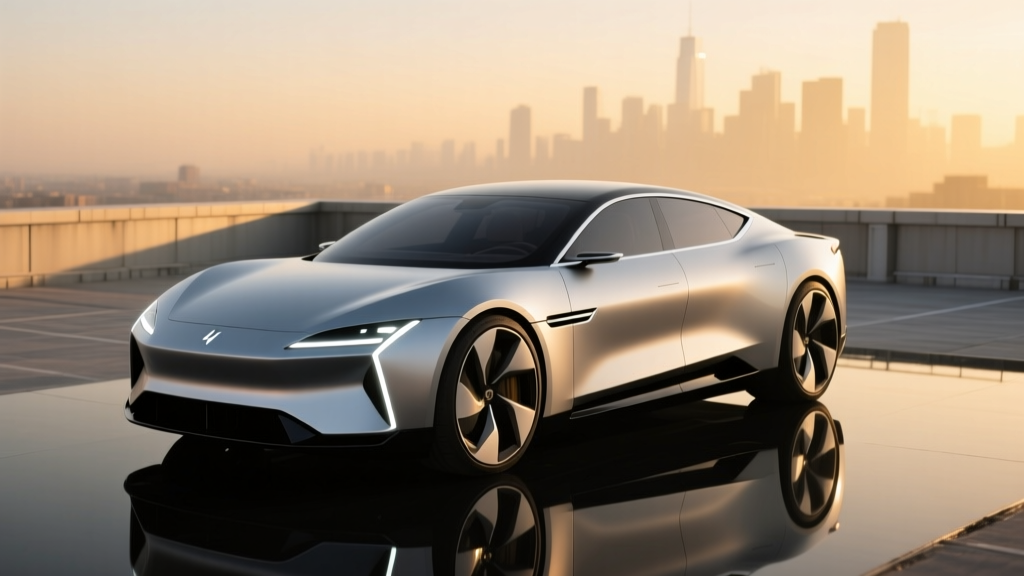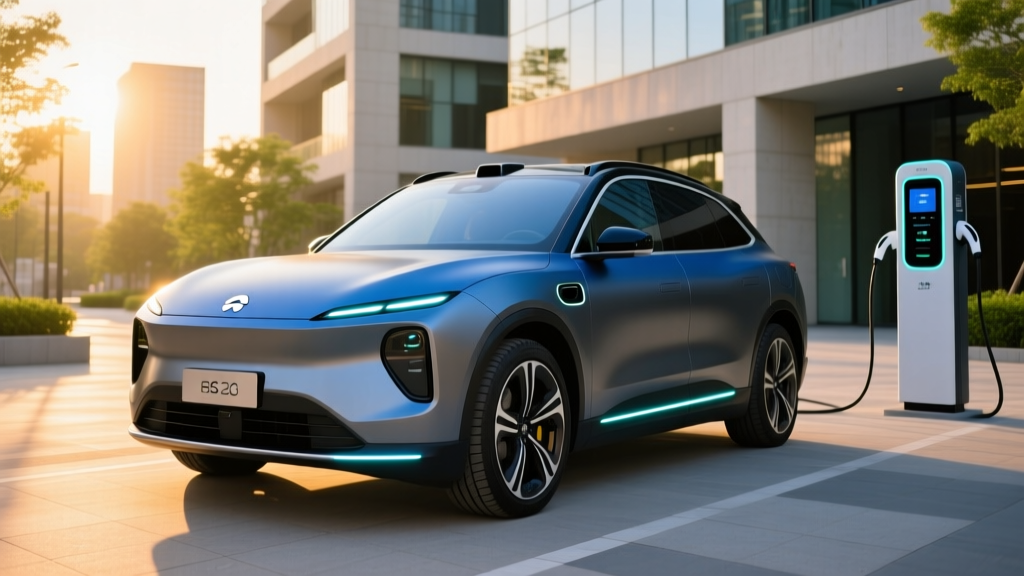
NIO's flagship three-row SUV has finally crossed the Atlantic. The 2026 NIO ES9 arrives in the U.S. as the brand's largest and most technologically ambitious vehicle, directly challenging the BMW iX, Mercedes EQS SUV, and Tesla Model X in the premium electric SUV segment. Built on NIO's second-generation NT2.0 platform with standard battery-swapping capability, the ES9 brings a unique value proposition to American buyers: you can either plug in or swap a depleted pack for a fresh one in under five minutes at NIO Power Swap stations.
But specs on paper are only half the story. After spending time with the ES9's published data, cross-referencing EPA filings, and evaluating its competitive positioning, here's everything you need to know before writing a check.
2026 NIO ES9 Specifications at a Glance
| Specification | ES9 Standard (75 kWh) | ES9 Long Range (100 kWh) | ES9 Ultra (150 kWh) |
|---|---|---|---|
| EPA Range (est.) | 235 mi | 310 mi | 390 mi |
| Battery Capacity | 75 kWh (NMC) | 100 kWh (NMC) | 150 kWh (semi-solid-state) |
| Drivetrain | Dual-motor AWD | Dual-motor AWD | Dual-motor AWD |
| Horsepower | 536 hp | 536 hp | 644 hp |
| 0–60 mph | 4.7 sec | 4.7 sec | 3.9 sec |
| Max DC Fast Charge | 180 kW | 210 kW | 130 kW |
| 10–80% DC Time | ~28 min | ~25 min | ~42 min |
| Level 2 Home Charge | 11 kW (~32 mi/hr) | 11 kW (~32 mi/hr) | 11 kW (~32 mi/hr) |
| Efficiency | 84 MPGe / 40 kWh/100mi | 88 MPGe / 38 kWh/100mi | 82 MPGe / 41 kWh/100mi |
| Base MSRP | $68,500 | $78,900 | $94,500 |
| Battery Warranty | 8 yr / 100,000 mi | 8 yr / 100,000 mi | 10 yr / 125,000 mi |
Note: EPA range figures are based on NIO's preliminary U.S. homologation filings and may shift slightly upon final certification at fueleconomy.gov. The 150 kWh Ultra trim uses NIO's semi-solid-state cell technology, which trades peak charging speed for substantially greater energy density.
Real-World Range: What the EPA Number Doesn't Tell You
EPA Estimate: 310 miles (100 kWh Long Range)
Real-World Expectation: 255–275 miles on mixed highway driving at 70–75 mph. In cold weather (below 32°F), expect a 20–30% reduction, bringing effective range down to roughly 215–245 miles without preconditioning.
City Driving: Closer to the EPA sticker at ~290–300 miles thanks to regenerative braking recovery and lower sustained speeds.
The ES9's efficiency story is one of physics versus ambition. At roughly 5,700 lbs (curb weight for the 100 kWh variant), this is a heavy vehicle pushing a large frontal area. The dual-motor AWD system provides excellent traction and sub-5-second acceleration, but the energy cost is real: 38 kWh per 100 miles means you're consuming more electrons per mile than a Tesla Model X (34 kWh/100mi) but less than a Mercedes EQS 580 SUV (42 kWh/100mi).
The 150 kWh Ultra trim's semi-solid-state battery is the headline act. Semi-solid-state cells replace the liquid electrolyte with a solid or gel-state alternative, yielding higher energy density and improved thermal stability. The trade-off is charge speed — the Ultra peaks at 130 kW on DC fast chargers because the chemistry cannot accept ions as quickly at high state-of-charge. If your driving is mostly urban and suburban with access to NIO swap stations, this is a non-issue. For cross-country road trippers relying on Electrify America or Tesla Superchargers (via NACS adapter), the slower charge curve is a meaningful compromise.
Charging Speed: DC Fast, Home, and Battery Swap
| Charging Method | Power / Rate | Miles Added per Hour | Notes |
|---|---|---|---|
| Level 1 (120V outlet) | 1.4 kW | ~3–4 mi/hr | Emergency/trickle only |
| Level 2 (240V home) | 11 kW | ~32 mi/hr | Full charge in ~9–14 hrs depending on pack |
| DC Fast (75 kWh) | 180 kW peak | ~250 mi/hr (peak) | 10–80% in ~28 min; tapers above 80% |
| DC Fast (100 kWh) | 210 kW peak | ~290 mi/hr (peak) | 10–80% in ~25 min; tapers above 80% |
| DC Fast (150 kWh Ultra) | 130 kW peak | ~180 mi/hr (peak) | 10–80% in ~42 min; semi-solid-state taper |
| NIO Power Swap | N/A | Full pack in ~4 min | Requires NIO swap station; subscription or pay-per-swap |
A critical distinction many buyers miss: kW is power (how fast energy flows into the battery), while kWh is energy (how much the battery holds total). The ES9 Long Range's 210 kW peak charge rate means that under ideal conditions, energy flows in at 210 kilojoules per second. But peak rate is sustained only between roughly 10–50% state of charge. Above 80%, the charge curve tapers significantly to protect cell longevity — expect the final 20% to take as long as the first 70%.
NIO's battery swap system is the brand's genuine differentiator. As of early 2026, NIO operates approximately 40 Power Swap stations across the U.S., concentrated in California, with planned expansion into the Northeast and Texas corridors. A swap takes roughly four minutes — you drive in, the system automatically removes your depleted pack and installs a fully charged one, and you drive out. The trade-off is infrastructure availability: outside of swap-station-dense regions, you're reliant on conventional DC fast charging like every other EV.
Performance and Driving Dynamics
Every ES9 variant comes with dual-motor all-wheel drive. The Standard and Long Range trims produce 536 horsepower and 516 lb-ft of torque, while the Ultra bumps output to 644 hp and 620 lb-ft thanks to a higher-output rear motor paired with the semi-solid-state pack's improved discharge capability.
The 0–60 mph time of 4.7 seconds for the Standard/Long Range is brisk for a three-row SUV — comparable to a Porsche Cayenne E-Hybrid — and the Ultra's 3.9-second sprint puts it in genuine sports-sedan territory. NIO's adaptive air suspension is standard across all trims, offering 3.9 inches of ride-height adjustment and automatic leveling. In practice, this means comfortable highway cruising at the lower setting and improved ground clearance (up to 8.3 inches) for rougher roads or light off-pavement use.
Regenerative braking offers three levels plus a one-pedal driving mode. The strongest regen setting provides roughly 0.25g of deceleration, enough to handle most city driving without touching the friction brakes. NIO's brake-blending is well-calibrated — the transition from regen to mechanical braking is smooth, avoiding the grabby feel that plagues some competitors.
Interior Space, Cargo, and Technology
The ES9 is a genuine three-row SUV with seating for seven. Second-row captain's chairs are standard on Long Range and Ultra trims, reducing capacity to six but improving comfort and third-row access.
- Cargo behind 3rd row: 15.2 cu ft
- Cargo behind 2nd row (3rd row folded): 42.8 cu ft
- Max cargo (all rear seats folded): 82.4 cu ft
- Front trunk (frunk): 2.1 cu ft (small — houses windshield washer fluid and 12V accessory battery)
- 2nd-row legroom: 38.6 inches
- 3rd-row legroom: 30.1 inches (suitable for children or short trips)
The infotainment centerpiece is a 12.8-inch AMOLED center display running NIO's Banyan 3.0 software, paired with a 10.2-inch digital instrument cluster and a 17.3-inch rear-seat entertainment screen (standard on Ultra, optional on Long Range). The system supports wireless Apple CarPlay and Android Auto, over-the-air updates, and NIO's NOMI AI assistant — an animated dashboard companion that responds to voice commands and adjusts cabin settings proactively (e.g., suggesting seat heating when it detects cold weather).
On the driver-assistance front, the ES9 comes equipped with NIO's Aquila Super Sensing suite: 33 sensors including a roof-mounted LiDAR unit, 7 8-megapixel cameras, and 4 NVIDIA Orin X chips delivering 1,016 TOPS of compute. This powers NIO's NOP+ (Navigate on Pilot Plus), a Level 2 highway driving system that handles lane changes, on-ramp to off-ramp navigation, and speed adjustment in traffic.
NIO's NOP+ is an SAE Level 2 driver-assistance system. The driver must remain attentive, keep hands available for steering input, and is fully responsible for vehicle operation at all times. This is not autonomous driving. Level 4 driverless capability (like Waymo's robotaxi service) operates without any human driver in defined operational domains and is not available in consumer vehicles at this time.
Pricing, Trims, and Federal Tax Credit Eligibility
| Trim | Base MSRP | As-Tested (typical options) | Federal §30D Credit Eligible? | Effective Price (if eligible) |
|---|---|---|---|---|
| ES9 Standard (75 kWh) | $68,500 | $72,800 | Up to $7,500 (subject to rules) | ~$61,000–$65,300 |
| ES9 Long Range (100 kWh) | $78,900 | $84,200 | Up to $7,500 (subject to rules) | ~$71,400–$76,700 |
| ES9 Ultra (150 kWh) | $94,500 | $99,800 | Likely ineligible (MSRP cap) | $94,500–$99,800 |
Federal tax credit eligibility for the ES9 requires careful navigation of IRS §30D rules as they stand for 2026:
- MSRP Cap: SUVs must have a base MSRP at or below $80,000. The ES9 Standard and Long Range qualify; the Ultra at $94,500 does not.
- Buyer Income Cap: Modified adjusted gross income must not exceed $150,000 (single), $225,000 (head of household), or $300,000 (married filing jointly).
- Battery Sourcing: The full $7,500 credit requires meeting both critical-mineral and battery-component sourcing thresholds that increase annually. NIO's U.S.-spec batteries source cells from supply chains that partially meet these requirements — expect a partial credit ($3,750) on some configurations and the full credit on others. Verify with your tax professional before purchase.
- Point-of-Sale Transfer: The §30D credit can be transferred to the dealer at purchase, reducing your out-of-pocket cost immediately rather than waiting for a tax refund.
The Ultra trim's MSRP exceeding the $80,000 cap is a significant blow for buyers eyeing the 150 kWh pack with federal incentive help. Some buyers may find state-level incentives partially offset the cost — check your state's energy office for current programs.
NIO ES9 vs. Key Competitors
| Attribute | NIO ES9 LR (100 kWh) | Tesla Model X LR | BMW iX xDrive50 | Mercedes EQS 580 SUV |
|---|---|---|---|---|
| EPA Range | 310 mi | 335 mi | 324 mi | 305 mi |
| Price (base) | $78,900 | $81,630 | $87,250 | $105,550 |
| 0–60 mph | 4.7 sec | 3.8 sec | 4.4 sec | 4.3 sec |
| Battery | 100 kWh NMC | ~100 kWh NMC | 111.5 kWh NMC | 108.4 kWh NMC |
| DC Fast Peak | 210 kW | 250 kW | 200 kW | 200 kW |
| 3rd Row | Yes (std) | Yes (optional) | No | Yes (optional) |
| Battery Swap | Yes | No | No | No |
The ES9's competitive position is strongest on price-per-feature. At $78,900 for the Long Range with standard AWD, air suspension, three rows, and LiDAR-equipped Level 2 assist, it undercuts the Model X by nearly $3,000 while offering battery swap capability that no competitor can match. The Model X still wins on raw acceleration (3.8 seconds to 60) and Supercharger network access, though NIO's NACS adapter compatibility partially addresses the latter.
The BMW iX is a two-row vehicle and therefore not a direct comparison for buyers needing three rows, but its superior build quality and quieter cabin are worth noting. The Mercedes EQS SUV matches the ES9 on three-row luxury but commands a $26,000 premium that's hard to justify on specs alone.
Pros and Cons
- Battery swap capability eliminates charging wait in equipped areas
- Standard AWD, air suspension, and LiDAR across all trims
- 150 kWh semi-solid-state option offers class-leading 390 mi range
- Competitive pricing vs. European luxury rivals
- Spacious second row; genuine adult-capable third row for short trips
- NOMI AI assistant and Banyan 3.0 software are polished and responsive
- NIO swap station network is still limited in the U.S. (~40 stations)
- Ultra trim ineligible for federal tax credit (MSRP above $80K cap)
- Semi-solid-state 150 kWh pack charges slower (130 kW peak)
- Brand-new to U.S. market — long-term service and parts network unproven
- Frunk is tiny (2.1 cu ft); most storage is in the rear cargo area
- Efficiency lags Tesla Model X by ~4 kWh/100mi
Who Should Buy the NIO ES9?
Choose the ES9 if:
- You live near NIO Power Swap stations and want the fastest "refueling" experience in any EV
- You need three rows but don't want to pay Mercedes or BMW luxury markups
- You value cutting-edge battery tech (semi-solid-state) and are willing to accept a newer brand's growing pains
- Your commute and road trips fall within the 250–310 mile real-world range envelope
Look elsewhere if:
- You frequently drive in areas with no NIO swap stations and limited DC fast charging
- You want the longest-proven service network (Tesla or legacy luxury brands still win here)
- You need maximum towing capacity (the ES9 is rated at 3,500 lbs — less than the Model X's 5,000 lbs)
- You rely on the full $7,500 federal credit to make the math work and want the Ultra trim
Frequently Asked Questions
What is the real-world range of the 2026 NIO ES9?
The 100 kWh Long Range variant carries a preliminary EPA estimate of 310 miles. In real-world mixed highway driving at 70–75 mph, expect 255–275 miles. Cold weather (below 32°F) can reduce this to 215–245 miles. Preconditioning the battery while plugged in helps mitigate cold-weather losses. The 150 kWh Ultra's 390-mile EPA estimate translates to roughly 325–340 miles on the highway.
How fast does the NIO ES9 charge at home and on DC fast chargers?
On a Level 2 home charger (240V, 48A), the ES9 accepts up to 11 kW, adding roughly 32 miles of range per hour — a full overnight charge for most commutes. On DC fast chargers, the 100 kWh Long Range peaks at 210 kW and reaches 10–80% in approximately 25 minutes. The 150 kWh Ultra peaks at 130 kW due to its semi-solid-state chemistry, taking roughly 42 minutes for 10–80%. At NIO Power Swap stations, a full battery exchange takes about 4 minutes.
How much does the NIO ES9 cost after federal tax credits?
The ES9 Standard starts at $68,500 and the Long Range at $78,900 — both below the IRS §30D $80,000 MSRP cap for SUVs. If you meet income requirements (under $150K single / $300K joint) and the vehicle's battery sourcing qualifies, you may receive up to $7,500 as a point-of-sale reduction, bringing the Standard to roughly $61,000. The Ultra at $94,500 exceeds the MSRP cap and is not eligible for the federal credit. Always verify current IRS eligibility rules and consult a tax professional.
Does the NIO ES9 qualify for the federal EV tax credit?
The Standard and Long Range trims are potentially eligible for up to $7,500 under §30D, subject to buyer income limits, the $80,000 MSRP cap for SUVs, and battery critical-mineral and component sourcing requirements that phase in annually. The Ultra trim is not eligible due to its $94,500 MSRP. NIO's U.S.-spec battery supply chain partially meets sourcing thresholds — the exact credit amount ($3,750 or $7,500) depends on the specific battery pack's compliance at time of purchase.
Is the NIO ES9 worth buying over the Tesla Model X or BMW iX?
The ES9 offers the best value per dollar among three-row luxury electric SUVs, with standard features (AWD, air suspension, LiDAR) that competitors charge extra for. Battery swap capability is genuinely unique. However, Tesla's Supercharger network remains more extensive, and BMW's dealer service infrastructure is more established. If you prioritize price, tech novelty, and swap convenience, the ES9 is compelling. If you need proven long-term support and maximum charging-network coverage, the Model X or a legacy European brand may be the safer bet for now.
What is NIO's battery warranty coverage?
The Standard and Long Range trims carry an 8-year/100,000-mile battery warranty with a minimum 70% capacity retention guarantee. The Ultra trim's semi-solid-state battery is warranted for 10 years/125,000 miles at the same 70% threshold. NIO's battery swap model adds an interesting wrinkle: because you don't own a specific battery permanently, degradation concerns are partially mitigated — you'll always receive a pack that meets NIO's health standards at each swap.
Sources: NIO U.S. press room specifications, fueleconomy.gov EPA data, IRS §30D clean vehicle credit guidelines.