Quick Verdict: Is the Electric Macan Porsche Worth It?
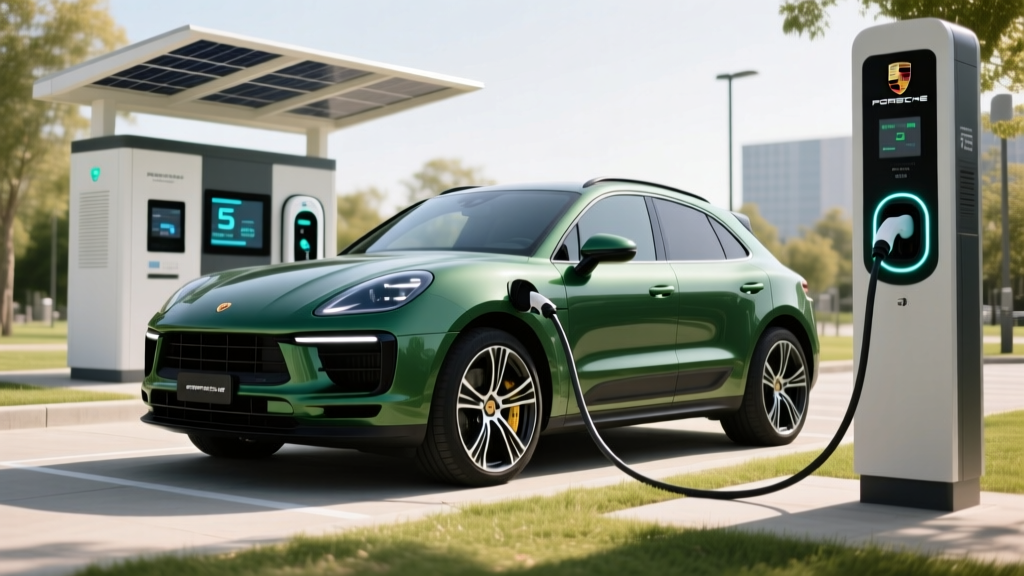
The 2026 Porsche Macan Electric is a luxury performance SUV that proves electrification doesn't dilute the brand's driving DNA. The Macan 4 Electric delivers an EPA-estimated 308 miles of range with 402 hp starting at $78,800, while the Macan Turbo Electric pushes 590 hp and a 3.1-second 0-60 for $106,900. Both ride on Porsche's 800-volt PPE platform, enabling peak DC charging at 270 kW (10-80% in roughly 21 minutes). The trade-off: it misses the $7,500 federal §30D tax credit due to MSRP caps and foreign battery sourcing, and real-world highway range drops to approximately 250-270 miles. If you want a driver-focused electric SUV with legitimate fast-charging capability and can absorb the premium without a federal incentive, it's one of the best in the segment.
Range and Efficiency: EPA Sticker vs. Real-World Miles
Porsche quotes two main trims for the 2026 model year, both equipped with a 100 kWh gross (approximately 95 kWh usable) lithium-ion battery pack using NMC (nickel manganese cobalt) chemistry optimized for energy density and high discharge rates.
| Spec | Macan 4 Electric | Macan Turbo Electric |
|---|---|---|
| EPA Range | 308 miles | 288 miles |
| Battery (usable) | ~95 kWh NMC | ~95 kWh NMC |
| MPGe (combined) | 84 MPGe | 79 MPGe |
| kWh/100 mi | ~40 kWh | ~43 kWh |
| Horsepower | 402 hp | 590 hp (Launch Control) |
| 0-60 mph | 4.9 sec | 3.1 sec |
| Top Speed | 143 mph | 161 mph |
| Base MSRP | $78,800 | $106,900 |
Real-World Range Expectations
EPA: 308 mi (Macan 4) / 288 mi (Turbo)
On sustained highway driving at 70-80 mph, expect approximately 250-270 miles (Macan 4) and 230-250 miles (Turbo). In cold weather (below 32°F), plan for a 15-25% reduction — roughly 230-260 miles for the Macan 4. Porsche's heat pump (standard on both trims) helps mitigate cabin-heating energy draw, but battery chemistry inherently loses efficiency in deep cold. Always precondition the battery via the Porsche app before DC fast charging in cold conditions to avoid sluggish charge rates.
Charging Speed: 800-Volt Architecture in Practice
The Macan Electric uses Porsche's Premium Platform Electric (PPE), co-developed with Audi, running an 800-volt architecture. This is the same voltage system in the Taycan, and it delivers meaningful advantages at compatible DC fast chargers.
| Charging Level | Power | Speed / Time |
|---|---|---|
| Level 1 (120V household) | ~1.4 kW | ~4 miles per hour |
| Level 2 (240V home/public) | Up to 11 kW (onboard charger) | ~30 miles per hour; 0-100% in ~10 hours |
| DC Fast Charging (peak) | Up to 270 kW | 10-80% in ~21 minutes |
| DC Fast Charging (50 kW station) | 50 kW | 10-80% in ~70 minutes |
Charging curve reality: The 270 kW peak is just that — a peak. On a 350 kW Electrify America or Ionity station, the Macan Electric will sustain approximately 220-250 kW from 10-40% SoC, then taper progressively. From 60-80%, expect speeds closer to 120-150 kW. This taper protects the NMC cells from thermal stress. The 21-minute 10-80% figure assumes an optimal station with full output and a preconditioned battery. In practice, on a typical road trip, budget 25-30 minutes per stop.
Connector note: For 2026, the Macan Electric ships with a NACS (North American Charging Standard) port in the US market, giving it native access to Tesla Superchargers without an adapter. CCS1 compatibility is maintained via the included adapter for Electrify America and other networks. Always verify the connector type at your planned stops via the Porsche Charging Planner or PlugShare.
Cost Breakdown: Purchase, Charging, and Ownership
The Macan Electric occupies a premium tier where buyers often prioritize performance over maximum savings — but the numbers still matter. Here's what ownership actually looks like over five years.
| Cost Category | Macan 4 Electric | Gas Macan (2025 base, 261 hp) |
|---|---|---|
| Base MSRP | $78,800 | $62,900 |
| Federal Tax Credit (§30D) | $0 (MSRP cap + sourcing) | $0 |
| Estimated State Incentives | $0-$2,000 (varies) | $0 |
| Fuel/Energy (5 yr, 60k mi) | ~$4,800 (home L2 avg) | ~$10,500 (premium gas) |
| Maintenance (5 yr) | ~$1,800 | ~$4,200 |
| Insurance (5 yr avg) | ~$14,500 | ~$11,000 |
| 5-Year Total (excl. depreciation) | ~$99,900 | ~$88,600 |
| Energy/Fuel Savings (EV) | ~$5,700 over 5 years | |
Tax credit reality check: The Macan Electric does not qualify for the $7,500 federal §30D credit. The IRS caps SUV eligibility at $80,000 MSRP — the Macan 4 starts at $78,800 but with destination and any options exceeds the cap quickly. More critically, the §30D credit requires battery component and critical-mineral sourcing from the US or FTA partners, and the Macan's battery is manufactured in Europe. Always verify current-year eligibility at irs.gov before purchase. Some states offer additional rebates — check your local DMV or energy office.
Home charging setup: To realize the ~$4,800 five-year energy cost, you need Level 2 home charging. A 48-amp hardwired ChargePoint Home Flex or Porsche Mobile Charger Connect installation typically costs $800-$2,500 including electrician labor, depending on panel capacity. If your home has a 200-amp panel with available breaker slots, expect the lower end. A panel upgrade to 200A adds $2,000-$4,000. Public DC fast charging costs significantly more — typically $0.35-$0.55/kWh vs. $0.12-$0.18/kWh for residential electricity.
Macan Electric vs. Gas Macan vs. Competitors
The gas-powered Macan (ending production as Porsche transitions the nameplate to electric-only) offered 261 hp and roughly 21 MPG combined. The electric version is substantially quicker, quieter, and cheaper to fuel — but costs more upfront and carries higher insurance premiums.
| Factor | Macan 4 Electric | Gas Macan (final model year) | Tesla Model Y LR |
|---|---|---|---|
| 0-60 mph | 4.9 sec | 6.2 sec | 4.8 sec |
| EPA Range | 308 mi | ~370 mi (tank) | 320 mi |
| Starting Price | $78,800 | $62,900 | $48,990 |
| Federal Credit | $0 | $0 | $7,500 (if eligible) |
| Cargo (rear seats up) | 18.4 cu ft | 17.6 cu ft | 30.2 cu ft |
| Frunk | 2.9 cu ft | None | 4.1 cu ft |
| Towing | 4,409 lbs | 4,409 lbs | 3,500 lbs |
Against the Tesla Model Y Long Range, the Macan Electric gives up significant cargo space, range-per-dollar, and tax-credit eligibility. Where it wins: interior material quality, chassis tuning, steering feel, and the 800V charging architecture (the Model Y uses a 400V system, peaking around 250 kW). The Macan is a driver's SUV first; the Model Y is an efficiency-and-space champion. They serve different buyer priorities.
The Audi Q6 e-tron shares the PPE platform and is a closer mechanical sibling, offering similar charging speeds and a slightly lower starting price (~$65,000). The Porsche commands a premium for tuning, branding, and a more performance-oriented suspension calibration.
Common Misconceptions About the Electric Macan
| Myth | Fact |
|---|---|
| "It's just a rebadged Audi." | While the PPE platform is shared with the Q6 e-tron, Porsche engineers its own suspension geometry, steering calibration, rear-axle steering (optional), and torque-vectoring. The driving experience is distinctly Porsche. |
| "The battery will need replacing in 5 years." | Porsche warrants the battery for 8 years / 100,000 miles with a minimum 70% capacity retention threshold. NMC packs in 800V systems with robust thermal management typically see 10-15% degradation over 100k miles based on Taycan fleet data. |
| "I can't road-trip because charging takes too long." | At a 350 kW station with a preconditioned battery, a 10-80% charge takes ~21 minutes — roughly the time for a rest stop. The Porsche Charging Planner automatically routes through compatible chargers and preconditions the battery en route. |
| "It qualifies for the $7,500 tax credit." | It does not. The MSRP cap ($80,000 for SUVs) and battery-sourcing requirements under §30D exclude the Macan Electric. Do not rely on dealer claims — verify at irs.gov. |
| "All-wheel drive means the same range in all weather." | Cold weather reduces range regardless of drivetrain. Expect 15-25% loss below freezing due to battery chemistry limitations and cabin heating demand. AWD improves traction but does not recover lost range. |
Who Should Buy the Electric Macan Porsche?
Decision Framework
Choose the Macan 4 Electric if:
- You want a luxury compact SUV with genuine sports-sedan dynamics and don't need maximum cargo volume
- You have reliable Level 2 home charging (or workplace charging) to keep fuel costs low
- Your typical road trips are under 250 miles between stops, or you're willing to plan 25-minute DC fast-charge breaks
- You value the 800V charging architecture for faster public charging compared to 400V competitors
- Budget allows for a ~$85,000-$95,000 out-the-door price (with options and destination) without relying on a federal credit
Choose the Macan Turbo Electric if:
- You want supercar-rivaling acceleration (3.1 sec 0-60) in a practical daily-driver SUV body
- You're upgrading from a Cayenne Turbo or Panamera and want electric performance without the sedan footprint
- You accept the ~288-mile EPA range as sufficient for your commute and regional travel
Look elsewhere if:
- You lack access to home or workplace Level 2 charging — public-only charging will erode cost savings and add time friction
- You need maximum cargo space (the Tesla Model Y or Rivian R1S significantly outpace the Macan's 18.4 cu ft)
- Federal tax credit eligibility is a deal-breaker — consider the Tesla Model Y, Ford Mustang Mach-E, or Hyundai Ioniq 5, which may qualify depending on trim and sourcing
- You regularly tow over 4,000 lbs or drive in extreme cold climates where range loss compounds
What First-Time EV Buyers Should Know Before Ordering
If the Macan Electric is your first EV, prepare for these ownership realities:
- Install Level 2 charging before delivery. Schedule a licensed electrician to assess your panel 4-6 weeks before your delivery date. A 60-amp circuit with a 48-amp charger is ideal for the Macan's 11 kW onboard charger.
- Download the Porsche app and set preconditioning schedules. Warming the battery and cabin while plugged in preserves range and enables faster DC charging in cold weather.
- Learn the charge curve. Charging from 80-100% on DC fast charging is painfully slow (the car tapers to protect the battery). Plan to charge to 80% on road trips and top off at home on Level 2.
- Insurance will be higher. EVs carry 15-25% higher premiums on average due to repair costs and parts pricing. Get quotes before ordering — some insurers offer EV-specific discounts.
- Tires wear faster. The Macan Electric's instant torque and heavy curb weight (~5,300 lbs) accelerate tire wear. Budget for replacement at 25,000-35,000 miles and consider EV-specific tire compounds (e.g., Michelin Pilot Sport EV).
Battery Warranty, Degradation, and Long-Term Outlook
Porsche covers the high-voltage battery for 8 years or 100,000 miles, guaranteeing at least 70% of original capacity. Based on Taycan fleet data (which uses a similar 800V NMC architecture), most owners report 5-8% degradation at 50,000 miles with normal charging habits. Full battery replacement out of warranty is estimated at $20,000-$30,000 — a figure that should factor into long-term ownership plans beyond the warranty window.
To maximize battery longevity: avoid sustained storage above 80% SoC, use Level 2 for daily charging rather than frequent DC fast charging, and always enable preconditioning before fast-charge sessions. The Macan's thermal management system is among the most sophisticated in the segment, actively cooling and heating cells to maintain optimal operating temperature.
Does the Electric Macan Porsche qualify for any federal tax credit?
No. The 2026 Macan Electric does not qualify for the $7,500 §30D federal clean vehicle credit. The MSRP exceeds the $80,000 SUV cap once destination charges and common options are added, and the battery's critical-mineral and component sourcing does not meet current IRS requirements. Some state-level incentives may apply — check your state energy office or fueleconomy.gov for details.
How does the Macan Electric's range compare to the gas Macan?
The gas Macan achieves approximately 370 miles on a full tank (19 city / 25 highway MPG). The Macan 4 Electric's EPA range is 308 miles. On paper, the gas version goes farther per fill-up. However, the electric version costs roughly half as much per mile to "fuel" when charging at home, and most daily driving (the US average is ~37 miles/day) doesn't approach either vehicle's full range.
Can I charge the Macan Electric at Tesla Superchargers?
Yes. The 2026 US-market Macan Electric comes with a native NACS charge port, granting direct access to Tesla's Supercharger network (V3 and V4 stalls) without an adapter. For CCS1 stations (Electrify America, EVgo), use the included adapter. Porsche's navigation system integrates both networks into route planning.
What is the real-world highway range?
In mixed highway driving at 70-80 mph in moderate temperatures (60-75°F), expect approximately 250-270 miles from the Macan 4 Electric and 230-250 miles from the Turbo. In cold weather (below 32°F), reduce those figures by 15-25%. These estimates are based on observed Taycan efficiency data and the Macan's slightly higher curb weight and SUV aerodynamic profile.
Is the Porsche Macan Electric self-driving?
No. The Macan Electric comes equipped with Porsche InnoDrive, which includes adaptive cruise control, lane-keeping assist, and traffic-sign recognition. This is an SAE Level 2 driver-assistance system — the driver must remain fully engaged with hands on the wheel and eyes on the road at all times. It is not autonomous or self-driving. Only Level 4 services like Waymo operate without a human driver in defined geographic areas.