Quick Verdict: Has Tesla Fixed the Model Y's Ride?
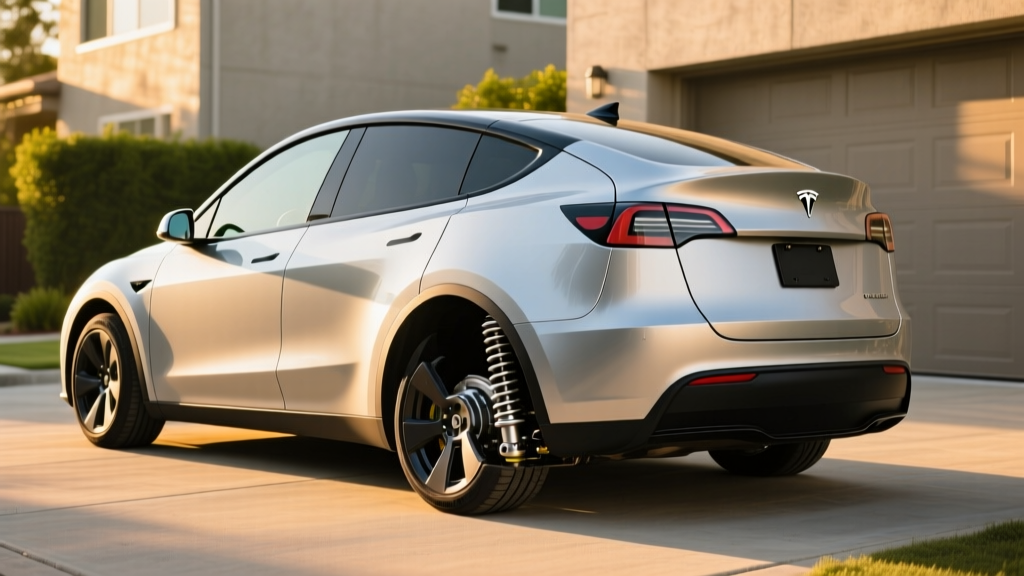
The Tesla Model Y remains the best-selling EV in the United States, but for years owners have flagged a recurring complaint: a firm, sometimes crashy ride that transmits too much road imperfection into the cabin. Early 2020–2022 builds drew the most criticism, with forums and NHTSA complaint logs citing harsh impacts over potholes, clunking from the front strut assembly, and premature wear on suspension bushings. Tesla's 2024 "Juniper" refresh introduced revised damper tuning and updated bushings, and the 2026 Model Y carries those improvements forward with additional acoustic insulation and a slightly softer low-speed compression curve.
Is it enough? The 2026 Model Y rides noticeably better than its predecessors, but it still leans sporty-firm compared to the Hyundai Ioniq 5 or Ford Mustang Mach-E. Buyers prioritizing plush ride isolation should test-drive carefully; those who value handling precision and Tesla's Supercharger network advantage will find the compromise acceptable.
2026 Tesla Model Y Core Specs
| Attribute | Long Range AWD | Performance AWD | Standard Range RWD |
|---|---|---|---|
| EPA Range | 320 mi | 290 mi | 295 mi |
| Battery (usable) | 75 kWh (est.) NMC | 75 kWh (est.) NMC | 60 kWh LFP |
| Drivetrain | Dual-Motor AWD | Dual-Motor AWD | Rear-Wheel Drive |
| Horsepower | 384 hp | 510 hp | 295 hp |
| 0–60 mph | 4.8 sec | 3.5 sec | 6.6 sec |
| Max DC Fast Charge | 250 kW | 250 kW | 170 kW |
| 10–80% DC Time | ~25 min | ~25 min | ~28 min |
| Level 2 Rate | 11.5 kW (~37 mi/hr) | 11.5 kW (~37 mi/hr) | 11.5 kW (~37 mi/hr) |
| MPGe (combined) | 122 MPGe | 111 MPGe | 127 MPGe |
| Efficiency | 27 kWh/100 mi | 30 kWh/100 mi | 26 kWh/100 mi |
| Base MSRP | $48,990 | $54,990 | $44,990 |
Source: fueleconomy.gov, Tesla spec sheets. Specs reflect 2026 model year; confirm with dealer.
Tesla Model Y Suspension Issues: A Detailed History
The phrase Tesla suspension issues has followed the Model Y since its 2020 launch. The core complaints cluster into three categories:
- Harsh ride quality (2020–2022): Early Model Ys used a stiffer damper tune than the Model 3 sedan, likely to manage the crossover's higher center of gravity and weight (~4,400 lbs). Owners reported jarring impacts over expansion joints and broken pavement, with rear passengers particularly affected.
- Front strut clunking: A subset of 2021–2022 owners logged NHTSA complaints describing metallic clunks from the front suspension under braking or low-speed turning. Tesla issued service bulletins addressing upper strut mount and bearing assemblies on affected vehicles.
- Control arm and bushing wear: Some high-mileage owners (60,000+ miles) reported accelerated wear on front lower control arm bushings, producing wandering or imprecise steering feel.
For the 2026 model year, Tesla has not issued a formal recall specifically for suspension components on the Juniper-generation Model Y. However, prospective buyers of used 2020–2023 examples should inspect strut mounts, check for service campaign completion via the Tesla app, and budget $800–$1,500 for potential bushing or strut-mount replacement if symptoms are present. The current NHTSA recall database can be searched by VIN for open items.
Real-World Range vs. EPA Sticker
EPA estimate: 320 miles (Long Range AWD)
Expect in practice: 260–285 miles on highway road trips at 70–75 mph; 290–310 miles in mixed suburban driving. In freezing temperatures (below 30°F), plan for 20–30% range reduction (roughly 225–255 miles) due to cabin heating demands and battery chemistry limitations, even with the heat pump equipped on 2026 models.
Why the gap? The EPA test cycle includes low-speed city driving where regenerative braking recovers energy. Sustained highway speeds and cold weather reduce efficiency significantly — a reality for all EVs, not just Tesla.
Charging: Speeds, Connectors, and the NACS Advantage
The 2026 Model Y uses the NACS (North American Charging Standard) connector natively — no adapter needed at Tesla Superchargers. With other networks (Electrify America, EVgo) now deploying NACS stalls alongside CCS, Tesla's connector advantage is narrowing, but the Supercharger network's reliability remains a key differentiator.
| Charging Level | Power | Speed (miles added/hr) | Typical Use Case |
|---|---|---|---|
| Level 1 (120V) | ~1.4 kW | ~4–5 mi/hr | Emergency / overnight trickle |
| Level 2 (240V, 48A) | 11.5 kW | ~37 mi/hr | Home daily charging |
| DC Fast (V3 Supercharger) | Peak 250 kW | ~180 mi in 15 min | Road trips |
Charging-curve reality check: The Long Range and Performance trims peak at 250 kW only between roughly 10–30% state of charge. The rate tapers progressively — expect ~100 kW by 60% SoC and ~50 kW above 80%. That 10–80% time of ~25 minutes assumes battery preconditioning is active (the car navigates to a Supercharger or you manually enable preconditioning via the app). Arriving at a charger cold can add 10–15 minutes to the session.
Pricing, Tax Credits, and Total Cost
| Trim | Base MSRP | Federal Credit (§30D) | Effective Price* |
|---|---|---|---|
| Standard Range RWD | $44,990 | Up to $7,500 | ~$37,490 |
| Long Range AWD | $48,990 | Up to $7,500 | ~$41,490 |
| Performance AWD | $54,990 | Up to $7,500 | ~$47,490 |
*Effective price assumes full $7,500 credit eligibility. As of 2026, the IRS §30D credit requires:
- MSRP cap: SUVs/crossovers must be ≤$80,000 (all Model Y trims qualify)
- Buyer income cap: AGI ≤$150,000 (single), ≤$225,000 (head of household), ≤$300,000 (joint)
- Battery sourcing: Critical minerals and battery components must meet phased-in domestic/free-trade sourcing percentages — confirm current-year compliance on Tesla's website and IRS guidance
- Point-of-sale transfer: Eligible buyers can apply the credit as an immediate price reduction at purchase rather than waiting for tax filing
Always verify eligibility with a tax professional and the latest IRS guidance before purchasing. State and local incentives (California CVRP, Colorado tax credit, etc.) may stack on top — check your jurisdiction's official energy office.
Interior, Cargo, and Daily Practicality
The Juniper-generation Model Y interior is cleaner and quieter than pre-2024 builds, with ventilated front seats, a rear touchscreen for passengers, and improved acoustic glass. Cargo space remains a strong point:
- Cargo (rear seats up): 30.2 cu ft
- Cargo (rear seats folded): 72.1 cu ft
- Front trunk (frunk): 4.1 cu ft
- Rear legroom: 41.6 inches
- Front headroom: 41.0 inches
The 2026 Model Y's minimalist interior means nearly all controls — climate, mirrors, glovebox — live on the central 15.4-inch touchscreen. Some buyers love the simplicity; others find it distracting while driving. There are no physical stalks for turn signals or wipers (steering-wheel buttons and auto-wipers handle these), which remains a polarizing design choice.
Driver Assistance: Autopilot and FSD Supervised
SAE Automation Level: Level 2. Tesla Autopilot and Full Self-Driving (Supervised) are driver-assistance systems. The driver must remain fully engaged, hands on the wheel (or torque-applied), and eyes on the road at all times. These systems do NOT make the Model Y a self-driving vehicle. Only Level 4 robotaxi services (Waymo, Zoox) operate without a human driver in defined areas.
Tesla's Autopilot (standard) handles adaptive cruise control and lane centering competently on highways. FSD Supervised ($8,000 one-time or $99/month as of 2026) adds city-street navigation, stop-sign/light recognition, and automated parking. FSD's real-world performance varies significantly by geography and road conditions — it excels on well-marked suburban arterials but can struggle with construction zones, faded lane lines, and unprotected left turns. Budget for the learning curve and always supervise.
Pros, Cons, and Who Should Buy
Pros
- Class-leading Supercharger network access (17,000+ stalls in North America)
- Strong efficiency — 26–30 kWh/100 mi depending on trim
- Spacious cargo area (72 cu ft max) with practical frunk
- Over-the-air updates continually add features
- Strong resale value relative to EV segment average
Cons
- Ride remains firm over broken pavement (improved but not class-best)
- No physical controls for climate, signals, or wipers
- FSD Supervised is expensive and still requires full driver attention
- Service center wait times can stretch weeks in some metro areas
- Insurance premiums often 15–30% higher than comparable non-Tesla EVs
Who the 2026 Model Y Suits Best
Commuters and road trippers who value fast DC charging and Supercharger reliability will find the Model Y hard to beat. Families appreciate the cargo volume and rear-seat space, though the firm ride may bother rear passengers on rough roads. Towing is limited to 3,500 lbs — adequate for a small trailer but not a camper. Buyers who prioritize ride comfort above all should cross-shop the Hyundai Ioniq 5 or Kia EV6, which offer softer suspension tuning at the cost of slower public charging (on non-NACS networks).
Warranty and Long-Term Ownership
- Basic vehicle: 4 years / 50,000 miles
- Battery & drive unit: 8 years / 120,000 miles (Long Range/Performance); 8 years / 100,000 miles (Standard Range)
- Battery capacity retention: Tesla warrants minimum 70% capacity retention over the warranty period
Tesla's powertrain warranty is competitive with the segment. Real-world degradation data from fleet operators suggests NMC packs in the Long Range lose roughly 8–12% capacity over 100,000 miles, while the LFP pack in the Standard Range trim typically shows slower degradation (5–8%) and tolerates routine 100% charging without harm — a practical advantage for daily drivers who want full range available every morning.
Frequently Asked Questions
What is the real-world range of the 2026 Tesla Model Y?
The EPA rates the Long Range AWD at 320 miles. In real-world highway driving at 70–75 mph, expect 260–285 miles. In cold weather (below 30°F), plan for 225–255 miles. The Standard Range RWD (EPA 295 mi) delivers roughly 240–265 miles highway.
How fast does the Model Y charge at home and on the road?
At home on a 240V Level 2 charger (48A), the Model Y adds about 37 miles of range per hour (11.5 kW), fully replenishing overnight. On a V3 Supercharger, it peaks at 250 kW and charges 10–80% in approximately 25 minutes with preconditioning active.
How much does the 2026 Model Y cost after tax credits?
With the full $7,500 federal §30D credit applied at point of sale, the Standard Range RWD starts around $37,490, the Long Range AWD around $41,490, and the Performance around $47,490. Eligibility depends on buyer income, battery sourcing compliance, and MSRP caps — verify with a tax professional and IRS guidance.
Is the Model Y worth buying vs. the Hyundai Ioniq 5 or Ford Mustang Mach-E?
The Model Y wins on charging infrastructure (Superchargers), efficiency, and cargo space. The Ioniq 5 offers a more comfortable ride and an 800V architecture for faster peak charging on CCS networks. The Mach-E provides more engaging steering feel. If Supercharger access matters for your road trips, the Model Y remains the pragmatic choice.
Are Tesla Model Y suspension issues fixed for 2026?
Significantly improved but not eliminated. The Juniper-generation dampers and bushings deliver a more compliant ride than 2020–2022 models, but the Model Y still transmits more road texture than comfort-oriented competitors. The front strut clunking complaints from early builds have largely been addressed through revised components.
Does the 2026 Model Y qualify for the federal EV tax credit?
All Model Y trims fall under the $80,000 SUV MSRP cap. Eligibility for the full $7,500 depends on your income (AGI limits apply), battery critical-mineral and component sourcing compliance for the current tax year, and purchasing new from a licensed dealer. Check the latest IRS rules before committing.