Quick Verdict: The EQS 450+ Is an Efficiency King Wearing a Tuxedo
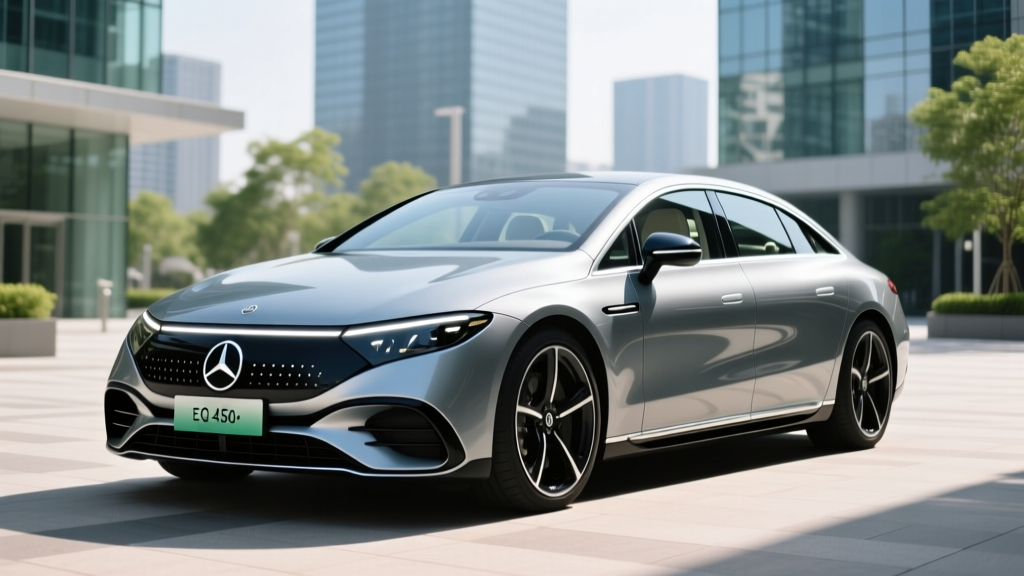
The Mercedes-Benz EQS 450+ remains the long-range, rear-wheel-drive variant of the brand's flagship electric sedan, and for 2026 it continues to prioritize silent, efficient cruising over brute-force acceleration. With an EPA-estimated 390 miles of range, a 118 kWh usable battery pack, and one of the most aerodynamically slippery production car bodies ever built (Cd 0.20), the EQS 450+ is engineered for drivers who measure road trips in single-charge segments and value cabin serenity above 0-60 bragging rights.
But luxury EV buyers in this price bracket face real trade-offs. The EQS 450+ starts above the federal tax credit MSRP cap, its fast-charging speed trails newer 800-volt rivals, and its liftback cargo area, while generous for a sedan, can't match an SUV's utility. This review breaks down the exact numbers — range, charging curves, ownership costs, and credit eligibility — so you can decide whether the EQS 450+ earns a spot in your garage.
Range and Efficiency: 390 Miles EPA, but What Happens on the Highway?
| Metric | Value |
|---|---|
| EPA Estimated Range | 390 miles |
| Battery Usable Capacity | 118 kWh (NMC lithium-ion) |
| EPA Efficiency (Combined) | 97 MPGe / 35 kWh/100 mi |
| Drivetrain | Rear-Wheel Drive (single motor) |
| Drag Coefficient (Cd) | 0.20 |
The EPA's 390-mile figure is measured on a blended cycle that favors city and moderate-speed driving — conditions where the EQS 450+ excels thanks to aggressive regenerative braking and that ultra-low drag coefficient. On sustained 75 mph highway runs, expect approximately 320–345 miles before needing to plug in. In cold weather (below 32°F), lithium-ion chemistry and cabin heating demands can reduce range by 20–30%, bringing realistic winter highway range down to roughly 260–290 miles. The standard heat pump helps mitigate this, but physics is physics. For most daily commutes and suburban driving, the 390-mile sticker is very much achievable.
The 118 kWh usable battery pack uses NMC (nickel-manganese-cobalt) chemistry, chosen here for its higher energy density versus LFP — critical for packaging this much capacity beneath the sedan's floor without compromising interior space. The EQS 450+'s efficiency of roughly 35 kWh per 100 miles is exceptional for a vehicle weighing over 5,600 pounds, and it's a direct result of Mercedes' obsessive aero work and the single-motor RWD powertrain's lower parasitic losses compared to dual-motor setups.
Charging Speed: 200 kW Peak DC, but the Curve Tells the Full Story
| Charging Level | Power / Rate | Time or Miles Added |
|---|---|---|
| DC Fast Charge (Peak) | 200 kW (CCS1) | 10–80% in ~31 minutes |
| DC Fast Charge (Sustained Avg.) | ~140–160 kW avg. | ~180 miles in 15 min (at peak) |
| Level 2 Home (240V / 48A) | 11.5 kW | ~33 miles per hour of charging |
| Level 2 Full Charge (10–100%) | — | ~11.5 hours |
| Level 1 (120V / 12A) | ~1.4 kW | ~4 miles per hour |
The EQS 450+ peaks at 200 kW on a DC fast charger using its CCS1 connector. That's competitive for a 400-volt architecture vehicle, but it trails 800-volt rivals like the Hyundai Ioniq 6 (peak 350 kW) and the Porsche Taycan (peak 270 kW). The distinction matters on road trips: while Mercedes quotes a 10–80% time of roughly 31 minutes, real-world charging sessions depend heavily on the charge curve.
Here's what the curve actually looks like: the EQS 450+ sustains close to its 200 kW peak between roughly 10% and 40% state of charge. From 40% to 60%, it tapers to approximately 150–160 kW. Above 80%, the rate drops sharply to protect battery longevity — often below 50 kW. This is normal for NMC chemistry at high SoC, but it means topping off from 80% to 100% at a fast charger is painfully slow and rarely worth the wait. Plan your road-trip stops around 10–80% windows for the best time efficiency.
At home on a Level 2 wallbox (240V, 48 amps), the onboard 11.5 kW charger replenishes about 33 miles of range per hour. A full overnight session easily restores a complete battery. Mercedes includes battery preconditioning when you navigate to a charger — the thermal management system warms or cools the pack to the optimal temperature before you arrive, which is essential for achieving peak charge rates, especially in cold weather.
Performance and Driving Dynamics
| Metric | Value |
|---|---|
| Powertrain | Single permanent-magnet motor, RWD |
| Horsepower | 355 hp |
| Torque | 419 lb-ft |
| 0–60 mph | 5.9 seconds |
| Top Speed (Electronically Limited) | 130 mph |
| Curb Weight | ~5,600 lbs |
A 5.9-second 0–60 time is brisk by any rational measure, but in a segment where the Tesla Model S Plaid hits 60 in under 2 seconds and even the dual-motor EQS 450 4MATIC does it in 5.3 seconds, the 450+ is clearly the efficiency-first variant. The single rear motor delivers smooth, linear thrust that's ideal for highway merging and passing. The rear-axle air suspension and standard rear-wheel steering (up to 10 degrees) give this large sedan a surprisingly tight turning circle and composed handling for its size.
The regenerative braking system offers multiple levels, selectable via steering-wheel paddles: from coasting (no regen) to strong one-pedal-style deceleration. However, unlike some competitors, the EQS 450+ does not come to a complete stop in its strongest regen mode — you'll still need the brake pedal for final stops. It's a deliberate engineering choice that prioritizes a traditional luxury-car feel.
Interior, Tech, and Cargo: The Hyperscreen Experience
The cabin is where the EQS 450+ makes its strongest case. The available MBUX Hyperscreen spans the entire dashboard width — a 56-inch curved glass surface housing three displays (12.3-inch driver cluster, 17.7-inch central OLED, and 12.3-inch front passenger screen). The infotainment runs Mercedes' latest MBUX generation with zero-layer navigation, augmented-reality head-up display, and natural-language voice control. Wireless Apple CarPlay and Android Auto are standard.
Passenger space is generous for a full-size luxury sedan:
- Front legroom: 41.7 inches
- Rear legroom: 42.1 inches
- Front headroom: 40.4 inches
- Rear headroom: 38.1 inches (sloping roofline trades some space for aero)
Cargo capacity measures 22 cubic feet via the liftback trunk — significantly more than a traditional sedan's trunk opening allows, though less than a mid-size SUV. The rear seats fold 40/20/40 for longer items. There is no frunk (front trunk); the space under the hood houses HVAC and power electronics.
Driver-assistance technology includes Mercedes' Drive Pilot system, which is a SAE Level 3 conditional automation feature approved for use in heavy traffic at speeds up to 40 mph on limited-access highways in approved U.S. states (currently Nevada and California). This is distinct from Level 2 systems like Tesla Autopilot or GM Super Cruise — Drive Pilot allows the driver to legally disengage from the driving task under specific conditions, though the car will prompt re-engagement when those conditions change. Outside of Level 3 conditions, the standard Driver Assistance Package (Level 2) includes adaptive cruise, lane-keeping, and automatic lane changes.
Mercedes Drive Pilot is SAE Level 3 — conditional automation under very specific conditions (mapped highways, under 40 mph, good weather, traffic congestion). It is NOT a full self-driving system. The standard Driver Assistance Package is SAE Level 2 and requires continuous driver attention and hands-on-wheel supervision at all times.
Pricing, Trims, and Federal Tax Credit Eligibility
| Trim / Configuration | Base MSRP | Est. As-Tested |
|---|---|---|
| EQS 450+ Sedan (Premium) | $105,550 | $108,000–$112,000 |
| EQS 450+ Sedan (Exclusive) | $108,100 | $115,000–$122,000 |
| EQS 450+ Sedan (Pinnacle) | $112,050 | $120,000–$130,000 |
All prices include the $1,150 destination charge. Popular options that push as-tested prices higher include the MBUX Hyperscreen ($8,500 standalone or bundled in higher trims), AMG Line exterior package, rear-seat entertainment, and Executive Rear Seat Plus package with heated/cooled reclining rear seats.
Federal EV Tax Credit: Does the EQS 450+ Qualify?
This is where EQS 450+ buyers need to pay close attention. Under current IRS §30D rules for 2026, the federal EV tax credit has strict eligibility requirements that effectively disqualify most EQS 450+ configurations:
- MSRP Cap for Sedans: $55,000 — The EQS 450+ starts at $105,550, far exceeding this limit.
- Buyer Income Cap: AGI must not exceed $150,000 (single), $225,000 (head of household), or $300,000 (joint filers).
- Battery Sourcing Requirements: Critical minerals and battery components must meet escalating domestic/free-trade-partner sourcing thresholds.
- Point-of-Sale Transfer: Qualifying buyers can transfer the credit to the dealer for an upfront price reduction — but only if the vehicle itself qualifies.
Bottom line: The EQS 450+ does not qualify for the $7,500 federal EV tax credit due to its MSRP exceeding the $55,000 sedan cap. Buyers should investigate state-level incentives (California's CVRP, for example, has its own income and MSRP caps) and consult a tax professional regarding any applicable state credits. See the IRS clean vehicle credit page for current rules.
Ownership Costs, Warranty, and Long-Term Battery Outlook
| Coverage | Term |
|---|---|
| New Vehicle Limited Warranty | 4 years / 50,000 miles |
| High-Voltage Battery Warranty | 8 years / 100,000 miles (70% capacity retention) |
| Powertrain Warranty | 4 years / 50,000 miles |
| Roadside Assistance | 4 years / 50,000 miles |
| Corrosion Perforation | 4 years / 50,000 miles |
Mercedes guarantees the high-voltage battery will retain at least 70% of its original capacity over 8 years or 100,000 miles — the industry-standard threshold. For NMC chemistry in a luxury application with active thermal management, real-world degradation data from earlier EQS model years suggests most packs retain 90%+ capacity after 50,000 miles when properly maintained (avoiding frequent 100% charges, leveraging preconditioning, and minimizing repeated DC fast charging to 100%).
Insurance premiums for the EQS 450+ run higher than average for the segment — expect $2,800–$3,600 annually depending on your state, driving record, and coverage level. Luxury EV repair costs, particularly for the Hyperscreen and sensor-laden body panels, drive these rates. Get quotes before purchasing.
For home charging, budget approximately $0.13–$0.16 per kWh nationally (varies widely by utility and state). At 35 kWh/100 miles, that translates to roughly $4.55–$5.60 per 100 miles on home electricity — about one-third the per-mile fuel cost of a comparable gasoline luxury sedan achieving 25 MPG combined at $3.80/gallon. Over 15,000 annual miles, home-charging savings versus premium gasoline can reach $1,500–$2,000 per year, partially offsetting the higher purchase price.
EQS 450+ vs. Key Competitors
| Specification | Mercedes EQS 450+ | Tesla Model S LR | BMW i7 eDrive50 | Lucid Air Pure |
|---|---|---|---|---|
| EPA Range | 390 mi | 402 mi | 318 mi | 419 mi |
| Battery (kWh usable) | 118 (NMC) | ~100 (NMC) | 101.7 (NMC) | 88 (NMC) |
| Peak DC Charge (kW) | 200 | 250 | 195 | 200+ |
| 0–60 mph | 5.9 sec | 3.1 sec | 5.5 sec | 5.2 sec |
| Drivetrain | RWD | AWD | RWD | RWD |
| Cargo (cu ft) | 22 | 28 (liftback+frunk) | 17.7 | 32 (liftback+frunk) |
| Base MSRP | $105,550 | $79,990 | $106,695 | $71,090 |
| Federal Tax Credit | No (MSRP cap) | No (MSRP cap) | No (MSRP cap) | No (MSRP cap) |
Who Should Buy the EQS 450+ — and Who Shouldn't
- You prioritize cabin silence, ride comfort, and luxury materials over acceleration times.
- Your daily commute and regular drives are under 300 miles, and you want one-charge road-trip capability with a buffer.
- You value Mercedes' dealer/service network and want SAE Level 3 Drive Pilot for congestion-heavy commutes on approved highways.
- You charge primarily at home and view DC fast charging as an occasional road-trip necessity, not a daily habit.
- You want the fastest possible acceleration (Tesla Model S, Lucid Air Sapphire).
- DC fast-charging speed is your top priority — the 800V Hyundai Ioniq 6 or Porsche Taycan charge significantly faster.
- You need SUV-level cargo space or tow capacity (consider the EQS SUV or Rivian R1S).
- Federal tax credit eligibility is a dealbreaker — no luxury sedan over $55,000 qualifies.
Pros and Cons
- Class-leading 390-mile EPA range with outstanding 35 kWh/100 mi efficiency
- Extremely quiet, well-isolated cabin with premium materials
- MBUX Hyperscreen is visually stunning and functionally impressive
- SAE Level 3 Drive Pilot (in approved areas) is a genuine differentiator
- 10-degree rear-axle steering gives limo-like maneuverability in parking
- Strong 22 cu ft liftback cargo area for a sedan
- 200 kW peak DC charging trails 800V competitors; 10–80% takes ~31 minutes
- No frunk — cargo space is rear-only
- Base price of $105,550 far exceeds $55K federal tax credit MSRP cap
- 5.9-second 0–60 feels leisurely next to dual-motor rivals in this price range
- Hyperscreen and advanced packages push as-tested prices well past $120K
- Rear headroom compromised by aerodynamic roofline
- Insurance costs run high due to sensor-dense body and Hyperscreen repair cost
Frequently Asked Questions
What is the real-world range of the Mercedes-Benz EQS 450+?
The EPA estimates 390 miles on a combined cycle. In real-world highway driving at 70–75 mph, expect roughly 320–345 miles. In cold weather (below freezing), range can drop to 260–290 miles on the highway due to battery chemistry limitations and cabin heating demands. City and suburban driving with regenerative braking closely matches the EPA sticker.
How fast does the EQS 450+ charge at home and on DC fast chargers?
On a DC fast charger, it peaks at 200 kW and charges from 10–80% in approximately 31 minutes, though the sustained average is closer to 140–160 kW due to the charge curve taper. At home on a Level 2 wallbox (240V, 48A, 11.5 kW), it adds about 33 miles of range per hour, with a full 10–100% charge taking roughly 11.5 hours. Level 1 (120V) trickle charging adds about 4 miles per hour — useful for overnight top-ups only.
How much does the EQS 450+ cost after incentives?
The base EQS 450+ Premium starts at $105,550 including destination. Because this exceeds the $55,000 MSRP cap for sedans under the IRS §30D federal tax credit program, the EQS 450+ does not qualify for the $7,500 federal credit regardless of buyer income. State incentives vary — check your state's EV rebate program. Total as-tested pricing with popular options typically falls between $112,000 and $130,000.
Does the EQS 450+ qualify for the federal EV tax credit?
No. The IRS §30D clean vehicle credit caps sedan eligibility at $55,000 MSRP. The EQS 450+ starts at $105,550, making it ineligible. This applies to all current EQS sedan trims. See IRS.gov for the full eligibility rules including income caps and battery sourcing requirements.
Is the EQS 450+ worth buying versus the Tesla Model S or Lucid Air?
It depends on your priorities. The EQS 450+ wins on cabin luxury, noise isolation, and SAE Level 3 Drive Pilot capability. The Tesla Model S offers dramatically faster acceleration, AWD, and Supercharger network access at a lower price. The Lucid Air Pure delivers more range (419 mi EPA) and more cargo space at $71,090. If interior ambiance and Mercedes brand prestige matter most, the EQS 450+ is compelling. If value, speed, or charging infrastructure are paramount, the alternatives are stronger.
What is the battery warranty, and how long will the pack last?
Mercedes covers the high-voltage battery for 8 years or 100,000 miles, guaranteeing at least 70% capacity retention over that period. The 118 kWh NMC pack benefits from active liquid thermal management and battery preconditioning. Based on early EQS fleet data, most owners can expect 90%+ capacity retention at 50,000 miles with normal charging habits. Full pack replacement out of warranty is estimated at $25,000–$35,000 based on current parts pricing, though this is expected to decline as battery costs continue falling.
What SAE automation level is Mercedes Drive Pilot?
Drive Pilot is SAE Level 3 — conditional automation. Under specific conditions (mapped divided highways, speeds under 40 mph, good weather, traffic congestion), the driver can legally disengage from active driving and the vehicle assumes responsibility. This is fundamentally different from Level 2 systems like Tesla Autopilot or GM Super Cruise, which require continuous driver supervision. Drive Pilot is currently approved in Nevada and California. Outside approved conditions, the EQS uses a Level 2 driver-assistance suite.