Quick Answer: What Is the Electric Highlander?
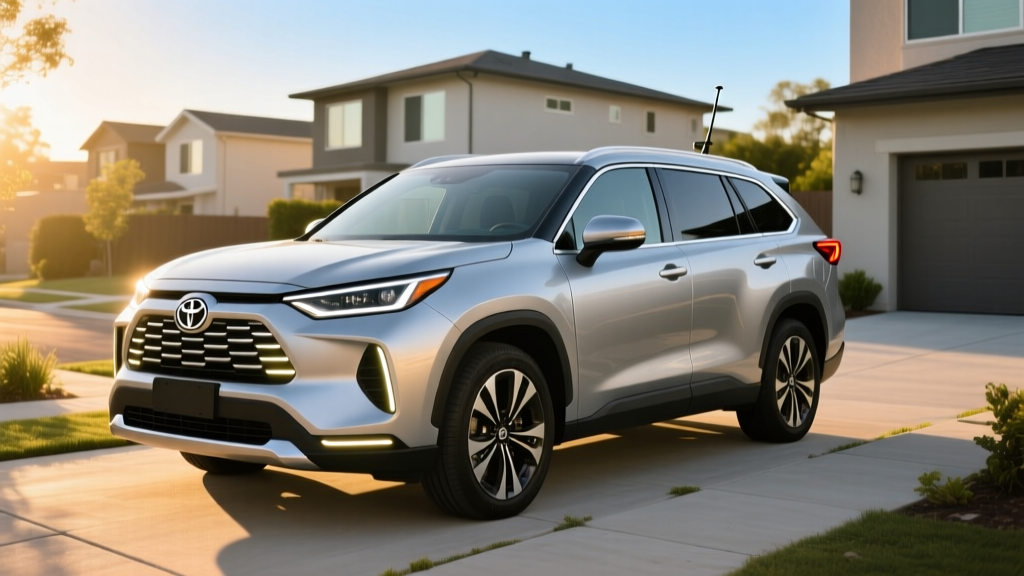
As of early 2026, Toyota has not yet released a fully electric Highlander to the U.S. market. The current Highlander lineup consists of a conventional gas V6 model and the Highlander Hybrid (HEV), which pairs a 2.5-liter 4-cylinder with electric motors for an EPA-estimated 35 MPG combined. Toyota has confirmed it is developing a 3-row electric SUV for North America, widely expected to wear the Highlander nameplate or a close variant, with a projected launch in the 2026–2027 model-year window. Until it officially goes on sale, buyers seeking a 3-row electrified Toyota SUV can choose the Highlander Hybrid, or look to competitors like the Kia EV9, Hyundai Ioniq 9, or Volkswagen ID. Buzz for a battery-electric option.
Current Highlander Hybrid vs. a Future Electric Highlander: What Buyers Need to Know
The Toyota Highlander has been a benchmark 3-row family SUV for over two decades. As Toyota accelerates its EV rollout under its "BEV Factory" initiative, an all-electric Highlander variant is one of the most anticipated models in the pipeline. But until Toyota publishes official specs and opens order books, any range, price, or charging figures remain preliminary estimates based on industry analysis and Toyota's stated platform targets.
Here's what we know for certain and what remains projected:
| Specification | Highlander Hybrid (Confirmed) | Electric Highlander (Projected/Unconfirmed) |
|---|---|---|
| Powertrain | 2.5L 4-cyl + 2 electric motors (HEV) | Dual-motor BEV (est.) |
| EPA Range / MPG | 35 MPG combined (~490 mi total range) | ~280–320 mi EPA (est.) |
| Battery Capacity | 1.6 kWh (NiMH, self-charging) | ~85–100 kWh usable (est., NMC) |
| Seating | 7 or 8 passengers | 6 or 7 passengers (est.) |
| 0–60 mph | ~7.9 seconds | ~5.5–6.5 seconds (est.) |
| Starting MSRP | $40,970 (LE trim) | $50,000–$58,000 (est.) |
| Federal Tax Credit (§30D) | Not eligible (HEV) | Up to $7,500 if sourcing/income rules met |
| Availability | On sale now | Announced/expected 2026–2027 |
How Would an Electric Highlander Compare to the Gas and Hybrid Versions?
The most common question from Highlander shoppers is whether to go gas, hybrid, or wait for electric. The answer depends heavily on your driving patterns, charging access, and budget. Let's break down the real numbers.
Annual Fuel vs. Electricity Cost
Using the current Highlander Hybrid's 35 MPG combined and a projected electric Highlander efficiency of roughly 2.8 kWh/mile (based on comparable 3-row EVs like the Kia EV9), here's how annual energy costs compare at 15,000 miles/year:
| Model | Energy Source | Rate | Annual Cost |
|---|---|---|---|
| Highlander Gas (V6 AWD) | Gasoline | $3.50/gal, 24 MPG | $2,188 |
| Highlander Hybrid (AWD-i) | Gasoline | $3.50/gal, 35 MPG | $1,500 |
| Electric Highlander (est.) | Home electricity | $0.14/kWh, 2.8 kWh/mi | $588 |
| Electric Highlander (est.) | Public DC fast charging | $0.40/kWh avg | $1,680 |
The electric variant saves roughly $900–$1,600/year in energy costs if you charge primarily at home. However, if you rely entirely on public DC fast charging, the savings shrink dramatically — and in some regions with high utility rates or expensive networks like Electrify America's peak pricing, you might spend nearly as much as the hybrid.
5-Year Total Cost of Ownership Projection
Projecting a 5-year/75,000-mile ownership cycle with home charging access:
| Cost Category | Highlander Hybrid | Electric Highlander (Est.) |
|---|---|---|
| Purchase Price (MSRP) | $40,970 | $54,000 (est.) |
| Federal Tax Credit | $0 | Up to $7,500* |
| Energy (5 years, home charging) | $7,500 | $2,940 |
| Maintenance (5 years) | $2,800 | $1,200 (est.) |
| Insurance (5 years) | $7,500 | $8,500 (est., EVs ~10-15% higher) |
| Estimated Depreciation | $16,000 | $20,000 (est.) |
| Total 5-Year Cost | $74,770 | $69,140 (est.) |
* §30D credit eligibility depends on MSRP caps ($80,000 for SUVs), buyer income limits ($300K joint / $150K single), and battery component/critical mineral sourcing rules per IRS guidelines. Consult a tax professional.
The electric Highlander could break even with the hybrid in roughly 4–5 years for a home-charging owner, primarily driven by energy and maintenance savings offsetting the higher purchase price and insurance premiums.
Charging Realities: What an Electric Highlander Owner Would Face
Based on the charging architecture of comparable 3-row EVs (Kia EV9 at 210 kW peak, VW ID. Buzz at 170 kW), a future electric Highlander would likely feature:
| Charging Level | Power | Speed (Miles Added/Hour) | Use Case |
|---|---|---|---|
| Level 1 (120V household) | ~1.4 kW | ~4–5 mi/hr | Overnight trickle; emergency only |
| Level 2 (240V home charger) | 7.7–11.5 kW | ~25–38 mi/hr | Daily charging; full overnight refill |
| DC Fast Charging | ~180–230 kW peak | ~150+ mi in 15 min (10–80%) | Road trips; taper above 80% |
Home Charging Installation: The Real Cost
If you're planning for a future electric Highlander, budget for a Level 2 home charger installation. Most 3-row EVs benefit from a 48-amp hardwired charger on a 60-amp circuit:
| Item | Cost Range |
|---|---|
| Level 2 charger (48A, hardwired) | $400–$700 |
| Electrician labor (standard install) | $500–$1,500 |
| Electrical panel upgrade (if needed, 100A→200A) | $1,500–$3,500 |
| Permit & inspection | $100–$300 |
| Total (no panel upgrade) | $1,000–$2,500 |
| Total (with panel upgrade) | $2,500–$6,000 |
Home charging access is the single biggest variable in EV ownership satisfaction. If you live in an apartment, condo, or street-parking situation without reliable overnight charging, the electric Highlander's cost advantage erodes significantly. The hybrid remains the pragmatic choice in these scenarios.
Real-World Range Expectations
Projected EPA Range: ~280–320 miles (based on segment competitors)
Real-World Highway (70 mph, moderate temps): ~240–280 miles
Cold Weather (below 32°F, highway): ~200–240 miles (20–30% reduction typical for NMC batteries without aggressive heat pump preconditioning)
DC Fast Charging Caveat: Peak kW rates are sustained only between ~10–50% SoC; expect significant taper above 80%, adding 10–15 minutes to a "10–90%" charge vs. the marketed 10–80% time.
For a family SUV used primarily for school runs, errands, and weekend trips within a 100-mile radius, even the reduced real-world range is more than sufficient. Road trips exceeding 250 miles will require at least one DC fast charging stop — plan for 20–30 minutes per stop, and use apps like PlugShare or the Toyota app to verify charger availability along your route.
Common Misconceptions About a Future Electric Highlander
| Myth | Fact |
|---|---|
| "It'll get the full $7,500 tax credit automatically." | The §30D credit requires meeting MSRP caps ($80K for SUVs), buyer income limits, AND battery sourcing requirements that change annually. Some trims may qualify for partial ($3,750) or no credit depending on mineral/component sourcing. Check IRS.gov before purchasing. |
| "EV batteries need replacing every 5 years." | Modern NMC and LFP batteries are designed for 150,000–200,000+ miles with <10% degradation. Toyota's hybrid battery warranty is 10 years/150,000 miles; a BEV warranty will likely match or exceed this. Per fueleconomy.gov, most EV batteries outlast the vehicle's economic life. |
| "Charging takes too long for family road trips." | At 180–230 kW DC fast charging, a 10–80% session takes roughly 20–28 minutes — comparable to a rest stop with kids. The key is route planning to align charging with natural breaks. |
| "A 3-row EV can't tow." | The Kia EV9 tows up to 5,000 lbs. A future electric Highlander should match or approach this, though towing at capacity will reduce range by 30–50%. |
| "I can just use any public charger." | Toyota is expected to adopt the NACS (Tesla Supercharger) connector for its future EVs, following the industry-wide shift. CCS compatibility may require an adapter. Verify connector type before purchasing. |
What Should a First-Time EV Buyer Know Before Waiting for the Electric Highlander?
If you're currently shopping for a 3-row family SUV and considering waiting for Toyota's electric offering, here's the practical framework:
Decision Framework: Buy Now or Wait?
Buy the Highlander Hybrid NOW if:
- You lack reliable home charging access (apartment, condo, street parking)
- You regularly drive in extreme cold (below 10°F) where EV range loss exceeds 30%
- You frequently tow heavy loads (5,000+ lbs) over long distances
- Your budget is firm at $40,000–$48,000 and you can't absorb a $10K+ premium
- You need a vehicle within the next 3–6 months
- You drive more than 300 miles between stops regularly and don't want to plan around chargers
Wait for the Electric Highlander if:
- You have (or can install) Level 2 home charging — this is non-negotiable for cost savings
- Your daily driving is under 80 miles round-trip (the vast majority of families)
- You want the lowest per-mile energy cost and are willing to pay more upfront
- You qualify for the §30D tax credit (check income caps: $300K joint, $150K single)
- You value instant torque, quiet operation, and zero tailpipe emissions for school-zone and neighborhood driving
- You can wait 12–24 months for Toyota to finalize specs, pricing, and availability
Consider a Competitor EV NOW if:
- The Kia EV9 (EPA 304 mi, ~$54,900, up to $7,500 credit) meets your needs today
- The Hyundai Ioniq 9 (expected 2026, ~300+ mi) aligns with your timeline
- The VW ID. Buzz (EPA 234 mi, ~$59,995) appeals as a 3-row electric van alternative
The Toyota EV Strategy Context: Why the Electric Highlander Matters
Toyota has historically been cautious on full battery-electric vehicles, focusing on its hybrid dominance and hydrogen fuel cell research. However, the company's 2023–2025 strategic pivot committed $35 billion+ to BEV development, with a target of 3.5 million annual EV sales by 2030. The 3-row electric SUV segment is a critical battleground — it's where American families make their highest-stakes vehicle purchases.
Toyota's advantage will likely be its manufacturing scale, dealer network (over 1,200 U.S. locations), and brand trust built through decades of Highlander and Sienna hybrid reliability. The risk is pricing: competitors like Kia and Hyundai have already established 3-row EVs in the $55K–$65K range, and Chinese-market pressure on battery costs could force Toyota to deliver strong value at launch.
For the latest confirmed information, monitor Toyota's upcoming vehicles page and EPA listings at fueleconomy.gov as the launch date approaches.
Frequently Asked Questions
Is there an electric Toyota Highlander available to buy right now?
No. As of early 2026, the Toyota Highlander is available as a conventional gas V6 or a self-charging hybrid (HEV). Toyota has signaled a 3-row electric SUV is in development, but it has not been officially priced, specced, or released for sale. The current Highlander Hybrid starts at $40,970 and achieves 35 MPG combined.
Will the electric Highlander qualify for the $7,500 federal tax credit?
It depends. Under current IRS §30D rules, the vehicle must have an MSRP under $80,000 (SUV cap), the buyer must fall under income limits ($300,000 joint / $150,000 single / $225,000 head of household), and the battery must meet critical mineral and component sourcing thresholds that tighten annually. Toyota's battery supply chain decisions will determine whether the electric Highlander qualifies for the full $7,500, a partial $3,750, or no credit. Always verify on IRS.gov at time of purchase.
How does the Highlander Hybrid compare to an EV for a family that drives 12,000 miles per year?
At 12,000 miles/year and $3.50/gallon gas, the Highlander Hybrid costs roughly $1,200/year in fuel. A projected electric Highlander charging at home ($0.14/kWh) would cost approximately $470/year — saving about $730 annually. Over 5 years, that's $3,650 in energy savings, but you'd need to factor in a likely $10,000–$14,000 higher purchase price (partially offset by tax credits). The hybrid wins on upfront cost; the EV wins on per-mile cost if you can charge at home.
What's the biggest risk of waiting for the electric Highlander?
Two risks: (1) Timeline uncertainty — Toyota's EV launch schedules have shifted before, and the vehicle may not arrive until late 2027 or 2028. (2) Tax credit changes — §30D rules are set through 2032, but sourcing requirements tighten each year, meaning the credit could be harder to qualify for by the time the vehicle launches. If you need a 3-row SUV now, the Highlander Hybrid is a proven, efficient choice that doesn't require waiting or charging infrastructure.
Should I install a Level 2 home charger before the electric Highlander comes out?
If you own your home and have a garage or dedicated parking spot with electrical access, yes — installing a 240V/48A circuit now is smart preparation. A standard installation runs $1,000–$2,500 (more if your panel needs upgrading). Having the infrastructure ready means you can charge from day one and avoid the rush when the vehicle launches. Consult a licensed electrician to assess your panel capacity (a 200-amp panel is recommended for simultaneous EV charging and normal household loads).
Will the electric Highlander have 3 rows and seat 7 or 8 passengers?
Based on segment norms (Kia EV9 seats 6 or 7, VW ID. Buzz seats 7), expect the electric Highlander to offer 6- or 7-passenger seating with second-row captain's chairs or a bench. 8-passenger seating is less likely in an EV due to the floor-mounted battery pack raising the floor height slightly, which constrains interior packaging. Third-row space in 3-row EVs tends to be tighter than in gas equivalents — plan to test-fit car seats and cargo before committing.