BYD K9 Electric Transit Bus: The Heavy-Duty EV Workhorse
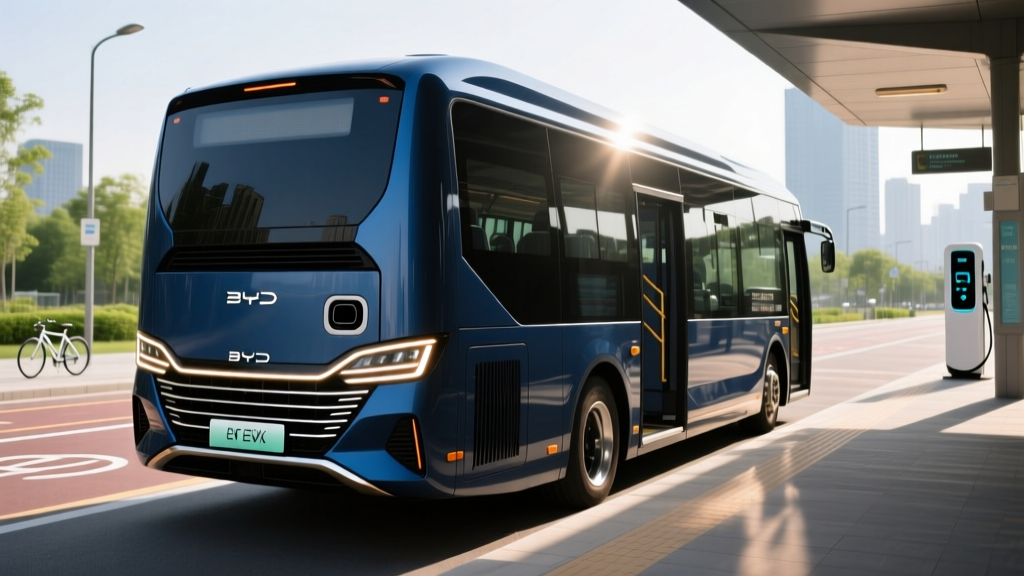
The BYD K9 is a 40-foot battery-electric transit bus that has become one of the most widely deployed electric buses globally, with thousands of units operating across Europe, Asia, Latin America, and in limited North American fleets. Unlike consumer EVs, the K9 is sold exclusively to transit agencies and private fleet operators — you won't find it at a dealership or qualify for a consumer federal tax credit. This review breaks down the real-world performance, charging logistics, and total cost of ownership that matter to procurement managers and fleet planners evaluating the K9 against competitors like the New Flyer Xcelsior CHARGE, Proterra ZX5, and Gillig Battery Electric.
BYD (Build Your Dreams) manufactures the K9 at multiple facilities worldwide, including a former Lancaster, California plant that served the U.S. market before geopolitical and Buy America compliance challenges limited domestic sales. As of 2026, the K9 remains a dominant platform internationally, and its specifications reflect BYD's vertically integrated approach — the company builds its own batteries, motors, and chassis in-house.
Battery, Range, and Efficiency: What the Numbers Actually Mean
| Spec | Value |
|---|---|
| Battery Capacity | 348 kWh (usable), Lithium Iron Phosphate (LFP) |
| EPA Estimated Range | ~155 miles (transit cycle) |
| Real-World Range | 120–140 mi (normal); 95–115 mi (cold weather) |
| Efficiency | ~2.2 kWh/mile (loaded transit cycle) |
| Electric Motor | Dual rear-axle hub motors, 2 × 150 kW (402 hp combined) |
| 0–30 mph | ~6.5 seconds (governed top speed 43 mph) |
| Drivetrain | Rear-wheel drive, dual hub motors |
| Passenger Capacity | Up to 82 (seated + standing, configuration dependent) |
| Length / Width / Height | 40 ft / 102 in / 132 in (approx.) |
| GVWR | ~43,000 lbs |
| Base Price (Fleet/Agency) | ~$750,000–$900,000 (varies by contract volume and spec) |
| Battery Warranty | 12 years / 500,000 miles (capacity retention ≥70%) |
The K9's 348 kWh LFP battery pack is one of the largest in any production electric vehicle. BYD's choice of lithium iron phosphate chemistry is deliberate: LFP offers superior cycle life (3,000–5,000+ full cycles before significant degradation), inherent thermal stability (no cobalt-related thermal runaway risk), and lower cost per kWh compared to NMC (nickel manganese cobalt). The trade-off is lower energy density — LFP cells are heavier and bulkier — but in a 40-foot bus with a high GVWR, the weight penalty is manageable.
For context on LFP versus NMC trade-offs in EV batteries, NREL's battery research documents LFP's cycle-life advantage in high-utilization fleet applications, where daily deep cycling is the norm.
Charging Infrastructure: Depot and Opportunity Charging
| Charging Level | Power (kW) | Time / Rate |
|---|---|---|
| DC Fast Charge (CCS1) | Up to 150 kW peak | 10–80% in ~90 minutes; 0–100% in ~4.5 hours |
| Depot AC Level 2 (J1772/CCS) | 19.2 kW (max) | ~18 hours for full charge (overnight depot) |
| Opportunity Charging (pantograph) | Up to 200 kW (SAE J3105) | 5–10 min top-up at layover points |
Transit agencies typically deploy the K9 with overnight depot charging at 19.2 kW per bus, requiring one dedicated charging stall per vehicle. At this rate, a fully depleted 348 kWh battery requires roughly 18 hours — which fits within standard overnight layover windows of 10–12 hours if the bus returns with 30–40% state of charge remaining.
For high-utilization routes exceeding the K9's single-charge range, agencies use opportunity charging via overhead pantograph systems (SAE J3105 standard) at route terminals or layover points. A 5–10 minute pantograph session at 200 kW can add 30–50 miles of range, enabling all-day operation without returning to the depot.
The DC fast-charge curve on the K9 is relatively flat compared to passenger EVs. LFP chemistry tolerates sustained high-rate charging better than NMC, so the K9 holds close to its 150 kW peak through 60–70% state of charge before tapering. This is a significant operational advantage — the 10–80% time of roughly 90 minutes is practical for mid-day top-ups during driver shift changes.
Performance and Drivetrain: Built for Stop-and-Go
The K9 uses dual 150 kW hub motors integrated into the rear axle, producing a combined 402 horsepower and massive low-end torque (approximately 3,500 lb-ft at the wheels). This configuration eliminates the need for a conventional transmission — there's no driveline loss through gears, and regenerative braking is highly effective because the hub motors directly decelerate the driven wheels.
Acceleration to 30 mph takes roughly 6.5 seconds, which is brisk for a 43,000-pound vehicle. Top speed is electronically governed to 43 mph (69 km/h) — appropriate for urban transit routes. The K9's low center of gravity (battery packs mounted in the roof and underfloor) gives it stable handling, though the 40-foot wheelbase and 43-foot turning radius require trained operators on tight urban streets.
Regenerative braking on the K9 is aggressive and configurable by fleet managers through BYD's fleet telematics platform. In maximum regen mode, the bus can achieve near one-pedal driving behavior at low speeds, recovering an estimated 20–30% of energy during typical stop-and-go transit cycles. This is a major efficiency advantage over diesel buses, which waste braking energy as heat.
Technology, Safety, and Fleet Management
The K9 comes equipped with BYD's proprietary fleet management telematics system, providing real-time data on battery state of charge, state of health (SoH), energy consumption per route, driver behavior, and maintenance alerts. Fleet managers access this via a web dashboard and can set geofences, speed limits, and charging schedules remotely.
Driver-assistance features include:
- Forward collision warning with automatic emergency braking
- Lane departure warning
- 360-degree surround-view camera system
- Electronic stability control (ESC)
- Tire pressure monitoring
- Pedestrian detection (market-dependent)
These are SAE Level 0–1 systems — warning and intervention aids, not autonomous driving. The driver remains fully responsible for vehicle operation at all times. The K9 does not offer Level 2 or higher driver-assist features like adaptive cruise control or lane-keeping assist, which are uncommon in heavy-duty transit applications.
The interior is configurable for up to 82 passengers (typical U.S. configuration: 39–45 seated, with ADA-compliant wheelchair positions and standing room). Low-floor design with kneeling capability provides accessible boarding. LED interior lighting, USB charging ports (optional), and HVAC with heat pump (optional in cold-climate specs) round out the passenger experience.
Pricing, Procurement, and Total Cost of Ownership
The BYD K9 is not sold through consumer channels — it is procured through fleet purchase agreements, typically via competitive bid processes or cooperative purchasing contracts (such as those available through state transit associations). Pricing varies significantly based on volume, customization, and delivery location:
| Item | Estimated Cost |
|---|---|
| Base Vehicle (single unit) | $850,000 – $900,000 |
| Volume Pricing (10+ units) | $750,000 – $800,000 per unit |
| Depot Charger (19.2 kW DC or AC) | $15,000 – $40,000 per stall (installed) |
| Pantograph Opportunity Charger | $150,000 – $300,000 per station |
| Annual Electricity (50,000 mi/yr) | $11,000 – $16,000 (at $0.10–$0.15/kWh) |
| Annual Diesel Equivalent (baseline) | $35,000 – $45,000 (at $4.00/gal, 4.5 mpg) |
| 12-Year Fuel Savings (est.) | $288,000 – $400,000+ |
The K9's higher upfront cost versus a diesel transit bus ($500,000–$600,000 typical) is offset by dramatically lower fuel and maintenance expenses over a 12-year service life. Electric buses eliminate engine oil, transmission fluid, diesel particulate filter, and exhaust aftertreatment maintenance. Brake wear is significantly reduced due to regenerative braking. Studies from the National Renewable Energy Laboratory (NREL) have documented 40–60% lower maintenance costs for battery-electric buses versus diesel equivalents.
Federal Funding and Incentives
The BYD K9 does not qualify for the consumer IRS §30D federal tax credit — that credit applies to light-duty vehicles under 14,000 lbs GVWR purchased for personal use. However, transit agencies can access substantial federal funding through:
- FTA Low-No Program: The Federal Transit Administration's Low or No Emission Vehicle Program provides competitive grants covering up to 80–85% of electric bus and charging infrastructure costs.
- EPA Clean School Bus Program: For school bus variants, up to $375,000 per vehicle plus $20,000 for infrastructure.
- State and utility incentives: Many states and electric utilities offer additional rebates or make-ready infrastructure funding for fleet electrification. Check the AFDC incentive database for jurisdiction-specific programs.
Important caveat for U.S. procurement: BYD is currently subject to restrictions under the National Defense Authorization Act (NDAA) that prohibit FTA funding for buses manufactured by companies owned or controlled by the Chinese government. This has effectively blocked BYD from new U.S. transit agency contracts using federal funds since 2020. Agencies considering the K9 should consult legal counsel regarding current eligibility for federal grant programs.
Who the BYD K9 Serves Best
- Urban transit agencies operating fixed routes under 130 miles per day
- University and corporate campus shuttle systems
- Airport circulator and rental-car shuttle routes
- Fleet operators in international markets without Buy America restrictions
- Agencies prioritizing LFP battery longevity and thermal safety
- Long intercity routes exceeding 150 miles without opportunity charging
- U.S. agencies dependent on FTA federal grant funding (NDAA restriction)
- Extreme cold-climate routes without depot heating infrastructure
BYD K9 vs. Key Competitors
| Spec | BYD K9 | New Flyer Xcelsior CHARGE NG | Proterra ZX5 |
|---|---|---|---|
| Battery | 348 kWh (LFP) | 350–525 kWh (NMC) | 440–660 kWh (NMC) |
| EPA Range | ~155 mi | ~190–260 mi | ~200–329 mi |
| DC Fast Charge | 150 kW | Up to 350 kW | Up to 250 kW |
| Battery Warranty | 12 yr / 500k mi | 10 yr / 500k mi | 10 yr / 500k mi |
| FTA Funding Eligible (U.S.) | No (NDAA restriction) | Yes | Yes |
| Est. Price | $750k–$900k | $1.0M–$1.3M | $1.1M–$1.4M |
The K9's primary advantage is cost — it undercuts North American competitors by $200,000–$500,000 per unit. Its LFP battery also offers a longer warranty and better cycle life for high-utilization fleets. However, the NDAA funding restriction and lower range (compared to extended-battery Proterra and New Flyer options) limit its competitiveness in the U.S. market. For international buyers without these restrictions, the K9 represents strong value per mile of range.
Pros, Cons, and Verdict
- Lowest per-unit cost in the 40-ft electric bus segment
- LFP battery: 12-year/500k-mile warranty, excellent cycle life, no cobalt
- Vertically integrated: BYD builds battery, motor, and chassis in-house
- Proven global track record: 50,000+ units deployed worldwide
- Regenerative braking recovers 20–30% of energy in stop-and-go service
- Pantograph opportunity charging for all-day route coverage
- Ineligible for FTA federal funding in the U.S. (NDAA restriction)
- 155-mile EPA range is lower than extended-battery competitors
- 150 kW DC fast charge is slower than New Flyer's 350 kW capability
- Cold-weather range drops 25–35% without optional heat pump
- Limited U.S. parts and service network compared to New Flyer/Gillig
- 4.5-hour full charge time requires careful depot scheduling
Frequently Asked Questions
What is the real-world range of the BYD K9?
The EPA estimates approximately 155 miles under a standard transit duty cycle. Real-world range is typically 120–140 miles in moderate temperatures with mixed city driving, dropping to 95–115 miles in freezing conditions due to HVAC load and battery chemistry losses at low temperatures. Routes with frequent stops recover more energy via regenerative braking, partially offsetting the stop-start energy cost.
How fast does the BYD K9 charge?
At a DC fast charger (CCS1 connector), the K9 peaks at 150 kW and charges from 10–80% in approximately 90 minutes. Overnight depot charging at 19.2 kW AC takes roughly 18 hours for a full 0–100% charge. Agencies using pantograph opportunity chargers (SAE J3105) can add 30–50 miles of range in a 5–10 minute layover session at up to 200 kW.
Does the BYD K9 qualify for the federal EV tax credit?
No. The IRS §30D Clean Vehicle Credit applies only to light-duty vehicles under 14,000 lbs GVWR purchased for personal use. The K9 is a heavy-duty transit bus (GVWR ~43,000 lbs) sold to fleet operators. Transit agencies instead access federal funding through the FTA Low-No Program, EPA Clean School Bus grants (for school variants), and state/utility incentive programs. Always verify current program rules at IRS.gov and the FTA website.
Is the BYD K9 worth buying versus competitors?
For international fleet operators and private shuttle companies not restricted by Buy America or NDAA provisions, the K9 offers the lowest acquisition cost and longest battery warranty in the segment. For U.S. transit agencies reliant on FTA federal grants, the NDAA restriction effectively disqualifies BYD, making the New Flyer Xcelsior CHARGE NG, Proterra ZX5, or Gillig Battery Electric the practical choices despite higher per-unit pricing.
How long will the BYD K9 battery last?
BYD warrants the K9's LFP battery for 12 years or 500,000 miles with a minimum 70% capacity retention. LFP chemistry typically sustains 3,000–5,000 full charge cycles before reaching 80% state of health — at one full cycle per day, that translates to 8–13+ years of service. Many early K9 deployments in China and Europe have exceeded 400,000 miles with less than 15% degradation, validating LFP's longevity advantage in fleet use.
What are the biggest drawbacks of the BYD K9?
The primary concerns for U.S. buyers are the NDAA federal funding restriction, lower range versus extended-battery competitors, and a thinner domestic service network. For international buyers, the main limitations are the 150 kW DC charge rate (slower than some competitors) and significant cold-weather range loss in northern climates without the optional heat-pump HVAC system.