Quick Verdict: The Tesla Model 3 Is Back — And Sharper Than Ever
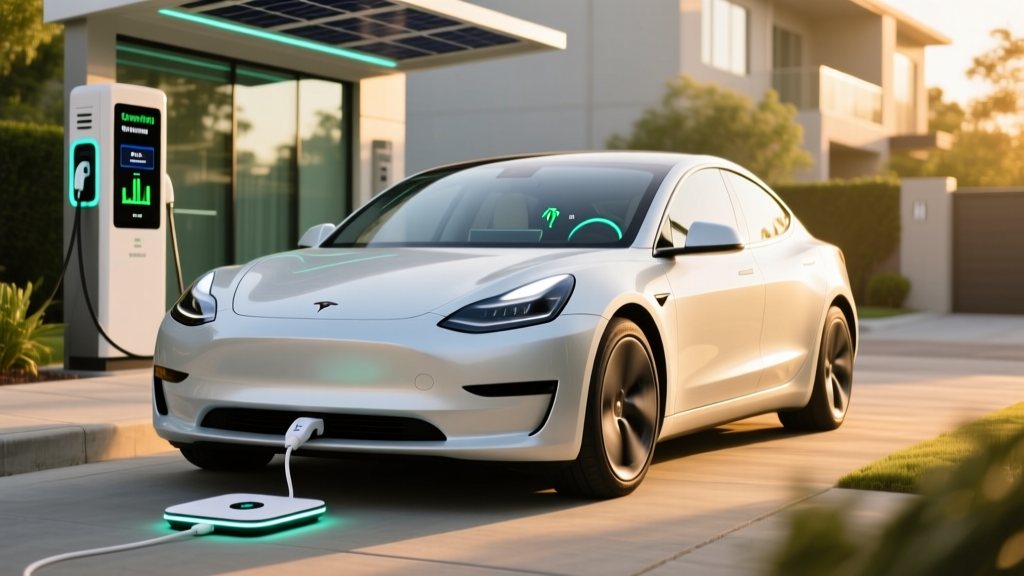
The phrase "Tesla Model 3 back" has been trending among EV shoppers for good reason. After a thorough refresh dubbed "Highland," the Model 3 sedan returns for the 2026 model year with a quieter cabin, revised suspension tuning, ventilated front seats, ambient lighting, and a rear touchscreen for passengers. It remains one of the most energy-efficient electric sedans on the market, undercutting rivals on price while delivering class-leading Supercharger network access.
But efficiency on paper doesn't always translate to the driveway. In this review, we break down the real-world range, charging behavior, pricing after federal tax credits, and the ownership realities that spec sheets leave out. Whether you're cross-shopping the Hyundai Ioniq 6, BMW i4, or Polestar 2, this is the data you need.
2026 Tesla Model 3 Specifications at a Glance
| Spec | Model 3 RWD | Model 3 Long Range AWD |
|---|---|---|
| EPA Range | 272 miles | 341 miles |
| Battery (usable) | ~60 kWh (LFP) | ~75 kWh (NMC) |
| Drivetrain | Rear-Wheel Drive | Dual-Motor AWD |
| Horsepower | 271 hp | 346 hp |
| 0–60 mph | 5.8 sec | 4.2 sec |
| Peak DC Fast Charge | 170 kW | 250 kW |
| 10–80% DCFC Time | ~25 min | ~18 min |
| Level 2 Home Charge | 11.5 kW (~44 mi/hr) | 11.5 kW (~44 mi/hr) |
| MPGe (combined) | 142 MPGe | 132 MPGe |
| kWh / 100 mi | 24 kWh | 25 kWh |
| Base MSRP | $38,990 | $45,990 |
| Battery Warranty | 8 yr / 100,000 mi | 8 yr / 120,000 mi |
Source: EPA / fueleconomy.gov and Tesla's official specifications. Prices reflect base MSRP before destination fees.
Real-World Range: What the EPA Sticker Doesn't Tell You
Model 3 RWD: EPA 272 mi → Expect ~230–250 mi at sustained 75 mph highway speeds; ~195–215 mi in freezing temperatures with cabin heat.
Model 3 Long Range AWD: EPA 341 mi → Expect ~285–310 mi highway; ~240–265 mi in sub-30°F conditions.
City driving with regenerative braking can match or slightly exceed EPA estimates.
The Model 3 Long Range AWD's 341-mile EPA rating is genuinely impressive for a sedan at this price point. However, the EPA test cycle includes substantial low-speed and city driving where regenerative braking recaptures energy. On a flat, 75-mph highway run in 70°F weather, plan on consuming roughly 85–90% of the sticker range.
Cold weather is the bigger variable. Lithium-ion batteries lose efficiency in freezing temperatures, and cabin heating draws significant power. The 2026 Model 3 uses a heat pump (standard on all trims), which reduces but does not eliminate cold-weather range loss. In our experience, expect a 20–25% reduction at 20°F compared to the EPA figure. If your commute is 120 miles round-trip in a northern climate, the Long Range AWD provides a comfortable buffer; the RWD variant requires more planning.
The RWD model's LFP (lithium iron phosphate) battery chemistry is worth noting. LFP cells tolerate regular charging to 100% without accelerated degradation — Tesla actually recommends periodic full charges to keep the battery management system calibrated. This means your usable daily range on the RWD can effectively be the full 272 miles, whereas NMC owners in the Long Range typically charge to 80% for daily use (~273 miles) and reserve 100% for road trips.
Charging Speed: DC Fast Charging and Home Setup
Charging speed is where the Model 3's engineering shows its maturity. Tesla's thermal management system preconditions the battery when you navigate to a Supercharger, enabling the car to hit peak charge rates quickly and sustain them longer than many competitors.
| Charging Level | Power | Miles Added per Hour | Notes |
|---|---|---|---|
| Level 1 (120V household) | ~1.4 kW | ~5 mi/hr | Emergency/trickle only |
| Level 2 (240V home, 48A) | 11.5 kW | ~44 mi/hr | Full charge overnight (~7–8 hrs) |
| DC Fast Charge (RWD) | Peak 170 kW | ~650 mi/hr (peak) | 10–80% in ~25 min |
| DC Fast Charge (Long Range) | Peak 250 kW | ~950 mi/hr (peak) | 10–80% in ~18 min |
The Long Range AWD's 250 kW peak rate on V3 Superchargers is among the fastest in its class. However, peak rate is not sustained rate. The charge curve tapers significantly above 60% state of charge, and charging from 80–100% can take nearly as long as 10–80%. For road trips, the practical strategy is to charge in the 10–80% window and skip to the next station rather than wait for a full battery.
For home charging, a 48-amp Level 2 wall connector on a 60-amp circuit delivers 11.5 kW — enough to replenish a full day's driving in roughly two hours. Installation costs typically range from $800 to $2,500 depending on whether your electrical panel needs an upgrade. Tesla's Wall Connector retails for around $420 and includes a 24-foot cable.
One significant 2026 update: Tesla's Supercharger network is now fully open to NACS-equipped vehicles from other automakers, which means the network is busier but also expanding rapidly. Model 3 owners still benefit from native integration — plug-and-charge with no adapters, automatic billing, and real-time stall availability in the nav system.
Performance, Efficiency, and Daily Drivability
The base RWD Model 3 hits 60 mph in 5.8 seconds with 271 horsepower from a single rear motor. That's brisk for a daily commuter and more than adequate for highway merging. The Long Range AWD's dual-motor setup delivers 346 horsepower and a 4.2-second sprint, putting it in sports-sedan territory without the associated fuel bill.
Efficiency is the Model 3's secret weapon. At 24 kWh per 100 miles (RWD), it extracts more miles per kilowatt-hour than nearly every competing sedan. For context, the Hyundai Ioniq 6 SE Long Range achieves a similar ~25 kWh/100mi, while the BMW i4 eDrive40 sits closer to 30 kWh/100mi. Over 12,000 annual miles at the U.S. average electricity rate of $0.16/kWh, the Model 3 RWD costs roughly $460 per year to charge at home — compared to $1,500+ in gasoline for a 30-mpg sedan.
The refreshed Model 3's ride quality is noticeably improved over pre-2024 models. Tesla retuned the suspension and added frequency-selective damping, which absorbs sharp pavement impacts without feeling floaty on the highway. Cabin noise is dramatically reduced thanks to acoustic glass all around and additional sound deadening. It's still a firm-riding car — sporty rather than plush — but it no longer feels punishing on broken urban streets.
Pricing, Tax Credits, and Total Cost
| Trim | Base MSRP | Destination | As-Tested (typical) | §30D Credit Eligible? |
|---|---|---|---|---|
| RWD | $38,990 | $1,390 | $40,380 | Yes — up to $7,500* |
| Long Range AWD | $45,990 | $1,390 | $47,380 | Yes — up to $7,500* |
| Performance AWD | $52,990 | $1,390 | $54,380 | Yes — up to $7,500* |
*Federal tax credit eligibility under IRS §30D depends on multiple factors:
- MSRP cap: Sedans must be at or below $55,000 MSRP. The RWD and Long Range qualify; the Performance trim may exceed the cap depending on options.
- Buyer income cap: Modified adjusted gross income must not exceed $150,000 (single), $225,000 (head of household), or $300,000 (joint).
- Battery sourcing: The credit splits into two halves ($3,750 each) — one for critical minerals sourcing and one for battery component manufacturing. Sourcing requirements tighten annually. Verify current-year compliance on the IRS website or via Tesla's order page before purchasing.
- Point-of-sale transfer: As of 2024, buyers can transfer the credit to the dealer at purchase, reducing the upfront cost rather than waiting for a tax refund.
If you qualify for the full $7,500 credit on the RWD model, your effective price drops to approximately $32,880 — making it one of the most affordable premium electric sedans available. Consult a tax professional to confirm your personal eligibility, as individual circumstances vary.
Interior Space, Tech, and Notable Drawbacks
The Model 3 cabin is minimalist by design. A single 15.4-inch center touchscreen handles virtually all vehicle controls, media, and navigation. The 2026 refresh adds a second 8-inch touchscreen for rear passengers, controlling climate, seat heating, and entertainment — a welcome addition for families.
Cargo and passenger dimensions:
- Cargo volume (rear trunk): 21.0 cu ft
- Front trunk (frunk): 3.1 cu ft
- Front legroom: 42.4 inches
- Rear legroom: 35.3 inches
- Rear headroom: 37.0 inches
Rear-seat space is adequate for adults on shorter trips but tighter than a midsize sedan like the Hyundai Ioniq 6 or Tesla's own Model Y. The low roofline and sloping rear glass cut into headroom for taller passengers. Cargo capacity is generous for the segment, and the 60/40 split-folding rear seat expands utility for longer items.
Standout tech features:
- Basic Autopilot (adaptive cruise + lane centering) included standard — SAE Level 2 driver assistance
- Full Self-Driving (Supervised) available as a $8,000 option or $99/month subscription — still requires active driver supervision
- Over-the-air updates continuously add features and refinements
- Dashcam and Sentry Mode with all-around cameras
- Phone-as-key with Bluetooth passive entry
- Ventilated front seats (new for the refresh)
- Ambient interior lighting
Tesla's Autopilot and FSD (Supervised) are SAE Level 2 driver-assistance systems. The driver must remain fully attentive, keep hands on the steering wheel, and be prepared to take over at any moment. These are not self-driving systems. Level 4 autonomous driving (no driver required) is currently only available in geofixed commercial robotaxi services like Waymo.
Notable drawbacks:
- No physical instrument cluster or head-up display — all info lives on the center screen
- No Apple CarPlay or Android Auto support
- Turn-signal stalks removed; signals activated via steering-wheel buttons (divisive among owners)
- Paint quality remains inconsistent based on owner reports — inspect carefully at delivery
- Insurance premiums tend to run 15–25% higher than comparable gas sedans
- No physical buttons for climate or volume — everything is touchscreen-mediated
Pros and Cons
Pros
- Class-leading energy efficiency (24 kWh/100mi)
- 341-mile range on Long Range AWD
- 250 kW peak DC fast charging (Long Range)
- Supercharger network access — largest, most reliable in North America
- Over-the-air updates keep the car improving post-purchase
- Strong resale value relative to EV segment
- LFP battery on RWD allows daily 100% charging
- Low annual fuel cost (~$460/yr at home rates)
Cons
- No Apple CarPlay or Android Auto
- Rear seat space tighter than some rivals
- Steering-wheel turn signals take adjustment
- FSD (Supervised) expensive and still Level 2
- Insurance costs above segment average
- Minimalist interior not for everyone
- No physical gauges or head-up display
- RWD range drops significantly in extreme cold
Who Should Buy the 2026 Tesla Model 3?
Best for: Tech-forward commuters and couples who prioritize efficiency, fast charging, and access to the most robust public charging network. The Long Range AWD is an excellent road-trip vehicle — 341 miles of range plus 250 kW Supercharging means 15–20 minute stops every 250–280 miles on the highway. The RWD is ideal for urban and suburban drivers who can charge at home and rarely exceed 200 miles in a day.
Consider alternatives if: You need a spacious rear seat for car seats or tall passengers regularly (look at the Model Y or Ioniq 5). You rely on Apple CarPlay and prefer traditional controls (the BMW i4 or Hyundai Ioniq 6 may suit you better). You live in an area with limited Supercharger coverage and no home charging access — public charging convenience is still a Tesla advantage, but it's not universal.
Key competitors:
- Hyundai Ioniq 6 SE LR: Similar efficiency, 361-mile EPA range, 800V charging architecture, CarPlay included. Less proven charging network.
- BMW i4 eDrive40: More traditional luxury interior, CarPlay, excellent ride quality. Higher price, lower efficiency.
- Polestar 2 LR: Scandanavian design, Google built-in, solid build. Shorter range, slower charging.
Frequently Asked Questions
What is the real-world range of the 2026 Tesla Model 3?
The RWD delivers approximately 230–250 miles on the highway and 195–215 miles in freezing weather. The Long Range AWD achieves 285–310 miles on the highway and 240–265 miles in cold conditions. City driving with regenerative braking can match or exceed the EPA estimates of 272 miles (RWD) and 341 miles (Long Range).
How fast does the Model 3 charge at home and on the road?
On a 48-amp Level 2 home charger, both trims add roughly 44 miles of range per hour, fully charging overnight in 7–8 hours. On DC fast chargers, the Long Range peaks at 250 kW (10–80% in ~18 minutes) and the RWD peaks at 170 kW (10–80% in ~25 minutes).
Does the 2026 Tesla Model 3 qualify for the federal EV tax credit?
The RWD and Long Range trims fall under the $55,000 MSRP sedan cap and are currently eligible for up to $7,500 under IRS §30D, provided the buyer meets income limits ($150K single / $300K joint) and the vehicle meets battery-sourcing requirements. Always verify current eligibility on irs.gov before purchasing, as sourcing rules tighten annually.
Is the Model 3 worth buying over competitors in 2026?
For buyers prioritizing charging infrastructure, efficiency, and software integration, the Model 3 remains the benchmark. The Supercharger network is still the most reliable and widespread in North America. If rear-seat space, physical controls, or CarPlay are higher priorities, the Hyundai Ioniq 6 or BMW i4 are strong alternatives.
How long will the Model 3 battery last?
Tesla warranties the RWD's LFP battery for 8 years or 100,000 miles (whichever comes first) with at least 70% capacity retention. The Long Range NMC battery is warranted for 8 years or 120,000 miles at 70% retention. Real-world data from earlier Model 3 vehicles shows typical degradation of 8–12% over 100,000 miles, suggesting the batteries should outlast the warranty period comfortably.
Is Tesla's Full Self-Driving actually self-driving?
No. FSD (Supervised) is an SAE Level 2 driver-assistance system. It can navigate highways, change lanes, and handle some city streets, but the driver must remain fully engaged and ready to intervene at all times. It does not make the Model 3 autonomous.