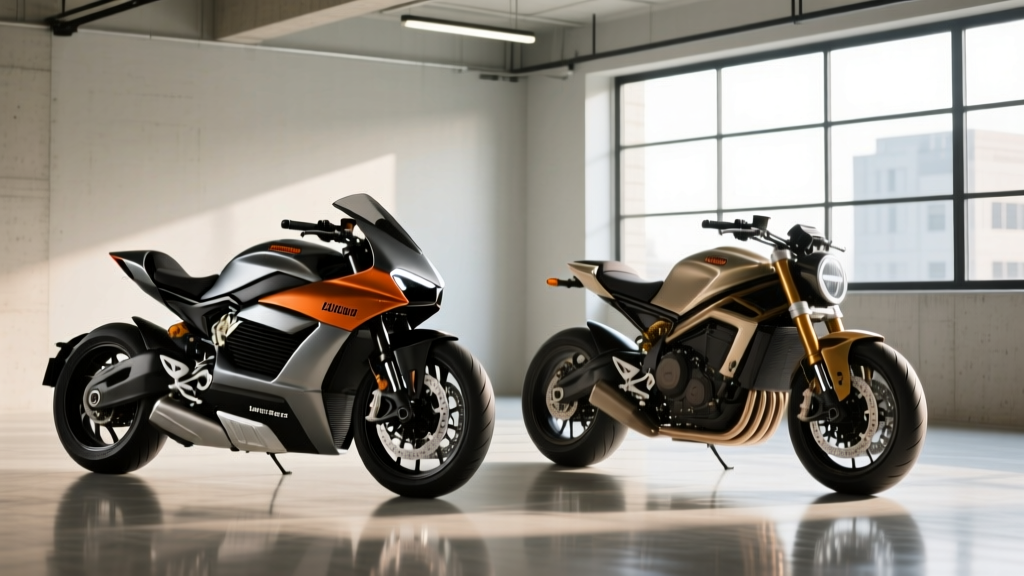
Harley-Davidson's electric venture, LiveWire, produces some of the most recognizable electric motorcycles on the market. But when prospective buyers search for "electric Harley cost," they're often met with sticker shock: the LiveWire One starts near $22,000, and even the more accessible S2 Del Mar lands around $15,500. The real question isn't just the purchase price — it's what ownership actually costs over time when you factor in charging, insurance, maintenance, depreciation, and available tax incentives.
This guide breaks down the total cost of owning a LiveWire electric motorcycle over five years, using real-world data, current federal incentive rules, and honest numbers that include the costs most marketing materials conveniently skip.
LiveWire Model Lineup: What You're Actually Buying
Before calculating ownership costs, here's what's in the LiveWire stable as of the 2026 model year. Note: LiveWire operates as a separate brand from Harley-Davidson, though it remains majority-owned by H-D.
| Spec | LiveWire One | S2 Del Mar |
|---|---|---|
| Base MSRP | $21,999 | $15,499 |
| Battery Capacity | 15.5 kWh (usable) | 10.5 kWh (usable) |
| EPA City Range | 146 miles | 113 miles |
| Real-World Highway Range | ~70–85 miles | ~55–65 miles |
| Peak Power | 105 HP (78 kW) | 84 HP (63 kW) |
| 0–60 mph | 3.0 seconds | 3.5 seconds |
| DC Fast Charge (10–80%) | ~40 min (50 kW peak) | ~35 min (35 kW peak) |
| Level 2 Charge Time (0–100%) | ~2.5 hours | ~1.75 hours |
| Weight | 462 lbs | 428 lbs |
| Warranty | 2 yr unlimited mi (vehicle); 5 yr/50,000 mi (battery) | 2 yr unlimited mi (vehicle); 5 yr/50,000 mi (battery) |
Total Cost of Ownership: 5-Year Breakdown
The table below models five years and 25,000 miles of ownership for both the LiveWire One and S2 Del Mar, compared against a comparable gas-powered motorcycle (Harley-Davidson Sportster S, ~$14,500 MSRP, ~48 MPG combined). All figures are national averages and will vary by region, riding habits, and electricity rates.
| Cost Category | LiveWire One | S2 Del Mar | H-D Sportster S (Gas Baseline) |
|---|---|---|---|
| Purchase Price (MSRP) | $21,999 | $15,499 | $14,499 |
| Federal Tax Credit (§30D) | –$7,500* | –$7,500* | $0 |
| Effective Purchase Price | $14,499 | $7,999 | $14,499 |
| Charging/Fuel (25,000 mi) | $875 | $625 | $3,250 |
| Insurance (5 years) | $7,500 | $6,250 | $5,000 |
| Maintenance (5 years) | $400 | $400 | $2,500 |
| Estimated Depreciation | $8,800 | $6,200 | $5,800 |
| Total 5-Year Cost | $23,774 | $15,974 | $24,249 |
| Cost Per Mile | $0.95 | $0.64 | $0.97 |
*Tax credit eligibility depends on income, battery sourcing, and point-of-sale transfer rules — see the eligibility section below. These figures assume full eligibility.
Federal Tax Credit: Do You Qualify for §30D?
The IRS §30D Clean Vehicle Credit can reduce your federal tax liability by up to $7,500 for a qualifying new electric motorcycle — or be applied as a point-of-sale discount at the dealer. However, eligibility is not automatic. The rules have tightened significantly since the Inflation Reduction Act, and battery sourcing requirements continue to evolve.
- Income Caps: Modified AGI must not exceed $150,000 (single), $225,000 (head of household), or $300,000 (married filing jointly)
- MSRP Cap: Electric motorcycles must have an MSRP at or below $80,000 (both LiveWire models qualify easily)
- Battery Sourcing: Battery components must be manufactured or assembled in North America (phasing percentages increase annually); critical minerals must be sourced from the U.S. or FTA partners — up to $3,750 each for components and minerals
- Point-of-Sale Transfer: You can transfer the credit to the dealer at purchase for an immediate price reduction, rather than waiting to claim it on your tax return
- One Credit Per 3 Years: The §30D credit for motorcycles/2- and 3-wheelers is limited to one per taxpayer per three-year period
- Final Assembly: Vehicle must undergo final assembly in North America
Source: IRS.gov — Clean Vehicle Credits. Rules are subject to change; verify current-year requirements and battery-sourcing compliance at the time of purchase. Consult a tax professional for personal eligibility.
For 2026, both the LiveWire One and S2 Del Mar are assembled in the U.S. and have historically qualified for the full $7,500 credit. However, battery component and critical mineral sourcing requirements tighten each year. Always confirm the specific VIN's eligibility using the IRS's dealer portal or fueleconomy.gov's tax credit lookup tool before finalizing a purchase.
Charging vs. Gas: The Per-Mile Math
This is where electric motorcycles shine — but the exact savings depend on your electricity rate and whether you charge at home or rely on public DC fast charging.
| Scenario | Cost per kWh / Gallon | LiveWire One (15.5 kWh/146 mi city) | Cost per Mile |
|---|---|---|---|
| Home Charging (national avg.) | $0.16/kWh | $2.48 per full charge | $0.035 |
| Home Charging (CA/high-cost) | $0.30/kWh | $4.65 per full charge | $0.065 |
| Public DC Fast Charging | $0.40/kWh avg. | $6.20 per full charge | $0.087 |
| Gas Motorcycle (Sportster S) | $3.75/gallon, 48 MPG | $0.078 per mile | $0.078 |
At the national average residential electricity rate of ~$0.16/kWh, home charging the LiveWire One costs roughly $0.035 per mile — less than half the per-mile fuel cost of a comparable gas motorcycle. Even at California's higher rates, home charging remains competitive. However, if you rely exclusively on public DC fast charging at $0.40/kWh, the cost advantage narrows to nearly nothing.
The bottom line: Home charging access is essential to realizing meaningful fuel savings on an electric motorcycle. If you live in an apartment without charging access and must rely on public chargers, your per-mile "fuel" cost may actually exceed a fuel-efficient gas motorcycle.
Maintenance Savings: Where Electric Motorcycles Dominate
Electric powertrains eliminate the majority of routine motorcycle maintenance. Here's a side-by-side comparison of what you will — and won't — pay for over five years.
| Maintenance Item | Gas Motorcycle (5 yr / 25,000 mi) | LiveWire Electric (5 yr / 25,000 mi) |
|---|---|---|
| Oil Changes (3–5 per year) | $500–$750 | $0 |
| Air Filter Replacement | $100–$150 | $0 |
| Spark Plugs | $80–$120 | $0 |
| Chain/Belt Service | $200–$400 | $200–$400 (belt drive) |
| Brake Pads (front + rear) | $300–$500 | $0–$150 (regen extends life 2–3×) |
| Coolant Flush | $80–$120 | $80–$120 (liquid-cooled battery/motor) |
| Tire Replacement (1–2 sets) | $400–$800 | $400–$800 |
| Valve Adjustment / Top-End | $300–$600 | $0 |
| Estimated Total | $1,960–$3,440 | $680–$1,370 |
LiveWire's maintenance costs run roughly 60–70% lower than a comparable gas motorcycle. Regenerative braking is the biggest saver — it handles most deceleration, meaning brake pads can last 40,000+ miles in typical riding. The electric motor has a single moving rotor versus hundreds of parts in an internal combustion engine, eliminating oil, filters, plugs, valves, and exhaust maintenance entirely.
The one maintenance wildcard: tires. Electric motorcycles produce instant torque from 0 RPM, which accelerates rear tire wear. Budget for at least one rear tire replacement within 5,000–8,000 miles if you ride aggressively.
Insurance: The Uncomfortable Reality
Electric motorcycles generally cost 20–50% more to insure than equivalent gas motorcycles. For the LiveWire One, expect annual premiums in the range of $1,300–$1,800 depending on your state, age, riding history, and coverage levels. The S2 Del Mar typically runs $1,100–$1,500 annually.
Why the premium?
- Higher repair costs: Electric powertrain components (motor, inverter, battery) are expensive to replace after a collision
- Limited parts availability: Fewer aftermarket options and a smaller dealer/repair network mean higher labor and parts costs
- Total loss risk: Battery damage in a crash often results in a total loss declaration, as battery replacement can exceed $5,000–$8,000
- Performance profile: The LiveWire One's 3.0-second 0–60 time puts it in superbike territory, which insurers price accordingly
- Smaller actuarial pool: Insurers have less historical data on electric motorcycle claims, so they price conservatively
Before purchasing, get insurance quotes from at least three providers (Progressive, GEICO, and Dairyland are among the more EV-friendly motorcycle insurers). In some states, the insurance premium difference alone can consume $1,000–$1,500 of your annual fuel and maintenance savings.
Depreciation and Resale Value
Electric motorcycles have historically depreciated faster than their gas counterparts — though the gap is narrowing as the market matures and battery longevity data improves.
Current depreciation estimates for LiveWire models:
- Year 1: 15–20% loss from MSRP
- Year 3: 35–45% cumulative loss
- Year 5: 45–55% cumulative loss
For comparison, a Harley-Davidson Sportster S typically loses 30–40% over five years. The LiveWire One's higher starting price means the dollar-amount depreciation hit is steeper, even if the percentage gap is closing.
Factors working against LiveWire resale value:
- Rapid battery tech advancement: Newer models with better range and faster charging make older models less desirable
- Used buyer skepticism: Concerns about battery degradation and replacement cost suppress used demand
- Smaller buyer pool: Electric motorcycles remain a niche within a niche
Factors working in LiveWire's favor:
- Brand cachet: The Harley connection provides residual brand loyalty
- Battery warranty: 5-year/50,000-mile battery coverage transfers to second owners, providing buyer confidence
- Low mileage used examples: Many LiveWire owners ride 2,000–4,000 miles/year, keeping used examples in excellent condition
State, Local, and Utility Incentives
Beyond the federal §30D credit, many states, municipalities, and electric utilities offer additional rebates for electric motorcycles. These change frequently and vary by jurisdiction. Examples include:
- California: CVRP rebate (income-dependent, up to $1,000 for motorcycles) plus utility rebates from PG&E, SCE, and SDG&E ($250–$500)
- New York: Drive Clean Rebate program (point-of-sale, up to $500 for electric motorcycles)
- Colorado: State tax credit for electric vehicles (amount varies by year and vehicle class — consult Colorado Dept. of Revenue)
- Utility rebates: Many utilities offer $200–$500 rebates for EV/motorcycle purchases or home charging equipment installation
Check your state's energy office website and your local utility's EV programs page for current incentive amounts. The Alternative Fuels Data Center maintains a searchable database of state and local incentives.
Frequently Asked Questions
How much does it really cost to own a LiveWire electric Harley over 5 years?
After applying the $7,500 federal tax credit (if eligible), the S2 Del Mar costs approximately $15,974 over five years and 25,000 miles — about $0.64 per mile. The LiveWire One comes in around $23,774 or $0.95 per mile. A comparable gas Sportster S costs roughly $24,249 over the same period. The S2 Del Mar is the clear cost winner if you qualify for incentives.
Do I qualify for the federal tax credit on a LiveWire?
You may qualify for up to $7,500 under §30D if your modified adjusted gross income is below the thresholds ($150K single / $300K joint), the motorcycle meets battery sourcing and critical mineral requirements, and it was assembled in North America. Both current LiveWire models have historically qualified. Use the IRS dealer portal or fueleconomy.gov to verify a specific VIN before purchasing. Consult a tax professional for personal eligibility — rules change annually.
How much do I save on fuel and maintenance with a LiveWire?
At the national average electricity rate ($0.16/kWh) and home charging, you'll spend roughly $0.035/mile on electricity versus $0.078/mile on gas for a comparable motorcycle — saving about $1,075 in fuel over 25,000 miles. Maintenance savings are even larger: expect to spend $400–$1,370 over five years versus $1,960–$3,440 for a gas motorcycle, saving $1,500–$2,000. Combined, fuel and maintenance savings total $2,500–$3,000 over five years.
Are LiveWire electric motorcycles more expensive to insure?
Yes, typically 20–50% more than a comparable gas motorcycle. Expect $1,300–$1,800/year for the LiveWire One and $1,100–$1,500/year for the S2 Del Mar, compared to $900–$1,200 for a gas Sportster S. Higher repair costs, limited parts networks, instant-torque performance, and a smaller actuarial data pool all contribute. Get quotes before buying to understand the real impact on your budget.
How well do LiveWire electric motorcycles hold their value?
LiveWire models depreciate faster than comparable gas Harleys — expect 45–55% value loss over five years versus 30–40% for a gas Sportster S. Battery technology advancement, a smaller used buyer pool, and replacement-cost concerns weigh on resale. However, LiveWire's 5-year battery warranty (transferable to second owners) and the brand's Harley connection provide some resale support. If depreciation is a primary concern, consider purchasing a lightly used LiveWire to let the first owner absorb the steepest depreciation curve.
Can I charge a LiveWire at home on a standard outlet?
Yes, but slowly. Level 1 charging (120V standard outlet) adds roughly 13–15 miles of range per hour on the LiveWire One. For a full charge from empty, expect 10–12 hours. A Level 2 home charger (240V, ~3.3 kW for motorcycles) reduces full-charge time to about 2.5 hours. Most riders install a dedicated 240V outlet in their garage — expect $300–$800 for a licensed electrician to install a 240V circuit, depending on panel capacity and run length.