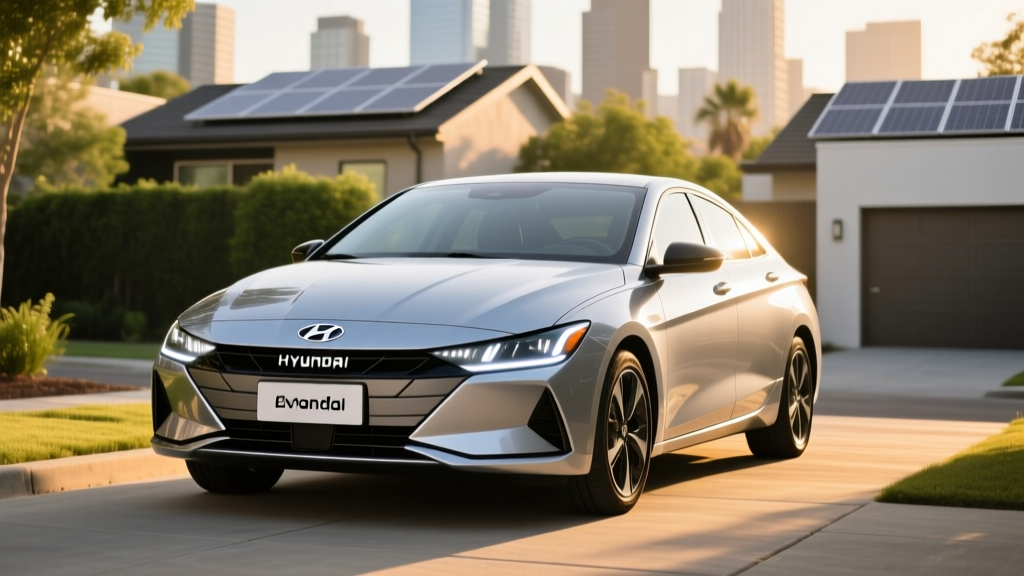
If you've been searching for an electric shadow Elantra—the anticipated all-electric successor sitting alongside Hyundai's iconic compact sedan—you're not alone. As of early 2026, Hyundai has not yet released a production Elantra EV in the U.S. market. What does exist is the gasoline Elantra, the Elantra Hybrid, and Hyundai's dedicated EV lineup (Ioniq 5, Ioniq 6, Kona Electric). However, industry reports and Hyundai's "Shadow" project codenames have fueled speculation about an electric compact sedan that would slot between the Kona Electric and Ioniq 6 in price and size. This guide breaks down what we know, what's confirmed, what's estimated, and how an electric Elantra-class vehicle compares to the gas and hybrid Elantra trims you can actually buy today.
What the "Electric Shadow Elantra" Actually Means
The term "Shadow" in Hyundai-Kia development circles has historically referred to internal project codenames rather than a production badge. Enthusiasts and automotive media have used "electric shadow Elantra" to describe a rumored battery-electric compact sedan that would carry the Elantra nameplate into the EV era. Hyundai's stated goal is to offer electrified versions across its lineup by the late 2020s, and the Elantra—historically one of the brand's highest-volume U.S. models—is a logical candidate.
What we can reasonably project based on Hyundai's current EV architecture:
- Platform: Likely a variant of the e-GMP (Electric Global Modular Platform) or the next-generation eM platform Hyundai has confirmed for future affordable EVs.
- Battery chemistry: Expected NMC (nickel manganese cobalt) for Long Range trims, possibly LFP (lithium iron phosphate) for a base Standard Range model to hit a lower price point.
- Charging port: NACS (North American Charging Standard), as Hyundai has confirmed all new U.S. EVs from late 2024 onward will use the Tesla-compatible connector, granting access to the Supercharger network.
- Production timeline: No confirmed U.S. sale date. Hyundai's Metaplant America in Georgia is ramping EV production, but current output focuses on the Ioniq 5 and upcoming models.
Elantra Lineup Comparison: Gas vs. Hybrid vs. Projected EV
Since the electric Elantra remains unannounced for production, the most useful comparison is between what you can buy now and what a future EV variant would need to deliver to be competitive. Here's how the 2026 Elantra trims stack up against each other and against Hyundai's existing electric alternatives.
| Spec | Elantra Gas (SE) | Elantra Hybrid (Blue) | Kona Electric (SEL) | Ioniq 6 (SE Std Range) |
|---|---|---|---|---|
| Base MSRP | ~$22,900 | ~$29,600 | ~$34,000 | ~$38,650 |
| EPA Range / MPG | 36 MPG combined | 54 MPG combined | 261 mi (EPA) | 240 mi (EPA) |
| Powertrain | 2.0L I4, 147 HP | 1.6L GDI hybrid, 139 HP | Single motor, 201 HP, 64.8 kWh NMC | Single motor, 168 HP, 54.0 kWh |
| Max DC Fast Charge | N/A | N/A | ~100 kW (10-80% ~43 min) | ~150 kW (10-80% ~28 min) |
| Fuel/Charge Cost per Mile | ~$0.10 (gas at $3.50/gal) | ~$0.065 (gas at $3.50/gal) | ~$0.04 (home, $0.13/kWh) | ~$0.04 (home, $0.13/kWh) |
| Federal Tax Credit (§30D) | None | None (up to $8,000 PHEV credit if eligible) | Up to $7,500 (eligibility varies) | Up to $7,500 (eligibility varies) |
| Warranty (Powertrain/Battery) | 10 yr/100,000 mi | 10 yr/100,000 mi | 10 yr/100,000 mi (battery: 10 yr/100,000 mi) | 10 yr/100,000 mi (battery: 10 yr/100,000 mi) |
Sources: fueleconomy.gov, Hyundai Newsroom. Tax credit eligibility depends on MSRP caps, buyer income limits, and battery component/critical mineral sourcing per IRS §30D rules. Consult a tax professional.
Real Costs: What an Electric Elantra Would Cost to Own
Even without a confirmed Elantra EV, we can model ownership economics using the Kona Electric as a proxy—the closest current Hyundai EV in projected Elantra EV pricing and positioning. Here's a 5-year total cost of ownership comparison assuming 15,000 miles per year.
| Cost Category | Elantra Gas SE | Elantra Hybrid Blue | Kona Electric SEL (proxy) |
|---|---|---|---|
| Purchase (MSRP) | $22,900 | $29,600 | $34,000 |
| Federal Tax Credit | $0 | $0 | –$7,500 (if eligible) |
| Fuel/Energy (5 yr) | $7,500 | $4,875 | $3,000 (home charging) |
| Maintenance (5 yr) | $2,500 | $2,200 | $1,200 |
| Insurance (est. 5 yr) | $7,500 | $7,800 | $8,500 |
| Net 5-Year Cost | $40,400 | $44,475 | $39,200 |
Assumes gas at $3.50/gal, electricity at $0.13/kWh, home Level 2 charging. Insurance estimates vary widely by state, driver profile, and vehicle. Tax credit eligibility subject to IRS §30D rules including income caps ($150K single/$300K joint), MSRP caps ($55K sedans), and battery sourcing requirements. Actual costs will vary.
The key takeaway: an EV at a ~$34,000 MSRP can reach cost parity with a $23,000 gas car within five years if you qualify for the full federal tax credit and charge primarily at home. Public DC fast charging at $0.35–$0.50/kWh significantly erodes those savings, pushing energy costs close to or above the hybrid's fuel costs.
Home Charging Reality: What First-Time EV Buyers Need
The single biggest variable in EV ownership satisfaction is home charging access. If an electric Elantra arrives with a ~65 kWh battery, here's what charging looks like in practice:
| Level | Power (kW) | Miles Added per Hour | 0–100% Time | Typical Use |
|---|---|---|---|---|
| Level 1 (120V outlet) | ~1.4 kW | ~4 mi/hr | ~46 hours | Emergency / overnight trickle |
| Level 2 (240V, 32A) | ~7.7 kW | ~25 mi/hr | ~8.5 hours | Home daily charging |
| Level 2 (240V, 48A) | ~11.5 kW | ~37 mi/hr | ~5.5 hours | Home fast / workplace |
| DC Fast (projected peak) | ~150 kW | ~500+ mi/hr (peak) | 10–80% in ~25 min | Road trips, Superchargers |
Important distinction: kW (kilowatts) measures the rate of energy flow—how fast you're charging. kWh (kilowatt-hours) measures total energy stored—your battery's capacity. A 65 kWh battery charged at 7.7 kW takes roughly 8.5 hours from empty, not the ~1 hour you'd get by dividing incorrectly.
Level 2 home installation typically runs $800–$2,500 for the charger and electrician labor if your panel has capacity. If you need a panel upgrade from 100A to 200A service, add $1,500–$3,500. Renters and condo dwellers without dedicated parking face a genuine barrier—this is where the Elantra Hybrid's 54 MPG and zero charging requirement make it a pragmatic alternative.
Cold Weather, Highway Driving, and Range Reality
EPA range estimates assume moderate temperatures and mixed driving. Real-world conditions tell a different story, and this applies to any future electric Elantra just as it does to current Hyundai EVs:
- Highway driving at 75 mph: Expect ~85–90% of EPA range (~220–235 mi). Aerodynamic drag increases exponentially with speed.
- Cold weather (below 32°F): Expect ~70–80% of EPA range (~180–210 mi). Battery chemistry slows, and cabin heating draws significant energy unless a heat pump is equipped.
- Cold + highway combined: Expect ~65–75% of EPA (~170–195 mi). This is the worst-case scenario for road trips in northern climates.
- City driving in mild weather: Often exceeds EPA by 5–10% thanks to regenerative braking recapturing energy in stop-and-go traffic.
Hyundai has equipped the Ioniq 5 and Ioniq 6 with heat pumps on most trims—a device that transfers ambient heat into the cabin far more efficiently than resistive heating. A future Elantra EV would likely include one on mid and upper trims, partially mitigating cold-weather losses. Budget trims may omit it, so check the spec sheet carefully when the vehicle launches.
Myths vs. Facts for First-Time EV Buyers
| Myth | Fact |
|---|---|
| "EV batteries need replacing every few years." | Hyundai warranties its EV batteries for 10 years/100,000 miles with a minimum 70% capacity retention threshold. Real-world data from fleet EVs shows modern NMC and LFP packs typically retain 85–90% capacity at 100,000 miles. |
| "The $7,500 tax credit applies to everyone." | Per IRS §30D, eligibility requires: income below $150K (single) or $300K (joint), vehicle MSRP under $55K (sedans), and battery components/critical minerals meeting U.S.-sourcing thresholds that tighten annually. Many EVs qualify for partial or zero credit depending on the model year. |
| "EVs cost more to insure, always." | Insurance premiums for EVs average 10–20% higher than equivalent gas cars due to higher repair costs and battery replacement risk. However, the gap has narrowed as EV volumes grow. Always get a quote before buying—varies by insurer, state, and model. |
| "Public charging is unreliable everywhere." | Reliability varies by network. Tesla Superchargers consistently report 95%+ uptime. Electrify America and EVgo have improved but still lag. For a future NACS-equipped Elantra EV, Supercharger access would significantly improve road-trip charging reliability. |
| "I need a 300+ mile range EV." | The average American drives ~37 miles per day (FHWA). A 250-mile EV with home charging covers 95%+ of daily needs. Long-range models cost more and carry heavier batteries that reduce efficiency. Match range to your actual driving pattern, not your worst-case anxiety. |
Decision Framework: Should You Wait or Buy Now?
Here's a practical framework for deciding between waiting for a potential electric Elantra and buying what's available today:
- If you need a car now and drive under 40 miles/day with home charging access: The Kona Electric (~$34,000, 261 mi EPA) or Ioniq 6 (~$38,650, 240–361 mi EPA depending on trim) delivers Elantra-class practicality with EV economics. Check §30D eligibility first.
- If you need a car now but can't charge at home: The Elantra Hybrid Blue (54 MPG combined, ~$29,600) eliminates charging dependency entirely while cutting fuel costs by roughly 40% versus the gas model.
- If you can wait 12–24 months and want an Elantra-badged EV specifically: Monitor Hyundai's U.S. product announcements. An Elantra EV would likely debut as a 2027 or 2028 model year vehicle. No confirmed timeline exists.
- If budget is the primary constraint: The gas Elantra SE at ~$22,900 remains the cheapest entry point. At 36 MPG combined and low maintenance costs, it's a rational choice for low-mileage drivers who won't recoup an EV's premium through fuel savings.
- If you want maximum federal incentive value: The point-of-sale transfer option (available since 2024) lets you apply the $7,500 credit as an immediate price reduction at the dealer, rather than waiting for tax filing. Verify the specific vehicle's eligibility at the time of purchase.
Frequently Asked Questions
Is the electric shadow Elantra available to buy in 2026?
No. As of 2026, Hyundai has not announced a production Elantra EV for the U.S. market. The "shadow Elantra" terminology comes from project codenames and enthusiast speculation. Hyundai's current electric lineup includes the Kona Electric and Ioniq 5/6.
How much would an electric Elantra cost if it launches?
Based on Hyundai's pricing strategy and the competitive compact EV segment, a reasonable estimate is $32,000–$36,000 for a base trim. This would position it below the Ioniq 6 and roughly on par with the Kona Electric, undercutting competitors like the Chevrolet Equinox EV and Volkswagen ID.4.
Would an Elantra EV qualify for the $7,500 federal tax credit?
It would depend on battery sourcing at the time of production. Under current IRS §30D rules, the critical minerals and battery component sourcing thresholds tighten each year. Hyundai's Georgia-built EVs have qualified for partial or full credits on some models, but eligibility must be verified per vehicle at the time of purchase. Buyer income caps ($150K single/$300K joint) and MSRP caps ($55K for sedans) also apply.
Should I buy the Elantra Hybrid instead of waiting for an EV?
If you lack reliable home charging, frequently drive over 300 miles between stops, or live in an area with limited public charging infrastructure, the Elantra Hybrid's 54 MPG combined and zero charging requirement make it the more practical choice. The hybrid also avoids the insurance premium increase typical of EVs and carries no battery-degradation concern beyond the standard hybrid battery warranty.
What charging connector would a future Elantra EV use?
Hyundai has confirmed that all new U.S.-market EVs will adopt the NACS (North American Charging Standard) connector, the same connector used by Tesla. This means a future Elantra EV would have native access to Tesla's Supercharger network—the most extensive and reliable DC fast-charging network in the U.S.—without an adapter.
How does EV maintenance compare to gas car maintenance?
EVs eliminate oil changes, spark plugs, timing belts, and exhaust system repairs. Brake wear is significantly reduced thanks to regenerative braking (many EV owners report 80,000+ miles on original brake pads). The main maintenance items are tire rotation/replacement (EVs are heavier and wear tires faster), cabin air filter, brake fluid checks, and coolant system service. Expect roughly 40–50% lower annual maintenance costs compared to a gas vehicle, based on AAA and Consumer Reports data.