The Short Answer: Does an "Electric Green Beetle" Exist?
As of 2026, Volkswagen does not sell a production electric Beetle. The last Beetle rolled off the line in 2019, and VW has not announced a dedicated electric successor. However, the "electric green Beetle" search reflects real buyer demand for a retro-styled, affordable, fun EV with personality — and several options scratch that itch: the VW ID. Buzz (retro microbus, starting ~$59,995), the MINI Cooper SE (iconic style, 114-mile EPA range, ~$30,900), or a custom EV-converted classic Beetle ($35,000–$65,000+ from shops like Zelectric Motors). If you want green paint and VW electric DNA, the ID. Buzz in Cabana Green or a wrapped ID.4 is your closest factory option today.
Why the Electric Beetle Hasn't Happened (Yet)
Volkswagen's electrification strategy has focused on its MEB-platform crossovers and the ID. Buzz van rather than reviving the Beetle nameplate. The Beetle's rear-engine, air-cooled layout is fundamentally incompatible with VW's skateboard-style MEB architecture without a costly bespoke platform. VW's former design chief Klaus Zyciora confirmed in interviews that a Beetle EV concept was explored internally but deprioritized in favor of higher-volume SUVs and the ID. 2all (a subcompact hatchback expected for Europe around 2026–2027).
For buyers specifically searching for an electric green Beetle, the motivation usually breaks down into three categories:
- Aesthetic nostalgia: The classic Beetle silhouette, especially in heritage colors like Fern Green or Colorado Green
- Compact EV practicality: Small footprint, city-friendly, affordable
- VW brand loyalty: Existing VW owners wanting to electrify within the brand
Each of these needs has a partial solution in 2026's market, even if the exact "electric green Beetle" doesn't exist as a single production car.
Your Real Options: What to Buy If You Want an Electric Green Beetle
Option 1: VW ID. Buzz (Retro VW, Factory Electric)
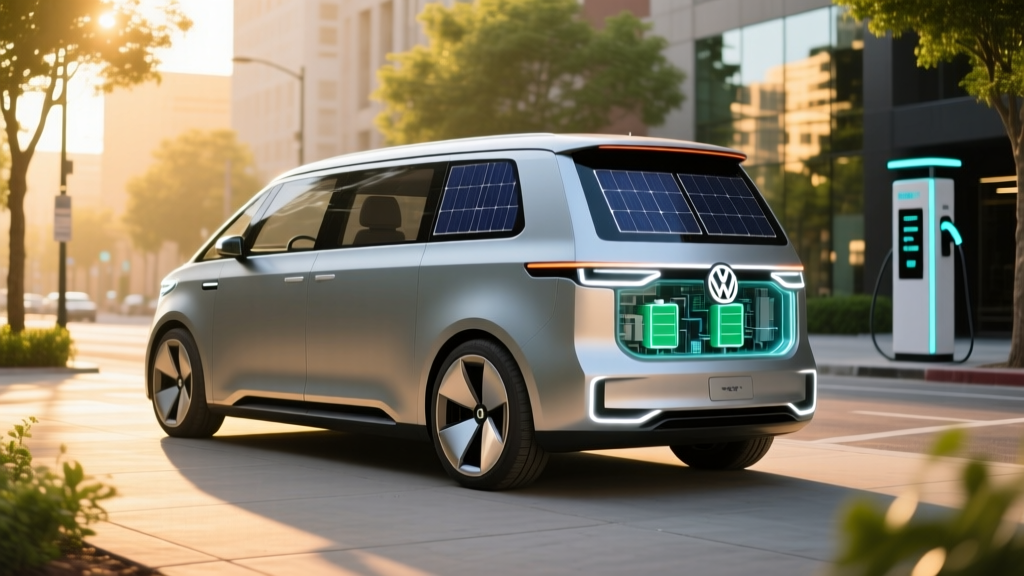
The ID. Buzz is the closest thing VW currently offers to a heritage-styled electric vehicle. Available in a two-tone Cabana Green/Candy White that channels classic VW vibes, it rides on the MEB platform with a 91 kWh usable battery (NMC chemistry).
| Spec | ID. Buzz RWD (2026) |
|---|---|
| EPA Range | 234 miles |
| Real-World Highway | ~185–200 miles |
| Battery (Usable) | 91 kWh, NMC |
| Peak DC Charge Rate | 200 kW |
| 10–80% DC Charge | ~26 minutes |
| Level 2 Rate | 11 kW (~7 hours 0–100%) |
| Motor Output | 282 hp, 339 lb-ft |
| 0–60 mph | 6.5 seconds |
| Base MSRP | $59,995 (Pro S) |
| §30D Tax Credit Eligible | Yes — up to $7,500 if income/sourcing rules met |
| Battery Warranty | 8 years / 100,000 miles (70% capacity retention) |
Option 2: MINI Cooper SE (Compact, Fun, Affordable)
If the Beetle appeal is about compact size and personality, the 2026 MINI Cooper SE delivers a 114-mile EPA range, 181 hp, and a starting price around $30,900. British Racing Green is a heritage color option. Its small 32.6 kWh battery (LFP in latest generation) charges quickly but limits road-trip viability.
Option 3: EV-Converted Classic Beetle
Specialty shops like Zelectric Motors (San Diego) and EV West convert 1960s–1970s Beetles to electric powertrains. Typical specs: 20–40 kWh battery, 100–150 mile range, 80–120 hp, and prices from $35,000 to $65,000+ depending on donor car condition and components. These are not eligible for the §30D federal tax credit (applies to new vehicles only) and lack modern safety systems.
EV vs. Gas: What a Beetle Electric Conversion Costs vs. a Gas Classic
| Factor | EV-Converted Beetle | Restored Gas Beetle (1970s) |
|---|---|---|
| Purchase / Conversion Cost | $35,000–$65,000 | $15,000–$35,000 |
| Fuel / Energy Cost per Mile | ~$0.04–$0.06 (home charging) | ~$0.18–$0.22 (25 MPG, $3.50/gal) |
| Annual Maintenance | $200–$500 | $1,500–$3,000 |
| Insurance (Agreed Value) | $800–$1,500/yr | $600–$1,200/yr |
| Reliability | High (fewer moving parts) | Low–Moderate (carburetor, cooling, rust) |
| Range | 100–150 miles | 250–300 miles (12-gal tank) |
| Smog / Emissions Testing | Exempt in most states | Required (varies by state/year) |
The EV conversion wins on operating cost and reliability but loses on upfront price and range. For a daily-driver city commuter covering under 60 miles per day, the EV Beetle makes strong economic sense over a 5-year horizon.
5-Year Cost of Ownership: ID. Buzz vs. Comparable Gas Minivan
| Category | VW ID. Buzz (2026) | Honda Odyssey (2026, Gas) |
|---|---|---|
| MSRP (Base) | $59,995 | $41,000 |
| Federal Tax Credit (§30D) | –$7,500 (if eligible) | $0 |
| Effective Purchase Price | $52,495 | $41,000 |
| Fuel/Energy (5 yr, 60,000 mi) | $2,700 (home L2, $0.13/kWh) | $9,000 (22 MPG avg, $3.50/gal) |
| Maintenance (5 yr) | $1,200 | $3,500 |
| Insurance (5 yr avg) | $9,500 | $7,500 |
| Estimated Depreciation (5 yr) | $22,000 | $16,000 |
| Total 5-Year Cost | $87,895 | $77,000 |
The ID. Buzz saves roughly $6,300 in fuel and maintenance over five years, but its higher purchase price, steeper depreciation, and elevated insurance premiums mean the gas Odyssey still comes out ~$10,000 ahead on pure total cost. The EV wins if you value zero tailpipe emissions, instant torque, and lower daily operating friction — but it is not the budget choice. For the latest §30D eligibility requirements including income caps and battery sourcing rules, consult the IRS clean vehicle credits page.
Myths vs. Facts: What First-Time EV Buyers Get Wrong
| Myth | Fact |
|---|---|
| "EVs are worse in cold weather permanently" | Range drops 20–35% in sub-30°F weather due to battery chemistry and cabin heating. A heat pump (standard on ID. Buzz) reduces this loss to ~15–20%. Range recovers fully in warm weather. |
| "You need a $2,000 panel upgrade to charge at home" | Most homes with a 200-amp panel can add a 48-amp Level 2 charger for $500–$1,500 (electrician + permit). Panel upgrades ($2,000–$4,000) are only needed for older 100-amp services. Get a quote from a licensed electrician before assuming worst-case. |
| "The battery will need replacing in 5 years" | Modern NMC and LFP batteries degrade ~1.5–2.5% per year under normal use. VW warrants the ID. Buzz battery at 70% capacity for 8 years/100,000 miles. Real-world data from older MEB vehicles shows ~8–12% degradation at 100,000 miles. |
| "Electric cars are all self-driving now" | Consumer EVs with features like VW's Travel Assist are SAE Level 2 — the driver must remain engaged and supervise at all times. No production car sold to consumers is self-driving. |
| "Charging takes hours everywhere" | Level 2 home charging adds ~30 miles per hour of charging (overnight is sufficient for daily use). DC fast charging at 150–200 kW adds 150–200 miles in ~20–25 minutes on road trips. |
Decision Framework: Which "Electric Green Beetle" Path Is Right for You?
Choose the VW ID. Buzz if:
- You want a factory-warrantied, modern EV with VW heritage styling
- You need 230+ miles of range and DC fast charging for road trips
- You have (or can install) Level 2 home charging
- Your budget is $55,000–$65,000 and you may qualify for the §30D credit
Choose the MINI Cooper SE if:
- Compact size and fun handling matter more than range
- Your daily commute is under 70 miles round-trip
- Your budget is $30,000–$38,000
- You want British Racing Green heritage styling
Choose an EV-converted classic Beetle if:
- You specifically want the original Beetle silhouette and driving experience
- You accept limited range (100–150 miles) and no fast charging
- You view the car as a passion project, not primary transportation
- You have $40,000+ to spend and understand the vehicle won't qualify for federal tax credits
Wait for a potential ID. Beetle concept if:
- VW announces a production Beetle EV (no confirmed timeline as of 2026)
- You're not in a rush and can monitor VW's concept car reveals at IAA and CES
Real-World Ownership Considerations
Home Charging Access
The single biggest factor in EV satisfaction is reliable home charging. If you own a home with a garage or dedicated parking spot near a 240V outlet (NEMA 14-50), you can install a Level 2 charger for roughly $500–$1,500 total (hardware + electrician). Apartment dwellers should check whether their building offers shared charging or whether workplace charging is available. Without home or workplace charging, EV ownership becomes significantly less convenient — relying on public DC fast chargers costs $0.30–$0.50/kWh (vs. ~$0.13/kWh at home) and adds 20–30 minutes per session.
Climate Impact
If you live in a region with harsh winters (Minnesota, Maine, Colorado mountains), plan for 20–35% range reduction in sustained sub-freezing temperatures. The ID. Buzz's heat pump helps, but it does not eliminate the loss entirely. Garage parking and preconditioning while plugged in mitigate the impact substantially. For data on real-world efficiency, the EPA's fueleconomy.gov provides official MPGe and range figures.
Driving Patterns
For daily commutes under 80 miles, any of the three options above work well. For frequent road trips over 200 miles, only the ID. Buzz is practical — the MINI Cooper SE's 114-mile range and the converted Beetle's ~120-mile range require multiple charging stops with long dwell times (converted Beetles typically charge at Level 2 speeds only, ~6.6 kW).
Frequently Asked Questions
Will VW ever make an electric Beetle?
VW has not confirmed an electric Beetle as of early 2026. Internal concepts have been explored, and the company's design team has expressed interest, but the business case is challenged by the Beetle's niche volume potential versus crossovers. The ID. 2all hatchback (expected in Europe) may be the spiritual successor in terms of compact, affordable VW electric mobility.
Can I convert my own classic Beetle to electric?
Yes, but it requires significant expertise in high-voltage systems. DIY conversion kits from companies like EV West start around $8,000–$15,000 for components alone, plus the donor vehicle, fabrication, and registration. Most buyers use professional conversion shops for safety and reliability. Never attempt to work on high-voltage EV components without proper training — DC voltages above 60V can be lethal.
Does the VW ID. Buzz qualify for the $7,500 federal tax credit?
The ID. Buzz is eligible for up to $7,500 under §30D, but you must meet several requirements: adjusted gross income below $150,000 (single) or $300,000 (joint), the vehicle must be assembled in a qualifying manner, and battery components/critical minerals must meet phased sourcing thresholds that tighten annually. The credit can now be transferred to the dealer at point of sale as an immediate price reduction. Always verify current-year rules at irs.gov and consult a tax professional for your specific situation.
What's the difference between kW and kWh?
kW (kilowatts) measures power — the rate of energy transfer, like the speed of water flowing through a pipe. kWh (kilowatt-hours) measures energy — the total amount stored or consumed, like the volume of water in a tank. A 91 kWh battery (ID. Buzz) charged at 200 kW (peak DC rate) would theoretically fill in under 30 minutes, but real-world charging curves taper significantly above 80% SoC, which is why 10–80% times (~26 minutes) are the standard metric.
Is an EV-converted Beetle safe?
Converted classic Beetles lack modern crumple zones, airbags, ABS, and stability control. They are safest as low-speed city and neighborhood vehicles. Professional conversions should include proper high-voltage isolation, fusing, and emergency disconnect systems. Check your state's requirements for registering a converted vehicle — some states require special inspections.