Quick Answer: Should You Wait for the Electric GMC Yukon?
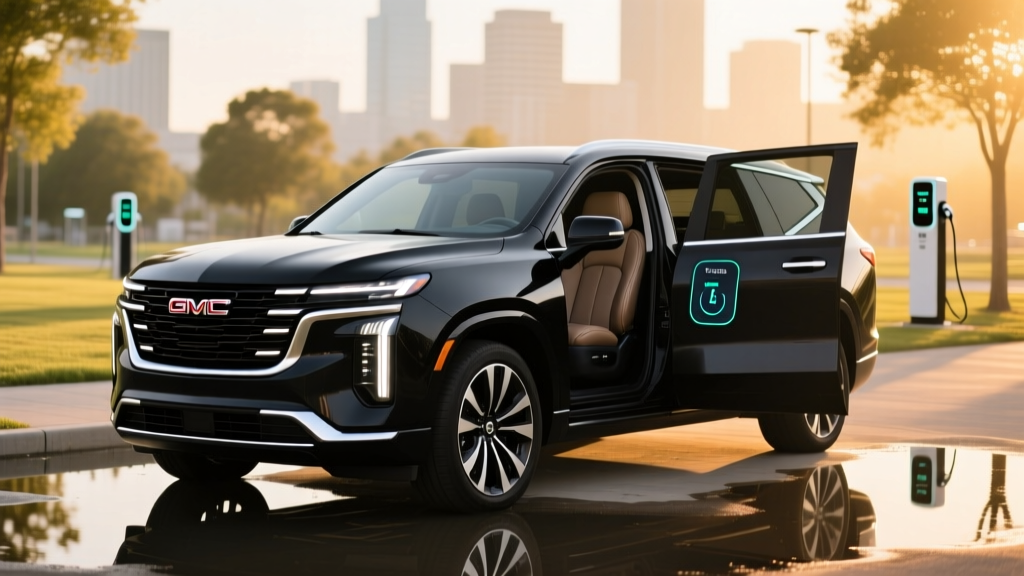
The all-electric GMC Yukon is expected for the 2027 model year (likely arriving in late 2026), built on GM's BT1 electric truck platform shared with the Silverado EV and Sierra EV. Based on the Sierra EV's architecture, expect a ~200+ kWh Ultium battery, 350–400 miles of EPA-estimated range, and peak DC fast charging around 350 kW. Pricing will likely start in the $85,000–$95,000 range for base trims, climbing past $110,000 for Denali Ultimate. Because the MSRP will almost certainly exceed the IRS §30D $80,000 cap for SUVs, most trims will not qualify for the $7,500 federal tax credit. If you need a three-row electric SUV today, the Cadillac Escalade IQ or Rivian R1S are available alternatives.
What We Know About the Electric Yukon So Far
GMC confirmed the electric Yukon is in development alongside the electric Acadia, extending GM's Ultium-based EV rollout into the full-size SUV segment. The Yukon EV will ride on the same BT1 platform underpinning the GMC Sierra EV and Chevrolet Silverado EV, which means it inherits a massive battery pack, dual-motor all-wheel drive capability, and the available 4-Wheel Steer system that dramatically tightens its turning radius — a genuine practicality win for a vehicle this size.
Here's what we can project based on the Sierra EV Denali Edition 1's published specifications and GM's Ultium platform scaling:
| Specification | Estimated Figure | Basis |
|---|---|---|
| Battery Capacity (usable) | ~200 kWh | Sierra EV Denali: 200+ kWh |
| Battery Chemistry | NMC (Nickel Manganese Cobalt) | GM Ultium large-pack standard |
| EPA Range (est.) | 350–400 miles | Sierra EV target: 400+ mi; Yukon is heavier/less aero |
| Peak DC Fast Charge Rate | ~350 kW | Sierra EV: 350 kW capable |
| 10–80% DC Charge Time (est.) | ~30–35 minutes | Large pack + 350 kW peak with taper curve |
| Level 2 Home Charging (est.) | 11.5–19.2 kW | GM Ultium platform capability |
| Horsepower | 600–750 hp (dual motor) | Sierra EV Denali: 754 hp |
| 0–60 mph (est.) | 4.0–5.0 seconds | Weight-adjusted from Sierra EV |
| Towing Capacity (est.) | ~9,000–10,000 lbs | Sierra EV: 10,000 lbs max |
| Seating | 7–8 passengers (3 rows) | Current Yukon configuration |
| Starting MSRP (est.) | $85,000–$95,000 | Sierra EV Denali starts ~$99,495; base trims lower |
| Powertrain Warranty | 8 years / 100,000 miles | GM EV standard |
Important caveat: These are projections based on platform siblings. GMC has not published final Yukon EV specs. The vehicle's greater weight and boxier profile compared to the Sierra EV pickup will likely reduce range by 10–15% from the truck's figures. We'll update this article when official EPA data is released on fueleconomy.gov.
Electric Yukon vs. Gas Yukon: Real Cost Comparison
The current gas-powered GMC Yukon Denali with its 6.2L V8 is a fuel-hungry beast, returning roughly 14 mpg city and 19 mpg highway per EPA estimates. Let's run the ownership math over five years and 75,000 miles to see where the EV stands:
| Cost Category | Gas Yukon Denali (6.2L V8) | Electric Yukon (Projected) |
|---|---|---|
| Purchase Price (MSRP) | $79,900 | $95,000 (est.) |
| Federal Tax Credit | $0 | $0 (exceeds $80K SUV cap) |
| Fuel/Energy Cost | $18,750 (15 mpg avg, $3.75/gal) | $5,625 (home charging at $0.15/kWh, 2.5 mi/kWh) |
| Maintenance | $4,500 (oil, filters, brakes, trans) | $1,500 (cabin filter, tires, wipers) |
| Insurance (est. avg) | $10,500 | $12,750 (EV premium ~15–20%) |
| Estimated Depreciation | $35,000 | $42,000 (luxury EV depreciation steeper) |
| Total 5-Year Cost | $148,650 | $156,875 |
| Cost Per Mile | $1.98 | $2.09 |
The electric Yukon is projected to save roughly $13,000–$15,000 on fuel and maintenance over five years compared to the gas V8 Denali. However, the higher purchase price (and ineligibility for the federal tax credit), steeper depreciation typical of luxury EVs, and higher insurance premiums mean the total cost of ownership is likely comparable or slightly higher than the gas version over the same period.
The equation shifts favorably if:
- You have access to cheap home electricity (under $0.12/kWh)
- You drive more than 15,000 miles per year (fuel savings scale with mileage)
- Your state offers additional EV rebates or HOV lane access
- You plan to keep the vehicle beyond 5 years (maintenance savings compound)
Charging the Electric Yukon: What You Need to Know
Charging a 200+ kWh battery pack is a fundamentally different proposition than topping up a 60 kWh compact EV. The physics of this much energy storage create both opportunities and real constraints.
Home Charging Reality
At a standard Level 2 home charger delivering 11.5 kW (48-amp circuit), refilling a 200 kWh pack from 10% to 90% would take approximately 14–16 hours. That's fine for overnight replenishment after daily driving, but it means a full charge from near-empty is an all-day affair. Upgrading to a 19.2 kW home charger (requiring a 100-amp circuit) cuts that to roughly 8–9 hours, but this requires a significant electrical panel investment — potentially $2,000–$5,000 for the panel upgrade alone if your home has a standard 100-amp or 150-amp service panel.
Real-world tip: Most daily driving (30–50 miles) only depletes 15–25 kWh, which an 11.5 kW charger replenishes in about 2 hours overnight. You rarely need a full charge. But plan your electrical infrastructure for the worst case, not the average day.
DC Fast Charging on Road Trips
The projected 350 kW peak charge rate is impressive, but the charging curve matters more than the peak number. With a 200+ kWh battery:
- 10–40% SoC: Sustained ~300–350 kW (fastest segment)
- 40–60% SoC: Tapers to ~250 kW
- 60–80% SoC: Tapers to ~150–180 kW
- 80–100% SoC: Drops below 50 kW (never fast-charge past 80% on road trips)
This curve is why the 10–80% time is estimated at 30–35 minutes despite the 350 kW peak. A larger battery can accept more total energy at high rates, partially offsetting the time penalty of the pack's size.
The Yukon EV will use the NACS (North American Charging Standard) connector, giving it native access to the Tesla Supercharger network — the most reliable and extensive DC fast-charging network in the U.S. This is a significant advantage over CCS-equipped competitors still reliant on Electrify America or EVgo for long-distance travel.
Home Charging Installation Cost Breakdown
| Item | Low Estimate | High Estimate |
|---|---|---|
| Level 2 Charger Hardware (11.5–19.2 kW) | $500 | $1,200 |
| Electrician Labor (240V circuit run) | $800 | $2,500 |
| Electrical Panel Upgrade (if needed, 200A) | $1,500 | $4,000 |
| Permit & Inspection | $100 | $400 |
| Total | $2,900 | $8,100 |
For a vehicle with a 200+ kWh battery, I strongly recommend budgeting for the 19.2 kW charger and ensuring your panel can support it. The incremental cost over an 11.5 kW setup is typically $800–$1,500 in hardware and wiring, and the time savings on large-pack replenishment are meaningful.
Real-World Range: What the EPA Sticker Won't Tell You
GM targets 400+ miles for the Sierra EV, but the Yukon's heavier curb weight (likely 8,500–9,000 lbs) and less aerodynamic SUV profile will reduce efficiency. Here's how a projected 375-mile EPA range translates to real-world scenarios:
Projected Real-World Range for Electric Yukon
- EPA Estimate: ~375 miles (projected)
- Highway (70–75 mph, mild weather): ~300–325 miles
- Mixed city/highway (spring/fall): ~340–360 miles
- Cold weather (below 32°F, heater on): ~250–290 miles
- Towing (5,000 lb trailer): ~175–210 miles
The cold-weather reduction is significant and non-negotiable — lithium-ion batteries lose efficiency in cold temperatures, and cabin heating in a vehicle this large draws substantial energy. A heat pump (expected on the Yukon EV) helps mitigate this by 5–10% compared to resistive heating, but physics still wins in sub-freezing conditions.
If you live in the upper Midwest, New England, or mountain states and regularly drive 200+ miles in winter, plan your routes around charging stops even with a "400-mile" battery. The NHTSA and independent testers consistently show 25–35% range reduction in extreme cold for large EVs.
Tax Credit Eligibility: The Hard Truth
The IRS §30D Clean Vehicle Credit has strict MSRP caps that will almost certainly disqualify the electric Yukon:
- MSRP Cap for SUVs: $80,000 maximum — the Yukon EV will likely start above this
- Buyer Income Cap: $300,000 (joint), $225,000 (head of household), $150,000 (single)
- Battery Sourcing: Critical minerals and battery components must meet escalating domestic-content thresholds
- Point-of-Sale Transfer: Eligible credits can be transferred to the dealer for an upfront price reduction — but only if the vehicle qualifies
- Assembly: Must be assembled in North America (likely satisfied — GM's Factory ZERO in Michigan)
Even if GMC introduces a base trim priced just under $80,000, the battery sourcing requirements for 2026–2027 are stringent enough that eligibility is uncertain. Do not factor the $7,500 federal credit into your purchase budget unless GMC explicitly confirms eligibility closer to launch. Consult a tax professional for your specific situation.
Electric Yukon vs. the Alternatives: Decision Framework
| Vehicle | Est. Range | Starting Price | Seating | Status |
|---|---|---|---|---|
| GMC Yukon EV | ~375 mi | $85,000–$95,000 | 7–8 | Announced (2027 MY) |
| Cadillac Escalade IQ | ~450 mi | $129,990 | 7 | On sale |
| Rivian R1S (Tri Motor) | ~410 mi | $99,900 | 7 | On sale |
| Tesla Model X | 335 mi | $79,990 | 5–7 | On sale |
| Kia EV9 | 304 mi | $54,900 | 6–7 | On sale |
Which Three-Row EV Is Right for You?
Wait for the Electric Yukon if:
- You need genuine 8-passenger seating with adult-sized third-row space
- You want GM's Super Cruise hands-free driving system (likely standard on upper trims)
- You tow regularly and need 9,000+ lb capacity in an EV
- You prefer traditional SUV styling and a dealership service network
Buy the Rivian R1S now if:
- You want a proven, available vehicle with strong off-road capability
- You value over-the-air updates and a tech-forward ownership experience
- 7-passenger seating is sufficient
Buy the Kia EV9 now if:
- Budget is a primary concern (starts $30K+ less than projected Yukon EV)
- 304 miles of range is adequate for your driving patterns
- You want available Level 2 hands-free highway driving (Highway Driving Assist 2)
Buy the Tesla Model X if:
- You prioritize Supercharger network access and the lowest starting price in this segment
- Falcon-wing doors and performance (0–60 in 3.8s) appeal to you
- Third-row space for adults is not a priority
Common Misconceptions About the Electric Yukon
| Myth | Fact |
|---|---|
| "It'll get the $7,500 federal tax credit." | Almost certainly not. The §30D SUV MSRP cap is $80,000, and the Yukon EV will start well above that. Even a theoretical sub-$80K base trim would need to pass stringent battery-sourcing requirements. |
| "400-mile range means I'll never need to charge on road trips." | Real-world highway range will be closer to 300–325 miles. In cold weather or while towing, plan for stops every 200–250 miles. Always budget a 20% range buffer. |
| "I can charge it on a regular 120V outlet overnight." | A 120V Level 1 outlet delivers roughly 1.4 kW — adding about 3–4 miles of range per hour. Charging a 200 kWh pack from empty would take over 140 hours. Level 2 home charging is essentially mandatory for daily ownership. |
| "The battery will need replacing in 5 years." | GM's Ultium battery warranty covers 8 years/100,000 miles against degradation below 60–70% of original capacity. Real-world data from GM's earlier EVs shows typical degradation of 8–12% over 100,000 miles. A replacement, if ever needed, would likely cost $15,000–$25,000 out of warranty. |
| "It's self-driving with Super Cruise." | Super Cruise is an SAE Level 2 driver-assistance system. It allows hands-free driving on mapped divided highways, but you must remain attentive, eyes on the road, and ready to take over immediately. It does not handle city streets, construction zones, or unmapped roads autonomously. |
First-Time EV Buyer Checklist for the Electric Yukon
If the electric Yukon will be your first EV, here's what you need to confirm before placing a reservation:
- Home charging access: Do you own a home with a garage or dedicated parking spot near your electrical panel? Renters and street-parkers face serious challenges with a vehicle this size and battery capacity.
- Electrical panel capacity: Have a licensed electrician assess whether your panel can support a 60-amp or 80-amp dedicated circuit. A 200-amp panel is typically the minimum for 19.2 kW charging alongside normal household loads.
- Daily driving pattern: If your daily round-trip commute is under 80 miles, an overnight Level 2 charge will keep you topped up indefinitely without ever visiting a public charger.
- Climate considerations: If you regularly experience sub-freezing winters, budget 25–35% range loss into your trip planning. A garage-kept Yukon EV will precondition its battery more efficiently than one parked outside.
- Road-trip routes: Map your most common long-distance routes on PlugShare or the Tesla Supercharger map. Verify that NACS-equipped chargers with 150+ kW capability exist at reasonable intervals (every 200–250 miles).
- Insurance quotes: Get quotes before purchasing. Large luxury EVs carry 15–25% insurance premiums over their gas counterparts due to higher repair costs and total-loss thresholds.
Frequently Asked Questions
When will the electric GMC Yukon be available to buy?
GMC has confirmed the electric Yukon is in development, targeting the 2027 model year. Based on GM's product cadence, expect reservations to open in late 2026 with deliveries beginning in early-to-mid 2027. This timeline is subject to change based on supply chain and production readiness at Factory ZERO or other GM EV assembly plants.
Will the electric Yukon have three rows of seating?
Yes. The current gas Yukon offers 7- or 8-passenger seating across three rows, and the EV version is expected to maintain this configuration. The BT1 platform's skateboard architecture (battery below the floor) preserves interior volume. Expect the third row to be comparable to or slightly better than the gas Yukon's, thanks to the flat floor and absence of a transmission tunnel.
How much will it cost to charge the electric Yukon at home?
At the U.S. average residential electricity rate of roughly $0.16/kWh, fully charging a 200 kWh battery costs approximately $32. However, you'll rarely charge from 0–100%. A typical day of 40 miles of driving consumes about 16–20 kWh, costing roughly $2.50–$3.20 to replenish at home. Compare that to $10–$12 in gasoline for the same distance in the V8 Yukon Denali.
Can the electric Yukon tow a boat or camper?
Projected towing capacity is 9,000–10,000 pounds, matching the Sierra EV. However, towing dramatically reduces range — expect a 40–55% reduction depending on trailer weight and aerodynamics. A 5,000-pound camper trailer would likely cut range to 175–210 miles. If you tow frequently over long distances, plan charging stops carefully and understand that DC fast charging with a trailer attached is logistically awkward at many stations.
Is the electric Yukon a better buy than the gas Yukon?
Financially, the total cost of ownership is projected to be comparable over 5 years, with the EV's fuel and maintenance savings offset by its higher purchase price, no federal tax credit, and steeper depreciation. The EV wins on daily driving smoothness, instant torque, home "refueling" convenience, and zero tailpipe emissions. The gas Yukon wins on lower upfront cost, established long-distance refueling infrastructure, and proven long-term reliability data. Your decision should hinge on your home charging situation, daily mileage, and how long you plan to keep the vehicle.