Quick Verdict: The 2026 Tesla Lease Deal at a Glance
Tesla's leasing structure has always been a polarizing topic among EV buyers. For the 2026 Model Y Long Range AWD, Tesla offers lease terms that can look attractive on paper — lower monthly payments than financing, no long-term battery degradation risk, and the ability to upgrade in three years. But the math gets complicated when you factor in the federal EV tax credit (§30D), which typically benefits the lessor (Tesla) rather than the lessee, and the fact that Tesla does not offer third-party lease buyouts at term end.
This review examines whether a Tesla lease deal in 2026 makes financial sense for the Model Y, the most popular electric SUV in America. We'll run the real numbers — range, charging, efficiency, pricing, and total cost — so you can decide if leasing is the right move or if purchasing outright (and claiming the tax credit yourself) is smarter.
| Spec | Value |
|---|---|
| EPA Estimated Range | 320 miles |
| Battery Capacity | ~78 kWh usable (NMC chemistry) |
| Drivetrain | Dual-Motor AWD |
| Horsepower | 384 hp (combined) |
| 0–60 mph | 4.8 seconds |
| Max DC Fast Charge | 250 kW peak |
| 10–80% DC Fast Charge | ~27 minutes |
| Level 2 Home Charging | 11.5 kW (~44 mi/hr) |
| Efficiency | 122 MPGe combined / 28 kWh/100 mi |
| Cargo Volume | 30.2 cu ft (rear seats up) / 72.1 cu ft (folded) |
| Base MSRP | $47,990 (before destination) |
| Battery Warranty | 8 years / 120,000 miles (70% retention) |
Real-World Range: What the EPA Sticker Doesn't Tell You
Real-World Highway (70 mph): ~265–285 miles
Real-World Cold Weather (below 32°F): ~220–250 miles
Combined Mixed Driving: ~280–300 miles
The 2026 Model Y Long Range AWD carries an EPA-estimated 320 miles of range. That number is achievable in mild weather with mixed city/highway driving and moderate climate control use. However, real-world conditions rarely match the test cycle perfectly.
On sustained highway driving at 70–75 mph, expect the range to drop to roughly 265–285 miles. The Model Y's aerodynamic profile helps at speed, but the physics of pushing a 4,400-lb crossover through air resistance still applies. In cold weather — particularly below freezing — lithium-ion battery internal resistance increases and cabin heating draws significant energy. Without preconditioning, you can lose 20–30% of rated range, dropping to around 220–250 miles on a full charge.
The Model Y Long Range uses a nickel-manganese-cobalt (NMC) battery pack with approximately 78 kWh of usable capacity. NMC offers higher energy density than LFP (lithium iron phosphate), which is why it's used in the Long Range trim. The trade-off is that NMC degrades slightly faster over time and Tesla recommends daily charging to 80% rather than 100% for longevity — reserving full charges for road trips. This effectively gives you ~256 miles of daily usable range on an 80% charge, which is still ample for most commutes.
Charging Speed: DC Fast Charging and Home Level 2
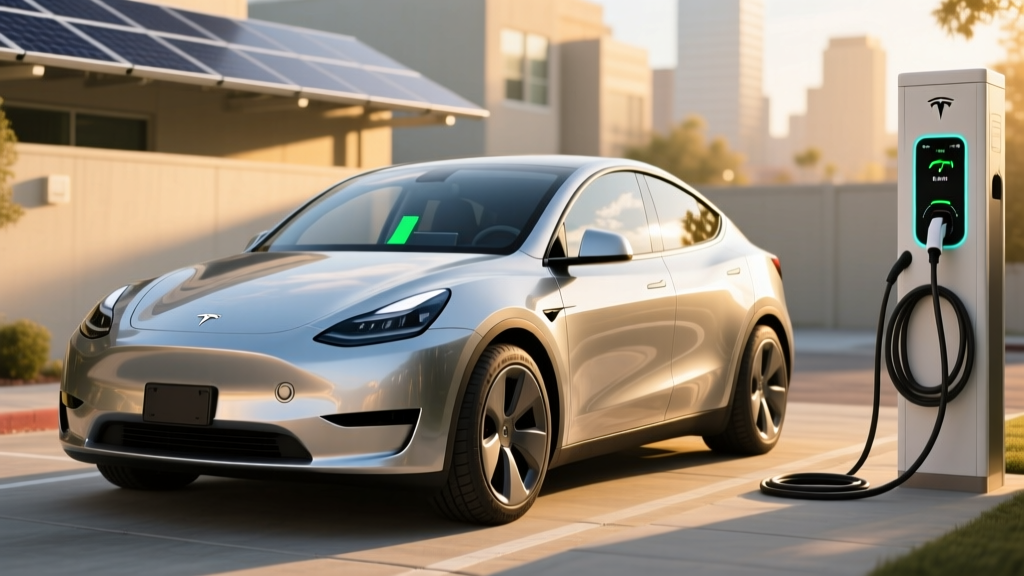
Charging speed is where Tesla's Supercharger network advantage becomes tangible. The 2026 Model Y Long Range supports up to 250 kW peak DC fast charging on V3 Superchargers. However, peak rate is not sustained rate — the charge curve tapers significantly as the battery fills.
| Charging Method | Power / Rate | Time / Range Added |
|---|---|---|
| DC Fast Charge (V3 Supercharger) | 250 kW peak, ~170 kW sustained avg | 10–80% in ~27 min; ~175 mi in 15 min |
| DC Fast Charge (CCS adapter, 150 kW station) | ~150 kW peak | 10–80% in ~35 min |
| Level 2 Home (Tesla Wall Connector, 48A) | 11.5 kW | ~44 miles per hour; full charge ~7 hrs |
| Level 2 Home (32A mobile connector) | 7.7 kW | ~30 miles per hour; full charge ~10 hrs |
| Level 1 (120V standard outlet) | ~1.4 kW | ~4 miles per hour; emergency use only |
At a V3 Supercharger, the Model Y will pull close to 250 kW between roughly 10–30% state of charge, then taper to 150–170 kW through 50%, and drop further to under 50 kW above 80%. This is standard lithium-ion charge-curve behavior — the reason we quote 10–80% times rather than 0–100%. Charging past 80% at a DC fast charger is painfully slow and generates excess heat; Tesla's navigation system will often route you to arrive at chargers with lower SoC to maximize time in the fast-charging sweet spot.
For home charging, a Tesla Wall Connector on a 60-amp circuit delivers 11.5 kW (48 amps continuous), adding roughly 44 miles of range per hour. A full overnight charge from 20% to 80% takes about 4–5 hours. Installation of a 240V/60A circuit typically runs $800–$2,000 depending on your electrical panel's capacity and the distance from panel to charger location. If your panel needs upgrading from 100A to 200A service, add $1,500–$3,000.
Lease vs. Buy: The 2026 Tesla Lease Deal Math
Here's where the Tesla lease deal analysis gets critical. Tesla's leasing structure differs from traditional automaker leases in several important ways:
- No third-party buyout at lease end. Unlike most leases where you can purchase the vehicle at residual value, Tesla leases (in most states) do not offer a buyout option to the lessee. You return the car or start a new lease.
- The federal tax credit goes to Tesla, not you. Under IRS §30D rules, the entity that owns the vehicle (the lessor) claims the $7,500 federal tax credit. Tesla may pass some of this savings to you via lower monthly payments, but they are not obligated to do so, and the pass-through amount varies.
- Mileage limits are strict. Tesla leases typically come with 10,000, 12,000, or 15,000 miles per year options. Excess mileage charges run $0.20–$0.25 per mile, which can add up fast for road-trippers or long commuters.
- No modification freedom. You cannot wrap the car, install aftermarket wheels, or modify the suspension without risking lease-end charges.
| Cost Factor | Lease (Estimated) | Purchase (Financed) |
|---|---|---|
| Monthly Payment | ~$499–$599/mo (10k mi/yr) | ~$680–$750/mo (6.5% APR, 72 mo) |
| Federal Tax Credit (§30D) | Goes to Tesla (lessor) | $7,500 to buyer (if eligible) |
| Point-of-Sale Transfer | Not available to lessee | Up to $7,500 off at purchase (if eligible) |
| Down Payment | ~$4,500–$6,000 (first mo + fees) | ~$5,000–$7,500 (down + taxes/fees) |
| Equity at 36 Months | $0 (return the car) | ~$8,000–$12,000 equity (est.) |
| Total 36-Month Out-of-Pocket | ~$22,500–$27,500 | ~$29,500–$34,000 (minus credit) |
| End-of-Term Flexibility | Walk away or re-lease | Keep, sell, or trade in |
The lease looks cheaper month-to-month, but the purchase path lets you claim the §30D federal tax credit — up to $7,500 — which can be transferred to the dealer at point of sale as an immediate price reduction under current IRS rules. To qualify, you must meet income caps ($150,000 single / $300,000 joint modified AGI), the vehicle MSRP must not exceed $80,000 for SUVs (the Model Y qualifies), and the battery must meet critical mineral and North American assembly/sourcing thresholds. Always verify current-year eligibility on IRS.gov before committing.
The critical insight: if you qualify for the full $7,500 credit and plan to keep the car beyond 3–4 years, purchasing almost always wins on total cost of ownership. The lease only makes sense if you value lower monthly payments, want to avoid battery degradation risk, or plan to upgrade frequently.
Performance, Efficiency, and Daily Drivability
The 2026 Model Y Long Range AWD delivers 384 combined horsepower from its dual-motor setup, reaching 0–60 mph in 4.8 seconds. That's genuinely quick for a family crossover — quicker than most V6 competitors in the segment. The dual-motor AWD system provides confident traction in rain and light snow, with torque vectoring that feels natural rather than intrusive.
Efficiency is where the Model Y shines. At 122 MPGe combined (28 kWh per 100 miles), it's one of the most efficient electric SUVs on the market. For context, charging at home on a national average electricity rate of $0.16/kWh, you're paying roughly $0.045 per mile — compared to $0.12–$0.15 per mile for a 25-MPG gas SUV at $3.50/gallon. Over 15,000 miles per year, that's a fuel savings of approximately $1,100–$1,600 annually.
The regenerative braking system is aggressive by default (Tesla's one-pedal driving mode), though the 2026 model year restores some driver-adjustable regen settings. The heat pump — standard on all trims — significantly improves cold-weather efficiency by scavenging waste heat from the powertrain rather than relying solely on resistive cabin heating.
Interior, Cargo, and Technology
The Model Y's minimalist interior remains divisive. The 15.4-inch center touchscreen handles virtually all vehicle controls — there are no physical buttons for climate, mirrors, or glovebox. For some, this is clean and futuristic; for others, it's a frustrating distraction while driving.
Cargo space is a genuine strength: 30.2 cubic feet behind the second row and 72.1 cubic feet with the 60/40 split rear seats folded. The rear trunk opening is wide and the load floor is flat. There's also a small front trunk (frunk) for additional storage, though it's modest at roughly 4.1 cubic feet.
Rear-seat legroom measures 41.6 inches — generous for the class — though the seat cushion is relatively flat and low, which taller passengers notice on longer trips. The optional third row (available on some trims) is strictly for small children and eats into cargo space when deployed.
On the tech front, the Model Y includes:
- Tesla's latest HW4 Autopilot hardware with improved camera resolution
- Basic Autopilot (lane centering + adaptive cruise) included standard
- Full Self-Driving (Supervised) available as an $8,000 add-on or $99/month subscription
- Over-the-air software updates that regularly add features
- Sentry Mode dashcam surveillance while parked
- Dog Mode, Camp Mode, and theater-style streaming on the center display
Warranty, Reliability, and Long-Term Ownership
Tesla's warranty structure for the 2026 Model Y Long Range:
- Basic Vehicle Limited Warranty: 4 years / 50,000 miles
- Battery & Drive Unit Warranty: 8 years / 120,000 miles (minimum 70% capacity retention)
- Rust-Through Warranty: 12 years / unlimited miles
The 8-year/120,000-mile battery warranty is competitive with the segment. The 70% retention threshold means Tesla will replace or repair the battery if it drops below 70% of original capacity within the warranty period. Real-world data from high-mileage Tesla owners suggests NMC packs typically retain 85–90% capacity at 100,000 miles when following recommended charging practices (daily 80% limit, avoiding prolonged 100% or near-0% states).
If you're leasing, battery degradation is largely Tesla's problem — another point in the lease's favor for risk-averse buyers. But if you're buying, the data suggests the battery should outlast the typical ownership period without issue.
Reliability remains a mixed bag. Tesla's panel gaps, paint quality, and interior fit-and-finish have improved at the Austin and Shanghai factories but still lag behind legacy automakers like Hyundai and BMW in initial quality surveys. Service center wait times can be long in some metro areas, though Tesla's mobile ranger service handles many common repairs at your home or office.
Pros
- Class-leading efficiency (122 MPGe) and real-world range
- Access to the Supercharger network — the most reliable DC fast-charging ecosystem
- Strong performance (4.8s 0–60) with practical cargo space
- Continuous OTA updates add features post-purchase
- Low per-mile fuel cost with home charging
- Strong resale value relative to most EVs
Cons
- Lease does not pass federal tax credit to lessee directly
- No lease buyout option at term end (most states)
- Minimalist interior frustrates some drivers (no physical controls)
- FSD (Supervised) is expensive and still requires full driver attention
- Insurance premiums tend to be higher than segment average
- Fit and finish still inconsistent compared to legacy competitors
Competitor Comparison: Model Y vs. the Field
The Model Y Long Range doesn't exist in a vacuum. Key competitors for 2026 include:
| Spec | Tesla Model Y LR AWD | Hyundai Ioniq 5 Limited AWD | Ford Mustang Mach-E Ext. Range AWD | BMW iX xDrive50 |
|---|---|---|---|---|
| EPA Range | 320 mi | 290 mi | 312 mi | 324 mi |
| Battery (kWh) | ~78 (NMC) | 77.4 (NMC) | 91 (NMC) | 105.2 (NMC) |
| Peak DC Charge | 250 kW | 238 kW (800V) | 150 kW | 200 kW |
| 10–80% Time | ~27 min | ~18 min | ~45 min | ~31 min |
| 0–60 mph | 4.8s | 5.1s | 5.1s | 4.4s |
| Base MSRP | $47,990 | $52,600 | $48,995 | $87,250 |
| §30D Credit Eligible | Yes | Yes (verify sourcing) | Yes | No (MSRP > $80k cap) |
The Ioniq 5's 800V architecture gives it a charging speed advantage (18 minutes 10–80%), but it has less range and a smaller Supercharger-equivalent network. The Mach-E is a strong all-rounder but charges noticeably slower. The BMW iX is more luxurious but nearly twice the price and ineligible for the federal credit due to the $80,000 MSRP cap for SUVs.
For a Tesla lease deal specifically, the Model Y's combination of range, Supercharger access, and strong residual values (which keep lease payments lower) makes it the most leaseable option in the group — provided you accept the no-buyout limitation.
Who Should Lease the 2026 Model Y?
A Tesla lease deal works best for:
- Commitment-averse buyers who want to drive a new EV every 3 years without worrying about resale value or battery degradation
- Business users who can deduct lease payments as a business expense (consult a tax professional)
- Short-term residents or expats who don't want the hassle of selling a car when relocating
- Lower monthly-budget buyers who prioritize cash flow over equity building
Purchasing makes more sense for:
- Tax-credit-eligible buyers who can claim the full $7,500 §30D credit at point of sale
- High-mileage drivers who would exceed lease mileage limits
- Long-term keepers who plan to own the car 5+ years and want equity
- Customizers who want to wrap, tint, or modify the vehicle freely
Frequently Asked Questions
What is the real-world range of the 2026 Tesla Model Y Long Range?
The EPA rates it at 320 miles, but expect 265–285 miles on highway road trips at 70+ mph and as low as 220–250 miles in freezing temperatures. Mixed daily driving in moderate weather will get you close to 290–300 miles. Daily charging to 80% (recommended for NMC batteries) gives you roughly 256 miles of usable range.
How fast does the Model Y charge at home and on the road?
On a V3 Supercharger, it peaks at 250 kW and charges from 10–80% in about 27 minutes. At home on a Level 2 Tesla Wall Connector (11.5 kW), it adds roughly 44 miles of range per hour, meaning a typical overnight session from 20% to 80% takes about 4–5 hours.
How much does the 2026 Model Y cost after tax credits?
The base MSRP is $47,990 before destination. If you purchase and qualify for the full §30D federal tax credit ($7,500 point-of-sale transfer), the effective price drops to approximately $40,490 plus destination and state fees. Lease buyers do not directly receive the credit — Tesla (as lessor) claims it, and may or may not reflect savings in the monthly payment.
Does the Model Y qualify for the federal EV tax credit?
Yes, the 2026 Model Y qualifies under current IRS §30D rules for up to $7,500, provided the buyer meets income caps ($150K single / $300K joint MAGI), the vehicle MSRP is under the $80,000 SUV threshold (it is), and the battery meets critical mineral and component sourcing requirements. Rules can change — always verify on IRS.gov before purchasing.
Is it worth buying vs. leasing the Model Y in 2026?
If you qualify for the $7,500 tax credit and plan to keep the car 4+ years, buying is almost always cheaper long-term. Leasing makes sense if you want lower monthly payments, don't want battery degradation risk, or plan to upgrade in 3 years. The no-buyout clause on Tesla leases is the biggest drawback — you build zero equity.
What are the biggest pros and cons of the Model Y?
Pros: Excellent efficiency (122 MPGe), strong Supercharger network, fast DC charging, generous cargo space, continuous OTA updates, strong resale value. Cons: Minimalist controls aren't for everyone, FSD is expensive and still Level 2 only, higher insurance costs, no lease buyout option, fit-and-finish variability.
Can I use non-Tesla chargers with the Model Y?
Yes. The 2026 Model Y uses the NACS (North American Charging Standard) connector natively. You can charge at Tesla Superchargers and destination chargers directly. For CCS-based networks (Electrify America, EVgo, some ChargePoint stations), you'll need a CCS-to-NACS adapter — Tesla sells one for approximately $250, and third-party options are also available. Charging speeds on non-Tesla networks depend on the station's output and the adapter's rated capacity.