The Quick Answer: Electric Flying Vehicles Aren't Ready for Consumers
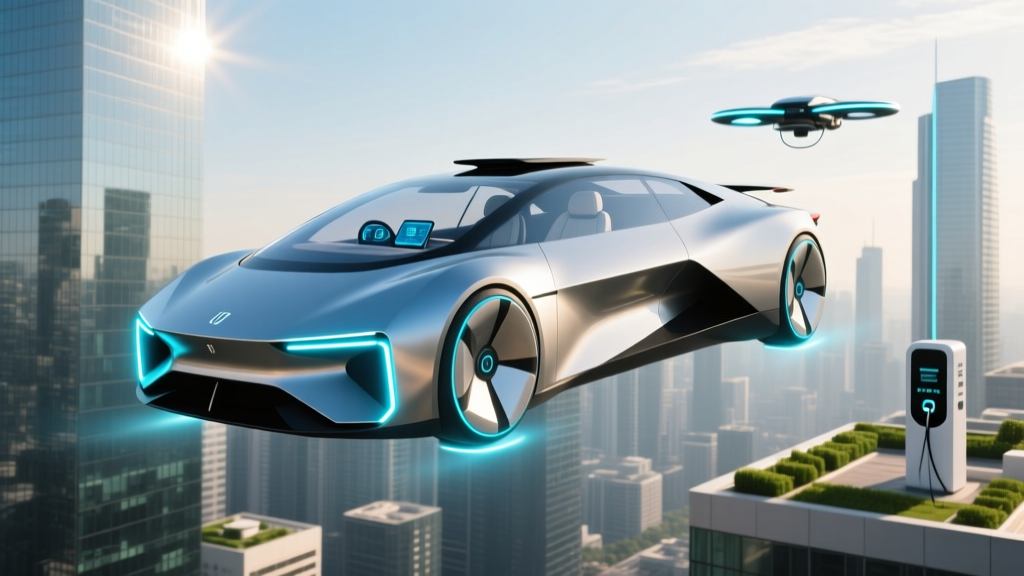
Bottom line: Electric flying vehicles — technically called eVTOLs (electric Vertical Takeoff and Landing aircraft) — are not available for consumer purchase in 2026. Companies like Joby Aviation and Archer Aviation are pursuing FAA certification for air-taxi services, not personal ownership. If you're researching "electric flying" as a car-buying option, your practical choice today remains a ground-based battery-electric vehicle (BEV) or plug-in hybrid (PHEV). The closest thing to an "electric flying car" you can actually buy is a high-performance EV like the Lucid Air Sapphire (1,234 hp, 0-60 in 1.89 seconds) — firmly on the ground, but breathtakingly quick.
The search term "electric flying" has surged as eVTOL startups capture headlines and investors pour billions into urban air mobility. But for the research-heavy EV shopper, the question isn't whether flying cars are cool — it's whether the technology affects your next vehicle purchase. It doesn't, at least not yet. What does matter is understanding how today's ground-based EVs stack up against gas and hybrid alternatives on cost, range, and daily practicality.
What "Electric Flying" Actually Means: eVTOL vs. EV
When people search for electric flying vehicles, they're typically encountering two distinct categories:
- eVTOL aircraft: Electric air taxis being developed by Joby Aviation, Archer Aviation, Volocopter, and others. These are regulated as aircraft by the FAA, not as automobiles by NHTSA. Expected commercial service launches target 2026–2028 in select cities, but only as ride-hailing-style services — you won't own one.
- Road-legal electric vehicles with aviation branding: A few concepts (like the Alef Model A or Samson Sky Switchblade) claim "flying car" status, but none are in production or available for general consumer purchase. Most require a pilot's license and operate under experimental aircraft rules.
For the purposes of this guide, we'll focus on what you can actually buy and drive: battery-electric vehicles and plug-in hybrids available in 2026. The eVTOL sector uses many of the same battery chemistries (NMC cells, high C-rate discharge) and charging principles as ground EVs, so the technology overlap is real — just not in a vehicle you'll park in your garage.
Ground EVs vs. Gas Cars: 2026 Cost Comparison
Since electric flying cars aren't a buying option, the real decision is ground-based: BEV, PHEV, or conventional gas vehicle. Here's how a representative 2026 EV compares to a similarly priced gas car over five years of ownership.
| Category | Tesla Model Y LR (BEV) | Toyota RAV4 LE (Gas AWD) |
|---|---|---|
| MSRP (base) | $44,990 | $30,495 |
| Federal tax credit (§30D) | Up to $7,500 (eligibility varies) | $0 |
| Effective purchase price | ~$37,490 | $30,495 |
| Fuel/energy (5 yrs, 15k mi/yr) | $3,750 (home L2 @ $0.13/kWh) | $9,375 (28 MPG avg @ $3.50/gal) |
| Maintenance (5 yrs) | $1,500 | $3,500 |
| Insurance (5 yrs avg) | $9,500 | $7,000 |
| Estimated depreciation | $18,000 | $14,000 |
| 5-Year Total Cost | ~$70,240 | ~$64,870 |
Key takeaways: the EV's higher MSRP is partially offset by the §30D federal tax credit (up to $7,500, subject to MSRP caps, buyer income limits, and battery-sourcing requirements — consult a tax professional). Fuel savings are substantial: roughly $5,600 over five years with home charging. But EV insurance premiums run 20–35% higher on average, and depreciation on EVs has been steeper than comparable gas vehicles in recent years, though this is stabilizing.
According to fueleconomy.gov, the average EV achieves 100–130 MPGe combined, translating to $0.04–$0.06 per mile on home electricity versus $0.12–$0.15 per mile for a 28 MPG gas vehicle.
Real-World Range and Charging: What First-Time Buyers Must Know
Range anxiety is the top concern for first-time EV buyers, and it deserves honest treatment — not dismissal. Here's what the numbers actually look like:
EPA Sticker vs. Reality (2026 Tesla Model Y Long Range):
- EPA rated range: 320 miles
- Real-world highway (70 mph, moderate climate): ~260–280 miles
- Real-world cold weather (below 30°F): ~210–240 miles
- Battery capacity: ~75 kWh usable, NMC chemistry
The gap between EPA estimates and real-world driving stems from the EPA's mixed-cycle test, which includes low-speed city driving where regenerative braking recovers energy. Sustained highway speeds above 70 mph increase aerodynamic drag significantly, and cold temperatures reduce battery efficiency while demanding cabin heating. Most modern EVs include a heat pump (the Model Y does), which mitigates but doesn't eliminate cold-weather range loss.
Charging Speeds: kW vs. kWh Explained
This is the most common point of confusion for new EV buyers:
- kWh (kilowatt-hours) = energy capacity. Think of it as the size of your "fuel tank." A 75 kWh battery stores 75 kilowatt-hours of energy.
- kW (kilowatts) = power, or the rate of energy transfer. A 250 kW charger delivers energy at a rate of 250 kilowatts.
| Level | Power (kW) | Miles Added per Hour | Typical Use Case |
|---|---|---|---|
| Level 1 (120V outlet) | 1.4 kW | 3–5 miles | Overnight trickle, emergencies |
| Level 2 (240V home/public) | 7.2–19.2 kW | 25–65 miles | Daily home charging, workplace |
| DC Fast Charge | 50–350 kW | 150–1,000+ miles/hr (peak) | Road trips, 10–80% in 18–40 min |
Critical nuance: DC fast charging doesn't sustain peak kW. A vehicle advertising "250 kW peak" may only hold that rate from 10–30% State of Charge (SoC), then taper progressively. The Model Y peaks around 250 kW but averages roughly 150 kW over a 10–80% session, taking about 25–30 minutes. Always look for 10–80% charge times, not peak kW figures.
Preconditioning — warming the battery before arriving at a DC fast charger — is essential for achieving advertised charge rates. Most EVs precondition automatically when you navigate to a charger in the built-in navigation system. Skipping this step in cold weather can cut your charge speed in half.
Home Charging Access: The Make-or-Break Factor
Not every EV buyer can charge at home, and this is the single biggest practical limitation of EV ownership. Here's a realistic breakdown:
| Component | Low End | High End | Notes |
|---|---|---|---|
| Level 2 EVSE hardware | $300 | $700 | ChargePoint, Emporia, Wallbox, Tesla |
| Electrician labor | $500 | $2,500 | Depends on run length, conduit |
| Permit & inspection | $50 | $300 | Varies by municipality |
| Electrical panel upgrade (if needed) | $1,500 | $4,000 | Required if panel is near capacity |
| Total (no panel upgrade) | $850 | $3,500 | Most homes with 200A service |
| Total (with panel upgrade) | $2,350 | $7,500 | Older homes, 100A service |
Always get a load calculation from a licensed electrician before committing. A 200-amp panel with spare capacity handles a 48-amp (11.5 kW) Level 2 circuit easily. A 100-amp panel in an older home may require a costly upgrade or a lower-amperage charger.
If you live in an apartment, condo, or street-parking situation without home charging access, a PHEV may be a better fit than a full BEV. You'll get 25–45 miles of electric-only range for daily commuting, with a gas engine covering longer trips — no charging infrastructure dependency.
Myths vs. Facts: Common Misconceptions About EVs
| Myth | Fact |
|---|---|
| "EV batteries need replacing every few years" | Federal law mandates battery warranties of 8 years/100,000 miles minimum. Real-world data shows most NMC batteries retain 85–92% capacity after 100k miles. LFP chemistries (used in standard-range Teslas and some Rivians) degrade even slower. |
| "EVs are worse for the environment because of battery mining" | Lifecycle analyses by the Union of Concerned Scientists show EVs produce fewer emissions than gas cars in every U.S. grid region, even accounting for battery manufacturing. The gap widens as grids add renewable energy. |
| "You can't take road trips in an EV" | Tesla's Supercharger network has 60,000+ stalls globally. CCS-based networks (Electrify America, EVgo) and the expanding NACS standard mean most highway corridors have DC fast charging every 50–100 miles. Plan 20–30 minute stops every 2–3 hours. |
| "Electric flying cars will replace EVs soon" | eVTOL air taxis are aircraft, not cars. They won't be consumer-owned, will serve limited urban routes, and won't affect ground transportation for decades — if ever. |
| "All EVs qualify for the $7,500 tax credit" | Under current IRS §30D rules, eligibility depends on MSRP caps ($55k sedans, $80k SUVs/trucks), buyer income limits ($150k single, $300k joint), battery sourcing requirements, and final assembly in North America. Many popular EVs qualify for partial or no credit. |
Decision Framework: BEV, PHEV, or Gas?
Choose a BEV (full electric) if:
- You have reliable home Level 2 charging access
- Your daily commute is under 200 miles round-trip
- You want the lowest per-mile fuel cost ($0.04–$0.06/mi)
- You're comfortable planning 20–30 min DC fast-charge stops on road trips
- You qualify for federal/state incentives that narrow the upfront price gap
Choose a PHEV (plug-in hybrid) if:
- You lack consistent home charging but can plug in occasionally
- Your commute is under 40 miles (covering most daily driving on electric only)
- You take frequent long road trips and don't want to plan around chargers
- You want EV-like daily driving with gas-engine range insurance
Choose a gas vehicle if:
- You have zero charging access at home or work
- You regularly tow heavy loads (trailers, boats) where EV range drops 40–60%
- You live in an extreme cold climate with limited charging infrastructure
- Your budget is firmly under $30,000 and you need maximum vehicle choice
The Bottom Line: Ground EVs Are Ready; Flying Ones Aren't
The electric flying car concept captures imagination, but in 2026 it remains an aviation-industry story, not a car-buying decision. The eVTOL sector shares battery technology with ground EVs — high-discharge NMC cells, advanced thermal management, and eventually solid-state batteries — but these are aircraft regulated by the FAA, not vehicles you'll test-drive at a dealership.
For today's buyer, the practical electrified vehicle landscape is mature and growing. A 2026 BEV delivers 250–400 miles of EPA range, DC fast charges from 10–80% in 18–35 minutes, and costs $0.04–$0.06 per mile to fuel at home. A PHEV offers 25–45 electric-only miles with gas backup. Both are proven technologies with real ownership data, established charging networks, and federal incentive programs.
Before you buy, verify your tax credit eligibility on IRS.gov, check your home's electrical capacity with a licensed electrician, compare real-world range (not just EPA stickers) using fueleconomy.gov, and honestly assess your charging access and driving patterns. The right electrified vehicle is the one that fits your actual life — not a concept from a trade show floor.
Frequently Asked Questions
Can I buy an electric flying car in 2026?
No. eVTOL aircraft from companies like Joby and Archer are pursuing FAA certification for commercial air-taxi services, not personal ownership. No flying car is available for consumer purchase. The closest practical option is a ground-based EV or PHEV.
How much does it cost to charge an EV at home vs. buying gas?
Home charging at the U.S. average of $0.13/kWh costs roughly $0.04–$0.06 per mile for a typical EV (3–4 mi/kWh). Gasoline at $3.50/gallon for a 28 MPG vehicle costs about $0.125 per mile. Over 15,000 miles annually, that's roughly $750 in electricity vs. $1,875 in gasoline — a savings of about $1,125 per year with home charging.
Do I need a special electrical setup for an EV?
For Level 1 charging (120V standard outlet), no — but it adds only 3–5 miles per hour. For Level 2 home charging (recommended), you'll need a 240V circuit installed by a licensed electrician, typically 40–60 amps. Total installation costs range from $850–$3,500 in most homes, or $2,350–$7,500 if your electrical panel needs upgrading.
What happens to EV range in cold weather?
Expect 20–35% range reduction in sustained temperatures below 30°F, primarily from cabin heating demands and reduced battery efficiency. A vehicle rated at 320 miles EPA may deliver 210–250 real-world miles in winter. Heat pumps (standard on most 2026 EVs) reduce but don't eliminate this loss. Preconditioning the cabin while plugged in helps preserve range.
Will eVTOL technology eventually make EVs obsolete?
Extremely unlikely. eVTOLs are aircraft designed for short urban air-taxi routes (20–100 miles), carrying 2–6 passengers at high per-seat-mile costs. They serve a different transportation niche than personal ground vehicles. Even mature eVTOL services won't replace the need for personal cars for commuting, cargo, road trips, and suburban/rural transportation.